The Bjarke Ingels Group (BIG) has revealed its groundbreaking conception of “The Sail”, an immense congress complex and high-end hotel that will occupy a very convenient location along the Seine River of the Paris outskirts, France. The project will be characterized by an enormous, sweeping timber construction that seemingly balloons like the canvas of a ship hull, anchoring into the periphery of the dominant business hub of the city, La Defense, and declaring a new, bolder definition of sustainable and publicly integrated urban infrastructure. The offer by BIG is an impressive combination of grandeur and environmentally friendly design, which concerns the accessibility of people and environmental sustainability.
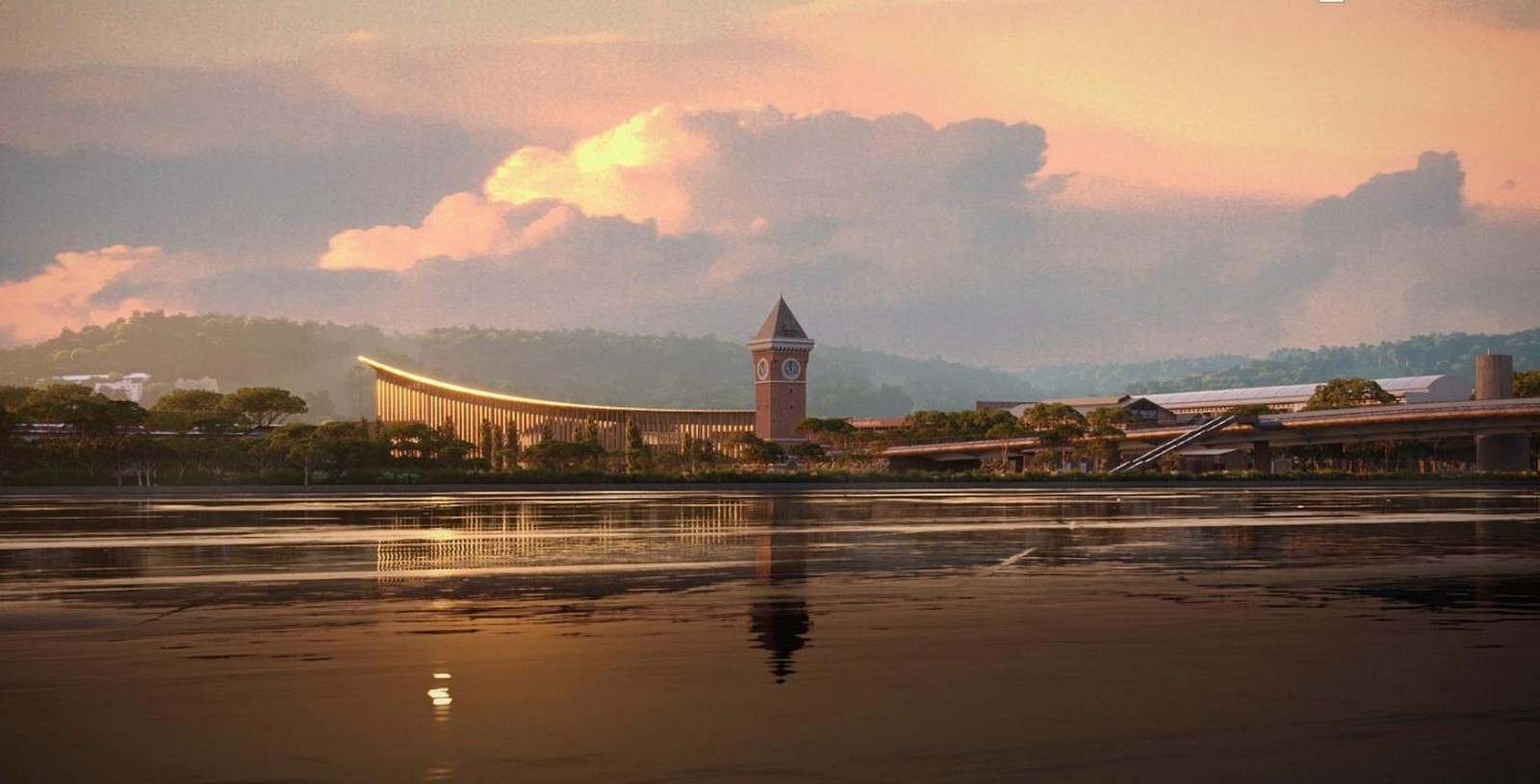
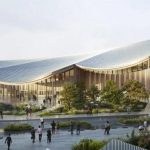
The visual impression of The Sail is short-lived. The design, which was typical of the playful but realistic attitude of BIG, involves a large, curved timber grid shell that outlines the whole structure. This prefabricated structure enables the building to accommodate the program with efficiency, covering the multidimensional program-based needs, such as 5,000 5,000-seat congress hall, large-scale meeting rooms, flexible retail and exhibition areas, and a high-end 200-key hotel. The organic, kinetic design is based squarely on the nautical background of the Seine River, redefining the dynamism of a boat’s canvas in a fixed construction design.
Innovation in Materiality and Form
One of the central innovations of design is the material palette. The main load-bearing structure is made of locally sourced mass timber that is sustainably sourced. The embodied carbon of the project is minimized by this strategic application of engineered wood, relative to the traditional steel and concrete construction, making The Sail a major signal to decarbonize large-scale civic architecture in Europe. The wavy wooden ribs of the building are not covered, which makes the interior very warm and friendly, which is in contrast with the glass-and-steel setting of La Défense.
The special and soaring geometry of the structure has two aims: to offer the maximum internal space to the principal congress areas and to provide a new and free topographical landscape to the citizens. Its roof is rather steep up on the riverfront, making pedestrians welcome climb its path.
A New Civic Plaza for the Seine
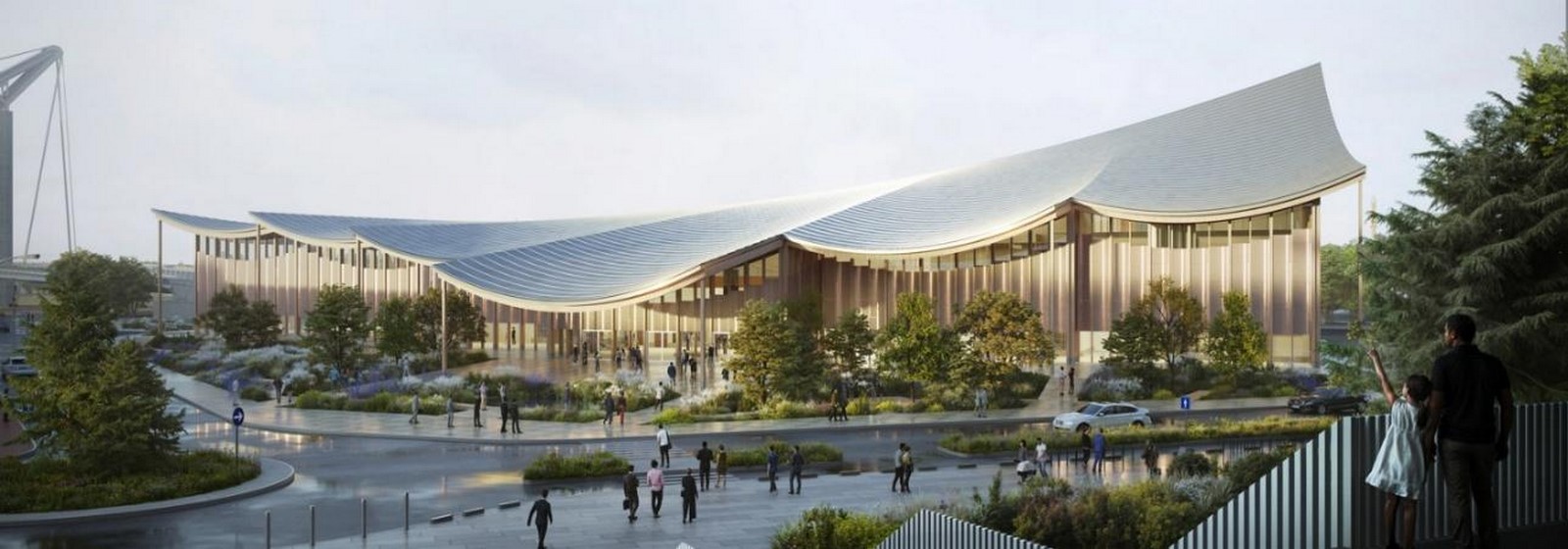
The Sail, which aims to integrate itself into the Parisian urban environment, is the core of the design philosophy of BIG. The construction aggressively declines the idea of confined and closed-off, and private event spaces. Rather, the design establishes a continuity in a way that the Seine River promenade had with the open and accessible roofscape of the building. This complex itself is designed like a new urban plaza, which allows the citizens and the visitors to climb the terraced wooden slopes on the roof to have uninterrupted panoramic views of the Seine and the skyline.
The concept of creating a roof, which is extremely open to the outside, is in effect converting a privately owned convention center into a civic facility, aligning with the principle of BIG that they often refer to as hedonistic sustainability design, which is not only environmentally friendly but also positively affects the living conditions. Beneath this facade, the building integrates state-of-the-art passive climate management, energy production, and harvesting of rainwater, and the structure is currently seeking the ultimate environmental approvals to establish a new standard in the gigantic projects in France.
BIG is cementing its status as a world leader in high-profile, structurally ambitious sustainable design with the commission. With cities throughout the globe seeking to redefine the role of the waterfronts and other sites close to transit, The Sail offers a strong example. The project does not just remain on a visual level, but it is a holistic solution that is a potent architectural symbol, but also an extremely practical element of the publicly owned infrastructure. The vision of BIG is the creation of a center that will start being constructed in 2026.