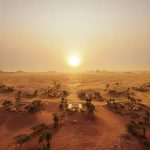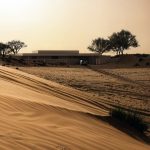
When we look at the UAE map without the major cities, what’s particularly striking is the vast expanse of desert. It’s a massive piece of desert, and where the urban intensity is happening is really a tiny percentage of the total plane. Highways link these dense nodes as vital economic and social connectivity arteries.
Project Name: Within Dunes
Studio Name: Almena
project size: 450 m2
project status: Unbuilt/Competition Entry
Lead Design: Almena
Art Direction: Omar Barghout, and Abdallah Mostafa
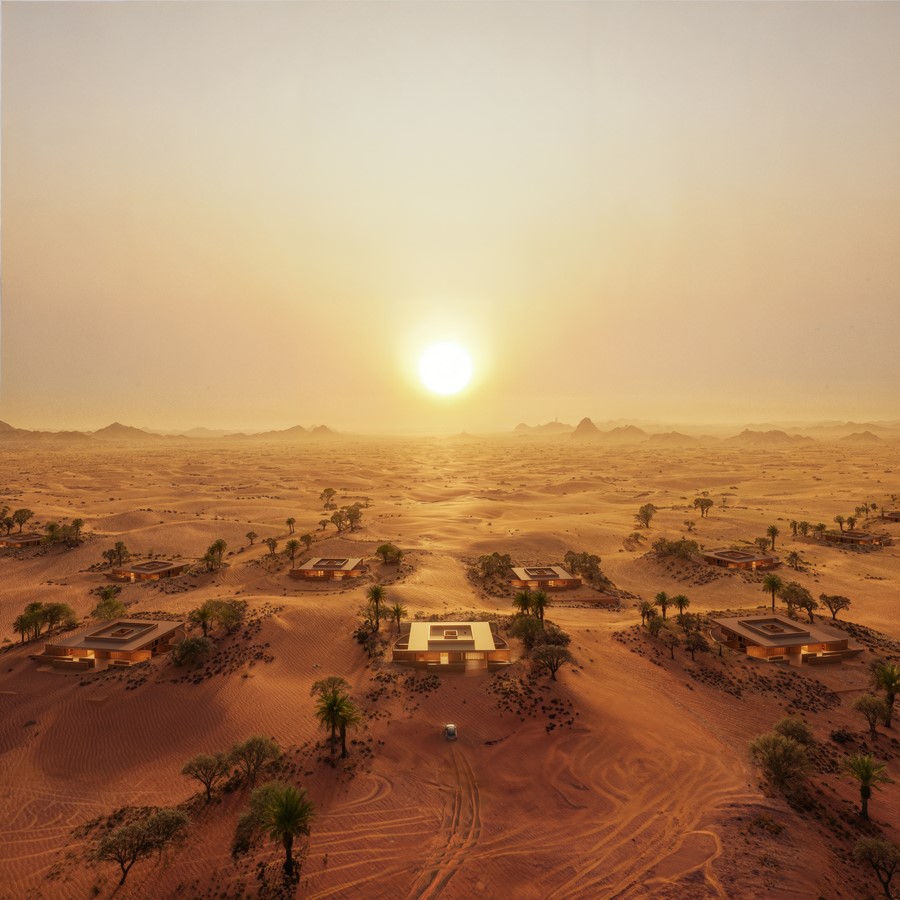
This has shaped how Dubai residents perceive the desert, differently from how it’s understood in the West or even the East. There is something deeply meaningful in the emptiness of the desert clean, open, and quiet expanse. After sunset, informal gatherings often appear along highway edges, where people claim space around their vehicles, forming temporary zones of conversation, community, and even commerce. From this perspective, the desert is not an empty void; it is a space where culture, politics, and relationships are actively negotiated.
There was a time when many Bedouins resisted settling in cities, valuing their mobility and the vastness of the desert. Early housing efforts in the 1960s and ‘70s aimed to encourage the shift to cities. Yet, in doing so, something was lost: the connection between settlement and landscape.
If we want to reimagine the house of the future in the UAE, we need to reconsider the value of the desert—not as something to escape from but as something to be
embraced, connected to, and designed with.
Within Dunes
The House of the Future rooted in place
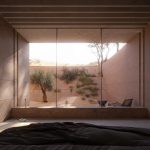
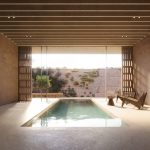
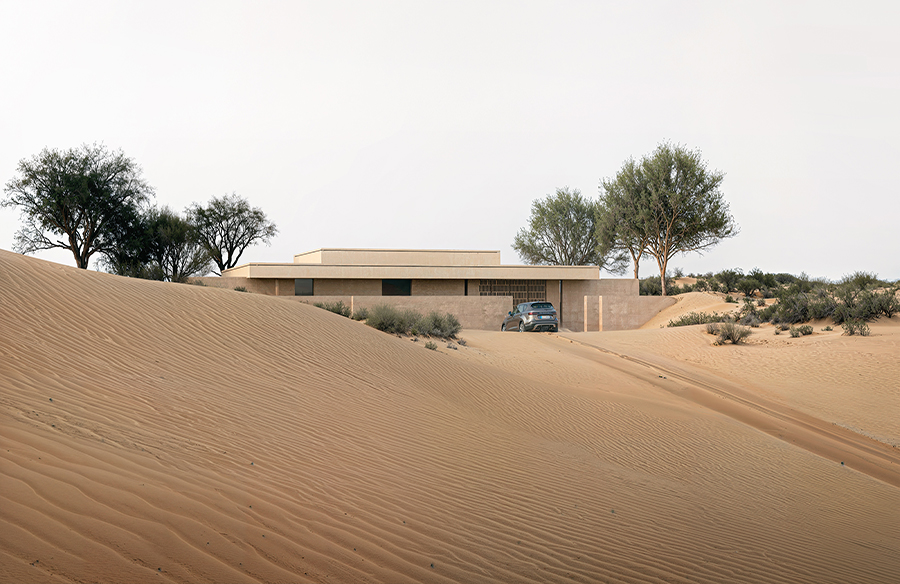
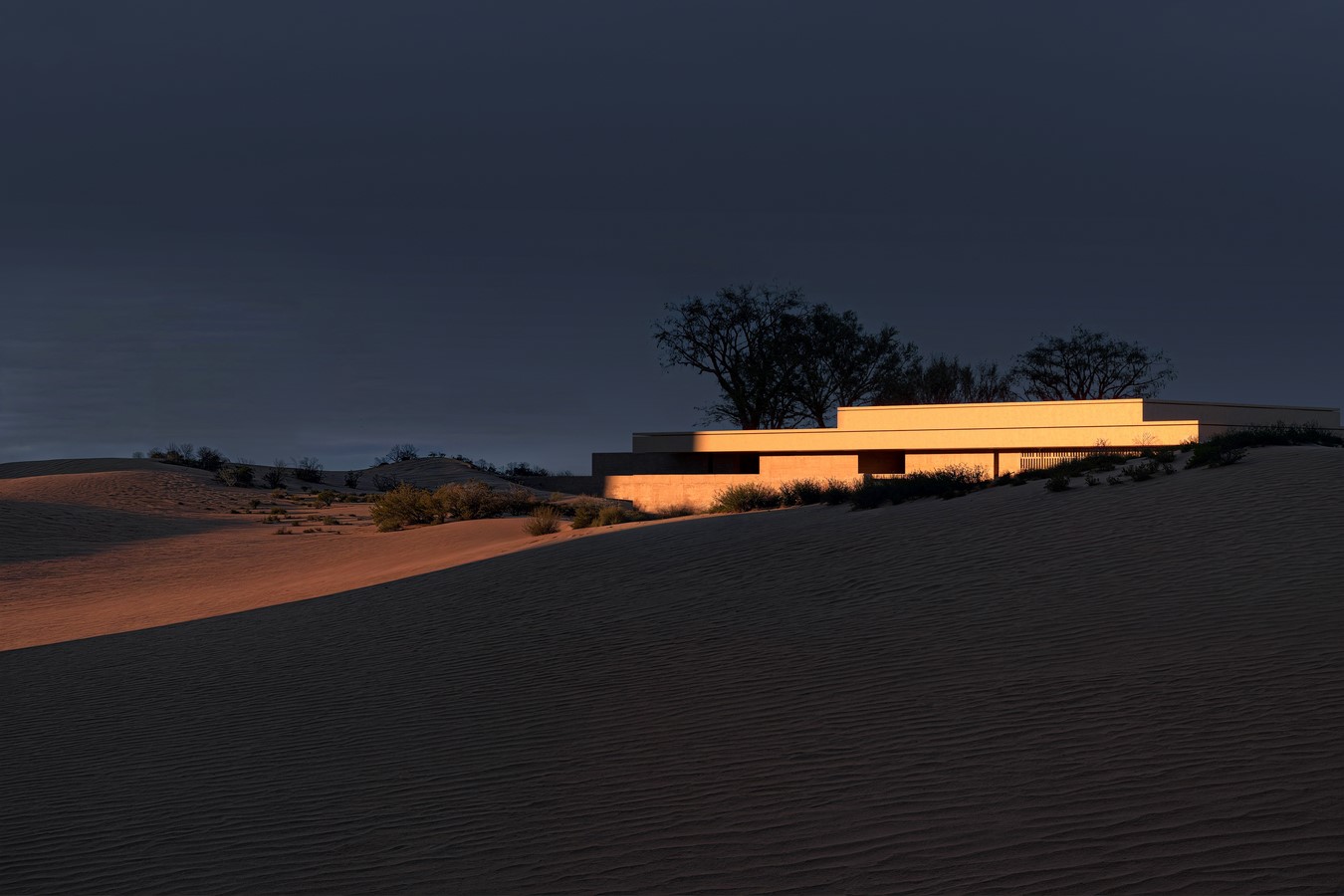
Within Dunes is a proposal rooted in its place. It draws on the symbolism of the oasis, representing the past—a circular, communal space of gathering and life. It pairs this with the Emirati house, representing the present defined by its solid square form and central courtyard, offering privacy, shade, and social structure.
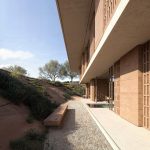
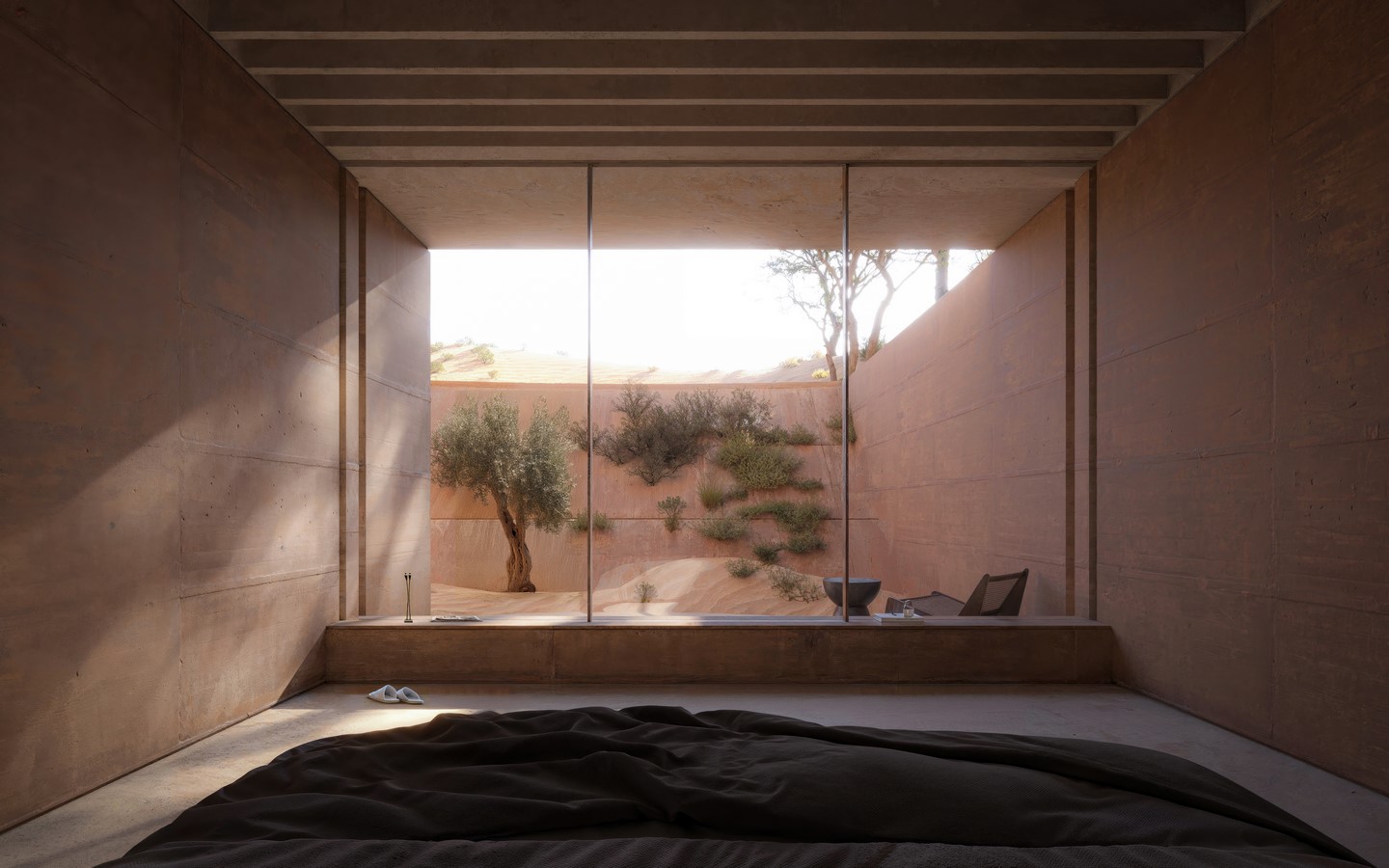
Bringing these elements together, the design imagines a house-shaped with dunes, not placed on top of them. We use natural topography to nestle architecture into the landscape, creating an underground level that takes advantage of the desert’s thermal stability. Just three meters below the surface, ground temperatures in Dubai stabilize around 29°c with minimal variation—offering natural cooling, reduced energy demand, and protection from harsh conditions.
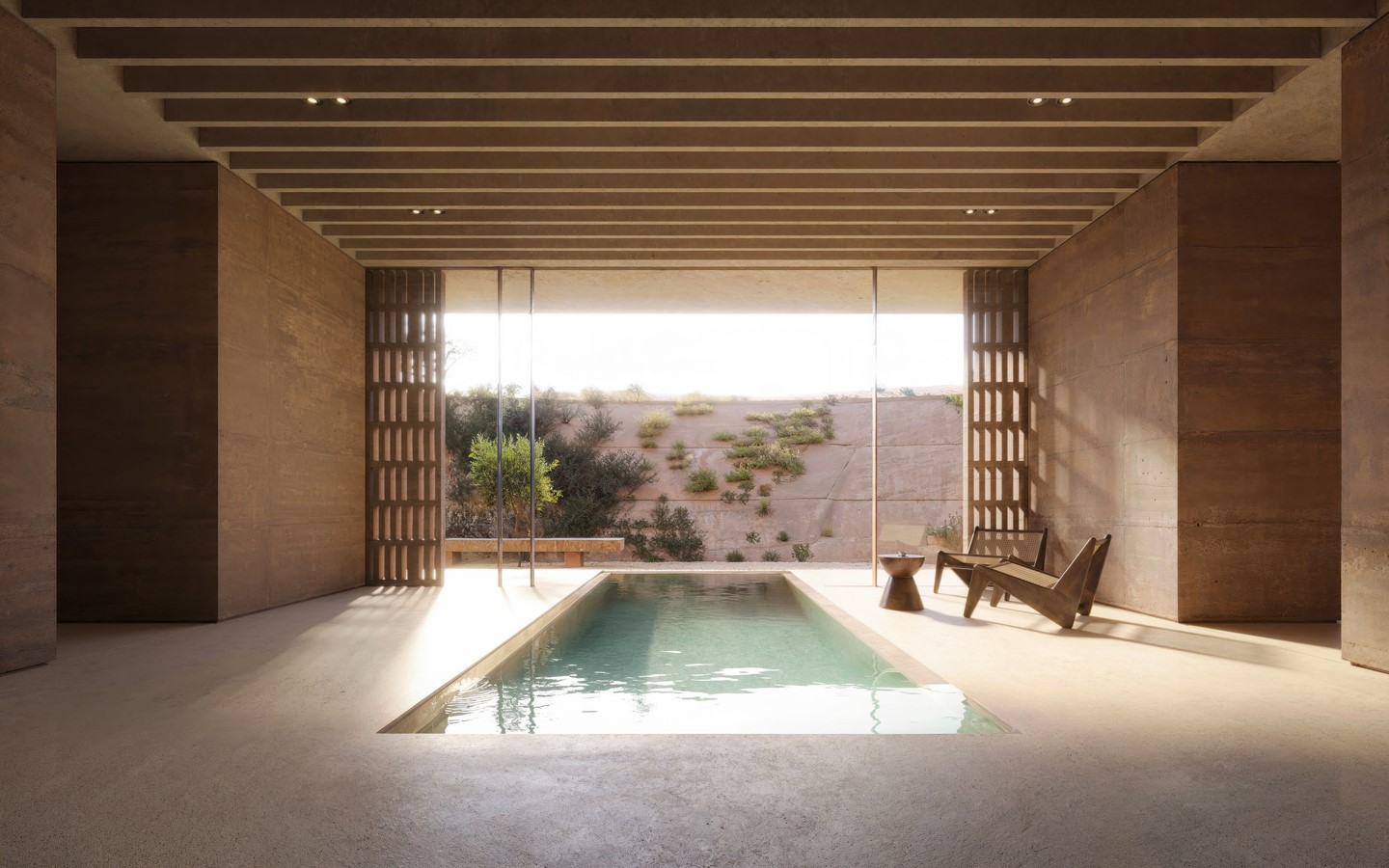
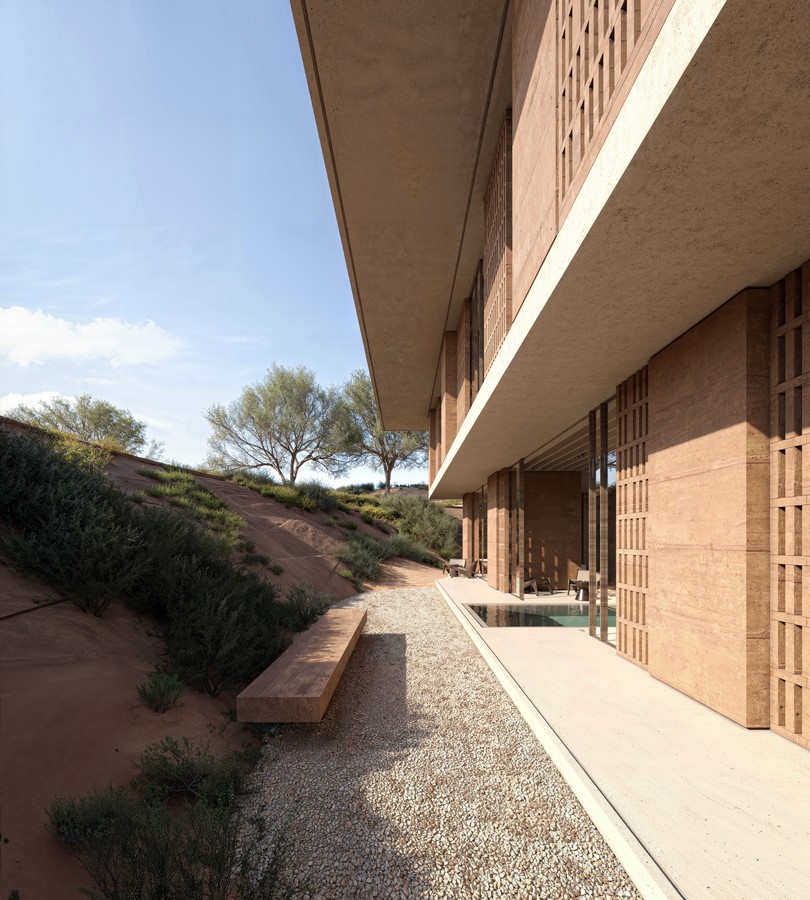
Rammed earth retaining walls stabilize the slopes and allow the architecture to grow from the land. The structure is made of modular prefabricated compressed earth units, enabling flexible, low-impact construction that can adapt to changing needs over time.