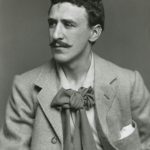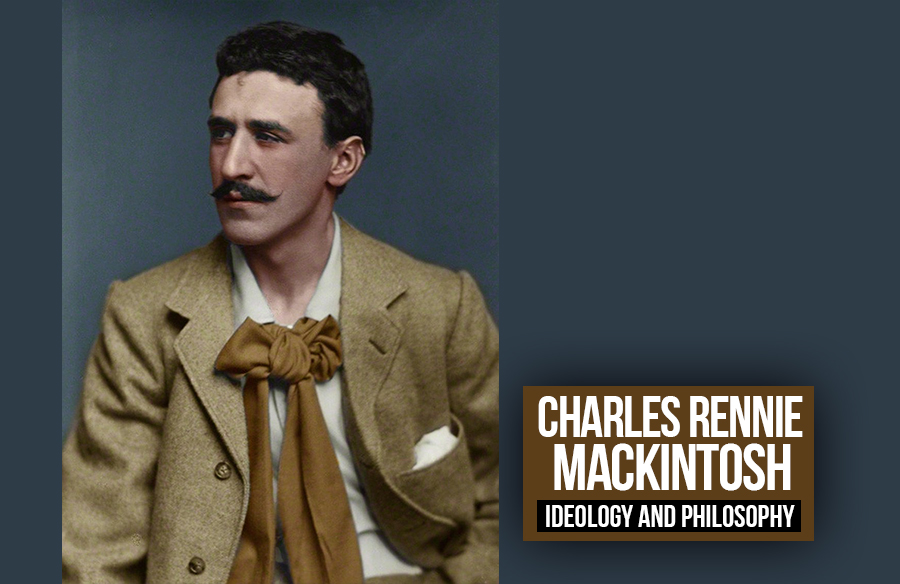
Charles Rennie Mackintosh is one of the most significant and original designers of the twentieth century. He is the forerunner of the Modern Movement and Art Deco. He was both an artist and an architect. Though his contributions were largely unrecognized during his lifetime, many of his achievements are now celebrated as iconic works worldwide.
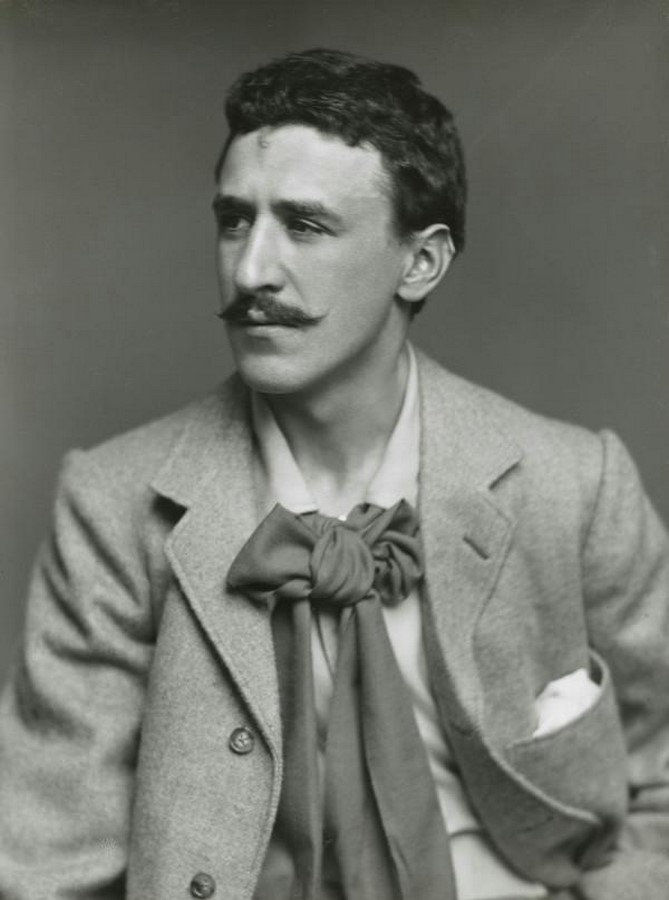
Early life
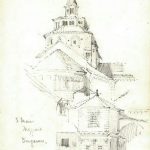
Mackintosh was born in Glasgow on June 7, 1868. In his early days, he found solace wandering the countryside. This experience, combined with his exquisite talent for sketching, led him to fill countless notebooks with nature studies and architectural drawings, laying the foundation for his later work in expressing nature through architecture.
At the age of fifteen, Mackintosh decided to become an architect. He enrolled in the Glasgow School of Art while beginning his apprenticeship with John Hutchinson’s architectural practice at the same time. He was a natural artist and earned numerous prizes during his art school years. His art education allowed him creative freedom, while his architecture practice gave him technical knowledge of structures. He was open to studying new movements of art and exotic designs like Japanese art and vernacular buildings.
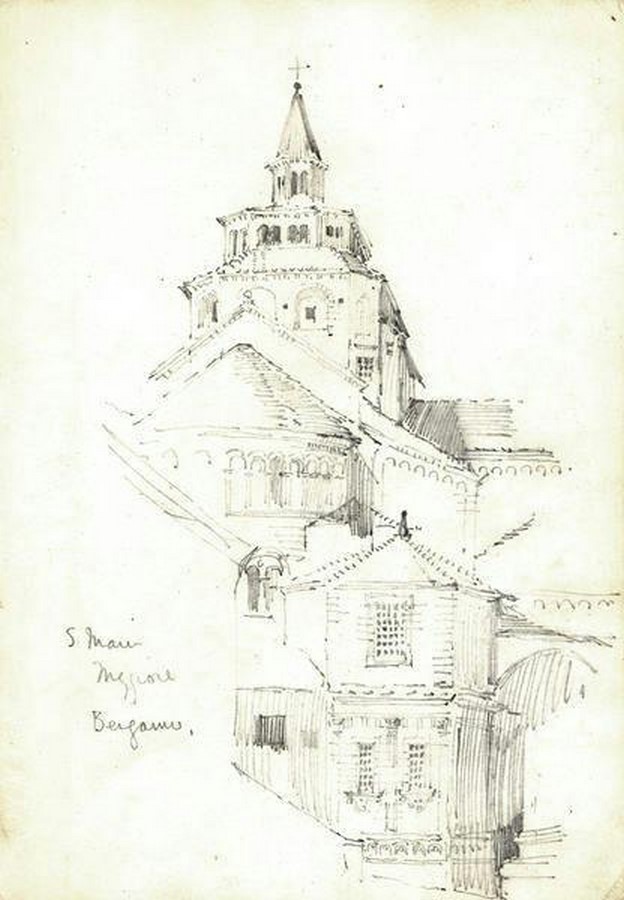
In 1890, Mackintosh won the prestigious Alexander Thomson Travelling Studentship for his Public Hall design that he did under the Honeyman and Keppie architectural firm in Glasgow. The prize funded an extensive tour of Italy in 1891. This journey had a major formative influence on his development and artistic taste. In Italy, Mackintosh was not drawn to classical structures; however, he had a personal bias towards Byzantine and Romanesque buildings.
Meeting Macdonald and The Four
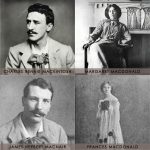
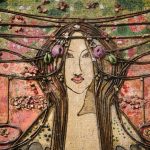
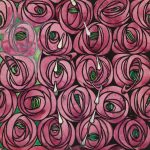
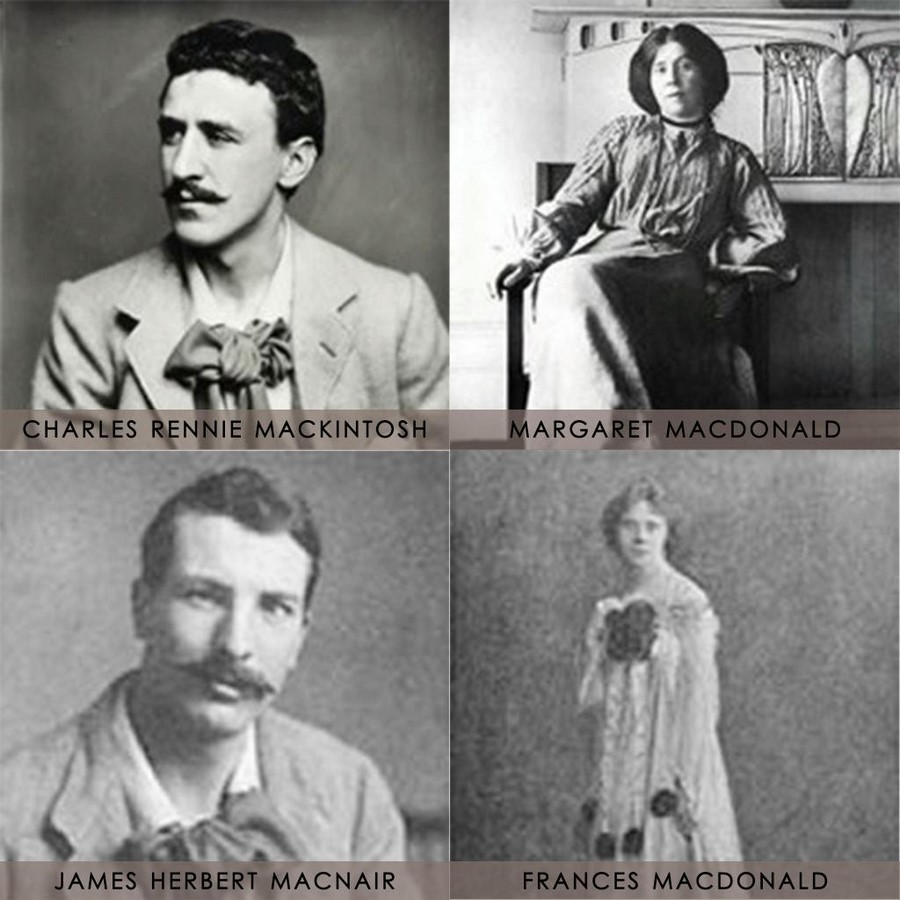
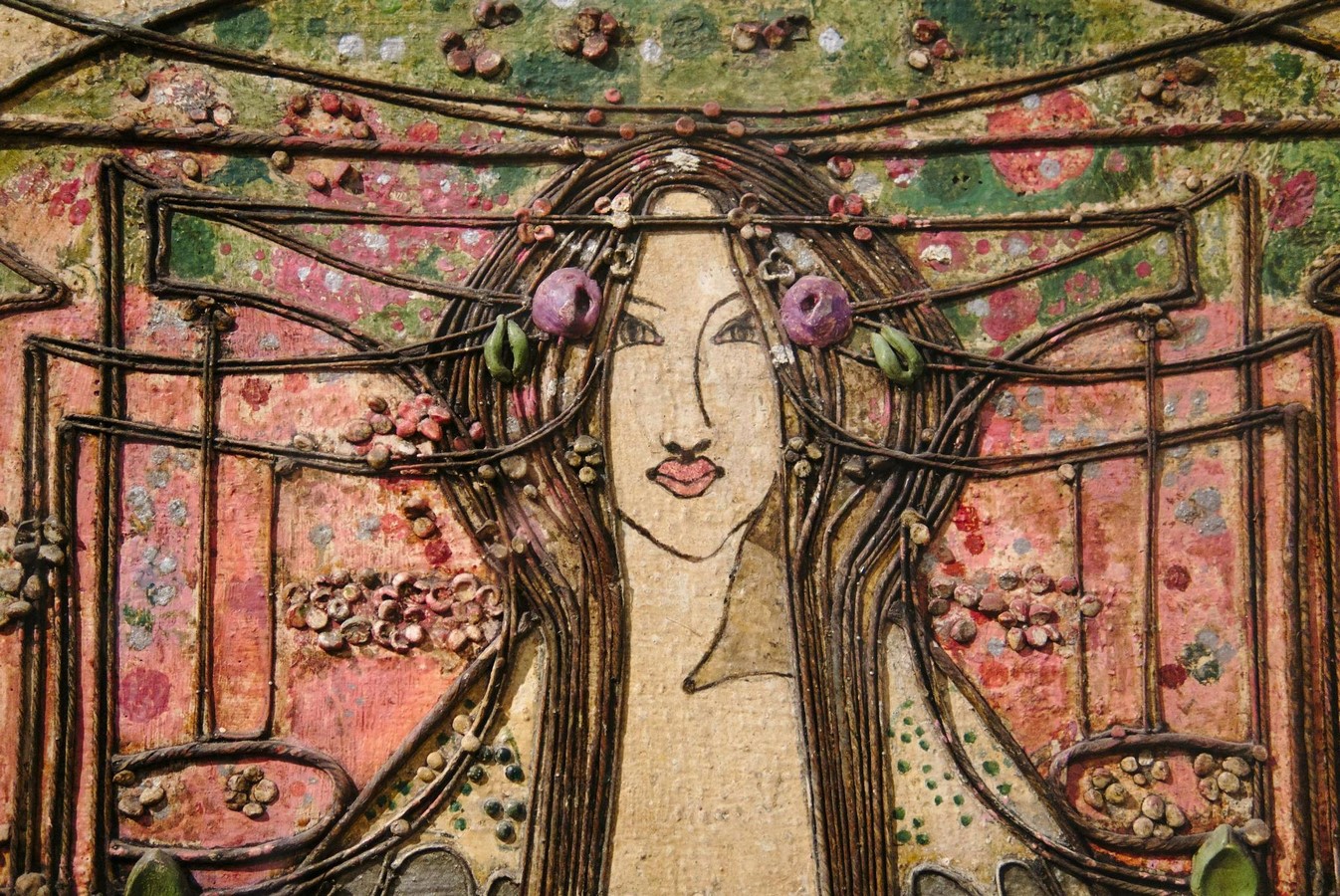
The mid-1890s marked a pivotal period for Charles Rennie Mackintosh, as he met with Margaret and Francis Macdonald. Two sisters who were artists. Alongside his close friend Herbert McNair and the Macdonald sisters, they formed a group that came to be known as The Four, The Immortals. They were idealists. They were controversial. They came to form what’s known as the Spookschool. Their collaboration marked the genesis of the distinct “Glasgow Style”. In their artworks, they used nature with pagan overtones. People and plants are turning into one.
Art is the flower, life is the green leaf.-Mackintosh
Mackintosh fell for Margaret, one of the Macdonald sisters. He was engaged to another woman when he proposed to Margaret. She plays a big role in his life and career as an artist. One can say she was his muse. He risked his career as an architect to be with her, to do art. They were married in 1900. He loved her so much and respected her. He once said, “I have talent, she has genius”.
Early architectural success
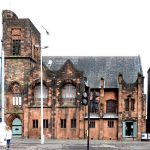
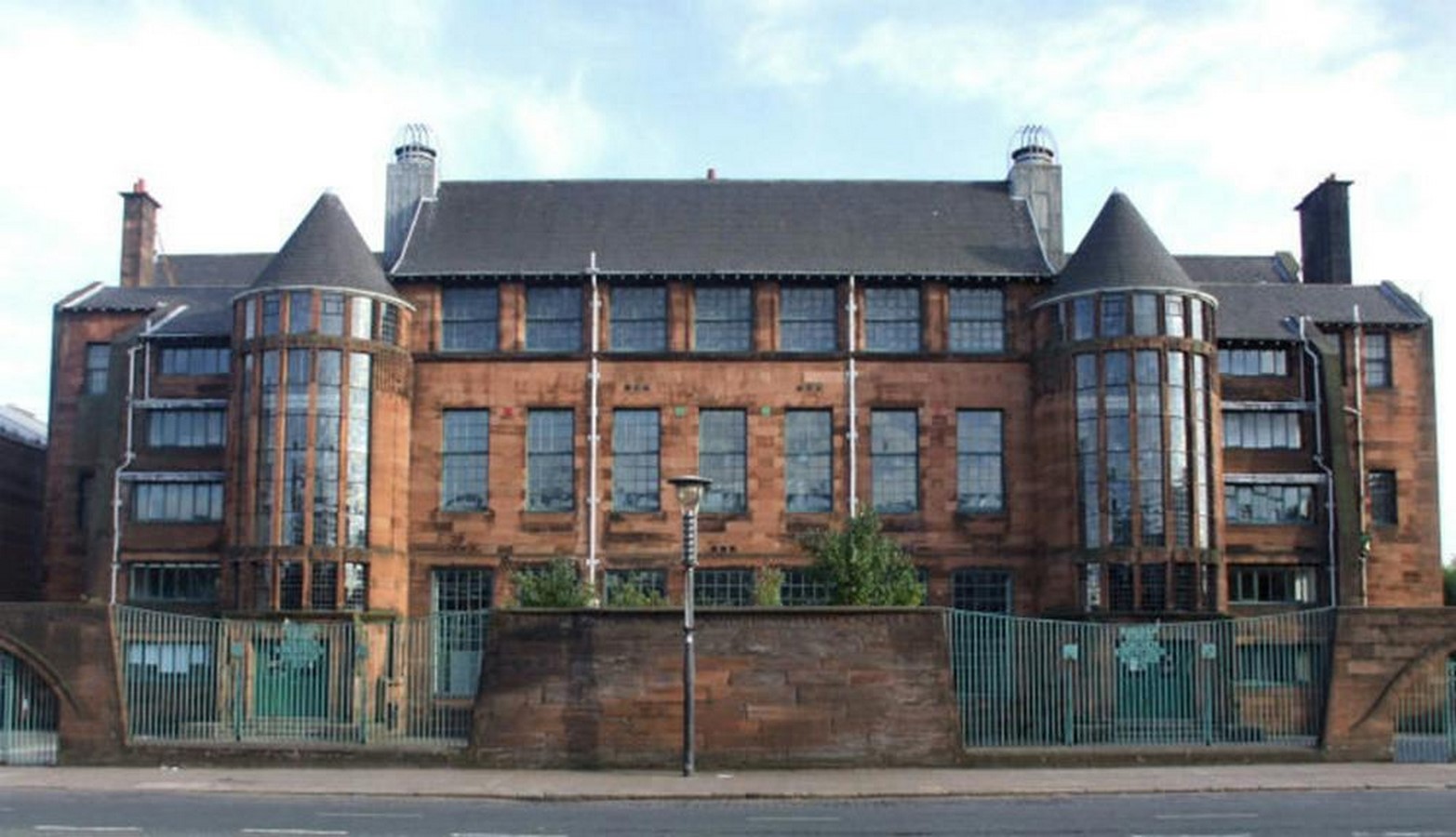
In 1896, he won the competition for the design of the Glasgow School of Art Building at the age of 28. There was nothing like that building at the time. It is one of his most appreciated works. While most of the architects of his time looked for inspiration from London or Italy, he took inspiration from up north, the medieval architecture of Scotland. The interior had elements of Japanese design. It created a sense of calm and serenity. The details were very well thought out. He was an artist himself, so he designed everything to serve artists. Nature was everywhere in his designs, mostly in symbolic form. The effect inside the building is like entering a forest. The Glasgow School of Art Building marked a first major milestone in Mackintosh’s architectural career.
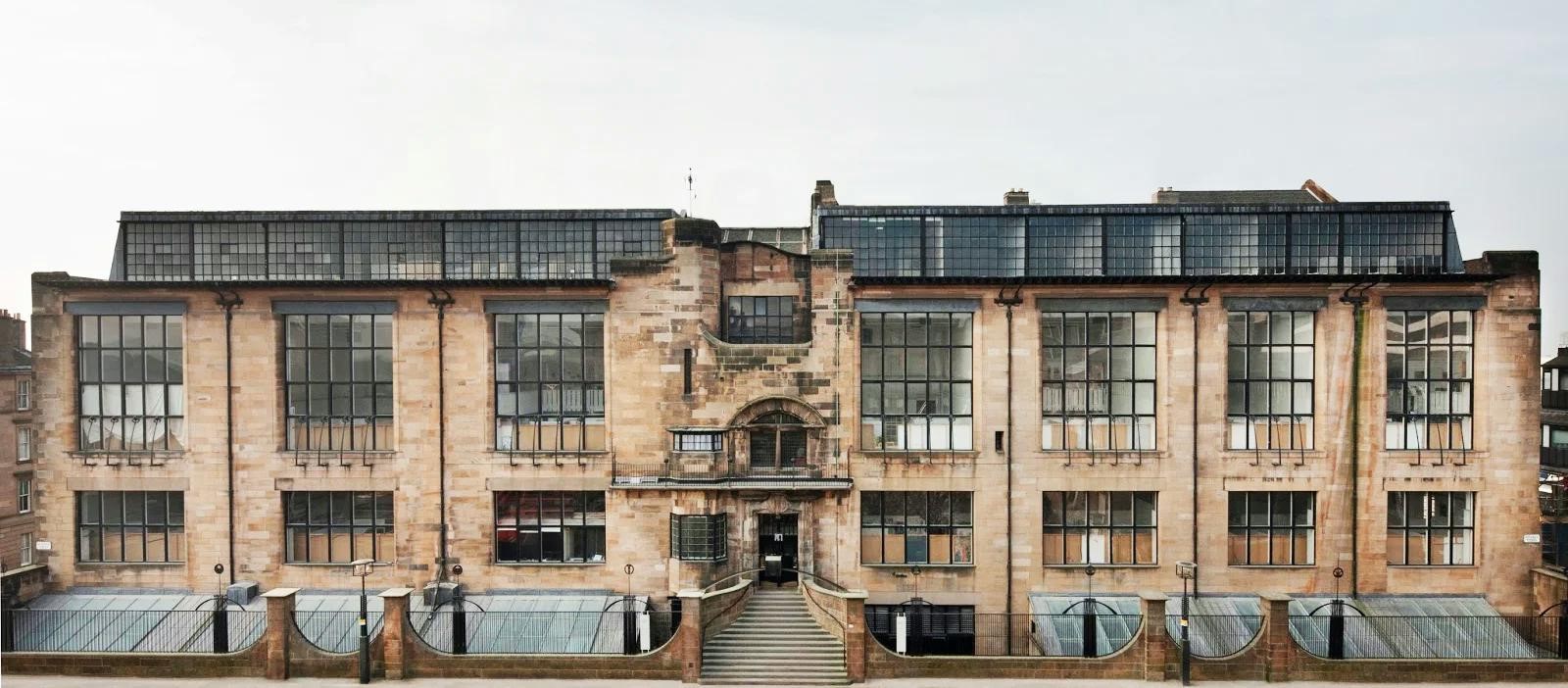
“Buildings should celebrate joy in nature, grace of form, gladness of colour, the functional and the lyrical”-Mackintosh
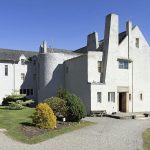
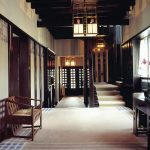
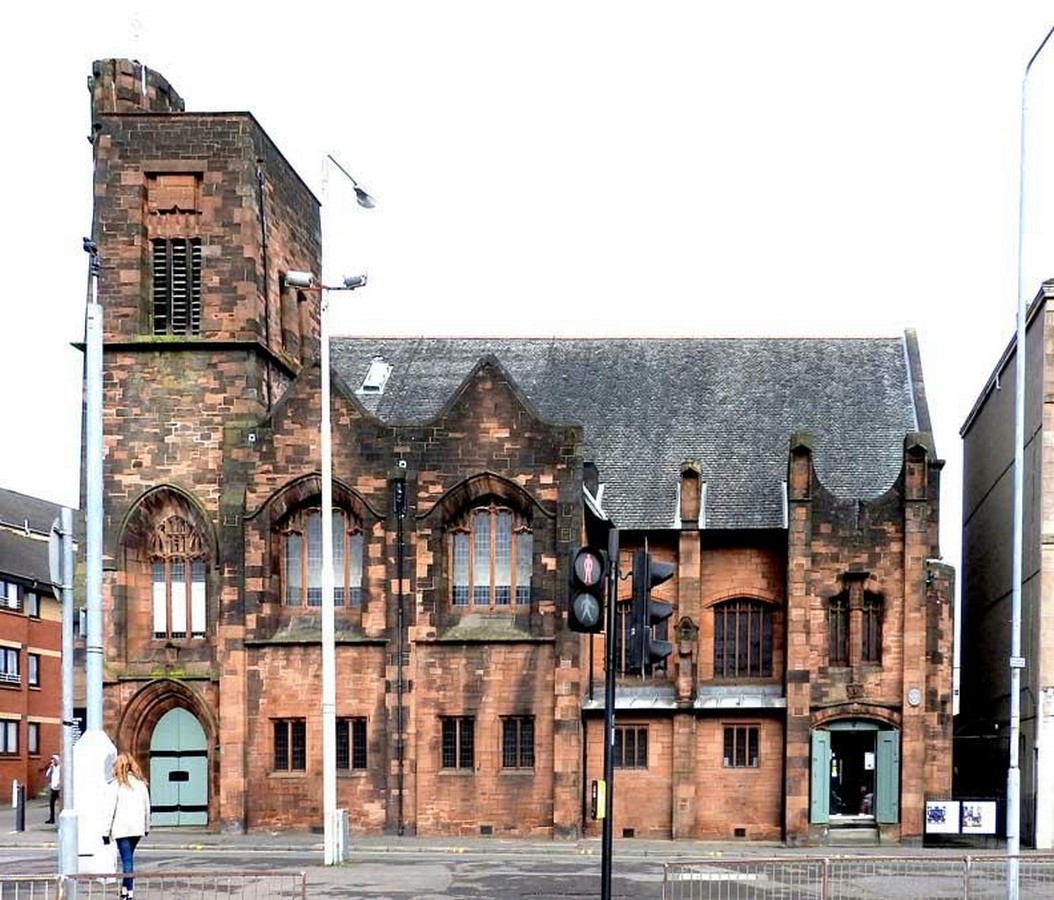
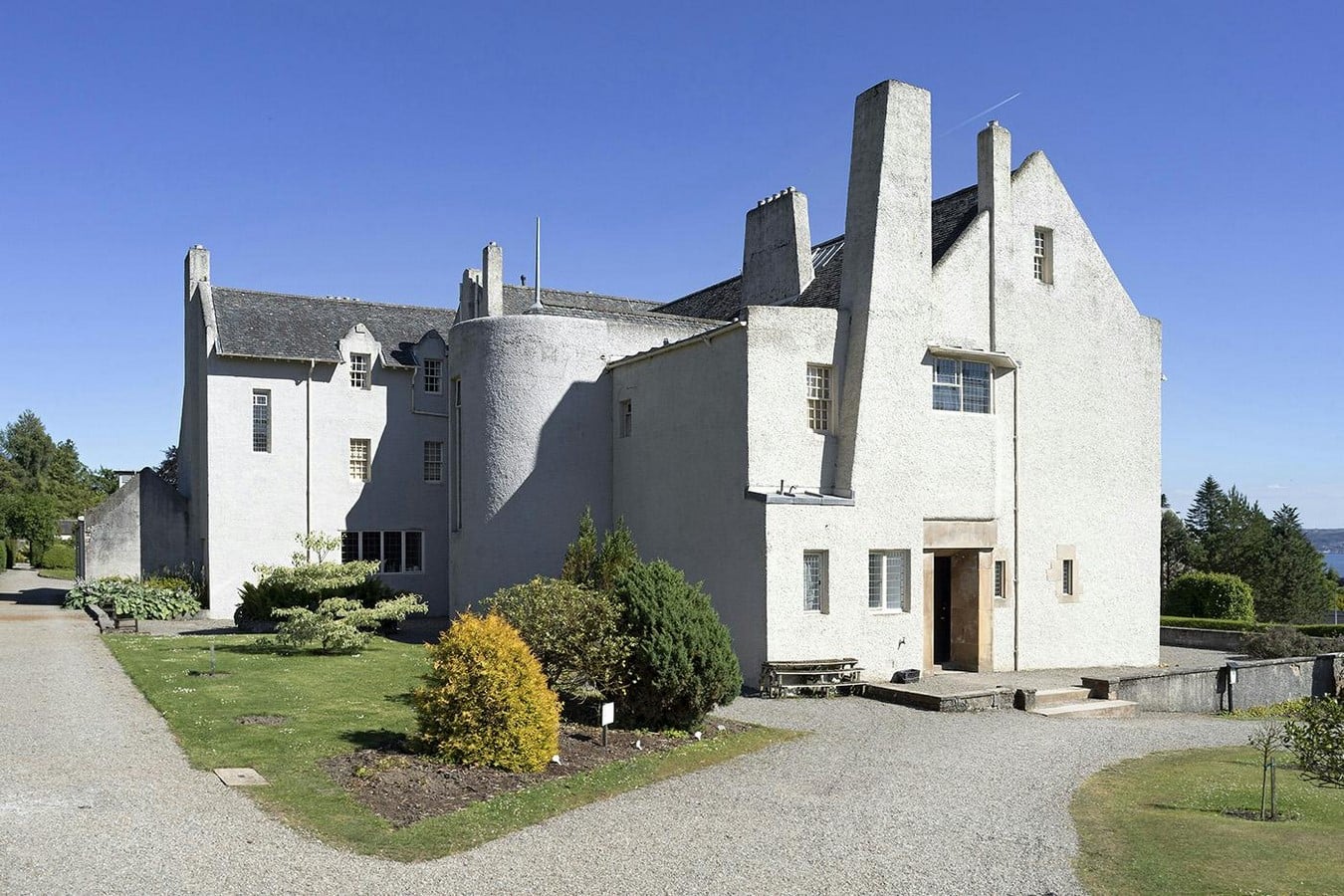
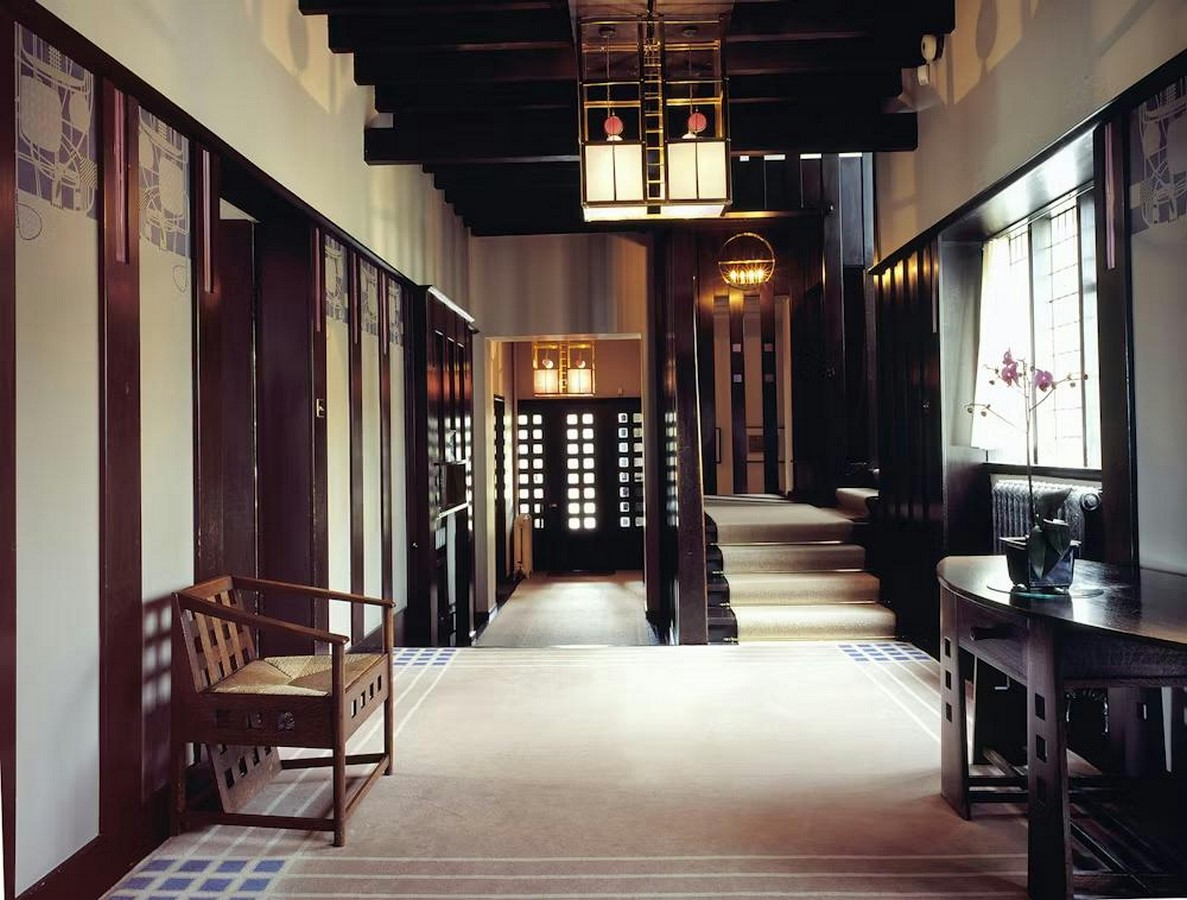
He had a holistic vision in his designs, where every element, from architecture to interiors, furniture, and textiles, formed an organic whole. This philosophy guided his most significant architectural projects, like the Windyhill (1900) and Hill House (1902). The houses had a contrast in the sturdy vernacular Scottish farmhouses tradition on the exterior and the Japanese subtle oriental interiors. He skillfully manipulated light, creating distinct “white rooms” for feminine spaces and darker masculine areas, reinforcing the interplay of opposites in his designs. Margaret’s romantic influence is also reflected in the stenciling, furniture, and glasswork that incorporates repeating motifs and symbolism.
High Acclaims in Vienna
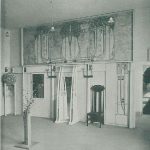
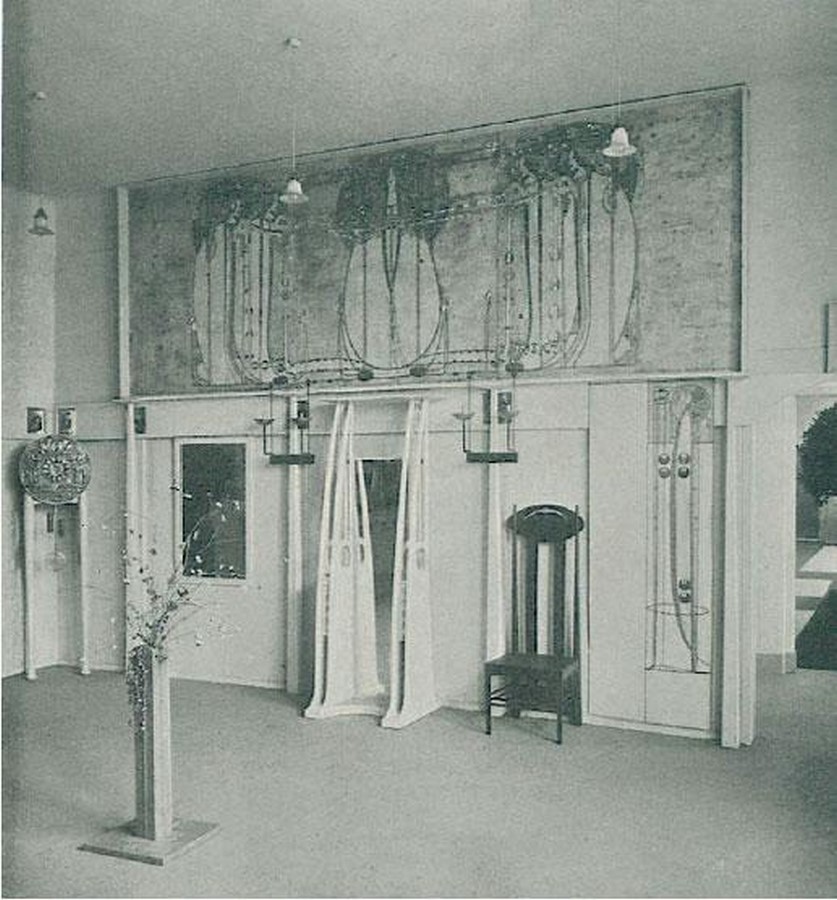
After the Glasgow School of Art Building, Mackintosh struggled to find recognition for his works in Scotland. However, in the rest of Europe, it was a different story. The exhibition of The Four’s “Scottish Room” in Vienna in 1900 brought him high acclaim. Critics praised his geometric motifs, latticework, and white surfaces. This trip was a high point in his life, and his designs had a dramatic influence on Viennese artists like Gustav Klimt and Josef Hoffmann. The latter became a key patron and supporter of Mackintosh’s works. This acclaim led him to get commissions like Fritz Warndorfer’s music salon.
Despite his international success, he lacked commissions and recognition back in his homeland. The decline in work led him to deprsion and heavy drinking. He resigned from Honeyman and Keppie in 1914, a firm where he was a partner at the time. He also departed from Glasgow in the same year, marking the end of his architectural career.
Focus on art
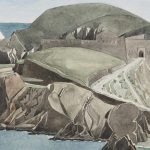
In his final years, Mackintosh focused on his paintings. First in Walberswick, Suffolk, and then in Port Vendres, France, painting atmospheric landscapes and vibrant flower studies. These paintings still reflected his architectural vision through their decorative form and use of line, which emphasized the immovable and permanent.
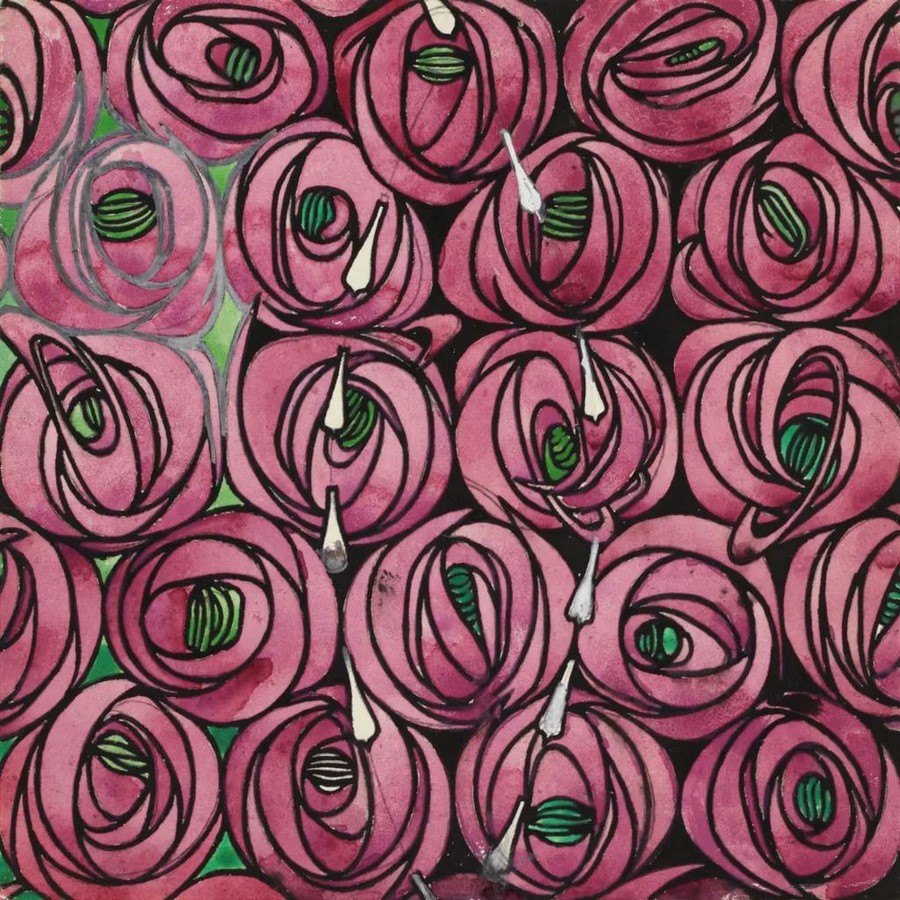
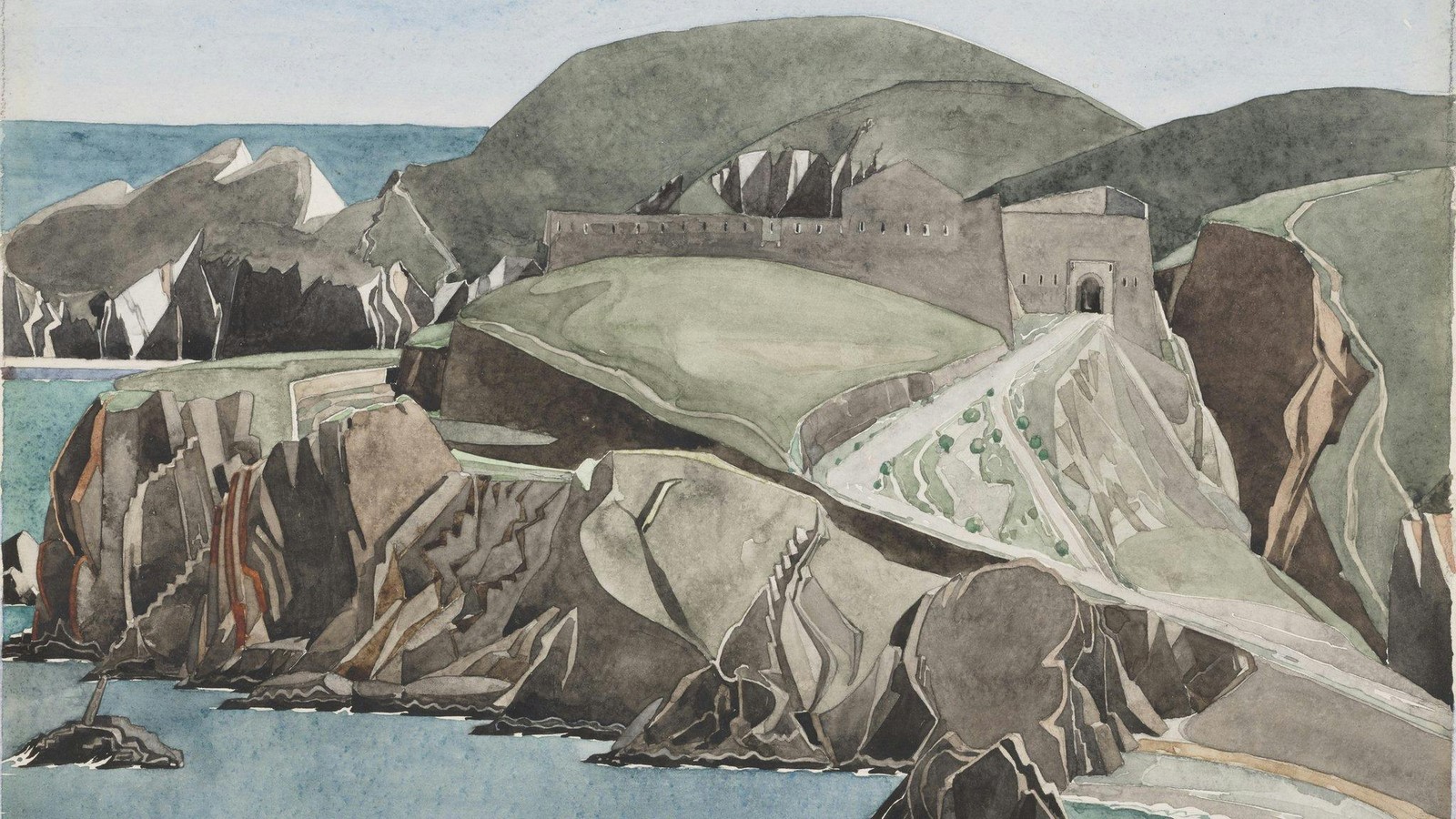
It was much later, after his death, that people started to understand and appreciate his work. Today, Charles Rennie Mackintosh is celebrated as an original genius whose unique vision, blending Scottish vernacular, English Free Style, and the spiritual harmony of his collaboration with Margaret, created a distinct and enduring legacy in the world of art and architecture.