Urban planning in rapidly evolving cities struggles to meet the emerging needs of urban communities. Tactical urbanism is a flexible approach to urban planning that transforms spaces using low-cost, scalable, and temporary interventions. It is a small-scale, creative, and citizen-led approach that promotes social engagement, safety, and accessibility. Although the execution of projects is short-term, the goal is for the long-term transformation of underutilized spaces. This concept of urban design redefines the relationship between people and public spaces in urban landscapes.

Essential Characteristics That Define Tactical Urbanism
Core characteristics of tactical urbanism emphasize speed, flexibility, and community engagement. The concept focuses on low-cost interventions, uses temporary materials, yet has a huge impact on redefining public spaces. It explores how short-term actions can lead to long-term changes. Tactical urbanism tests ideas, observes people’s interaction with proposed ideas, and adapts on the basis of feedback. Through experimentation, it addresses urban issues of traffic, walkability, and lack of green spaces.

Another characteristic is its community-driven approach. Tactical urbanism believes that small-scale interventions like adding seating, painting crosswalks, or pop-up parks can elevate the urban landscape and build community engagement. From rigid spaces to reimagining through temporary interventions, these efforts value creativity, informality, and accessibility.
Positive Impacts On Urban Cities
Tactical urbanism encourages the public to participate and shape their urban neighborhood. Residents are involved in the planning and execution of intervention support and maintain improvements as they foster a sense of ownership and pride. One of the benefits includes its testing ability for urban design strategies. Small interventions allow designers and planners to experiment, observe, and reimagine spaces based on feedback before committing to permanent changes.
Vacant plots or underused spaces through tactical urbanism transform into functional, vibrant, safe, and more inviting public spaces. Small-scale design changes like widening sidewalks or pedestrian zones encourage walking and use of public transit, helping shift urban planning away from car-centric design. This shift not only promotes healthier lifestyles but also promotes sustainable and active transportation.

Real-World Interventions
Modular market stalls – transforming vacant spaces to flexible vendor setups that reactivates the underutilized space, supports the local economy, and encourages public interactions.

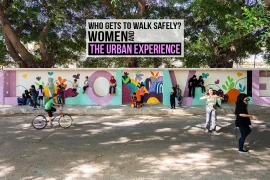
Street murals – colorful visuals on roads and walls enhance aesthetics, slow down traffic, and create neighborhood identity.

Intersection makeovers – using temporary interventions like paints, plants, and other creative elements, intersections can be transformed into safer and attractive urban designs that improve pedestrian safety and create appealing landmarks.

Guerrilla Gardening – planting plants in neglected, vacant lots in neighborhoods improves aesthetics, ecological value, and promotes environmental awareness.

Parklet installation – street parking spaces are converted into temporary mini-parks with seating, greenery to enhance street vibrancy, and a pause in dense urban areas.

Critiques and Constraints
Although tactical urbanism offers various benefits, it faces numerous challenges and criticism. Temporality being one of them, as if the design intervention is not backed by long-term planning, short-lived can be superficial. Lack of government support or a legal framework can hinder public space design. Additionally, projects may fail if citizen’s community engagement lacks. If not integrated with proper design and planning, tactical urbanism runs the risk of feeling isolated from the overall urban landscape.
Tactical urbanism illustrates how, through even minimal interventions, urban spaces can be transformed. Citizens shaping neighborhoods through small-scale, community-driven design rethinks how public spaces can be reclaimed for the public. It provides alternative design planning that empowers flexibility, experimentation, and inclusivity.
Even though tactical urbanism faces challenges and criticism, it remains a powerful tool for shaping responsive and resilient cities. In a rapidly urbanizing world, urban challenges grow more complex, and this urban design of tactical urbanism reminds us that even temporary, small-scale changes can have a long-term impact on the urban landscape.

Citations:
What is tactical urbanism? (2023) Urban Design lab. Available at: https://urbandesignlab.in/what-is-tactical-urbanism/?srsltid=AfmBOooK_XAYn_xB3EPRRgLSwBVvFDzGISECEMmu9ITTMDujrvKT37yG (Accessed: 06 July 2025).
Communities, H.S. (2024) Pop-up urbanism and tactical urbanism: Temporary projects to engage communities and test ideas, HSC. Available at: https://www.hscommunities.com/post/pop-up-urbanism-and-tactical-urbanism (Accessed: 06 July 2025).
Ikiz, S.U. (2024) How can tactical urbanism help to create better urban spaces?, PA. Available at: https://parametric-architecture.com/planning-by-doing-how-can-tactical-urbanism-help-to-create-better-urban-spaces/?srsltid=AfmBOoq0IulZBeMaXI1V2cTJLMJgGiGI14nmaPEvKpP2-1Mx7-H5SEuo#google_vignette (Accessed: 06 July 2025).