The global construction industry accounts for nearly 40% of global carbon emissions and acts as a primary cause of natural resource depletion. Worldwide conversations about global warming and pollution have made many people realize the importance of making industries greener and more sustainable. Today, climate-responsive design is not sufficient; the need for sustainable design is on the rise, leading to innovations in regenerative materials. Traditional Building methods are heavily reliant on resource-intensive materials; therefore, there is a need for materials that are not only eco-friendly but also significantly reduce the carbon emissions produced while making the material. Bio-fabrication is the process of growing materials through biological processes, using organisms such as fungi, algae, and bacteria.
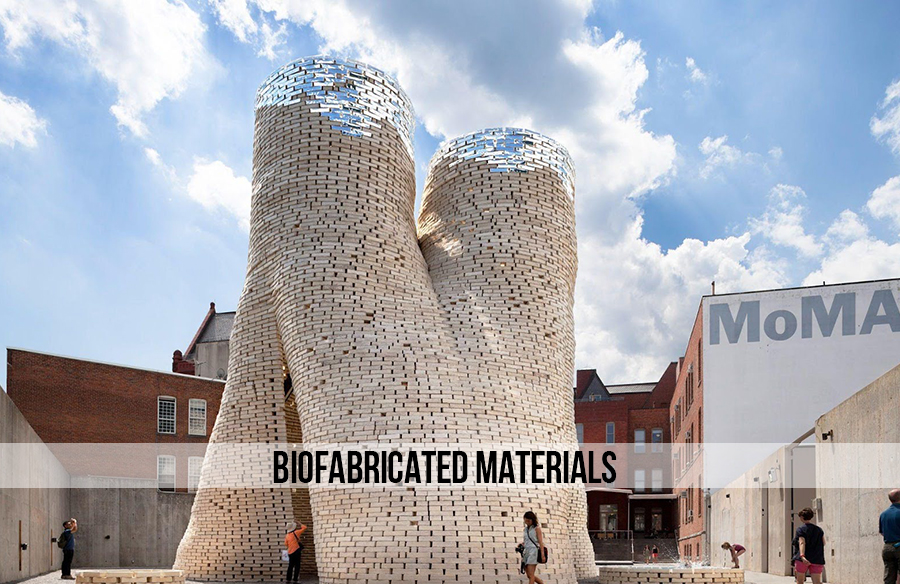
Biofabricated materials is an emerging and promising field in sustainability. They are aiming to not only help build a sustainable environment but rather a live one, which will actively regenerate, interact, and benefit its surrounding environment throughout its lifecycle.
Mycelium-Based Composites
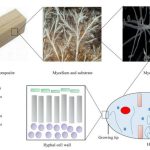
Mycelium-based composites are a fundamental material in bio-fabricated architecture. Mycelium refers to the vegetative root system of fungi.1 Its fundamental mechanism involves growing by digesting organic waste materials such as shredded hemp stalks, sawdust, and straw, and forming a dense, lightweight, and fire-resistant material. Mycelium is the vegetative root system of fungi, growing into a solid, cohesive structure. This process is remarkably rapid and can be precisely controlled through the use of molds, which allows for the creation of various shapes and forms. They are inherently renewable, biodegradable, and non-toxic, and can be produced using readily available local resources, thereby reducing transportation emissions.
Mycelium is a versatile material with significant advantages for sustainable construction. Their excellent thermal and acoustical insulation properties and natural resistance to fire make them highly functional building components. As a result, its applications include mycelium bricks, insulation panels, acoustic tiles, furniture, and biodegradable packaging. Additionally, they also have a very significant advantage, that is their high carbon sequestration potential; some mycelium bricks have demonstrated the ability to sequester up to 75% of the carbon emitted during their production. Sequestering carbon means that as they grow, they absorb carbon and store it, thereby locking it into the materials for the lifespan of their use.
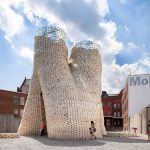
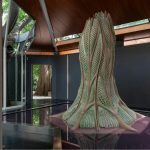
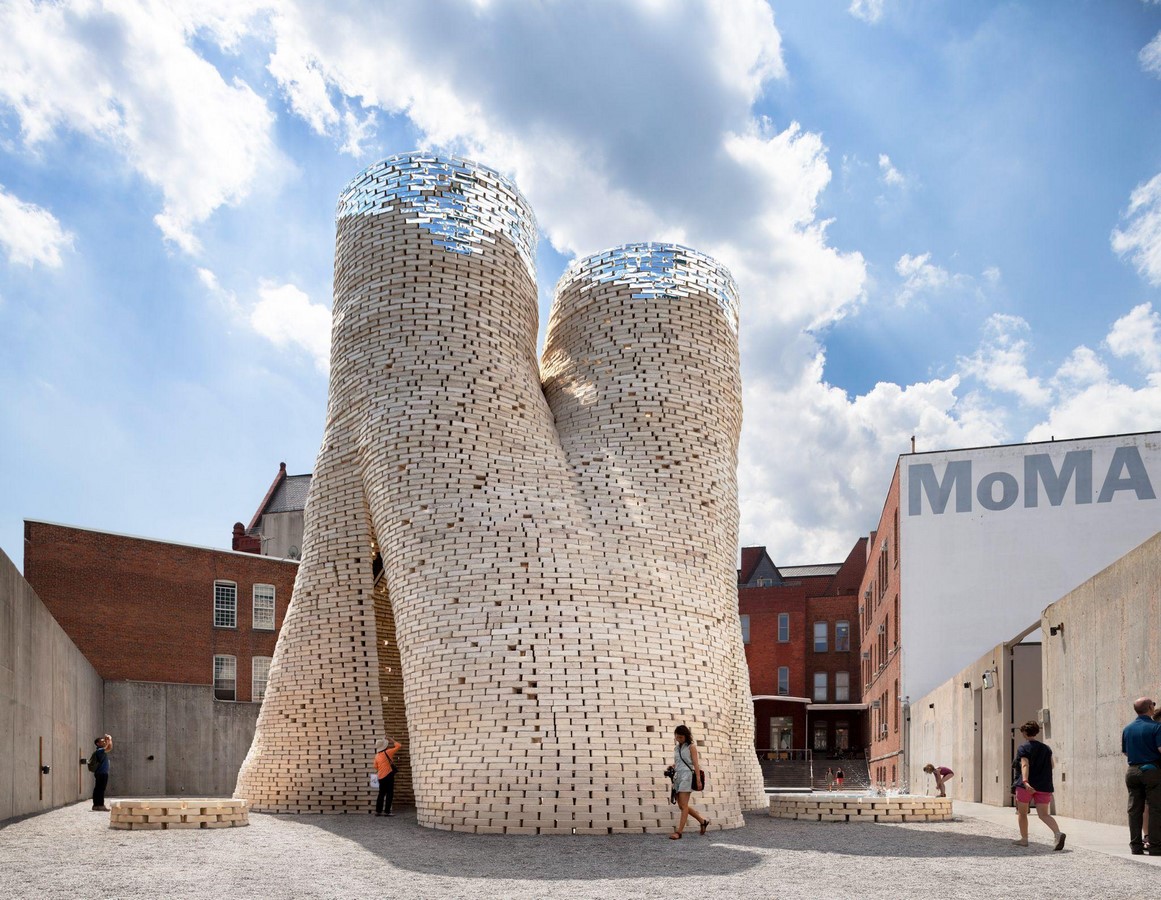
Lastly, a few notable examples where mycelium composites have been used practically include, outside pavilions, like Homegrown Wonderland designed by Andre Kong Studio, Hy-Fi Pavilion by the Living at MoMA PS1, and the Growing Pavilion.
Bacterial Concrete: Self-Healing


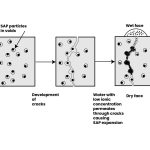
Concrete is one of the most widely used building materials in the world, and it’s a well-known fact that its durability is subject to change over time. To address these effects and challenges, companies are harnessing the power of non-harmful bacteria to create self-healing concrete. Hendrik Jonkers, a microbiologist at DELFT University in the Netherlands, invented self-healing concrete. The mechanism involves incorporating specific bacteria spores with some nutrients while making the concrete mix. These bacteria spores, when exposed to water, start to grow and produce limestone, which fills up the cracks and makes it watertight. This process can fill cracks up to 0.8mm wide.
These benefits of self-healing concrete not only ensure the longevity of a structure but also offer a sustainable life cycle. This material also offers a potential avenue for Carbon Dioxide sequestration, as the bacterial activity can enhance the chemical hydration within the concrete, leading to the production of bicarbonate ions that contribute to CO2 binding. Despite all this potential, there are still some significant challenges that need to be addressed, mainly being the encapsulation technique that protects the bacteria & nutrients until activation. This concept of biofabricated concrete aligns with the broader trend of “intelligent building materials” that will dynamically respond to the environmental challenges and help create a sustainable built environment.
Algae-Based Systems
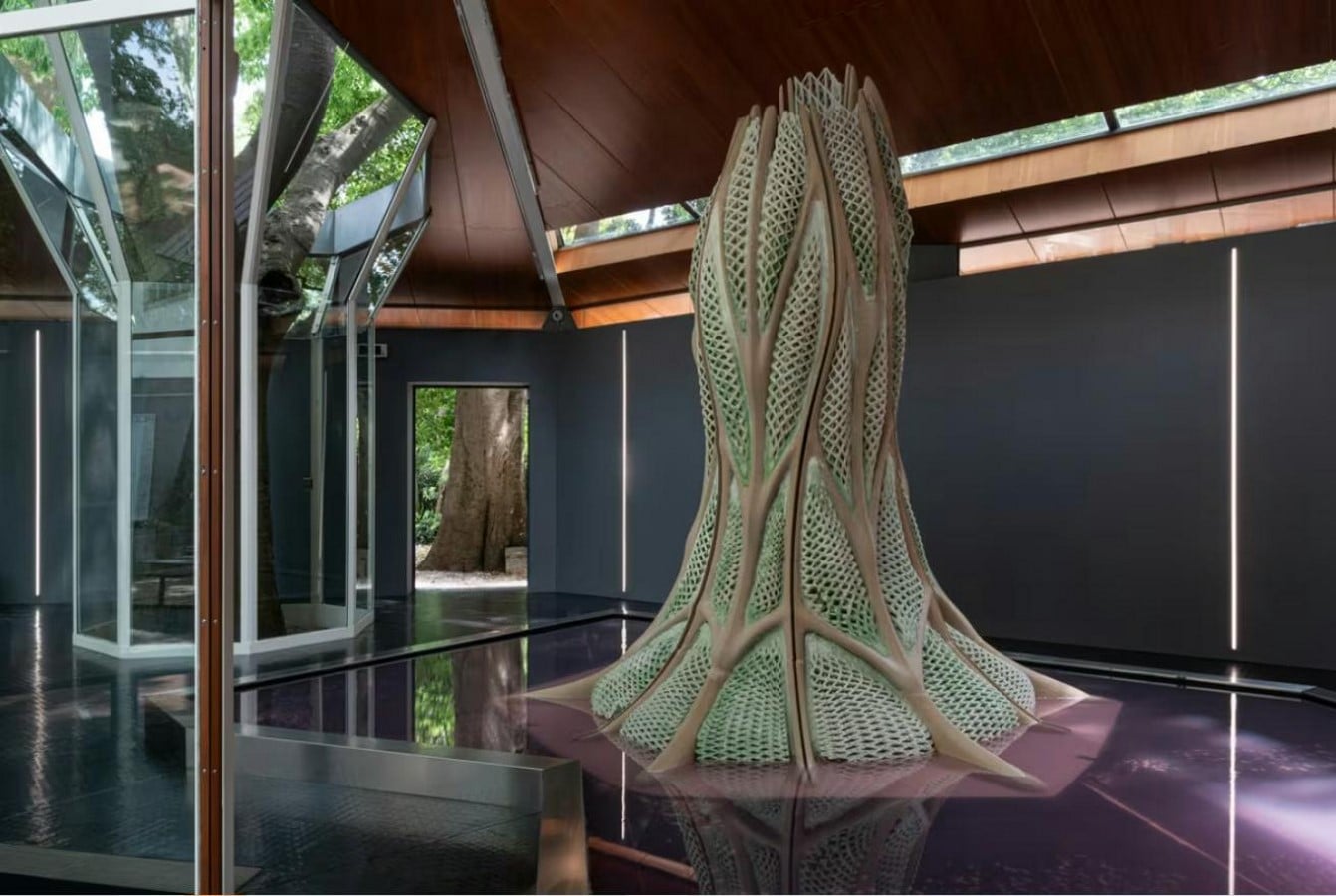
Algae systems are another emerging multi-functional biofabricated component in the field of sustainable architecture. Micro-Algae, in particular, are recognized for their rapid growth rate and exceptional ability to absorb carbon dioxide; therefore, they are being transformed into various versatile, eco-friendly building materials. This integration of algae into the building structures significantly reduces the carbon footprint of the building and actively improves the indoor air quality by releasing oxygen.
Practical Applications of algae in architecture are diverse, ranging from algae-based bio-plastics and 4D printing applications to photo-bioreactor integrated window systems and building facades. A few examples include BIQ Building, Hamburg, the world’s first bio-reactive facade made using microalgae for shading, biomass energy generation and capturing carbon, another prominent example is the Picoplanktonics project, Venice; it is an installation which features large-scale, 3D printed structures embedded with living cyanobacteria that are designed to actively absorb carbon dioxide and transform the building into dynamic, metabolically active entity. This represents a significant step beyond simply reducing environmental harm, moving towards actively “healing the Earth” through architectural design.
Biofabricated materials offer a radical shift from the conventional building materials that have dominated the building construction industry. Although there are still notable challenges to be addressed, these materials present a remarkably promising solution towards designing sustainably and responsibly. They not only suggest that future buildings will be sustainable but rather active participants in the built environment; they may be alive and contribute towards a healthier living environment for all. Materials that will grow, heal, and eventually return to the earth without any harm.
References List:
- Patel, S. (2023). Four Promising Uses for Mycelium. [online] MDPI Blog. Available at: https://blog.mdpi.com/2023/02/24/four-uses-for-mycelium/.
- ArchDaily. (2022). What Are Biomaterials in Architecture? [online] Available at: https://www.archdaily.com/987658/what-are-biomaterials-in-architecture.
- Albert, H. (2021). Biomaterials Are Making the Building Industry More Sustainable. [online] Labiotech.eu. Available at: https://www.labiotech.eu/in-depth/biomaterials-building-industry-sustainable/.
- hlmarchitects.com. (n.d.). The use of Bio-based Materials in Architecture – HLM Architects. [online] Available at: https://hlmarchitects.com/the-use-of-bio-based-materials-in-architecture/.
- (No date) IJRESM. Available at: https://www.ijresm.com/Vol.2_2019/Vol2_Iss10_October19/IJRESM_V2_I10_200.pdf[Accessed: 06 July 2025].
- ERC. (2024). Bio-based architecture for sustainable living. [online] Available at: https://erc.europa.eu/projects-statistics/science-stories/bio-based-architecture-sustainable-living [Accessed 6 Jul. 2025].
- Chen, L., Zhang, Y., Chen, Z., Dong, Y., Jiang, Y., Hua, J., Liu, Y., Osman, A.I., Farghali, M., Huang, L., Rooney, D.W. and Yap, P.-S. (2024). Biomaterials technology and policies in the building sector: a review. Environmental Chemistry Letters. doi:https://doi.org/10.1007/s10311-023-01689-w.
- Stylos. (2025). Living structures – Questions about biofabrication in architectural design – Stylos. [online] Available at: https://stylos.nl/nl/pantheon-online/artikel/2025-06-13-living-structures-questions-about-biofabrication-in-architectural-design [Accessed 6 Jul. 2025].
- Nast, C. (2020). France Wants All Public Buildings to Be Made of at Least 50% Wood by 2022. [online] Architectural Digest. Available at: https://www.architecturaldigest.com/story/france-wants-all-public-buildings-to-be-made-of-at-least-50-wood-by-2022.
- Bdcnetwork.com. (2024). France to mandate all new public buildings be 50% timber or other natural materials. [online] Available at: https://www.bdcnetwork.com/home/news/55163143/france-to-mandate-all-new-public-buildings-be-50-timber-or-other-natural-materials.
- Wikipedia. (2022). Mycelium-based materials. [online] Available at: https://en.wikipedia.org/wiki/Mycelium-based_materials.
- Wikipedia. (2022). Self-healing concrete. [online] Available at: https://en.wikipedia.org/wiki/Self-healing_concrete.
- Perez, D. (2020). The First Algae-Powered Building Presents Unique Renewable Energy Solution. [online] Engineering.com. Available at: https://www.engineering.com/the-first-algae-powered-building-presents-unique-renewable-energy-solution/.
- Rodrigo-Navarro, A., Sankaran, S., Dalby, M.J., del Campo, A. and Salmeron-Sanchez, M. (2021). Engineered living biomaterials. Nature Reviews Materials, [online] 6(12), pp.1175–1190. doi:https://doi.org/10.1038/s41578-021-00350-8.
- Lu, C., Huang, Y., Cui, J., Wu, J., Jiang, C., Gu, X., Cao, Y. and Yin, S. (2024). toward Practical Applications of Engineered Living Materials with Advanced Fabrication Techniques. ACS Synthetic Biology. [online] doi:https://doi.org/10.1021/acssynbio.4c00259.