Urban Design
Urban planning involves designing and regulating land use to shape the physical layout, economic activities, and social dynamics of metropolitan areas, while strategically organizing the placement of various functions within them. It majorly focuses on the development of a city or town through the upliftment of its physical, social, and economic levels.
Role of Urban Design
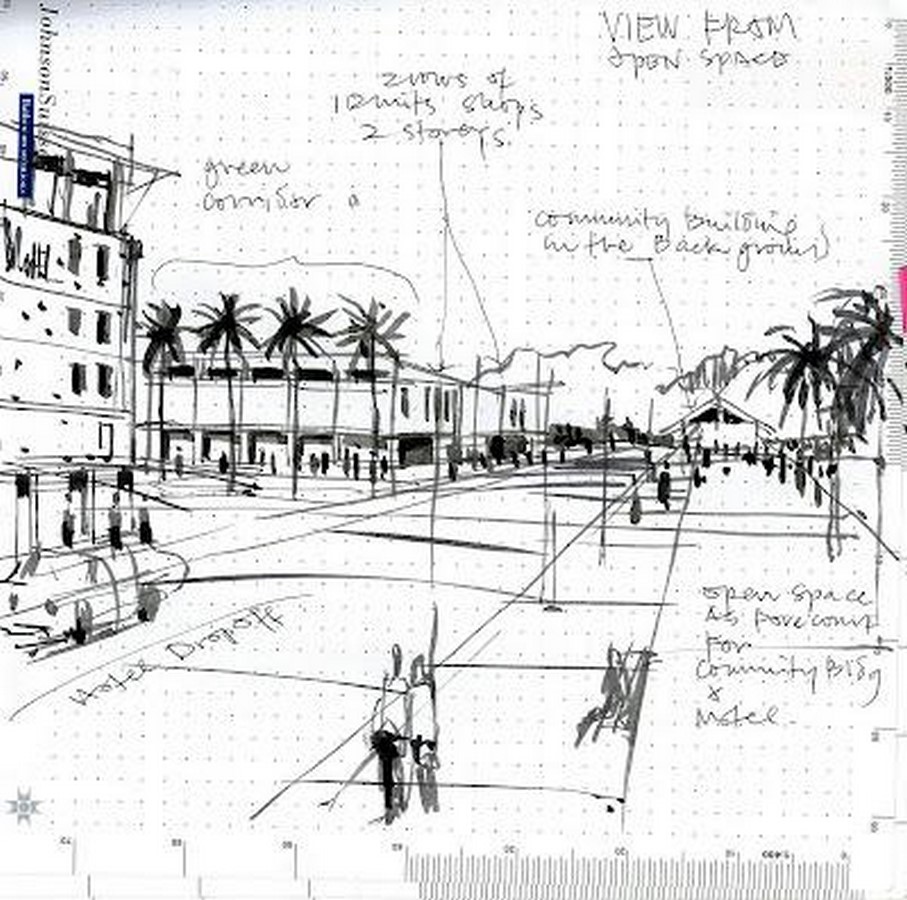
For humans to have easy life access to various infrastructures, the level of designing and planning on an urban scale requires the organization of various elements that shape up from part to whole. Plannings related to the urban sector are often seen done in a well-budgeted form. It embodies a set of core values that all relevant urban design activities should aim to achieve. It offers a practical checklist for designers, planners, engineers, and other professionals to ensure they align with urban design’s fundamental principles. It outlines a logical, inclusive process and provides a clear framework for implementing urban design concepts.
-
Transit oriented Development(TOD)
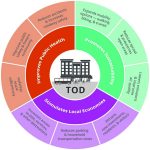
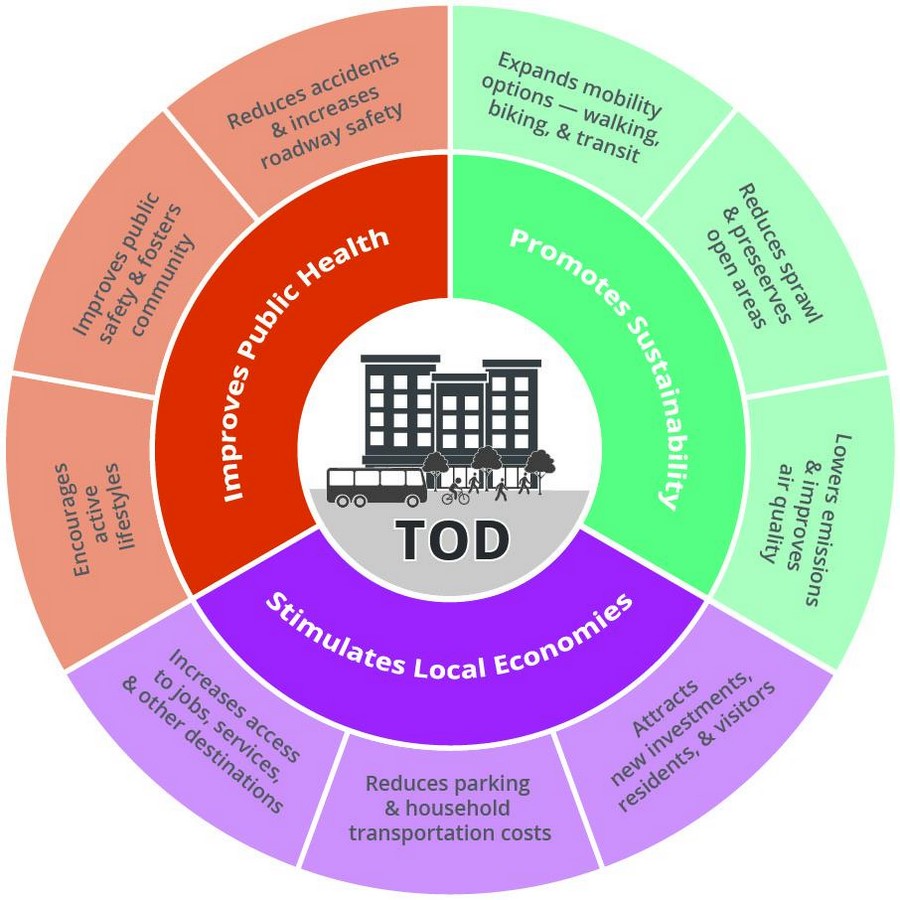
Transit-oriented development (TOD) is a strategy for urban growth that integrates people, services, and activities around high-quality public transportation, promoting walkability, cycling, and shorter trips to enhance lifestyles and optimize city resource use.
Today’s world is gradually moving towards an easy and efficient way to get their work done rather than thinking about the impact it’s leaving on the environment. When 10 people are going to the same destination through the same route then using the same means of vehicle that could accommodate them is more convenient than each of them taking their own vehicle. The impacts and carbon footprints could be reduced and it can become an environment-friendly option.
-
Climate and Sustainability
The essential components of an urban design plan encompass the plan itself, the creation of design guidelines for structures, the design of the public realm—including open spaces, streets, sidewalks, and plazas surrounding buildings—and considerations of public interest related to buildings. When cities have breathable space and low carbon footprints then their negative impact on climate reduces which can lead to a sustainable approach.
-
Smart Mobility
Smart mobility is related to the techniques that can be used to reduce carbon emissions. The use of electric bikes could lead to improvement in both environmental and physical health aspects. The use of open bike lanes could lead to a sustainable life and trafficless life.
Technological Approach
-
Navigation through AI
The world is rapidly moving towards AI and as urban planners and architects, we can take advantage of it. The well-established use of the technology could lead the user to better navigation whether they are the locals or tourists. The navigation through the various apps and other technology can help develop the Urban plan approach in a broader concept. Various AI navigation apps are used to flourish tourism aspects and the increase in touristy areas can help the country to connect with different people and various perspectives in the world.
-
Data and Analysis
For anything to be established research and user analysis are needed as per who the users are and who the output is for. Architects should collect comprehensive data early in the design process, as even minor details can significantly affect a building’s overall efficiency. The more the data is collected the more analysis can be carried out.
In the case of Urban planning various data should be collected for impressive and outstanding output. In Singapore, urban planners continuously seek innovative solutions to maximize limited space while ensuring a livable environment. Geospatial technology enables planners to collect data on current conditions and plan future enhancements tailored to the needs of Singapore’s residents. By analyzing geospatial data, planners can identify deficiencies in amenities and infrastructure, allowing for more effective resource allocation over time.
-
Smart City Application
A ‘Smart City Application’ refers to a system designed to manage streetlights in a smart city, emphasizing energy efficiency and green technology. It leverages a cloud platform to enable communication between the lighting system and a control center, integrating data on traffic, weather, and security. The system can connect to the national grid based on lighting needs and traffic patterns and may incorporate smart grid technology to utilize surplus energy effectively.
Benefits
- The concept of urban design is discussed in relation to technology and modernism which is used to include urban design in a bigger arena.
- The easy access to urban approach through technology and understanding can help to reduce negative environmental impact at a broader concept.
- The urban approach with human-centric design can lead to user-applicable planning and analysis.
- As the new era of startups and investment is rising the sector of urban design can be a new hot place for the rise of various businesses.
Challenges
- More the world is developing, the population is also increasing. The users are more and the resources are meant to be provided to them equally. The lack of resources could cause rapid scarcity.
- The data analysis and data transparency could lead to data piracy and cyber attacks.
- The technological aspects are expensive and if there’s a lack of financial funds and resources then the approach could lead to bad results.
- The unusual access to data can lead to disparity, leaving marginalized people to be excluded from the benefits.
Conclusion
Tomorrow’s City can be designed in relation to developing sustainable, inclusive, and efficient cities with the help of constructive thinking and technology. The proper use of these aspects could provide a new meaning to people’s day-to-day journey and also to future generations.
References:
- Urban planning (2025) Encyclopædia Britannica. Available at: https://www.britannica.com/topic/urban-planning (Accessed: 10 June 2025).
- What is Tod? (no date) ITDP. Available at: https://tod.itdp.org/what-is-tod.html (Accessed: 10 June 2025).
- HMC Architects (2021) Using data analytics in architecture to embrace communities in design: Ideas, HMC Architects. Available at: http://hmcarchitects.com/news/using-data-analytics-in-architecture-to-embrace-communities-in-design-2019-01-09/ (Accessed: 13 June 2025).
- Ginsberg, C. (2025) Using data analytics for urban planning, Noble Desktop. Available at: https://www.nobledesktop.com/classes-near-me/blog/data-analytics-for-urban-planning#:~:text=Data%20analytics%20helps%20Urban%20Planners,not%20receiving%20a%20proper%20allocation. (Accessed: 14 June 2025).
- The importance of Urban Design for Your Community (no date) MRSC. Available at: https://mrsc.org/stay-informed/mrsc-insight/march-2020/the-importance-of-urban-design-for-your-community#:~:text=Urban%20design%20addresses%20how%20people,tools%20to%20address%20this%20need. (Accessed: 15 June 2025).
- Smart City Application (no date) Smart City Application – an overview | ScienceDirect Topics. Available at: https://www.sciencedirect.com/topics/computer-science/smart-city-applicatio (Accessed: 15 June 2025).