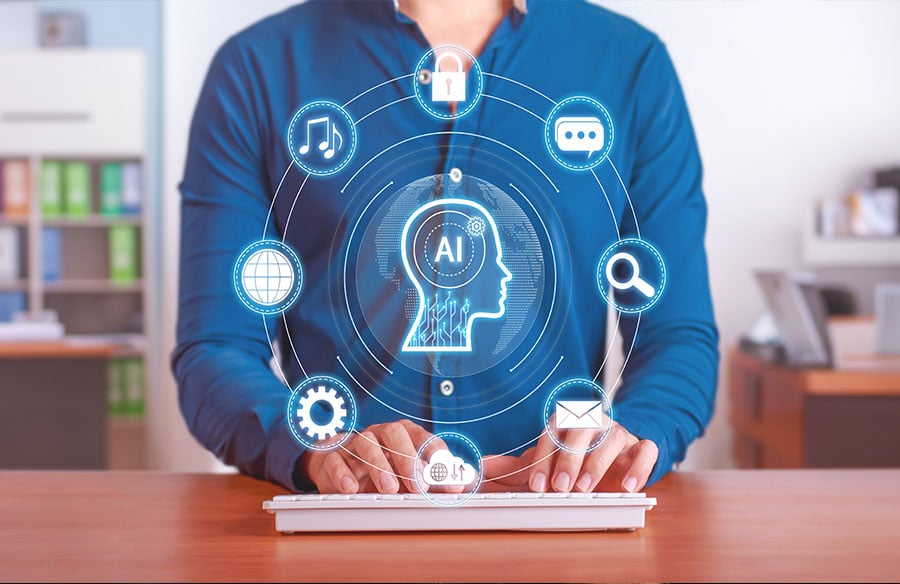
For marketers today,staying relevant requires more than just keeping up—it requires staying ahead. For years, marketers have been on a quest to create content that not only resonates with their audience but also performs across an ever-growing list of platforms: websites, blogs, newsletters, social media, and more. Now, with the emergence of AI-powered tools, that uphill battle is starting to look a lot more manageable.
Artificial intelligence is revolutionizing the way marketers approach content creation and distribution. It’s not just about saving time—it’s about creating smarter, more adaptive strategies that truly meet audiences where they are. Whether it’s crafting compelling headlines, personalizing email campaigns, or generating social media copy that sounds like it was written by a human, AI is stepping into the marketer’s toolbox in a big way.
Repurposing Content Like a Pro
One of the most impressive shifts AI has introduced is the ability to repurpose your content with AI across multiple platforms with minimal effort. Think about it: A single blog post can now be transformed into a week’s worth of LinkedIn posts, a punchy email newsletter, a tweet thread, and even a YouTube video script—with just a few clicks.
Let’s take a real-world scenario. Imagine a content marketer has just written a 1,000-word blog post about the latest trends in eco-friendly fashion. In the past, they’d have to manually sift through the article, pull out key quotes, rewrite them for different formats, and hope they could get it all done before the next post was due. With AI, that same marketer can feed the article into an AI tool, and receive optimized versions for Instagram captions, LinkedIn updates, and more. The AI doesn’t just copy-paste—it adjusts the tone, shortens or lengthens the text, and sometimes even adds emojis or hashtags based on the platform’s conventions.
That kind of adaptability is invaluable. Every platform has its own language, and AI is becoming remarkably fluent in all of them. It knows that a tweet needs to be snappy and attention-grabbing, while a LinkedIn post might benefit from a more professional, thought-leadership tone. It understands that Instagram content should lean into visual storytelling, and that YouTube descriptions benefit from SEO-rich keywords. Instead of juggling a dozen content calendars and rewriting the same message repeatedly, marketers can now streamline the process and focus on the bigger picture: strategy, storytelling, and connecting with their audience.
Smarter, Not Harder: How AI Enhances Strategy
But AI isn’t just a content-repackaging machine. It’s also helping marketers figure out what to say, when to say it, and who to say it to. Predictive analytics tools can help determine the best time to post based on audience activity, while AI-driven personalization engines can tailor email subject lines or website headlines for different segments of users. Chatbots powered by AI can even engage with users in real time, answering questions, guiding them through purchase decisions, or recommending content based on previous behavior.
This kind of intelligent automation is freeing marketers from the constant grind of content production and allowing them to focus on creativity and strategy—things that AI can enhance, but not replace. That’s where the human touch still matters most. AI can suggest what might work, but marketers still bring the intuition and emotional intelligence that make campaigns truly resonate.
The Future of Marketing Is Human + Machine
Of course, AI isn’t perfect. It can generate generic content if not guided properly, and it sometimes lacks the nuance needed for complex storytelling. But when used thoughtfully, as a partner rather than a replacement, it can elevate a marketing team’s capabilities dramatically.
In many ways, AI is doing for marketing what the printing press did for publishing: it’s democratizing the process, speeding it up, and making it more accessible. It’s no longer about who can work the longest hours—it’s about who can work the smartest. And in that sense, AI isn’t taking jobs away; it’s transforming them, shifting the focus from tedious tasks to the kind of creative, impactful work that inspired many marketers to get into the field in the first place.
We’re only scratching the surface of what AI can do in content marketing. But one thing’s for sure: the future is here, and it’s generating ideas at lightning speed.