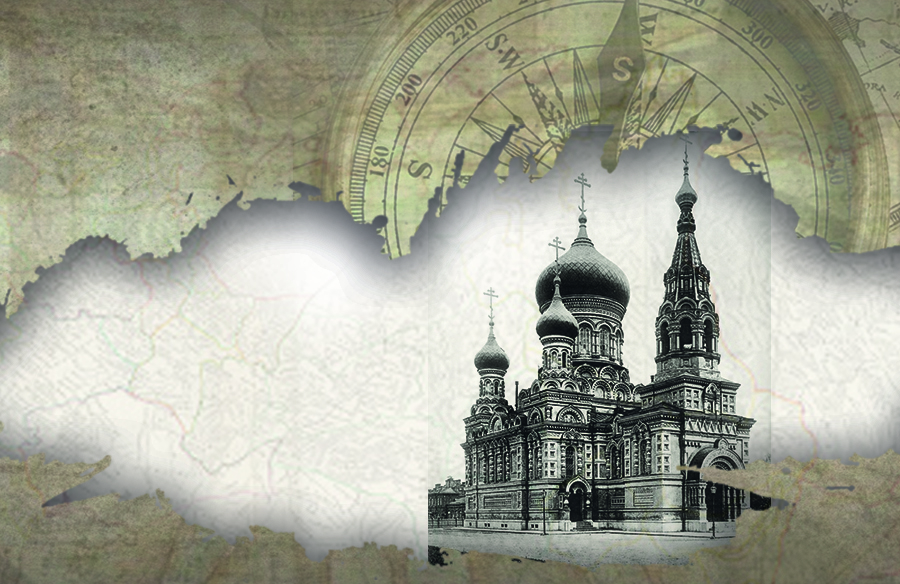
The Archangel Michael Church in Warsaw, Poland, is a tribute to a time of strife in the city’s history. Built-in 1892 and destroyed in 1923, its brief life was one of socio-political change, strife, and urban ideology shifts. The article examines the background of the church, its architectural importance, why it was destroyed, the status of the site today, conservation efforts, and the potential for revival in the future.
Historical Context and Construction
The Archangel Michael Church was constructed during the era of Russian rule in Warsaw. Poland was under partition, and Warsaw was under Russian rule at the time. The church was a component of a comprehensive attempt to Russify the area, catering to the Russian Orthodox population.
With its Neo-Byzantine design, the church boasted an onion dome, elaborate façade, and detailed interior work. The architectural design served as a combination of Russian and Orthodox Christian elements, contrasting with the city’s prevailing Catholic buildings (Davies, 2001). The church’s position in Warsaw’s Saski Garden also represented Russian control over the city.
Architectural Significance
The Archangel Michael Church was a significant representation of Neo-Byzantine architecture in Poland. The Russian government commissioned the building as part of their overall attempts to exert political and cultural influence over Warsaw. The design of the church was dominated by Eastern Orthodox traditions, with elaborate mosaics, arched windows, and detailed frescoes. The application of polychrome decorations and extensive gold leaf ornamentation within the church was a characteristic of Russian ecclesiastical architecture (Filipowicz, 2010).
Moreover, the interior design of the church conformed to the common cross-in-square plan typical of Russian Orthodox churches. The central dome was upheld by four giant pillars, resulting in a large interior space intended to inspire divine majesty. The exterior of the church also had richly ornamented pilasters and cornices, topped by the bell tower as a dominant feature of the Warsaw landscape in the late 19th and early 20th centuries (Tomaszewski, 2018).
Reasons for Demolition
After Poland regained its independence in 1918, the country moved to reclaim its cultural heritage. The church, linked to Russian domination, emerged as a problematic building. Its demolition was instructed by the government in 1923 as part of a comprehensive program to take down Russian-construction Orthodox churches (Ciborowski, 1969). The act was not a mere architectural one but a political one, affirming Poland’s efforts to reinstate its national identity.
The choice to knock down the church was also guided by the greater urban redevelopment of Warsaw’s central district. Officially, attempts were made to revive the visual and cultural profile of the Saxon Garden under Russian domination (Majewski, 2013). Eliminating the church facilitated the reunification of space into Polish buildings (Majewski, 2013). The demolition process was received with mixed feelings—while some regarded it as a step towards national reconstruction, others were saddened by the destruction of an important historical building.
Political and Social Implications
The demolition of the Church of the Archangel Michael was not in itself unique. In the interwar period, Poland systematically dismantled some Russian Orthodox churches built under the partition regime. The destruction of the church was emblematic of Poland’s overall attempts to eradicate Russian presence and reclaim its historic and cultural past (Kłoczowski, 2000).
Meanwhile, the action also demonstrated the multifaceted nature of religion and nationalism in Poland. The Catholic Church was central to Polish identity, and the existence of Orthodox churches—especially those under Russian domination—was perceived as a legacy of foreign domination. The destruction was both an act of political resistance and an exercise in cultural reclamation of the urban space of Warsaw (Tarkowski, 2020).
Current Condition of the Site
Nowadays, the area where the Church of the Archangel Michael used to be is included in the Saxon Garden (Ogród Saski). The park continues to be among the most frequented public spaces in Warsaw, with little or no trace of the church. The area has been refurbished, and there are few signs or reminders of the church (Majewski, 2013).
Though there are no remaining physical structures of the church, historic records, images, and city maps remain significant sources for researchers and conservationists. Various archives contain remnants of ornamentations retrieved from the church before its destruction, giving a glimpse into its forgotten magnificence (Filipowicz, 2010).
Preservation and Funding Efforts
Although the church was demolished, discussions on historical preservation often highlight the importance of remembering Warsaw’s complex past. Some historians and preservationists advocate for a commemorative plaque or digital reconstruction to acknowledge the site’s history (Kłoczowski, 2000). However, there is no significant funding dedicated to restoring or commemorating the church as of now.
Efforts to digitally reconstruct the church using archival photographs and architectural drawings have gained traction in recent years. Scholars and heritage professionals are increasingly relying on digital modelling techniques to recreate lost structures, offering new ways to engage with Warsaw’s architectural history (Tomaszewski, 2018).
Possibilities for Revival
Although the full reconstruction of the Church of the Archangel Michael is not likely because of its problematic history, some researchers propose incorporating its history into the cultural and architectural stories of Warsaw. Digital reconstructions, museum displays, and augmented reality encounters can be used as tools to inform the public about the historical importance of the church (Tarkowski, 2020).
Besides, debates on the general topic of lost architecture in Warsaw have incited interest in saving historical memory through modern-day urban interventions. Some advocate the placement of informational panels in the Saxon Garden, explaining the history and architecture of the church. Others support the incorporation of the church in virtual heritage programs, enabling viewers to tour a reconstructed version using digital media (Majewski, 2013).
The Archangel Michael Church in Warsaw still exists as a lost fragment of the city’s building past, representing an era of foreign domination and national reclaiming. Though physical traces are gone, the history of the church still raises questions on memory, heritage, and city transformation. Coming attempts may lie in educational campaigns instead of physical rebuilding to ensure this forgotten monument is recalled in the larger narrative of Warsaw’s history.
References:
Ciborowski, A. (1969). Warsaw: A City Destroyed and Rebuilt. Polish Scientific Publishers.
Davies, N. (2001). Heart of Europe: The Past in Poland’s Present. Oxford University Press.
Filipowicz, J. (2010). Byzantine Influence on Russian Ecclesiastical Architecture. University of Warsaw Press.
Kłoczowski, J. (2000). A History of Polish Christianity. Cambridge University Press.
Majewski, J. (2013). The Architecture of Warsaw. Warsaw University Press.
Tarkowski, P. (2020). Virtual Heritage and the Digital Reconstruction of Lost Landmarks. European Journal of Digital Culture.
Tomaszewski, M. (2018). Lost Churches of Poland: Architectural Memory and Digital Reconstruction. Kraków Heritage Studies.
Waldek, S., & Waldek, S. (2020, May 12). 10 of the Most Magnificent Buildings That No Longer Exist – Galerie. Galerie – Galerie Magazine. https://galeriemagazine.com/10-of-the-most-magnificent-buildings-that-no-longer-exist/