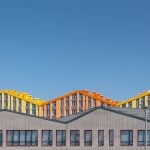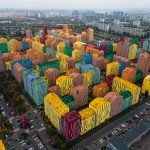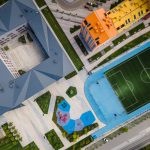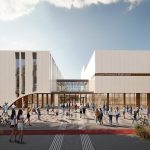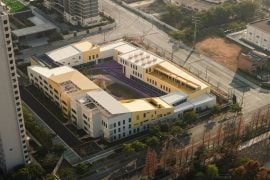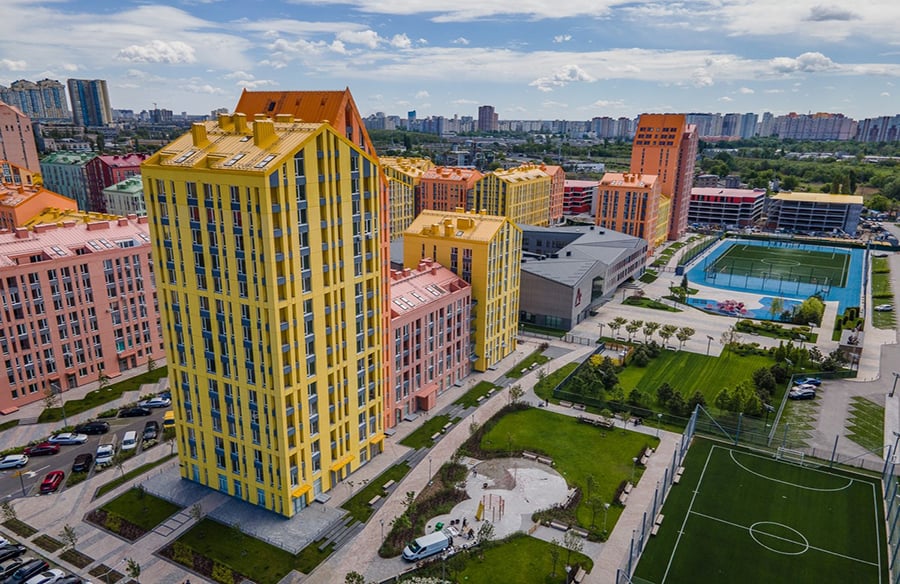
Comfort Town is Archimatika’s first completed multi-block development in Kyiv. Its size and comprehensive infrastructure set it apart from various earlier gated communities and multi-building developments. Besides mid-rise residential blocks, the complex includes a kindergarten and elementary, middle, and high schools. Comfort Town is located in Kyiv’s Darnytsia Sotsmisto (socialist town) neighborhood, which is surrounded by industrial areas and first-generation Soviet serial developments built to house the workers of Darnytsia’s factories.
Project Name: Comfort Town, Kyiv
Studio Name: Archimatika
Location: Kyiv, Reheneratorna St.
Implementation: 2009–2019
Today, Darnytsia is essentially a dormitory district. As in other residential dormitory neighborhoods, in the years preceding the full-scale war in Darnytsia, housing construction was rising, and the population was growing. Still, there was no accompanying increase in the number of primary- and secondary-education facilities. This makes the inclusion of education facilities in the Comfort Town complex essential to its desirability. In addition to schools, Comfort Town, like gated worldwide communities, has private parks and sports and recreational facilities for residents only. Unlike other gated communities in Ukraine, Comfort Town has cafés, restaurants, and other businesses that are primarily accessible to residents. Some commercial premises in the complex, however, are accessible to non-residents as well. Although this business model does not rely on the foot traffic typically generated by cafés or restaurants, it appears to function successfully in Ukrainian metropolitan centers.
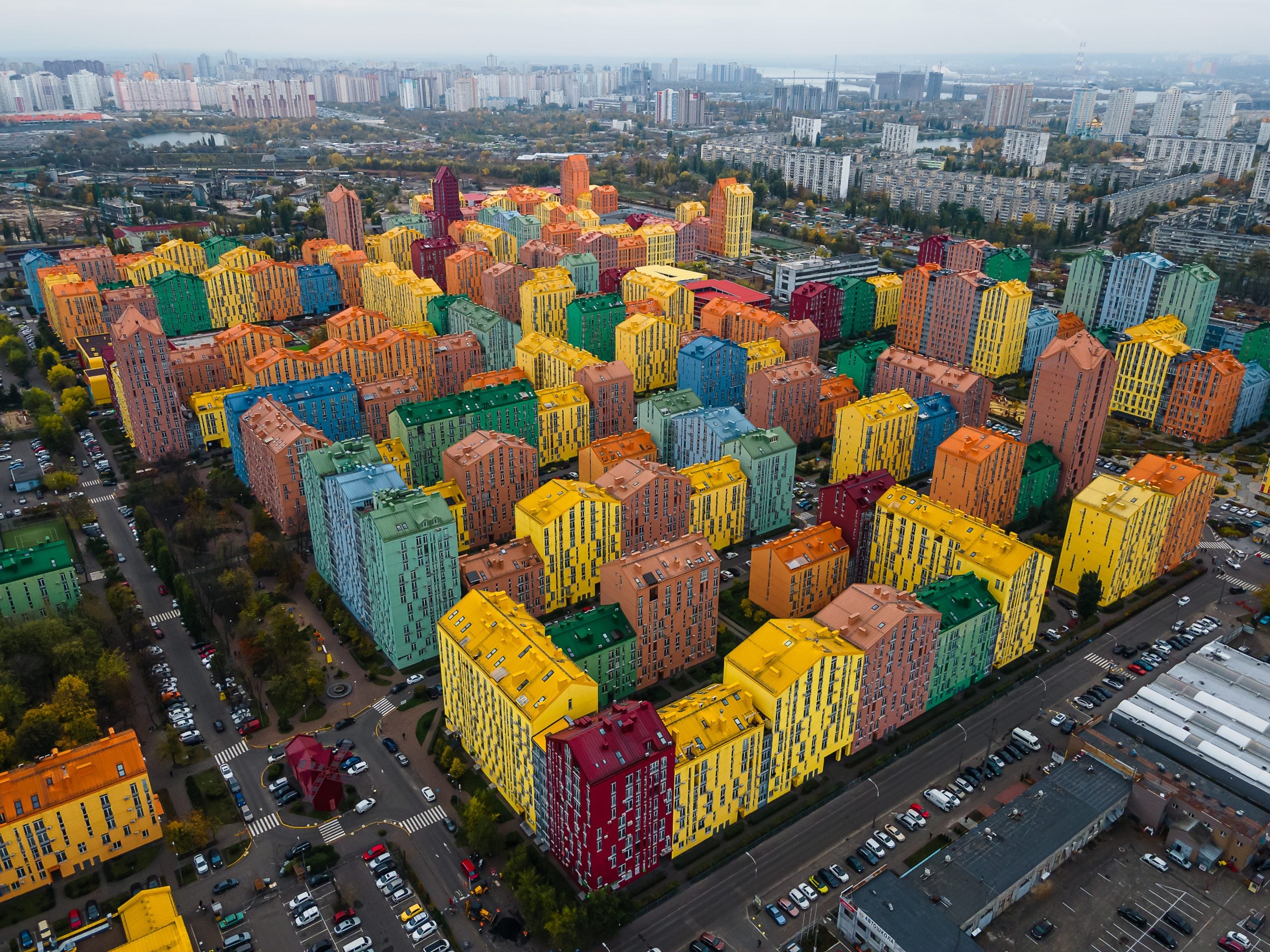
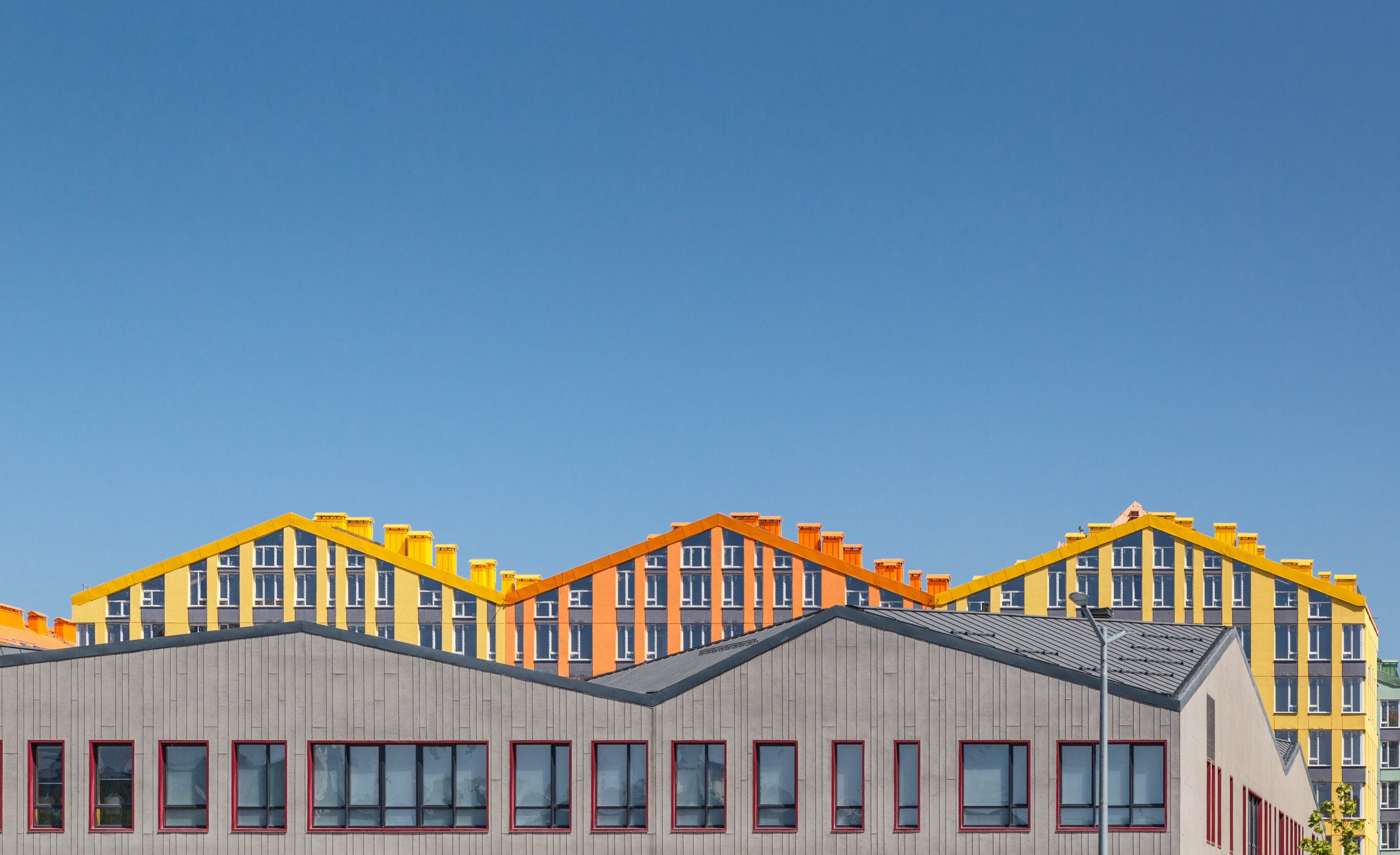
The façades and roofs of this multi-block development are entirely colored in various bright colors. This somewhat straightforward yet visually impactful architectural solution nevertheless works as an effective counterpoint to the surrounding grey, Soviet-built city fabric. The exterior walls are assembled from aircrete blocks, and the load-bearing structures are cast-in-place concrete. Buildings in Comfort Town have pitched roofs, vary in height, and form blocks with internal courtyards similar in proportions to the apartment buildings and courtyards in historical parts of Kyiv. These planning and formal solutions produce a relatable human scale, a familiar architectural character, and a street-like circulation within the gated community, even though Comfort Town buildings are significantly taller than historical buildings elsewhere in the city. Comfort Town has buildings that neither engage with the surrounding streets nor attempt to attract pedestrian traffic on the edges of the complex. Instead of generous storefronts, the lower floors in Comfort Town are predominantly residential and inaccessible from the outside. For pedestrians, these previously non-residential streets had long been a non-place, a distance that needed to be covered without being enjoyed. Unfortunately, the designers of Comfort Town did not completely fix this problem. Instead, they placed parking spaces between the buildings and the narrow pavements, creating an additional buffer between pedestrians and the complex’s residential buildings.
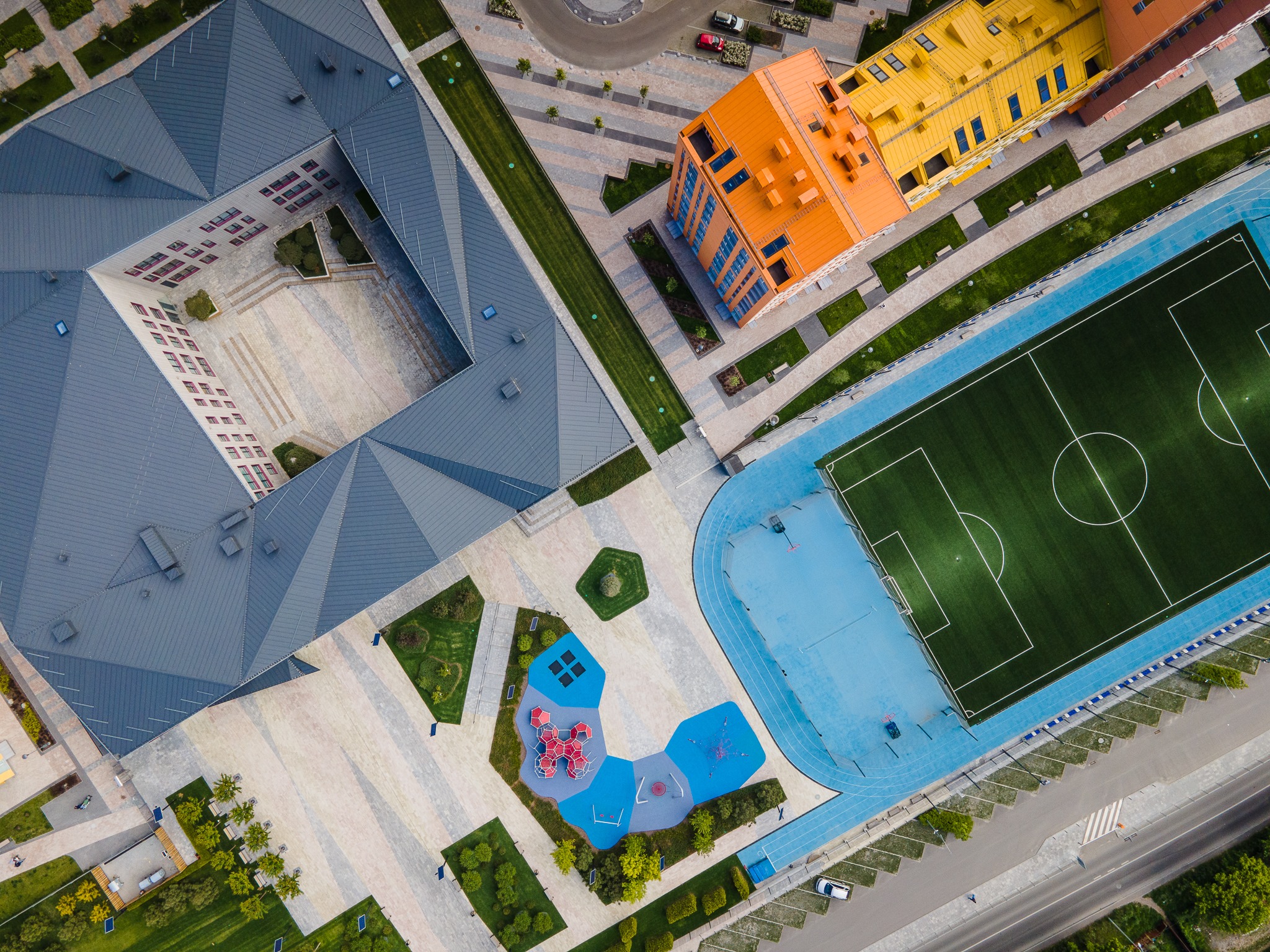
In some instances, parking garages are located on the outskirts of the complex, flanking the same pedestrian-unfriendly streets. However, it would be unfair to say that Comfort Town has lowered the quality of these streets; all the surrounding streets have long served predominantly as driveways, with narrow single-story parking garages on both sides and the presence of a residential complex with a vibrant façade and a property line is still a minor improvement of the street experience. Currently, Comfort Town is a city within a city. However, its urban form does not prohibit it from opening its gates to the rest of its neighborhood in the future, even if Comfort Town itself does not actively contribute to the neighborhood’s improvement or transformation. Unfortunately, the war and the very real fear of Russian ‘spotters’ locating targets for missile and drone attacks make this change unlikely in the near future.