World heritage sites are locations granted legal protection for their cultural and historical significance by an international treaty overseen by UNESCO. The evaluation of the locations states that “cultural and natural heritage around the world is considered to be of outstanding value to humanity.”.
Two significant examples of Armenian Culture and Architecture are the monasteries of Haghpat and Sanahin, situated in the Lori region of Armenia. These monasteries were constructed between the tenth and thirteenth centuries and were significant places of worship and learning. Because of their distinctive architectural design and historical significance, they were named UNESCO World Heritage Sites in 1996. They are now well-preserved monuments that honor Armenia’s rich spiritual and cultural history.
Historical Background
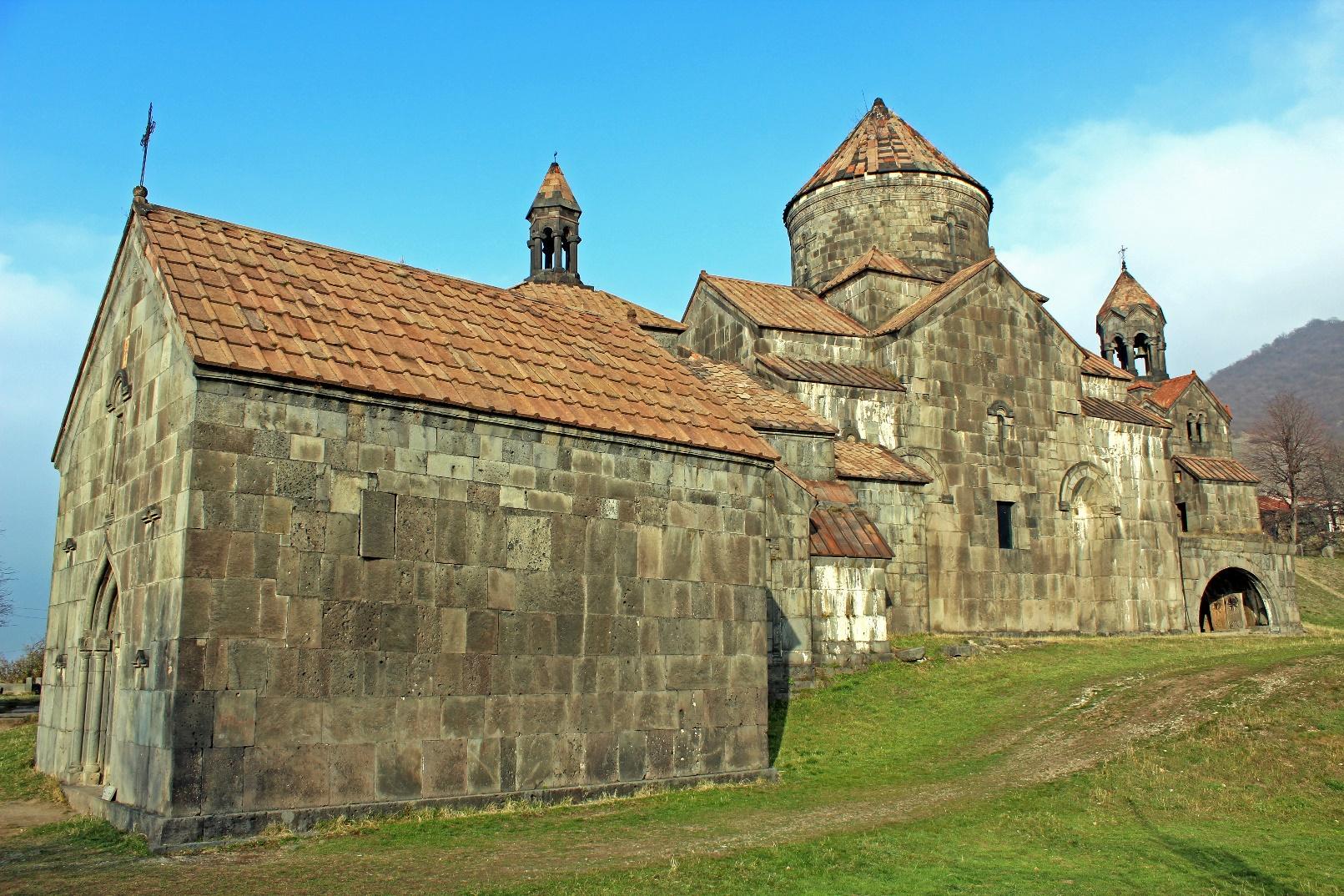
Haghpat
The Bagratid monarch Ashot III’s wife, Queen Khosrovanuysh, founded the monastery of Haghpat around 976. King Smbat finished the Cathedral of Surb Nishan which is the complex’s greatest cathedral, in 991. It was most likely started in 1976. With its central dome supported by the four towering pillars of the lateral walls, it is an iconic example of Armenian architecture from the eleventh century.
The tiny domed Church of Sourb Grigor, which dates back to 1005, is one of the many structures that consist of the complex. The church was expanded with two side chapels: the smaller one was the “Hamazasp House” chapel which was constructed in 1257, while the bigger one was constructed around the start of the 13th century. There were additional additions from the 13th century which were the capel of Sourb Astvatsatsin, the scriptorium, and a sizable refectory beyond the monastery grounds.
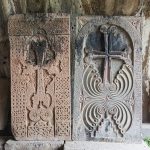
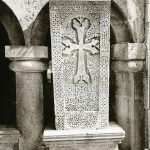
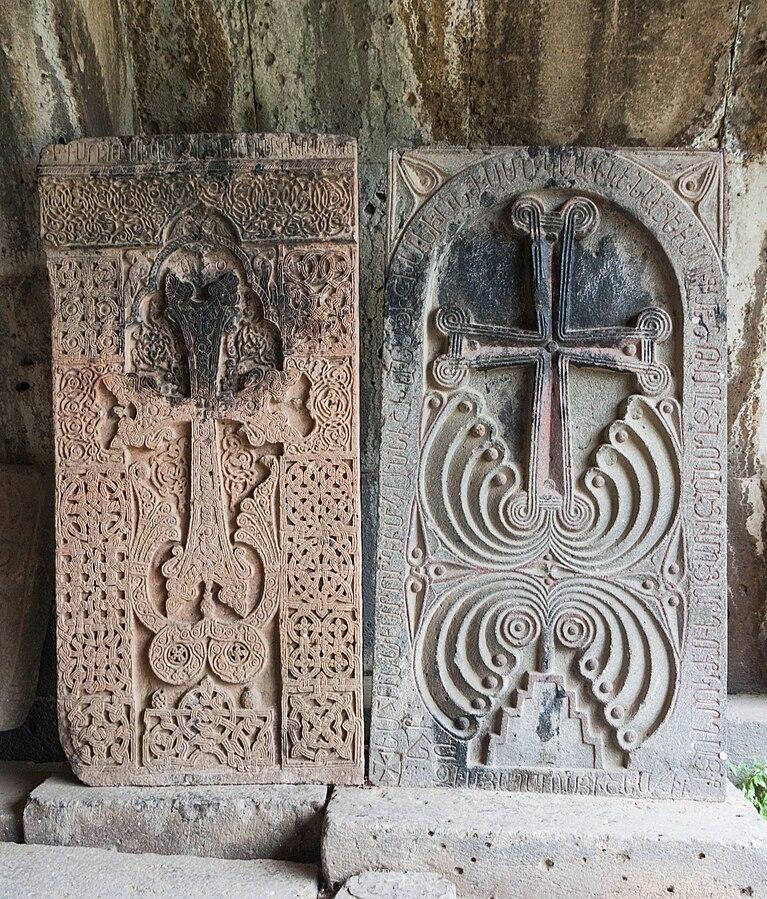
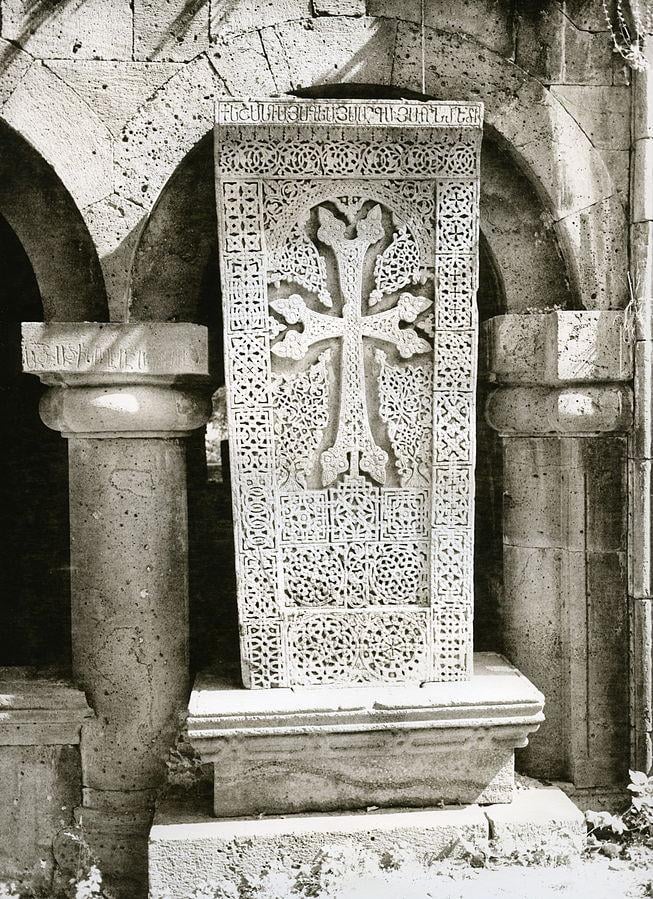
There are several magnificent khachkars on the monastery of Haghpat’s grounds from the eleventh and thirteenth centuries. A khachkar is a memorial stele that is carved with a cross on it. It has other designs like rosettes, interlaces, and botanicals. It is a characteristic of Christian Armenian Art.
This monastery was partially destroyed around 1130 and was then rebuilt after fifty years. Throughout its many years of existence, it has been subjected to many things like the earthquakes in 1988 and the military attacks. It is safe to say that a large part of this complex has been retained.
Sanahin
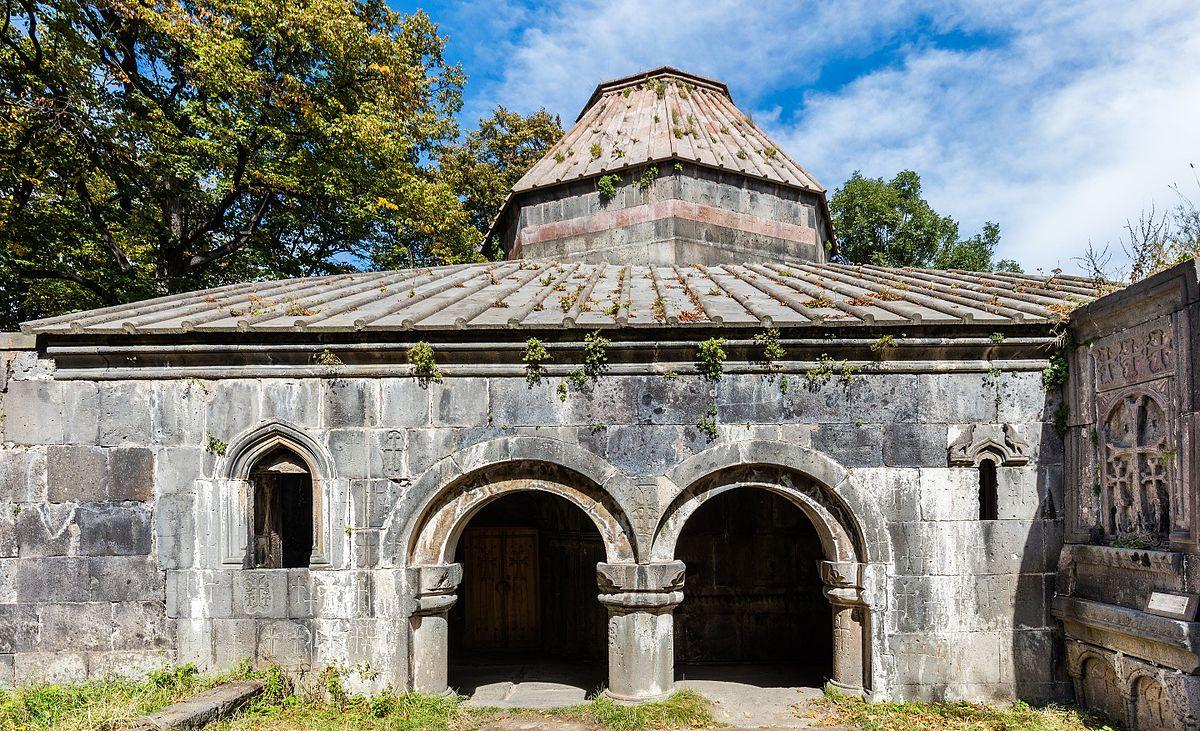
Sanahin’s name translates to “this one is older than that one” in Armenian, likely implying that it is an older monastery Haghpat Monastery which is nearby, which is roughly three kilometers to the east, and is also a UNESCO World Heritage Site.
The Monastery of Sanahin was founded in the 10th century during the rule of the Bagratid dynasty and it served as an important spiritual and educational center in medieval Armenia. It was built on a plateau above the Debed River and played a key role in manuscript writing, theology, and education. The monastery complex expanded over the centuries, with churches, a library, and a scriptorium and a bell tower.
The monastery of Sanahin’s principal buildings went under very extensive renovations under the direction of Archbishop Sargis Arghutyan in the 17th century, after it was being damaged by earthquakes. The monastery’s tribal head constructed a single spring next to the northern wall in 1831. He had also decoded the inscriptions and fixed the buildings. The activity of the monastery stopped at the beginning of the 20th century.
As a historical and cultural landmark, Sanahin Monastery was protected by the state during Soviet domination, and its buildings were reinforced and renovated.
Architectural Significance
Haghpat
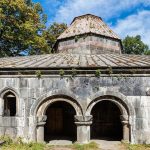
Monastery of Haghpat is encircled by a towered rampart and includes a single narthex with two corridor sepulchers, a refectory, a scriptorium, the Chapel of Hamazasp, a belfry, multiple chapel-tombs, and numerous cross-stones which are khachkars.
It is the largest church in the complex and it dates back to about 976. With its central dome which is supported by the four towering pillars of the lateral walls, it is an iconic example of Armenian architecture from the 11th century. There are triangular niches scattered around its outside walls.
An outstanding illustration of Armenian medieval architecture is the narthex. The narthex was erected in the second decade of the 13th century and has an interesting interior composition. It is adjacent to the church to the west.
The building’s interior is illuminated by the roof vault. The roof vault is carried by the crossing arches held up by two columns.
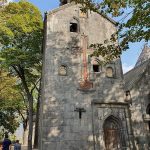
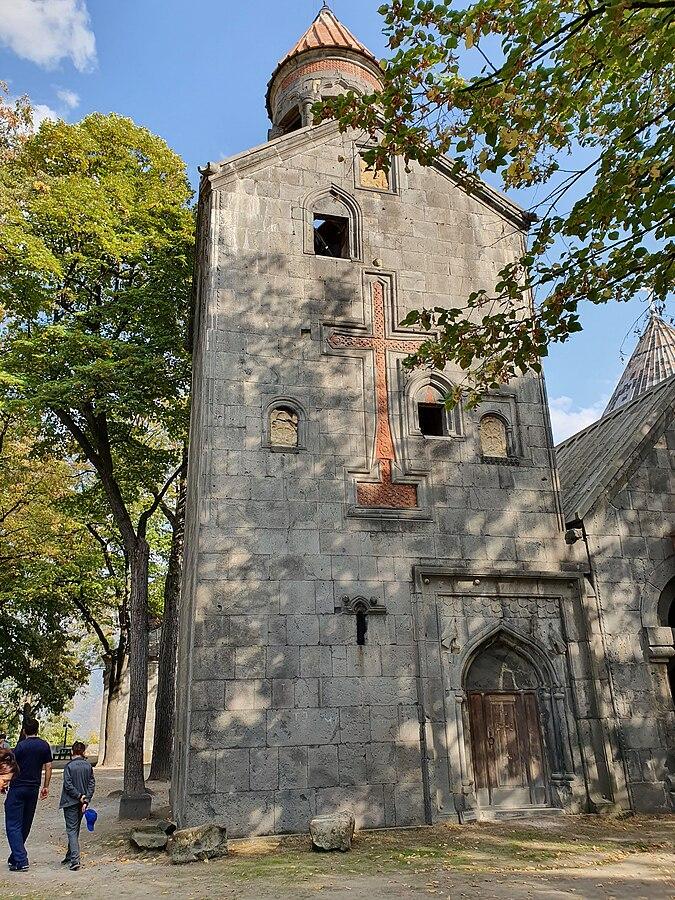
A three-story free-standing bell tower was built in 1245. It was one of the first of its kind, and this building included volumetric-spatial concepts with an octahedral second floor which was supported by a cross-shaped ground floor layout.
Sanahin
In addition to the oldest building, the church of St. Astvatsatsin (Holy Mother of God), St. Amenaprkich (All Savior), and St. Grigor Chapel, the Monastery of Sanahin also has narthexes, a fore-church, a scriptorium, a belfry, and an academy.
St. Astvatsatsin Church was constructed between AD 928 and 944. It is a prime example of Armenian medieval classical architecture with its centrally dome-shaped, cross-shape. The architectural style can be seen reaching perfection in St. Amenaprkich Church, which is the complex’s major structure.
The center nucleus and the balance between its round dome and square base are the main focal points of the interior and there are four two-story sacristies encircling the main apse.
The narthex, which is the earliest known example of a cross-in-square building, was constructed in AD 1181 and leads to the church. Its roof is supported by four columns and the narthex is given very unique expressions by the decoration of the column capitals with symbolic sculptures of animal heads.
Monastery of Sanahin features irregular asymmetry, with all of the buildings blending into an organic whole that is built into the surrounding landscape.
There are about khachkars that have been preserved in the area around Sanahin monastery. The most well-known of these is Grigor Tuteordi’s khachkar which was built in 1215.
Conservation Efforts & Current Status
Known as a “major center of learning in the Middle Ages and a masterpiece of religious architecture,” Haghpat Monastery and Sanahin Monastery were included in the UNESCO World Heritage List in 1996.
The following factors led to the monasteries at Haghpat and Sanahin being selected as UNESCO World Heritage Sites:
- The two monastic complexes are the pinnacle of Armenian religious architecture, which evolved from a fusion of Byzantine church architecture and the old Caucasian vernacular architecture to create its own distinctive, unique style.
- They are distinctive because they combine aspects of the typical vernacular building types of this area with Byzantine church architecture.
The religious architecture that emerged in Armenia between the tenth and thirteenth centuries is shown by the monasteries of Sanahin and Haghpat.
Google Arts & Culture. (2024). Monasteries of Haghpat and Sanahin, Armenia – Google Arts & Culture. [online] Available at: https://artsandculture.google.com/story/monasteries-of-haghpat-and-sanahin-armenia-unesco/2wUBYWjrc0KSIQ?hl=en [Accessed 2 Mar. 2025].
Wikipedia Contributors (2025). Haghpat Monastery. Wikipedia.
Wikipedia Contributors (2024). Sanahin Monastery. Wikipedia.