From the golden rays of the sunlight that greet us in the morning to the serene glow of the moon at night, architecturally designed spaces have a great impact on the mood and well-being of an individual. The orientation and layout of the house, placement of the window, the colour palette of the room, and many more architectural features and elements are responsible for setting the day’s tone. The interplay of light, space, and material plays an unseen part in guiding how our productivity is set and even our health. The surrounding features play a key role in orchestrating one person’s mood. Let us delve into the subtle yet powerful ways design shapes lives.
The Morning Ray- With the influence of Ergonomic design
Have you ever noticed how waking up to a muted dim light feels to a bright-energized ambiance? As the blankets are pushed off from the bed, that first blink of the day which sees the bright sunlight with the proper window placement, an energizing colour palette would keep the mood intact. Moving on to the next activity, a freshened well-organised bathroom with strategic placement of the fixtures would help in the ease of the activity. Tactical minor placements, countertop heights, and shower positioning are where the ergonomics come into play. Similarly, a perfectly aligned work triangle in the kitchen would make it efficient to make the first meal of the day with full enthusiasm

Workspace-The Productive den
After the daily ritual at home here comes the main part of the day when you travel and reach the workplace. As most of the hours in the day are spent over here it has a major impact on our minds. This is the place where the ideation takes place, the desk place, the ergonomic chair, window placement, lighting, and ventilation-thoughtfully positioned spaces improve productivity, mental health, and overall well-being. Spaces that balance functionality with comfort, ensuring that every element supports the daily task.
The curvature of the chair which supports the spine, the height of the desk space, and the lighting of the room help to take over the task without any flare, and ventilation of the space to escape from claustrophobia, migraine, and other mental health-related issues.
Ventilation- The Unseen Comfort
Architecture and design spaces through their formula have a huge influence on the natural flow of air into liveable spaces. A quiet river or lush screen scenery, cross-ventilation through strategic openings- doesn’t it look like a deal breaker?
A space without seamless flow of air leads to suffocation and claustrophobia. A space that breaths with you that lets the outside world in-bridges the gap and acts as the key factor-ventilation is the transition element. This X-factor sharpens the mind, lifts the spirit, and keeps you intact.

Design for Well-being
Beyond private and interior spaces architecture’s influence is widespread in the public unbuilt and semi-built spaces. Shaded walkways, lush green landscape adjacent to the footpaths, and seaters along the pathways encourage city outdoor breaks and promote better well-being and mental health of the users to keep up with their day. Adding to this a well-planned and strategized transit hub would encourage stress-free journeys for working employees to reach their desired destination with ease. The simple inclusion of natural elements in every designed space would light up the space with optimism and energy.

The Obscured Effect- Through Psychological means
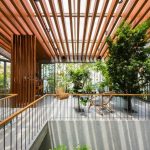
Apart from the physical comfort, architectural elements impact the physiological state of the human brain. Spaces with high ceilings give a sense of freedom likewise the colour palette of a space deeply influences the mood of a particular person, and materials and textures play a role in emotional and sensory responses. For example, wood-textured surfaces give a sense while glass gives a feeling of being fragile and open.

The Night-calm Before the Chaos
As the day winds down, well-designed spaces welcome us to take a rest as we come from a long stress facing multiple events confronting and dealing with it.
Soft lighting, muted colours, and comfortable furniture create a sense of belonging. Dimmable lights mimic the setting of the sun, easing into rest. Soundproofing keeps away all the distractions, wrapping in silence, with all these features and elements they keep it safe and nurturing.

Where it all comes together
Architecture is more than just bricks, glass, and steel- it is a silent storyteller, a quiet companion that comes along in shaping that rarely is noticed. While we rarely stop to analyse the impact of architecture and its designed spaces every day, it is omnipresent. The best designs aren’t always aligned with the nametag of aesthetics; they come with comfort, efficiency, and well-being. The real beauty of this phenomenon is when it unfolds. By paying attention to how spaces influence routines, it can take a front seat and get acknowledged for its unseen choreography in the so-called life dance.
Citation:
Ergonomic design enhances daily routines by ensuring comfort and efficiency in home and workspaces (Lechner, 2021)
Biophilic design principles suggest that integrating natural elements into urban settings promotes overall well-being (Kellert et al., 2008)