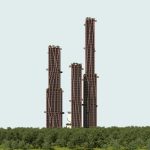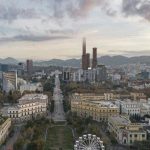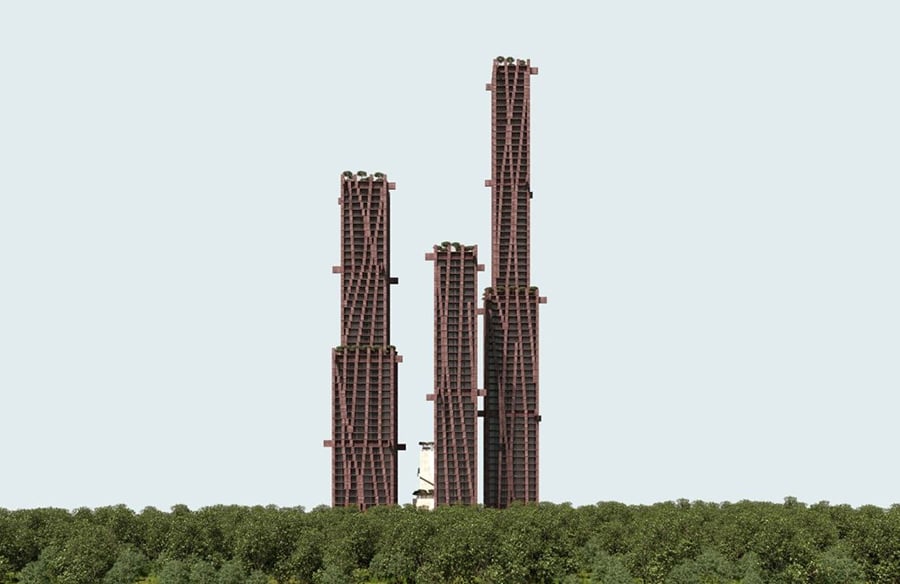
Swiss architect Valerio Olgiati, renowned for his avant-garde architectural philosophy and minimalist aesthetic, has unveiled his latest project—Rruga Adem Jashari, a striking mixed-use development in Tirana, Albania. Known for pushing the boundaries of conventional design, Olgiati’s work embodies a unique blend of raw materiality, sculptural form, and spatial experimentation. With this project, he brings his distinctive architectural language to one of Europe’s fastest-evolving urban centres, reshaping the skyline of Albania’s capital city.
Project Overview
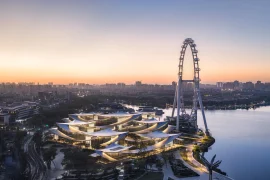
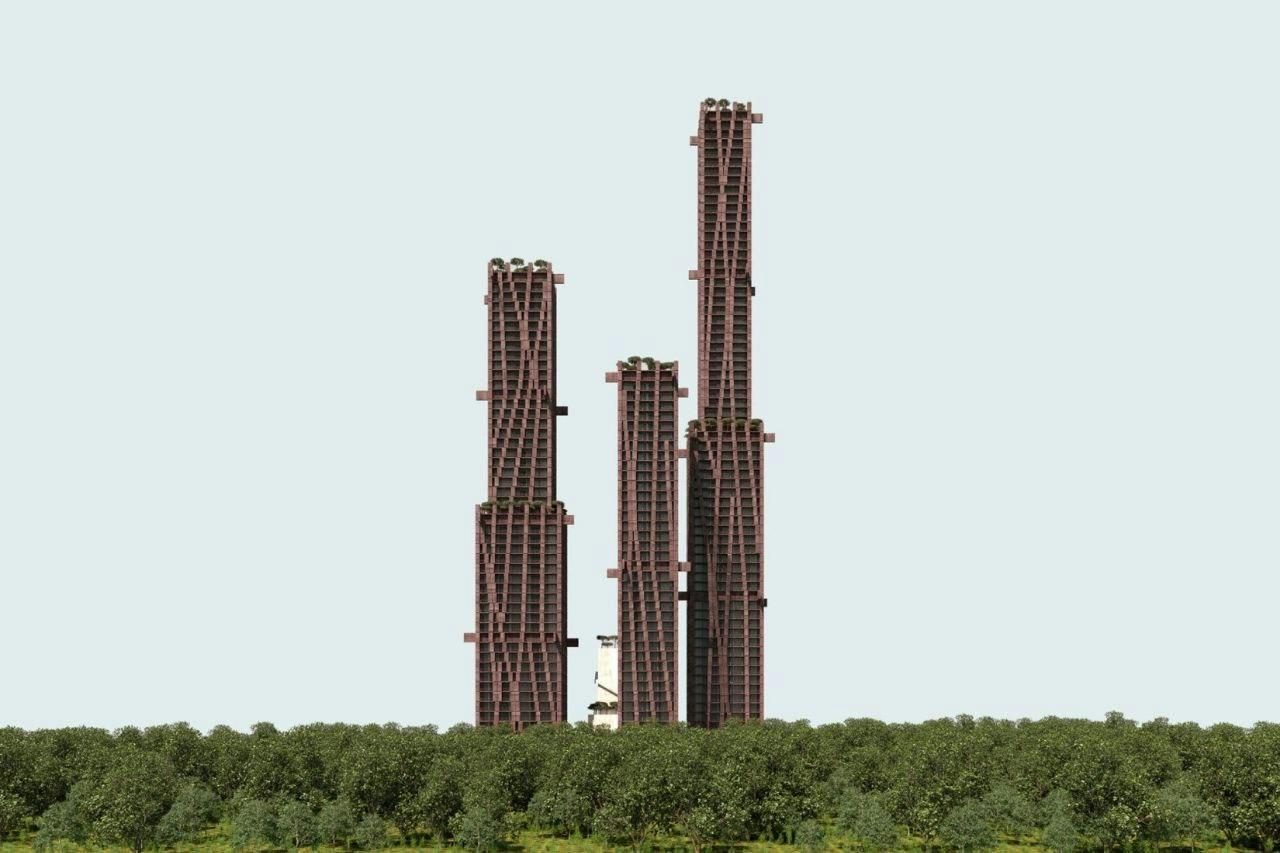
Located along the historic Rruga Adem Jashari, this new development is designed as a mixed-use complex, seamlessly integrating residential apartments, commercial spaces, and public areas. The project reflects Tirana’s dynamic transformation, as the city shifts from its post-communist past to embrace a contemporary urban identity. This development is not just about constructing a building; it’s about creating a space that fosters community interaction while standing as an architectural landmark.
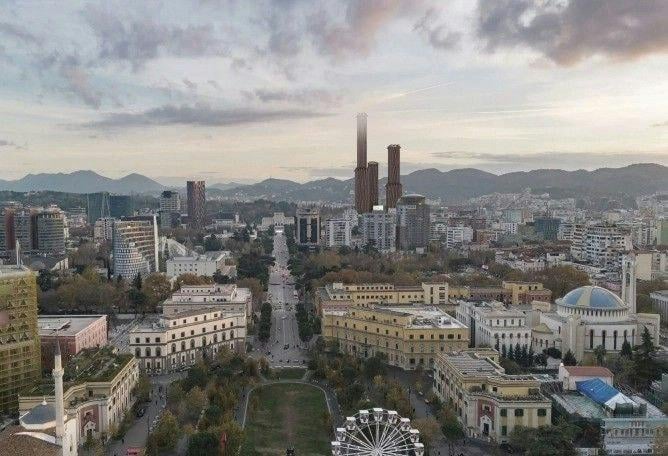
Olgiati’s design responds to both the cultural context and the practical needs of Tirana’s growing population. The project’s location in a bustling part of the city makes it a hub of activity, with easy access to key areas, thus enhancing its role in Tirana’s urban ecosystem.
Design Philosophy
At the heart of Rruga Adem Jashari is Valerio Olgiati’s belief in architecture as an autonomous art form. Unlike many architects who focus on blending structures into their environments, Olgiati designs buildings that stand out while still resonating with their surroundings. His minimalist approach avoids unnecessary ornamentation, focusing instead on bold forms, spatial clarity, and raw materials.
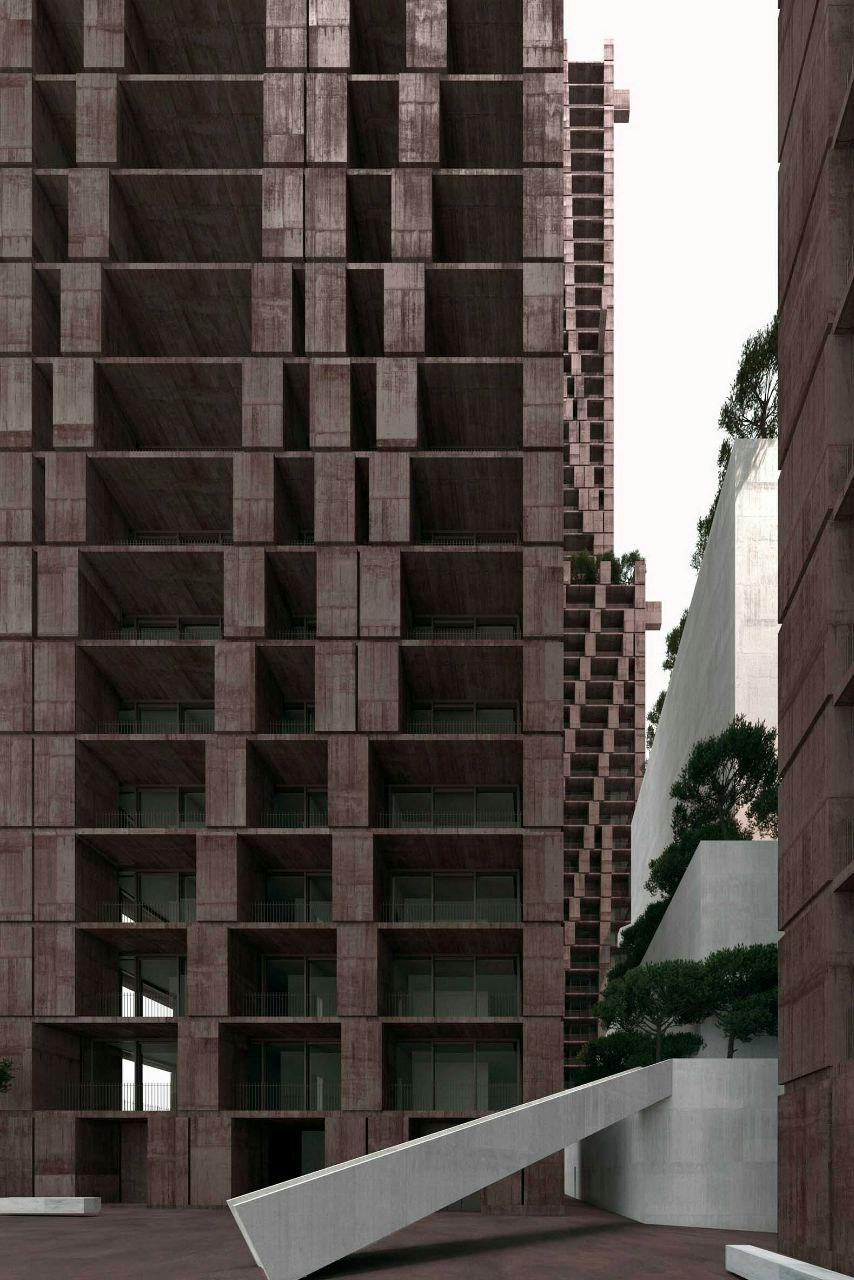
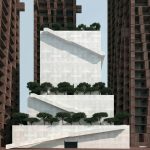
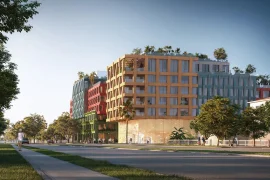
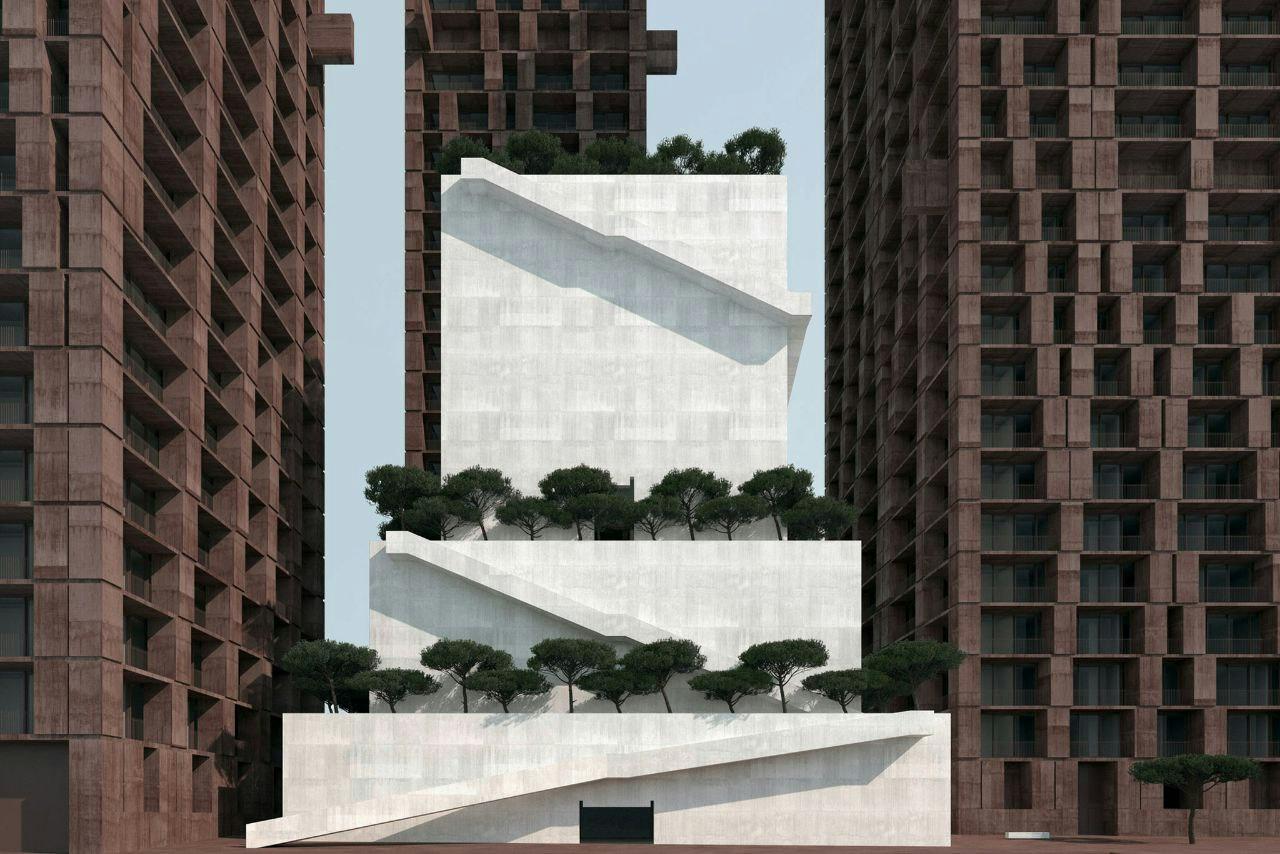
The façade of the building is a testament to this philosophy. It features a rhythmic arrangement of windows and voids that create a dynamic visual effect, making the structure appear both monumental and fluid. The use of exposed concrete gives the building a rugged, timeless quality, while the interplay of light and shadow across the façade adds depth and character.
Olgiati’s commitment to simplicity is not about creating something basic but about reducing a design to its purest form. This allows the architecture to speak for itself, evoking emotions through space, light, and texture rather than decorative details.
Key Features of Rruga Adem Jashari
1.Mixed-Use Functionality:
The development is thoughtfully designed to accommodate various functions. The ground floor is dedicated to commercial spaces, including shops, cafes, and public plazas that invite social interaction. Above, residential units offer modern living spaces with large windows that frame views of the city and the surrounding landscape. This combination of residential and commercial areas creates a vibrant, self-sustaining community.
2.Innovative Spatial Planning:
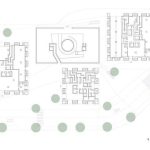
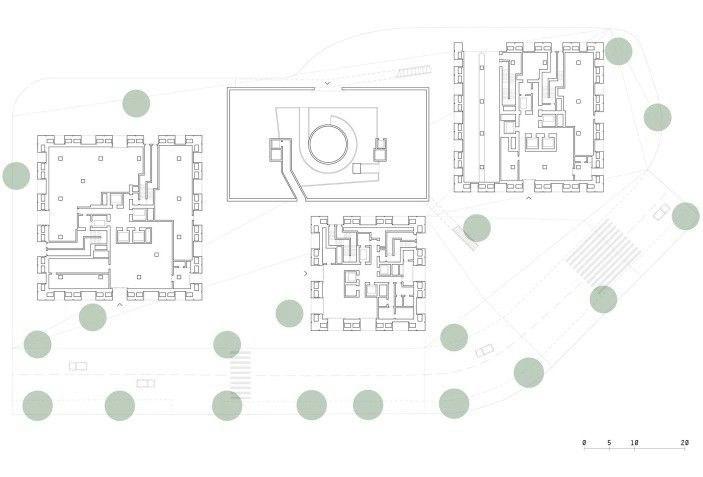
Olgiati’s design goes beyond aesthetics to focus on how people experience space. The building features open-plan layouts, maximising natural light and ventilation. The seamless transition between private and public spaces encourages a sense of openness while maintaining privacy where needed. Communal areas, such as terraces and courtyards, promote a sense of community among residents.
3.Sustainability and Environmental Integration:
While Olgiati’s designs are often minimalist, sustainability is subtly embedded in the project. The building orientation maximises natural light and reduces energy consumption. The use of thermal mass from exposed concrete helps regulate indoor temperatures. Additionally, the inclusion of green spaces within the development helps improve air quality and provides residents with a connection to nature.
4. Materiality and Texture:
Olgiati’s material palette is deliberately simple yet impactful. The raw concrete façade is complemented by glass and steel elements, creating a contrast between rough and smooth textures. This material honesty is a hallmark of Olgiati’s work, where the beauty lies in the authenticity of the materials themselves.
Impact on Tirana’s Urban Landscape
Tirana is undergoing a significant transformation, with contemporary architecture playing a key role in redefining the city’s identity. Rruga Adem Jashari contributes to this urban evolution, standing as a symbol of modern Albania—a country balancing its rich history with rapid development.
Unlike many modern developments that prioritise flashy designs, Olgiati’s project is rooted in timelessness. It doesn’t seek to impress through excess but through thoughtful simplicity. This approach is particularly relevant in Tirana, where the architectural landscape is a mix of historical buildings, communist-era structures, and contemporary designs. Rruga Adem Jashari bridges these eras, offering a fresh yet respectful addition to the cityscape.
Valerio Olgiati’s Architectural Legacy
Valerio Olgiati’s work is celebrated for its intellectual rigor and sculptural quality. His notable projects, such as the Yellow House in Flims, the Pearling Site in Bahrain, and the Plantahof Auditorium in Switzerland, reflect his dedication to creating spaces that are both conceptually profound and visually striking.
What sets Olgiati apart is his refusal to follow trends. Instead, he focuses on creating architecture that transcends time and place. His designs are often described as ‘monolithic’—not just in their physical presence but in their conceptual strength. Rruga Adem Jashari continues this legacy, showcasing Olgiati’s ability to adapt his philosophy to different cultural and urban contexts.
Challenges and Inspirations
Designing a project in Tirana presented unique challenges and opportunities. The city’s complex history, from its Ottoman roots to its communist past and current phase of rapid urbanisation, provided a rich tapestry of influences. Olgiati approached this context with sensitivity, drawing inspiration from the city’s vibrant street life, diverse architectural heritage, and the resilience of its people.
The challenge was to create a building that not only fits into this dynamic environment but also elevates it. By focusing on form, function, and materiality, Olgiati has crafted a space that feels both rooted in its context and refreshingly contemporary.
Rruga Adem Jashari is more than just a building—it’s an architectural statement that reflects Tirana’s evolving identity and Valerio Olgiati’s unwavering commitment to design excellence. Through minimalist forms, innovative spatial planning, and sustainable practices, the project offers a blueprint for the future of urban development in Albania and beyond.
In a world where architecture often succumbs to fleeting trends, Olgiati’s work reminds us of the power of simplicity, authenticity, and timeless design. As Tirana continues to grow and change, projects like Rruga Adem Jashari will play a crucial role in shaping not just the city’s skyline but its cultural and social fabric as well.
Images:
Image 1_”Rruga Adem Jashari by Valerio Olgiati.” Images courtesy of Archive Olgiati, www.archiveolgiati.com, Accessed 2 Feb. 2025.
Image 2_”Rruga Adem Jashari in Tirana, Albania.” Images courtesy of Archive Olgiati, www.archiveolgiati.com, Accessed 2 Feb. 2025.
Image 3_”Rruga Adem Jashari Facade.” Images courtesy of Archive Olgiati, www.archiveolgiati.com, Accessed 2 Feb. 2025.
Image 4_”Rruga Adem Jashari in Tirana, Albania.” Images courtesy of Archive Olgiati, www.archiveolgiati.com, Accessed 2 Feb. 2025.
Image 5_”Rruga Adem Jashari planning.” Images courtesy of Archive Olgiati, www.archiveolgiati.com, Accessed 2 Feb. 2025
Books:
- Olgiati, Valerio. Valerio Olgiati: Non-Referential Architecture. Park Books, 2018.
- Olgiati, Valerio, and Markus Breitschmid. Thinking Architecture: The Work of Valerio Olgiati. Lars Müller Publishers, 2015.
- Betsky, Aaron. Architecture Must Burn: Manifestos for the Future of Architecture. Thames & Hudson, 2000.
Articles:
- Smith, John. “The Minimalist Approach of Valerio Olgiati.” Architectural Review, vol. 234, no. 4, 2021, pp. 34–42.
- Brown, Emily. “Reimagining Urban Spaces: Valerio Olgiati’s Tirana Project.” Dezeen, www.dezeen.com/valerio-olgiati-tirana, Accessed 28 Jan. 2025.
- Johnson, Laura. “Valerio Olgiati’s Rruga Adem Jashari: A New Icon in Albania.” ArchDaily, www.archdaily.com/olgiati-tirana, Accessed 28 Jan. 2025.