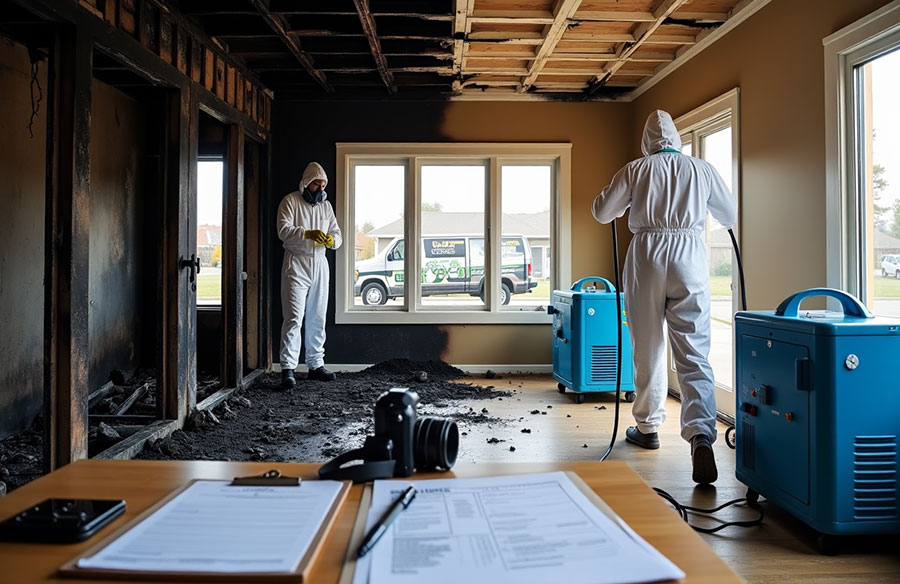
A fire department somewhere in the United States responds to a fire every 24 seconds. Fires annually cause more than $25.5 billion in direct property damage, and countless homeowners face the challenging task of fire damage restoration.
Time matters when it comes to restoration after a fire. The damage can get pricey with each passing moment. Water damage often occurs with fire damage, and mold can start growing within 24-48 hours. Quick action is vital to recover your property.
Your home deserves immediate attention after a fire incident. Our step-by-step approach will restore your home to its original condition. Let’s help you handle fire damage cleanup and return your life to normal as soon as possible.
First 24 Hours After Fire Damage
After a fire, the first day is critical for assessing damage, ensuring safety, and beginning the recovery process. The situation can be overwhelming, but taking the right steps early on can make the road to rebuilding smoother. While the flames may be extinguished, hidden dangers and urgent tasks remain. Acting quickly and carefully in these first 24 hours will help protect both your home and your future.
Safety checks before re-entry
You must wait for the fire department’s official clearance before entering your property. Hidden dangers exist even when you can’t see flames anymore. Your home’s stability might be at risk due to damage in walls, floors, and support beams. On top of that, smoke residue has harmful chemicals that can cause serious breathing problems.
Make these vital checks before you go inside:
- Look for loose power lines, damaged gas lines, and foundation cracks outside
- Smell for natural or propane gas and listen for hissing sounds
- Search for smoke and embers, especially in the attic
- Be careful of unstable furniture or stairs that might collapse
Emergency contacts to notify
You should start calling important contacts once safety is confirmed. Your insurance company comes first – most policies need you to notify them within 24 hours of the whole ordeal. Next, reach out to:
- Local police department about your temporarily empty property
- Utility companies to check services professionally
- Mortgage company about the fire
- Your children’s school if you need temporary relocation
- Post office to forward your mail
Documenting initial damage
Good documentation is vital evidence for your insurance claim. Create a detailed inventory of affected items room by room. Add descriptions, estimated values, and when you bought them if possible.
Here’s how to photograph the damage:
- Get wide-angle shots of full rooms
- Take close-ups of specific damage spots
- Record smoke and soot patterns on walls
- Get pictures of all entry points and their condition
Keep all assessment reports, photos, and inventory lists in digital and physical formats. Save receipts for any immediate fire-related expenses as your insurance might reimburse them.
Note that animals might have entered your home during the fire. Use a stick to tap loudly on the floor to warn any wildlife when you inspect. Your children should stay with relatives or friends during the first inspection to avoid potential trauma.
Securing Your Property
After a fire, securing your property is one of the most important steps to prevent further damage and protect what remains. Even though the flames are gone, risks like trespassing, weather exposure, and structural instability can create new problems.
Board-up essentials
The right boarding methods keep intruders and weather out effectively. You should use 1/2-inch exterior grade CDX plywood to cover all ground-level openings, including basement access points, first-floor doors, and windows. Security works better with 2-by-4 braces installed horizontally – two sets for windows and three sets for doors.
When you secure the openings:
- Add carriage bolts every 12 inches around the perimeter
- Make sure plywood fits tightly against exterior frames
- Put up “No Trespassing” signs when done
Openings that sit 10 feet above ground level don’t need as much protection, but you should still watch out for access from fire escapes or nearby buildings.
Temporary weather protection
Your roof might have serious damage after firefighters put out the fire. Stormseal, a specialized polyethylene film, works better than regular tarps. This new solution stays watertight and can handle winds up to 160km/h.
Regular tarps usually fail several times during insurance claims that can last up to 12 months after a major fire. Each time a tarp fails, you risk more property damage and higher repair costs.
To protect everything properly:
- Get temporary roofing systems up quickly to keep water out
- Use weather-resistant materials on damaged areas
- Check structural strength before you start
Note that securing your property does several things – it stops unwanted visitors, prevents weather damage, and helps your insurance claim stay valid. These steps create a safe space for repairs and keep vandals and thieves away.
Working With Insurance
Navigating the insurance process after a fire can feel overwhelming, but taking the right steps early can make a significant difference in your recovery. Understanding what your policy covers and keeping detailed records will put you in a stronger position to receive the support you need. By staying organized and proactive, you can move forward with confidence as you rebuild.
Filing your claim
Your first step is to call your insurance provider once everyone is safe. Insurance companies want to know about the incident within 24 hours. They’ll assign an adjuster to look at the damage and figure out what’s covered.
Make any emergency repairs needed to stop more damage from happening. Keep all your receipts because your insurance might pay you back. Save copies of every conversation and email with your insurer. Write down dates, times, and who you talked to.
Required documentation
Put together a complete proof of loss claim with all your damaged items and their worth. You’ll need these documents:
- A fire department report that shows how and where the fire happened
- Clear photos and videos of damage everywhere
- A list of damaged items with details about what they’re worth
- Financial papers that show lost income
- Quotes from qualified contractors for repairs
Don’t throw away damaged items until the insurance adjuster sees them. Your policy likely covers extra costs like hotels, food, and pet care, so save those receipts too.
Choosing fire restoration services
Pick a restoration company that knows how to work with insurance companies. The best services will:
- Help with insurance paperwork and talks
- Bill your insurance company directly
- Make the claims process easier
A public adjuster who works just for you might be worth hiring. They charge 9-15% of what you get back but often get substantially higher settlements.
Insurance companies have deadlines to handle claims. Some states require them to tell you their plans within 30 days of getting your claim. Take your time before closing your claim because more damage might show up later. Most experts suggest waiting a few months until you’ve found and documented all losses.
Creating Your Recovery Plan
Recovering from fire damage is a complex process that requires careful planning and patience. While the road ahead may seem daunting, setting realistic expectations, securing temporary living arrangements, and managing finances wisely will help you regain stability. By taking a structured approach to your recovery, you can navigate challenges more effectively and make informed decisions that support a smooth rebuilding process.
Timeline expectations
Fire damage restoration timelines depend on how bad the damage is. Small incidents need only a few days to two weeks for full restoration. Major damage might take several months to a year. The restoration moves through these specific phases:
- Emergency response and assessment: 24-48 hours
- Water removal and drying: 2-7 days
- Smoke and soot cleanup: 1-2 weeks
- Structural repairs and reconstruction: Several weeks to months
Temporary housing arrangements
You need to find temporary housing quickly once you know if your home is safe to live in. FEMA gives direct temporary housing options to homeowners who have the most important structural damage. These options include:
- Transportable temporary housing units
- Direct lease properties
- Multi-family lease arrangements
Budget planning
Smart financial planning will give a smoother restoration trip. Fire damage restoration costs run between $4.00 to $7.00 per square foot. Here are the most important budget items to think over:
- Immediate expenses:
- Emergency supplies
- Temporary housing costs
- Essential personal items
- Long-term considerations:
- Permit fees for structural repairs
- Professional inspection costs
- Utility service restoration
You can save money by buying materials in bulk and watching for seasonal sales. Keep detailed records of everything you spend – these expenses might qualify for insurance money back or tax deductions.
Conclusion
Recovering from a fire is a challenging journey, but with the right approach, you can rebuild and restore your home efficiently. By acting quickly, securing your property, working closely with your insurance provider, and following a structured recovery plan, you can navigate the process with confidence.
While the road ahead may feel overwhelming, every step you take brings you closer to reclaiming your space and returning to a sense of normalcy. With patience, careful planning, and the right resources, you can turn a devastating situation into an opportunity for a fresh start.