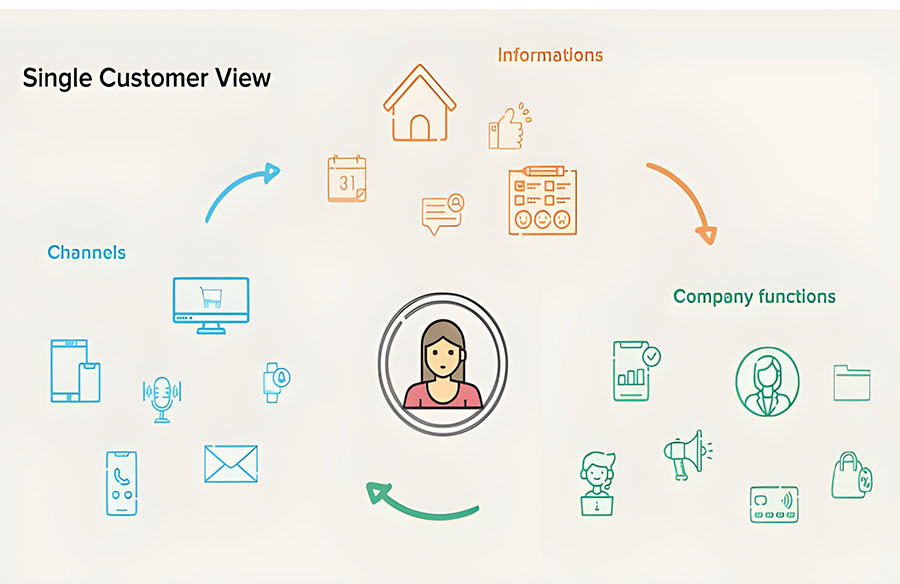
Imagine having all your customer data in one place, giving you a clear, comprehensive view of their needs and behaviors. For businesses to improve their customer relationships and provide more personalised experiences, they need to have a single-customer view (SCV). This blog will guide you through the steps to create scv.
1. Collecting Customer Data from Multiple Sources
To create a single customer view, start by collecting data from various sources where your customers interact with your business. Among these are your website, social media, email marketing campaigns, interactions with customer service representatives, and visits to your physical store.
Gathering data from all these sources helps you get a complete picture of your customer’s behaviors, preferences, and history with your brand. Make sure to track important details like purchase history, feedback, and engagement patterns to build a rich customer profile.
2. Data Cleaning and Enrichment
Following the completion of the data collection process, it is essential to clean and enrich the data. This means removing duplicate records, correcting errors, and filling in missing information.
Data enrichment helps by adding more details to customer profiles, like demographic information or social media links, improving the accuracy and completeness of your data.
Clean and accurate data ensures that you are making decisions based on reliable information, which leads to better insights and strategies.
3. Centralizing Data in a Unified Platform
Once you have cleaned the data, you should then centralise it on a single platform. Having access to and analysing all of the information about your customers is made much simpler as a result of this.
A Customer Relationship Management (CRM) system or a data management platform can help you store all customer data in one place.
By centralizing the data, you eliminate silos and allow all departments to work from the same up-to-date information. This unified view helps improve decision-making and customer engagement.
4. Creating Comprehensive Customer Profiles
Next, create detailed customer profiles using the centralized data. These profiles should include key information like contact details, purchase history, preferences, and behavior patterns.
By analyzing this data, you can better understand each customer’s needs and interests. Comprehensive profiles help you personalize marketing campaigns, improve customer service, and offer relevant product recommendations. The goal is to have a holistic view of each customer’s journey with your brand.
5. Ensuring Data Privacy
As you collect and centralize customer data, it’s essential to ensure privacy and security. Follow best practices to protect your customers’ personal information and comply with data protection laws, such as GDPR or CCPA.
Inform your customers about how their data will be used and give them the option to opt-out if desired. Ensuring data privacy builds trust with your customers and safeguards your business from legal issues or data breaches.
Start Implementing SCV Practices
With a unified approach to customer data, you can enhance personalization, boost customer loyalty, and make more informed business decisions. Start implementing SCV practices today, and watch how it transforms your marketing strategies and overall customer experience!