Historical Background
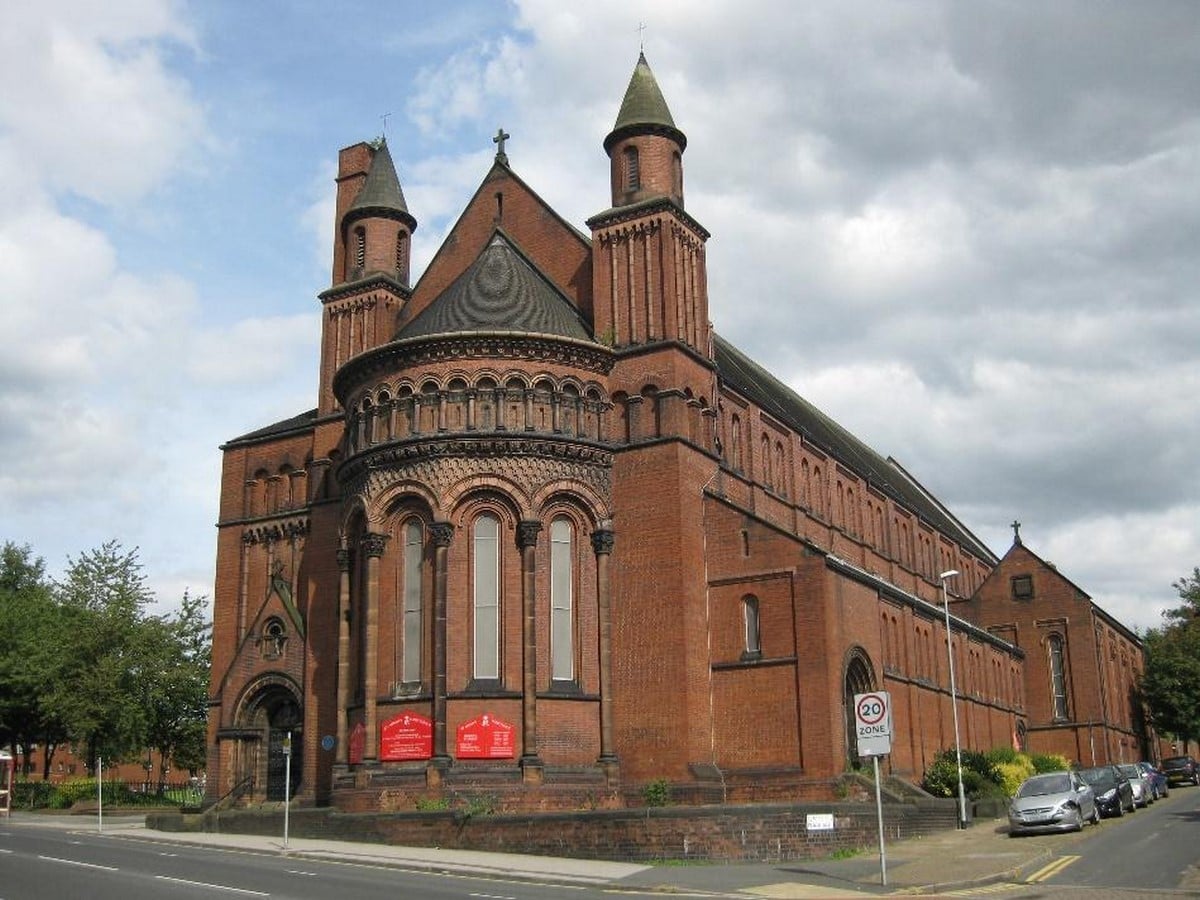
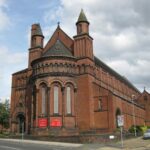
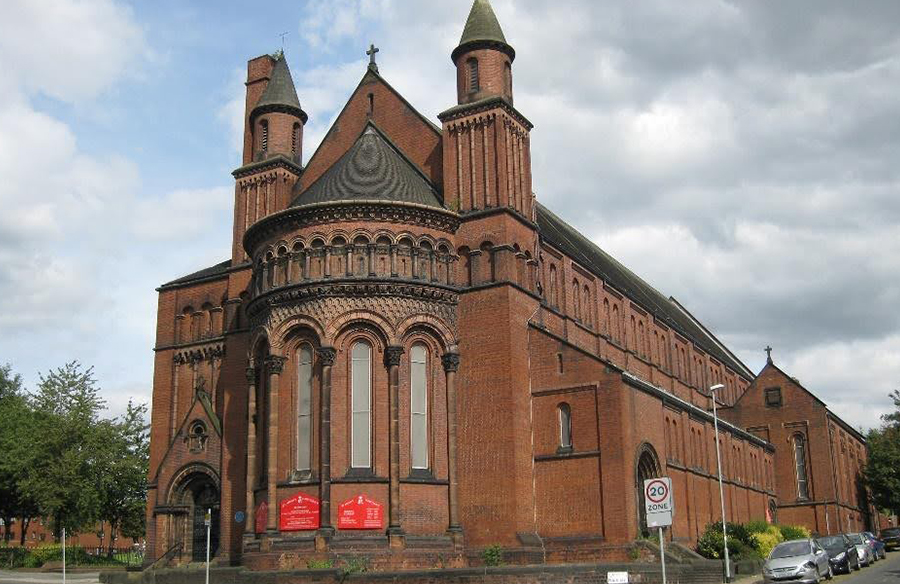
The Anglican Church of Epiphany also known as Bishops Burroughs Memorial Church of the Epiphany in Gipton, Leeds, West Yorkshire, England is an Anglican Parish Church and is a Garde 1 listed building and is located at the junction of Gathorne Terrace and Gipton Wood Road. This is an area of high social deprivation and is a zone targeted by the government for major regeneration projects under the “New Deal for Communities Programme”. The construction of the church aimed to assist the growing population and housing estate of Gipton. Groundbreaking began in 1936, the foundation stone was laid by Elsie Burroughs on 12th July 1937 and the church opened in 1938 – designed by Nugent Cachemaille-Day and built by Armitage Hodgson of Leeds. The church replaced a temporary church that was built in 1936, and modifications were made to it in 1976. It was listed as a Grade 1 building on 25th June 1993.
Epiphany
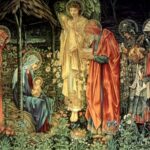
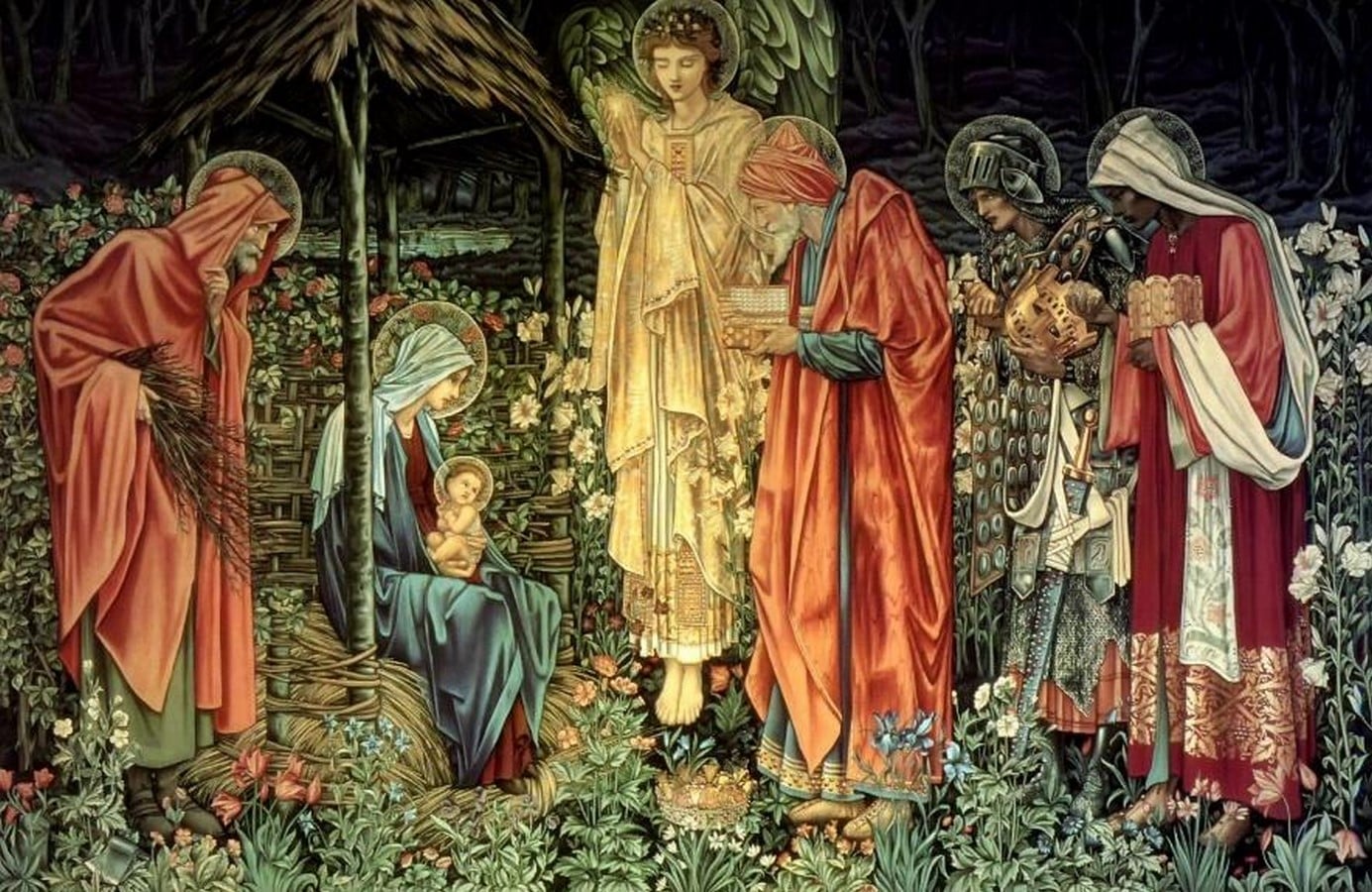
Epiphany, also known as Three Kings Day, is a Christian feast day that celebrates the discovery of God in his Son as a human in Jesus. The word epiphany, originating in the Eastern Churches, comes from a Greek word that translates to “manifestation” or “appearance” and is symbolized by the color green. It primarily honours the visit of the Magi to baby Jesus and the baptism of Jesus. It also respects the visit of “The Wise Men”–Casper, Melchior, and Balthazar who showered Jesus with gold and herbs such as frankincense and myrrh typically used for burial hence possibly foreshadowing Jesus’ future. Eastern traditions focus on Jesus’s baptism, whereas Western traditions focus on the Magi’s visit seen as the first manifestation of Christ as a saviour of Gentiles and Jews. Epiphany not only signifies the calling of the chosen few e.g., The Wise Men and the Magi’s but also an invitation to anyone around the world to follow Jesus.
Social, Political & Historical Importance
The Church of Epiphany holds social, political, and historical importance in the sense of being both a spiritual center and a community hub. By providing a venue for its parishioners’ spiritual lives and bringing people together from all backgrounds and socioeconomic backgrounds, the church fosters social cohesiveness and harmony within communities. As a centre of the community, it offers chances for people to interact, engage, and support one another, creating a sense of identity and belonging.
The Church’s political importance stems from the politics of the nation and the political role of Epiphany, for Christianity may have been to facilitate its move away from its significant Judaism to make a base in the Gentile world. This (the political move) branched from the travellers from the East, the first Epiphany, who were neither Jews nor had any political part to play in the life of Judea, and from the King of the Jew, Herod. The travellers were Magi–outsiders with their own religious and cultural life and background and yet willing to pay homage to a young child who threatened Herod despite having authority, power, and privilege, hence driving him to extreme measures in the pursuit of a toddler.
The settlement of Gipton has an elongated history aging back to the Domesday Book. Gipton was absorbed into the bordering during the Victorian Period when the city experienced precipitous expansion. Gipton was chosen as a site for one of North England’s first garden suburbs during the 1930s. This was to include the building of houses, schools, and shops. New council houses were completed in 1935, and a temporary Mission Church known as the “tin hut” or “tin tabernacle” was opened in 1936. This was known as a “tabernacle” because it was built out of corrugated iron and sat on rudimentary brick or rubble and a mortar foundation. Typically, “tin tabernacles” were based on wooden frames bolted together with simple connections.
Architectural style & construction
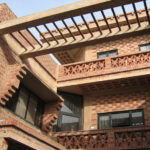
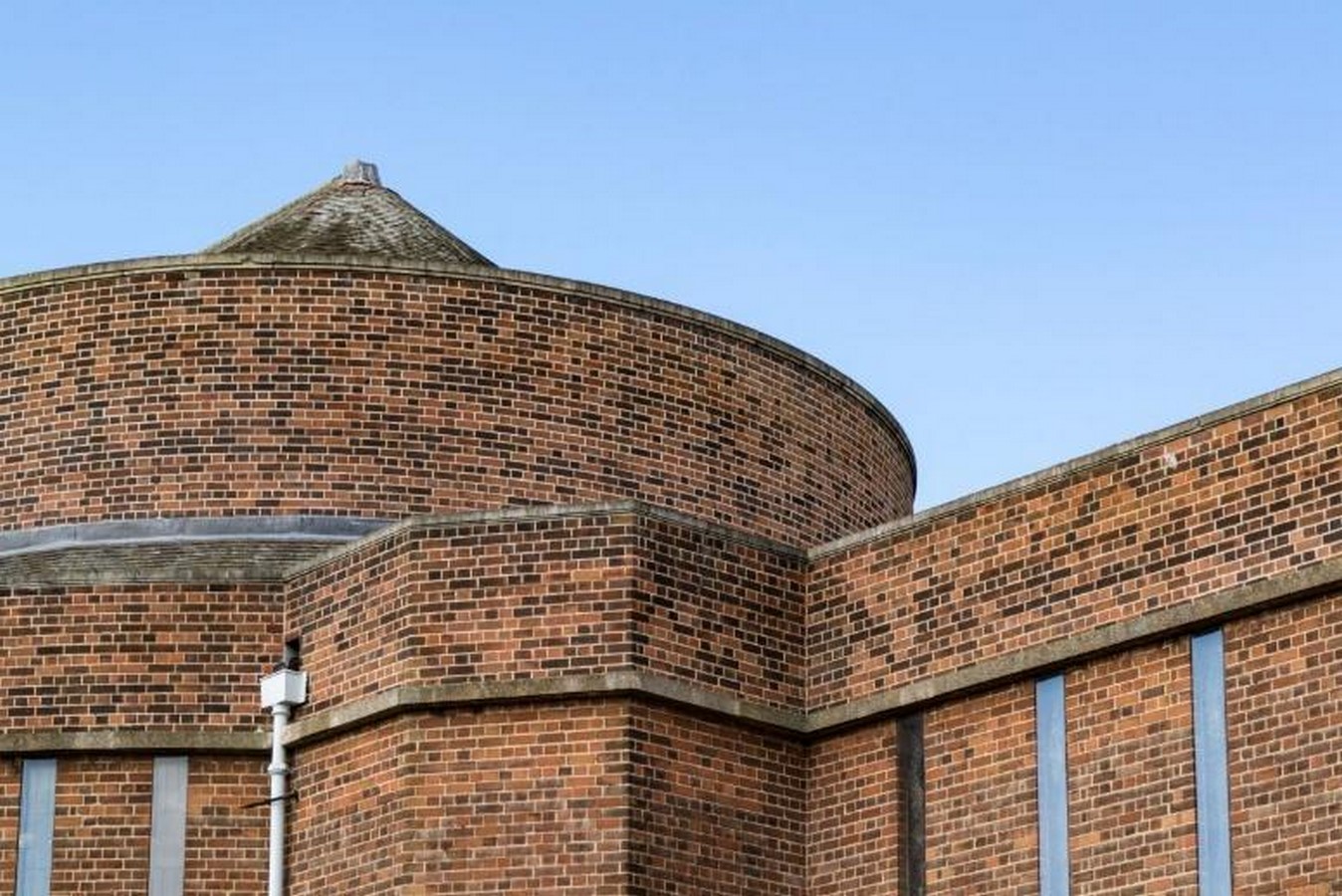
The church is built of red brick in a style that would fit with its mid-twentieth-century era. Plans of the Church of Epiphany were prepared by Nugent Cachemaille-Day whose designs were greatly inspired by a newly built church in Coutances, Normandy and the structure of the church is an early example of a reinforced concrete frame with concrete floor bands, a furrowed concrete plinth, elevated coped parapets, and, most importantly, brick cladding. Initially, Cachemaille recommended a minimal design of a rectangular church with a chapel behind the high altar, but this was then changed to a present, more dramatic arrangement of two levels before construction began.
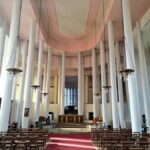
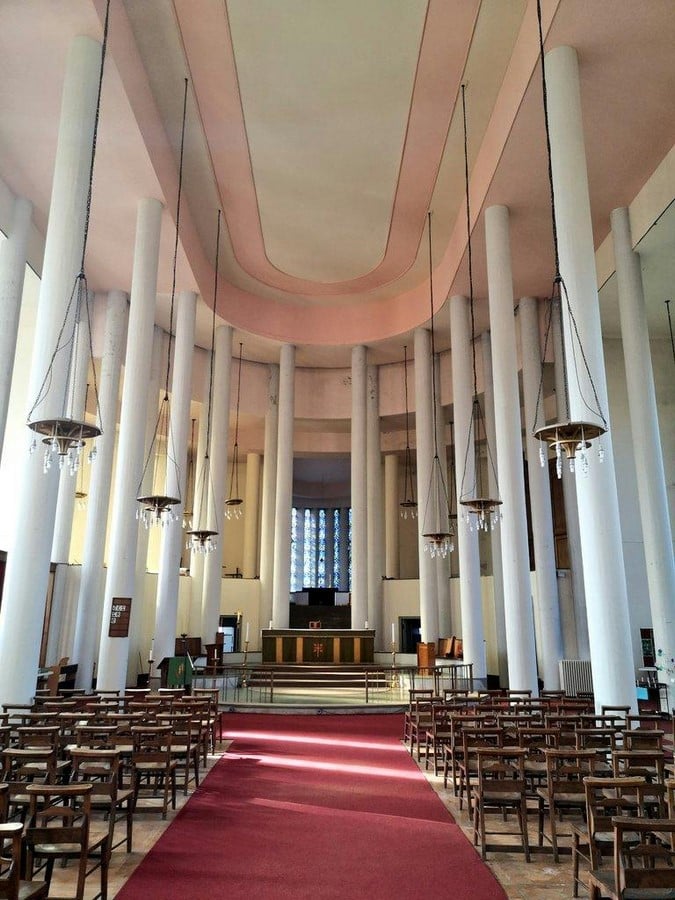
The architectural style of the church is considered a “happy blend” of the mid-twentieth-century era of the Basilican type of either Gothic or Byzantine & Romanesque models which presents a type of creativity and design approach that differs from the values encompassed by modernism but still engages with the modernity of suburb areas in an intricate fusion between modern and traditional. It steps up like that of a French Romanesque church comprising a low semicircle of the Lady Chapel and a higher semicircle of the ambulatory. The interior is painted white and has sixty feet high circular concrete piers that support the flat ceilings in addition to stripped surfaces which insinuate the Gothic and stripped forms of the mid-twentieth-century works. The windows are narrow, slim, and closely spaced. Vivid and colourful stained glass in the Lady Chapel depict the Epiphany stars with blue as the dominant colour.
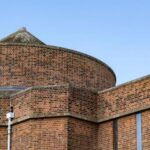
The mid-twentieth-century architectural movement was characterised by straight lines, geometric shapes, and sparse ornamentation. Red brick acquired prominence between the 1930s and 1960s because of its distinctive appearance, affordability, flexibility, and durability, which gave rise to this style movement. The significance of this during this era is an attribution to the evolution of modernist design principles and its lasting impact on the built environment. These buildings are celebrated for their integration with surrounding landscapes, especially in urban and suburban areas, as well as their timeless appeal and serve as important cultural and historical architectural trends of the mid-twentieth century. The tones and textured surfaces complement the landscape hence creating a sense of unity and cohesion and further culturally symbolizing durability, warmth, and a connection to tradition alongside historically reflecting the post-war rebuilding efforts and the emergence of a new architectural style influenced by modernism.
Current Significance
In terms of current significance, red brick mid-twentieth-century architecture continues to stimulate contemporary design practices and urban planning strategies. In addition to contributing to the character and identity of cities and communities, these buildings serve as landmarks and symbols of historical continuity and have been preserved, renovated, and repurposed for modern use, hence highlighting their adaptive potential and architectural value. These structures can also be infused with both traditional and modern structures as their colour and texture allows for an artistical approach to expression while also creating a timeless charm.
Red bricks have been a staple in construction for centuries, known for their durability and traditional visual appeal, and are now making a remarkable comeback because of their sustainability profile. Red bricks, typically composed of abundant natural clay, are a renewable resource. Manufacturers often produce them locally, reducing carbon emissions associated with transportation. This, as well as its exceptional thermal mass properties, aligns with the growing trend of creating a more sustainable and minimal radiation of the ecological footprint of construction projects. Red brick absorbs heat during the day and releases it slowly at night, consequently helping to regulate indoor temperatures and therefore reducing the need for artificial heating or cooling as it acts as a natural insulation. This leads to lower energy usage, and a reduced carbon footprint in buildings.
Overall, the Church of Epiphany is valuable in past and present times. It holds both a historical value and a future outlook as it is a melange of tradition, durability, design flexibility, and energy efficiency, therefore making it a sustainable choice for the future of construction. Red brick structures from the mid-twentieth-century represent an important period of architecture, both historically and in terms of its ongoing influence on the built environment. These structures continue to influence the built environment and serve as an inspiration to upcoming generations of architects and designers through preservation and adaptive usage.
References:
- (MRFR), M.R.F. (2023) Red Brick Market: Building the future with Sustainable Construction Materials, LinkedIn. Available at: https://www.linkedin.com/pulse/red-brick-market-building-future-sustainable-construction/ (Accessed: 09 February 2024).
- Allen, R. (2020) The politics of the epiphany?, Cape Cod Times. Available at: https://eu.capecodtimes.com/story/lifestyle/faith/2020/01/05/the-politics-epiphany/1956908007/ (Accessed: 09 February 2024).
- Bagguley, P., & Hussain, Y. (2008). Community, Conflict and Exclusion: The Church and the State in Britain. Sociology, 42(5), 821–838. https://doi.org/10.1177/0038038508094570 (Accessed: 09 February 2024).
- Brick Gothic – a fascinating building material that tells history (2020) Europäische Route der Backsteingotik. Available at: https://www.eurob.org/brick-gothic/?lang=en (Accessed: 09 February 2024).
- Chaves, M. (2004). Congregations in America. Harvard University Press (Accessed: 09 February 2024).
- Church Heritage record 646371 (no date) Leeds, Gipton: Church of the Epiphany – CHR Church. Available at: https://facultyonline.churchofengland.org/church-heritage-record-leeds-gipton-church-of-the-epiphany-646371 (Accessed: 09 February 2024).
- Designing the suburban church: The mid twentieth-century Roman Catholic Churches of Reynolds & Scott (2017) Journal of Historical Geography. Available at: https://www.sciencedirect.com/science/article/abs/pii/S0305748817300567#:~:text=The%20basilican%20type%20dominated%20Roman,new%20suburbs%20of%20expanding%20cities. (Accessed: 09 February 2024).
- Epiphany (2024) Encyclopædia Britannica. Available at: https://www.britannica.com/topic/Epiphany (Accessed: 09 February 2024).
- Giedion, S. (1941). Space, Time, and Architecture: The Growth of a New Tradition. Harvard University Press (Accessed: 09 February 2024).
- Harland-Davies, C. (2021) A political epiphany, Theology Everywhere. Available at: https://theologyeverywhere.org/2021/01/18/a-political-epiphany/ (Accessed: 09 February 2024).
- Harvard University. (n.d.). Harkness Commons. Retrieved from https://library.harvard.edu/harvard-university-archives/harkness-commons (Accessed: 09 February 2024).
- Lincoln, C. E., & Mamiya, L. H. (1990). The Black Church in the African American Experience. Duke University Press (Accessed: 09 February 2024).
- Liouh, N. (2020) The significance of Epiphany, Medium. Available at: https://medium.com/cbuworship/the-significance-of-epiphany-956202ff71b8#:~:text=The%20coming%20of%20the%20wise,gifts%20for%20the%20baby%20Jesus. (Accessed: 09 February 2024).
- Looking at buildings (no date) Looking at Buildings: Church of the Epiphany. Available at: https://www.lookingatbuildings.org.uk/cities/leeds/buildings-in-focus/church-of-the-epiphany.html (Accessed: 09 February 2024).
- Putnam, R. D. (2000). Bowling Alone: The Collapse and Revival of American Community. Simon & Schuster (Accessed: 09 February 2024).
- Stoller, E. (2001). The Architecture of Walter Gropius. W.W. Norton & Company (Accessed: 09 February 2024).
- Strutt & Parker (2021) The history of 20th Century british architecture: Strutt & Parker, Strutt & Parker: UK Real Estate specialists. Available at: https://www.struttandparker.com/blog/the-history-of-20th-century-british-architecture (Accessed: 09 February 2024).
- Sutton, H. (2017) Church of the Epiphany, Gipton, Leeds, Maysand. Available at: https://maysand.co.uk/special-projects-2/2017/2/10/church-of-the-epiphany-gipton-leeds (Accessed: 09 February 2024).
- Walker, P. (2002). The Harvard Grad Center: Gropius and Le Corbusier. Journal of Architectural Education, 55(3), 156-164 (Accessed: 09 February 2024).
- What is the epiphany?: The National Shrine of Saint Jude (2024) The National Shrine of Saint Jude |. Available at: https://shrineofstjude.org/learn/catholic-history/what-is-the-epiphany/#:~:text=Epiphany%20(or%20Theophany%2C%20as%20it,as%20human%20in%20Jesus%20Christ. (Accessed: 09 February 2024).
- Wilkinson, M. S. (1991). Christian Democracy in Western Europe, 1820-1953. Croom Helm (Accessed: 09 February 2024).