Beneath the surface of the architectural profession lies a world of hidden costs. From the financial instability that comes with striking out on your own to the emotional cost of a long commute to the stifling creative stagnation that afflicts many employees, there is a tax on everything.
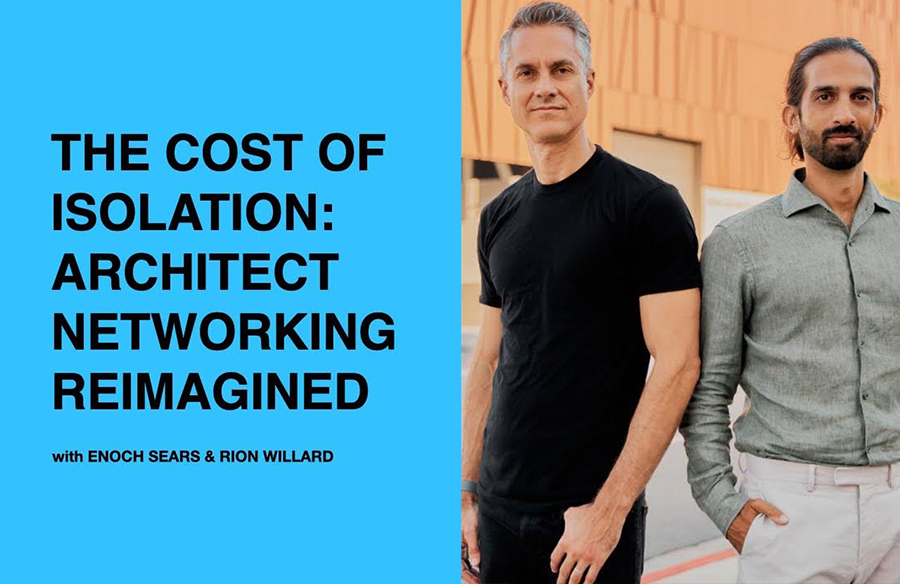
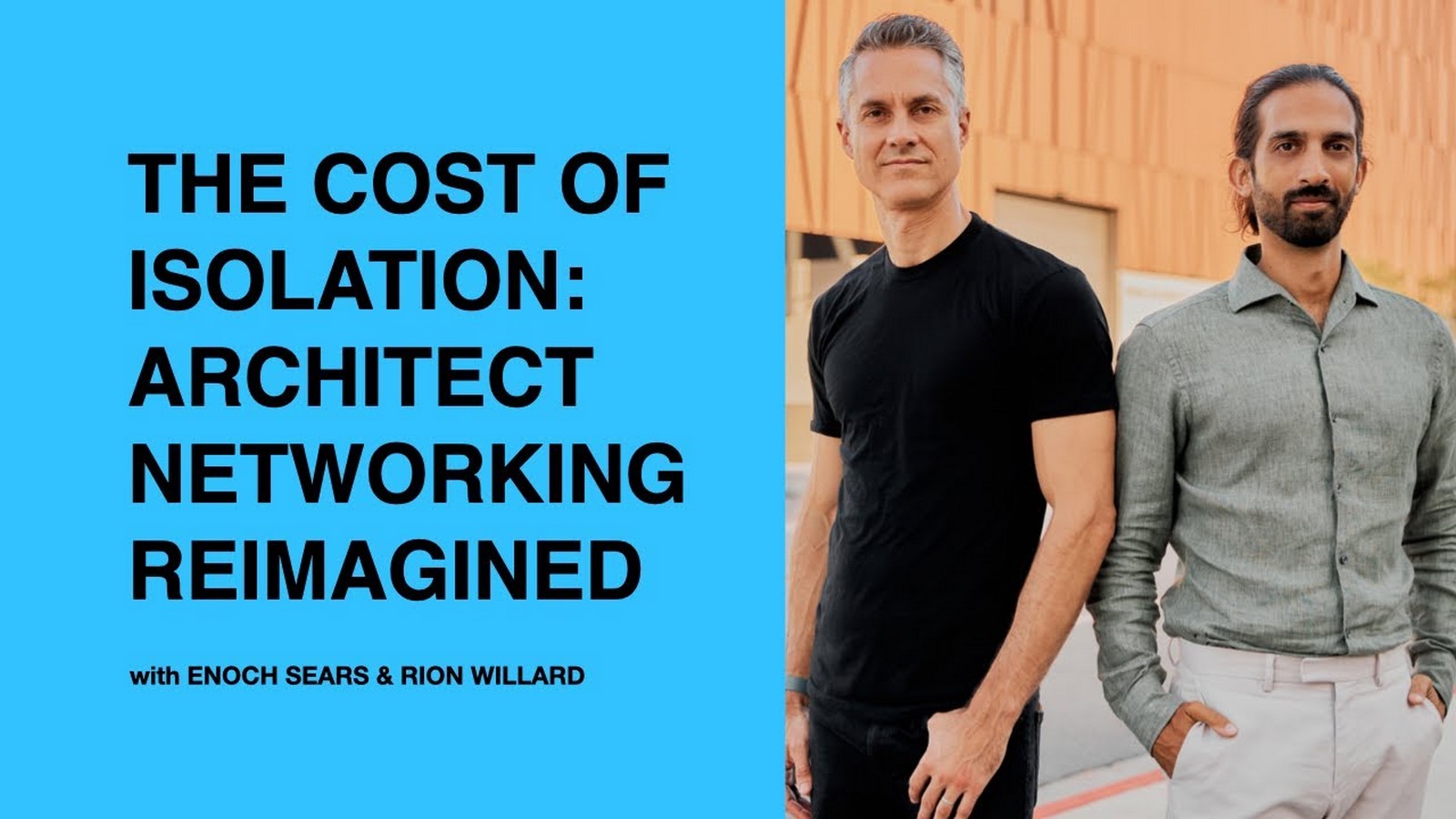
Recently, the price of isolation was uncovered in a discussion between architect and business coach Enoch Sears and Rion Willard on the Business of Architecture podcast. According to the episode, an architecture business doesn’t just bear the cost of professional isolation; it is a burden that an entire profession can feel, or rather, it’s taken by the architects themselves in genuine and often painful ways.
Architectural isolation creates a negative chain of reactions. Unstable finances mean a minimal number of less enjoyable projects. An inability to connect and thus build relationships means growth is stunted, thus making scarcity and unfulfillment even more problematic. The biggest takeaway from the podcast was what “costs” so much: nothing ventured in people or time, the costs of not showing up, the invisible line that separates architects from the mainstream market.
When the myth of the lone genius permeates a culture, the effects of that culture design isolation into every aspect of an architect’s career. Isolation can prevent firms from building more diverse teams, foster burnout, and exacerbate the sense of being alone in some of the most challenging parts of our work, feelings that can extend back to school. However connecting, sharing, and being open to collaboration can create spaces for new ideas, improve architects’ mental well-being, and lead to better projects.
The podcast showed the importance of being visible to the architectural community and the world. Being visible in the design industry means the same as anywhere else: opportunities will come to you. You can diversify your clientele and referral sources by being correctly visible while increasing everyone’s market knowledge and customer service.
Another critical point in the podcast is that networking is about something other than demanding more money. It is about stirring the pot. Being creative in your marketing efforts is being the most efficient.
Technology emerges as a linchpin in architect networking, which helps to build relationships, create “rivers of work” that cross geographical boundaries, and provide scale. However, as the presenter discussed on the podcast, being physically present and visible in a market are requirements for converting opportunities. Networking is of significant importance in the life of an architect. Networking is a part of “working smarter, not harder,” it builds our social status and links our past to the future. The speaker’s experience underscored the importance of stretching oneself, pushing past comfortable limits, and experiencing the growth and resilience that follow, reinforcing much of Tony Robbins’ philosophy on the significance of networking and the extraordinary success that can come through personal connections in growing one’s business.
The podcast presented an unconventional and unorthodox approach to gaining ground in architecture. It was a blatant dismissal of all conventional business ways—no more banging e-mails or social media posting for professionals seeking work opportunities. Instead, cultivate relationships in the sphere and beyond by creating vibrant events, organizing that avant/garage party, celebration practice, or evening dinner, as these are not only a public platform for your greatness but a draw for diverse audiences that would have never known you even existed. It’s an ingenious way of leveraging the same networks that pre-exist but growing your own. It presents architects with the fuel to cultivate the “unforeseen” opportunities.
During the discussion, it was clear that the most significant advantage to landing professional development opportunities has less to do with the volume of wealth or simply ‘free time’ and resourcefulness.
One of the panelists explained that resourcefulness was the ability to work with a limited set of resources, whatever is already available, to get things done. It’s about presenting oneself as severe with the level of commitment to get results. If time and financial lifestyle are at their minimum, then there are moves to be made to maximize what you already work with.

The podcast convened a well-defined discourse towards the end. The business of architectural practice is generally built on the capability of an architect to serve as a “rainmaker” under any conditions.
Even comfortable introverts who throw parties or convene networking sessions to meet new people are taking risks to extend their comfort zones and deliberately signal to others that they are intelligent practitioners of their profession.
References
Podcast for Architects: The Cost of Isolation: Archit ect Networking Reimagined with Enoch Sears & Rion Willard – Google Search (no date). https://www.google.com/search?q=Podcast+for+Architects%3A+The+Cost+of+Isolation%3A+Archit%20ect+Networking+Reimagined+with+Enoch+Sears+%26+Rion+Willard&oq=Podcast+for+Architects%3A+The+Cost+of+Isolation%3A+Architect+Networking+Reimagined+with+Enoch+Sears+%26+Rion+Willard&gs_lcrp=EgZjaHJvbWUqBggAEEUYOzIGCAAQRRg7MgYIARBFGDzSAQczNTNqMGo3qAIAsAIA&sourceid=chrome&ie=UTF-8#fpstate=ive&vld=cid:b824e767,vid:3SHIMr2aQrM,st:0.