The Idea of Luxury Housing
The idea of luxury homes was initiated in Europe during the 15th and 16th centuries. It started with the advancement of the idea of aristocracy spending their lives in comfortable surroundings called “mansions” with all needs met within the reach of their finger. Their home decorations became a ‘trend’ of time and became a meaning of ‘luxury’ to such other mansions or homes.
As the meanings developed further and the idea of luxury evolved, Furniture around the house became remarkable to define luxury and wealth. And to remain fashionable or so-called the trend, updating it with time became a necessity. The end of the 18th century proved to be remarkable in witnessing such changes and the growing need to maintain the appearance through expensive items, be it a piece of furniture or a tapestry.
Therefore, A luxury item or luxury home is rightly defined as a commodity beyond necessity, as the thought of it is “An unnecessary and extremely expensive indulgence that pleasures because of its exceptional quality and beauty”, perfectly expressed by Dale N. Dewey (Dale N. Dewey, CEO-Luxury Solutions, 2009).
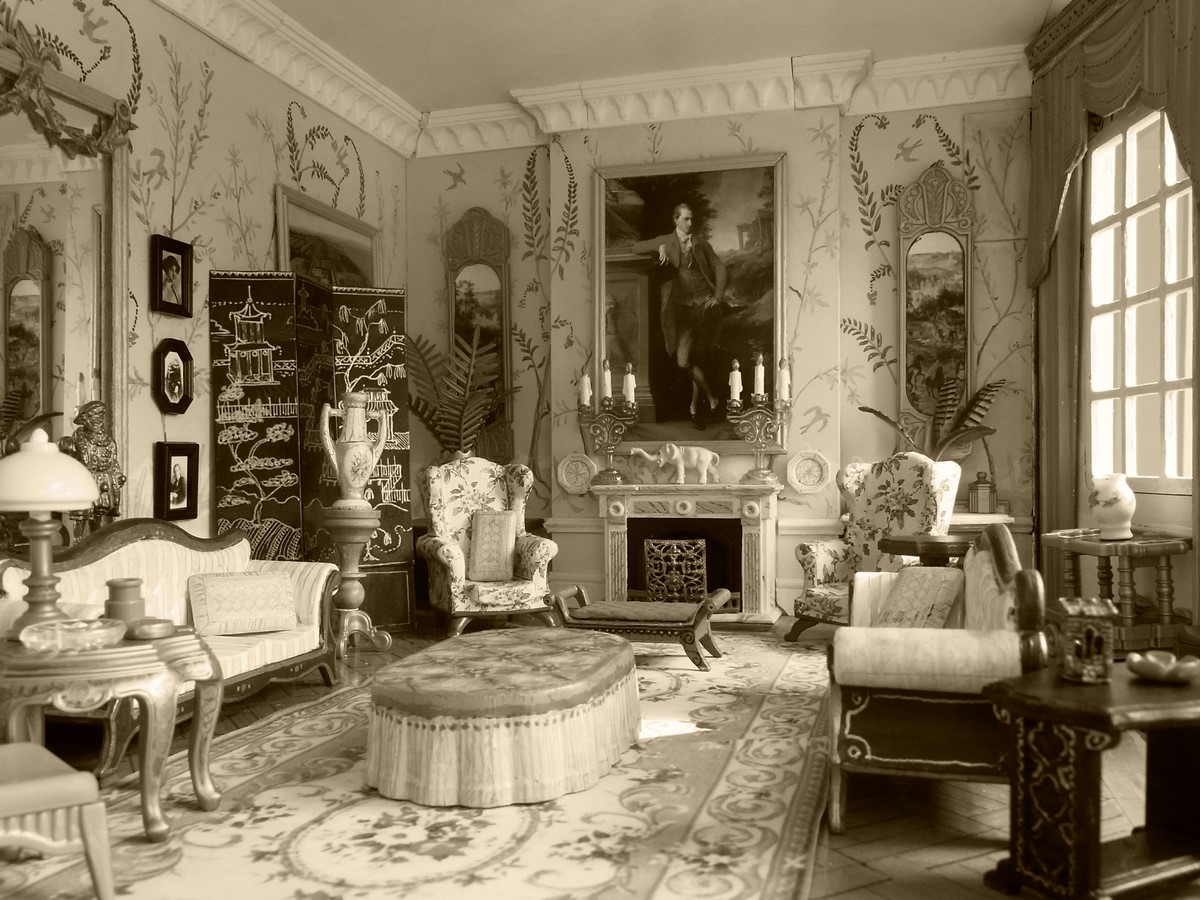
Luxury was also very much defined by wealth. And became Symbolic to demonstrate superiority in society. However, the idea of luxury was not only confined to the idea of owning homes but it reflected in the way of living. It turned into a lifestyle for many as they changed their needs according to the idea of luxury and indulged themselves in the sanctity of it daily.
People of wealth grew themselves fonder of the smell of Luxury and inhibited the term too closely into their lives. However, it became a burden to many to keep up with the standards of luxury upgrading each time to the trends. Though it became a burden to many consumers, it became a market for many sellers and it gave a platform to create luxury as a source of business.
Luxury with the cost of privacy
Privacy is perceived differently by different individuals but in today’s times, privacy has become a mandatory right and need.
With the change in society and the appearance of capitalism in the system, different strata in society emerged. The rich become richer and the poor become poorer. The rich continued to enjoy the luxuries of life and continued to possess expensive homes, making it their lifestyle. However, it was seen that it had a cost that came along, the cost of privacy. Since these people added high-end elements to their luxurious life and into their homes, they became more and more anxious and insecure as if being watched over and needed to maintain privacy to the utmost.
Privacy has become an ultimate commodity of importance alongside the need for comfortable beds, kitchen tops, sleek hoods, luxury stylish couches etc in a luxury home to maintain its luxuriousness.
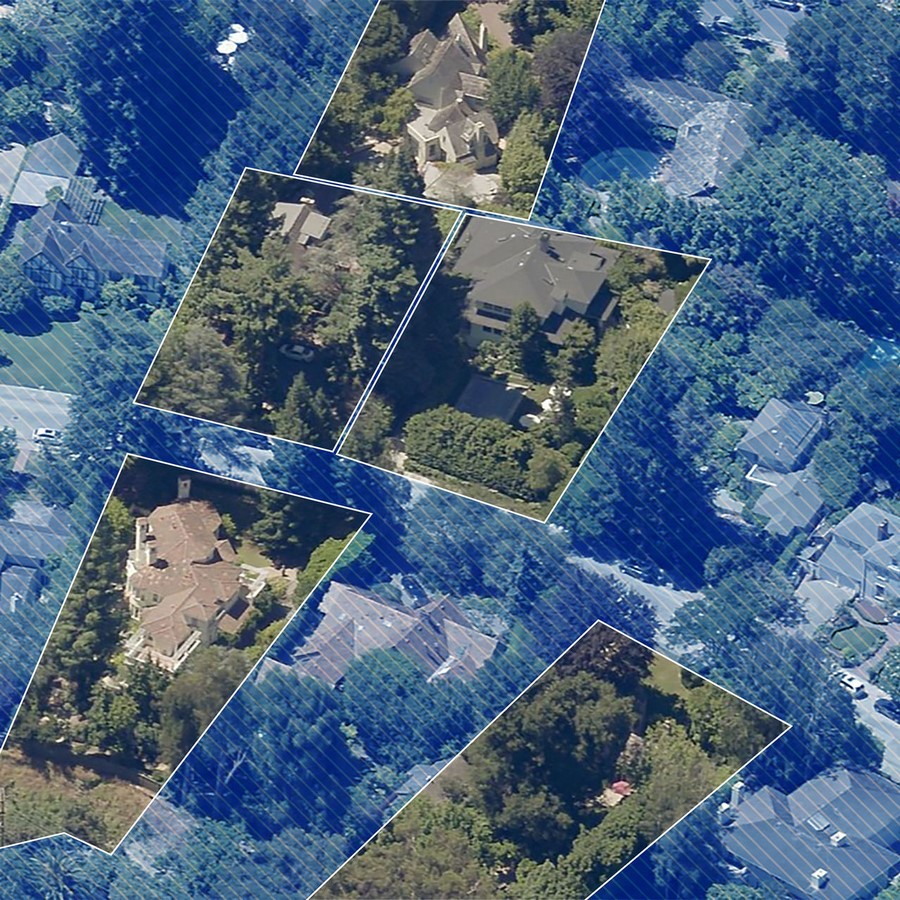
And it started with the installation of Fences, cameras, and Hitech systems and also has led to employing guards at times.
The quotient of privacy from an Architectural perspective
With the intriguing importance of having privacy as a very vital checkbox to a luxury home, it has been extremely a necessity for all designers and architects to keep that in mind before handing over the luxury house to the owners and keep in mind their needs and wants.
A luxury home today is defined by a lot of breathing, open spaces. But to keep privacy intact in such a space is equally a challenge; therefore, an Architect has to step in and create a space that balances both.
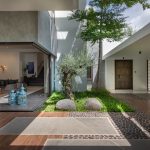
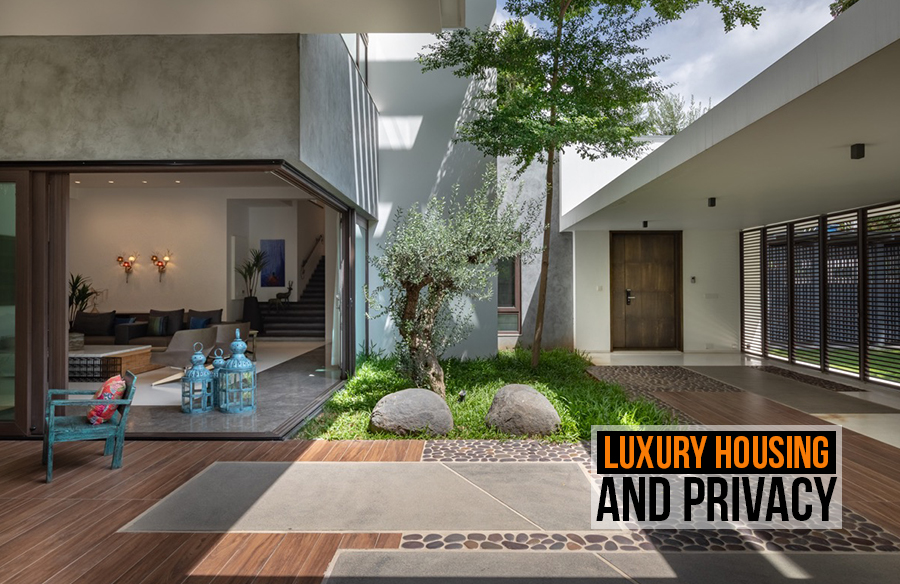
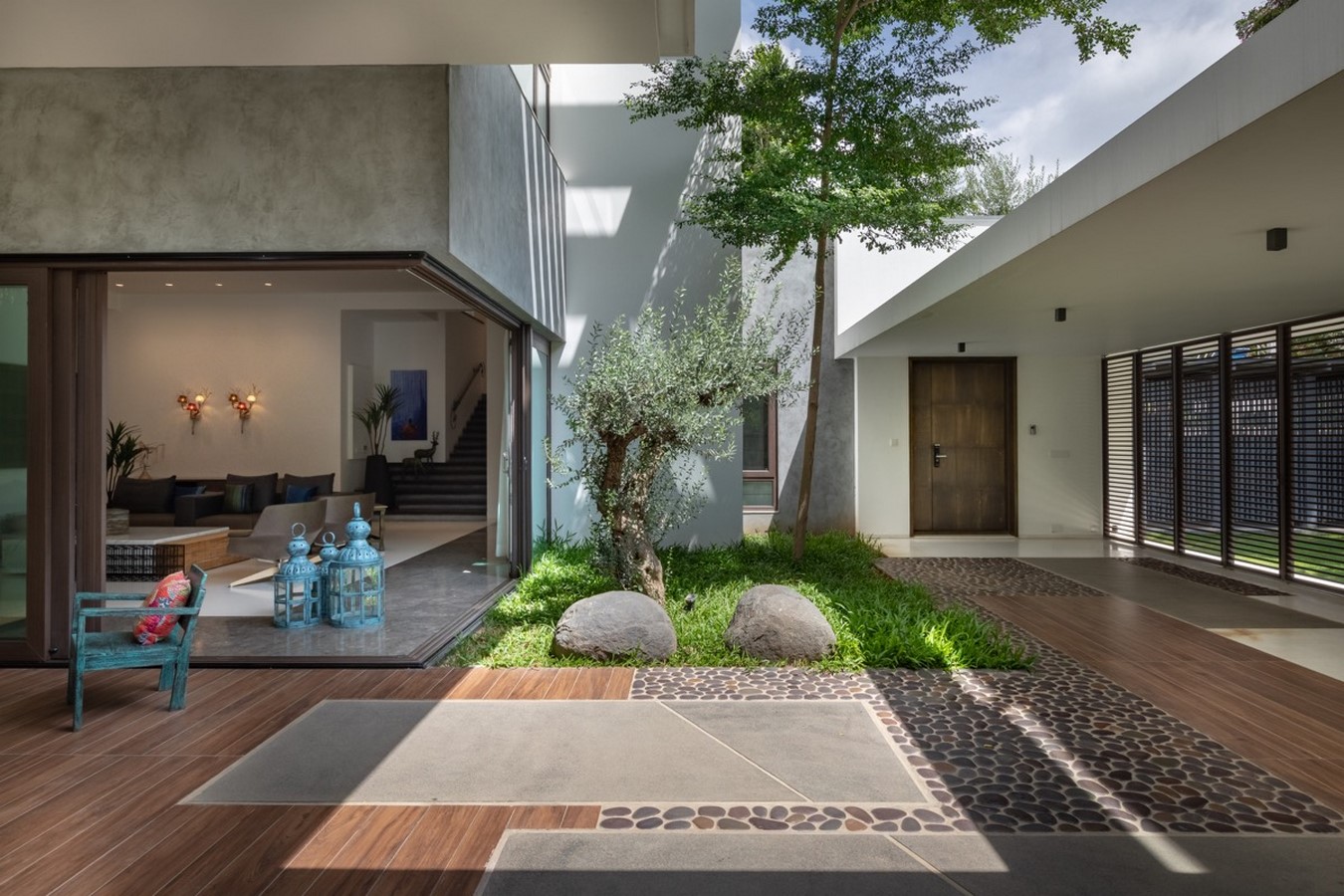
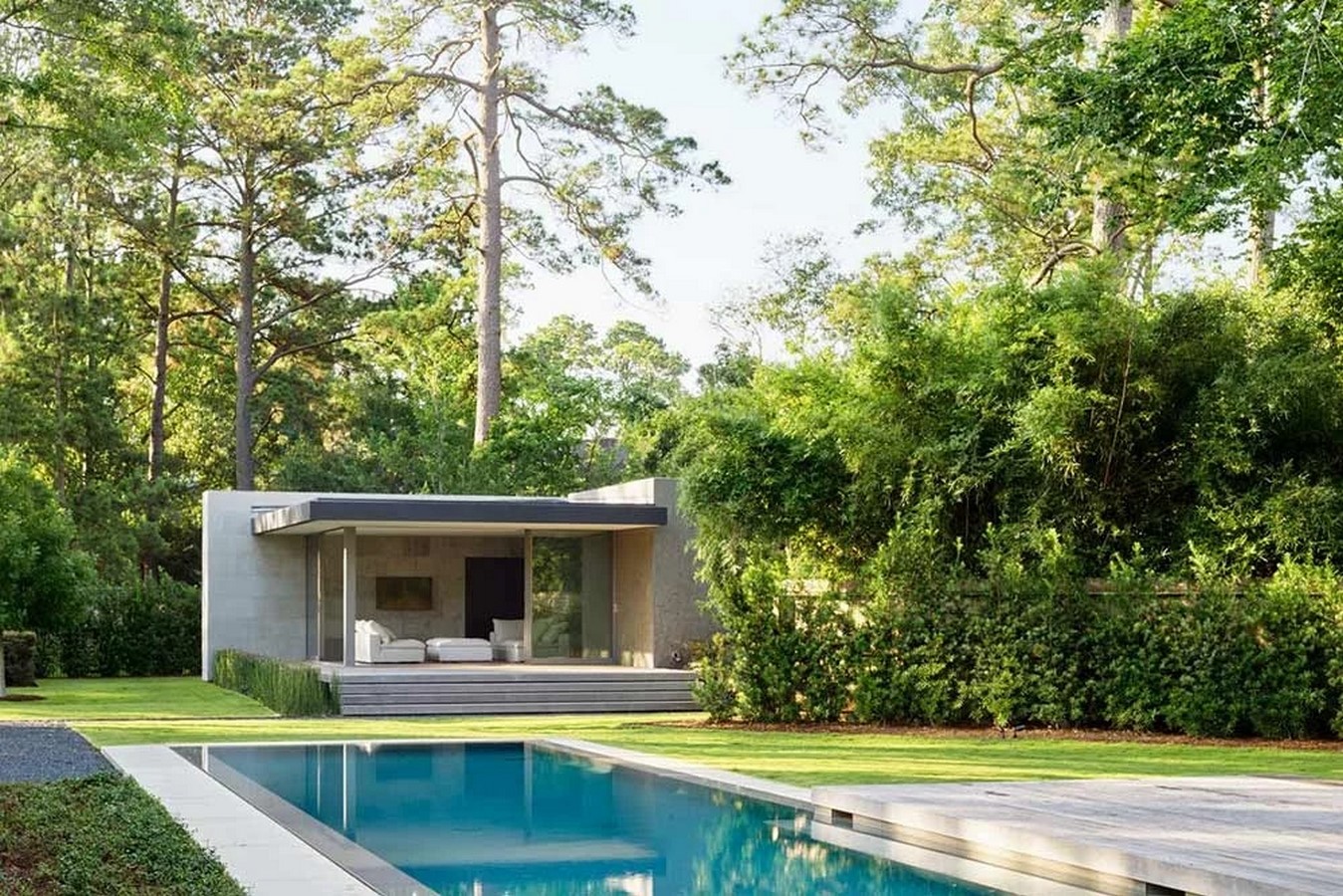
Spaces in a luxury home where privacy could be sought after are, Outdoor spaces: spaces to be considered for privacy and design depends much more on the context around the site. If the site is around a dense neighbourhood then making the open spaces private would be different than for the site in a sparsely populated neighbourhood. Therefore, probably incorporating a Semi-Open courtyard could be a thing to consider for enjoying the outdoors but feeling shielded. It is like bringing the goodness of outdoor spaces into the indoors through visual and experiential connectivity and ensuring privacy.
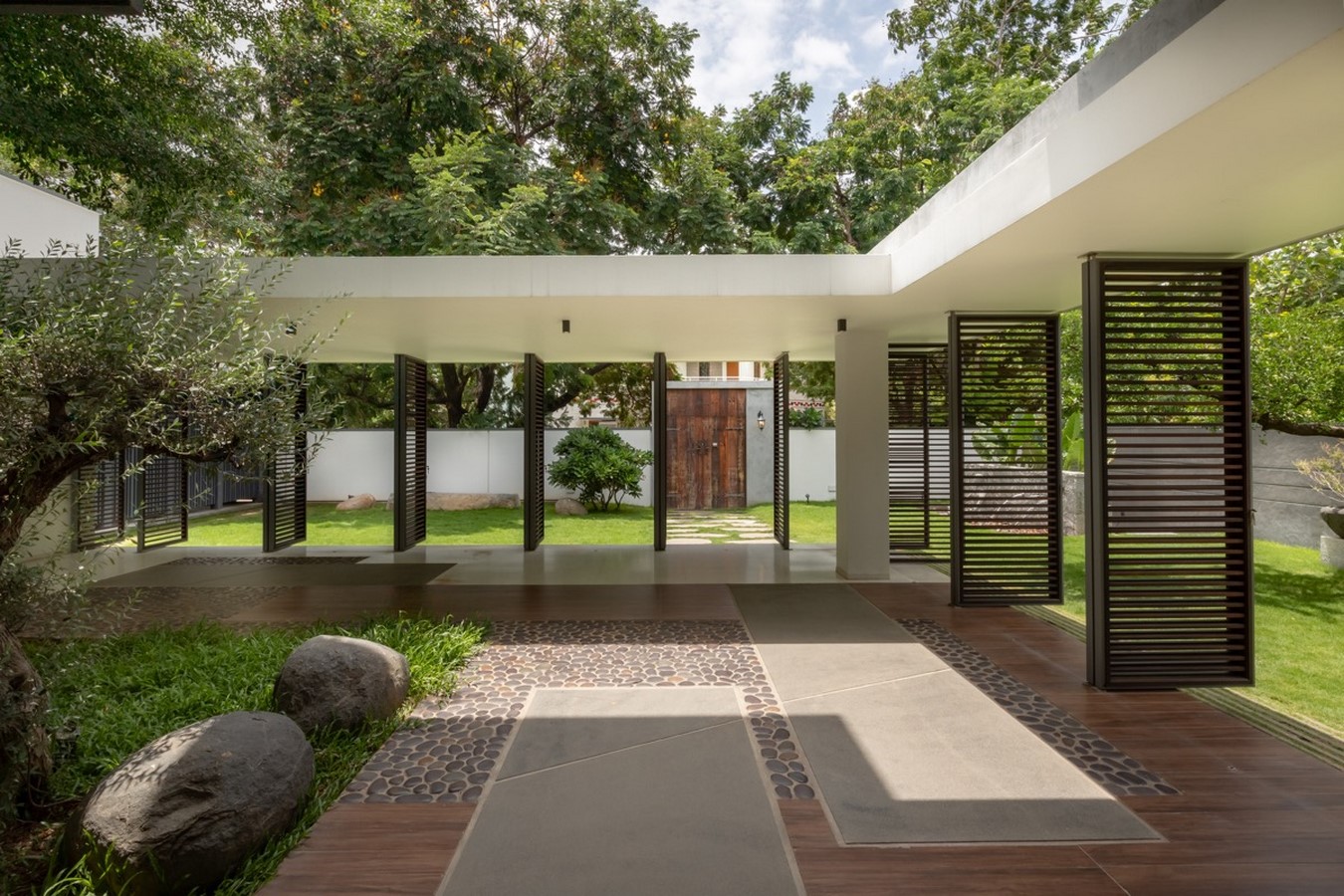
2.Gardens(landscaping in the site) and Entrances: Landscaping can play very much of a vital role in keeping up privacy and segregating it from the streets and other neighbourhood contextual existence, providing privacy to the users. Also, entrances are well guarded by landscaping to block in views and provide visual privacy. Entrances can be placed in a very sequential and effective way to bring in privacy.
For instance, an entrance can be defined firstly by landscaping and then a transit space can be inclusive of the design to not directly allow outsiders to excess the more private spaces immediately after one enters. This is where zoning out spaces effectively proves beneficial and segregating into different zones according to the need for privacy and planning out transitional spaces, letting one know the change of spaces through design.
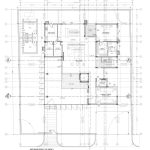
For Instance, the Indian villa by architect Moriq mentioned has been designed in such a way that it supposedly has a double entrance to the main area of the house and the second entrance is after a transitional space in between the entrance from the lane to the actual entry to the house, much to notice the second entrance also is flexible to serve as an indoor courtyard keeping up to privacy.
3.Guest Houses or secondary accommodating spaces within the site: Again this kind of space is not common probably for a lot of luxury homes but homes with a vision of including such spaces also need to take care of privacy for those secondary dwelling units and be considerate about privacy from the primary unit of residence. This is where zoning again comes in and plays an important role . Also transitional spaces can hop in taking share in the responsibility of keeping spaces private.
 Architects being Amenable
Architects have a responsibility and need to be sensitive to privacy and do justice to their role of providing the ultimate vision of the client or the occupants. Amongst them is privacy. Privacy is one of the sensitive goals to be achieved, therefore architects need to play their role well.
Architects need to focus more on certain aspects like Being Intuitive and Sensible: spaces should be sensibly placed and should have a distinctive separation to maintain privacy, this could be achieved in multiple creative ways. Occupants and visitors can be guided well by the design itself for space, where they will be welcomed and spaces where they cannot set foot, meaning more private spaces.
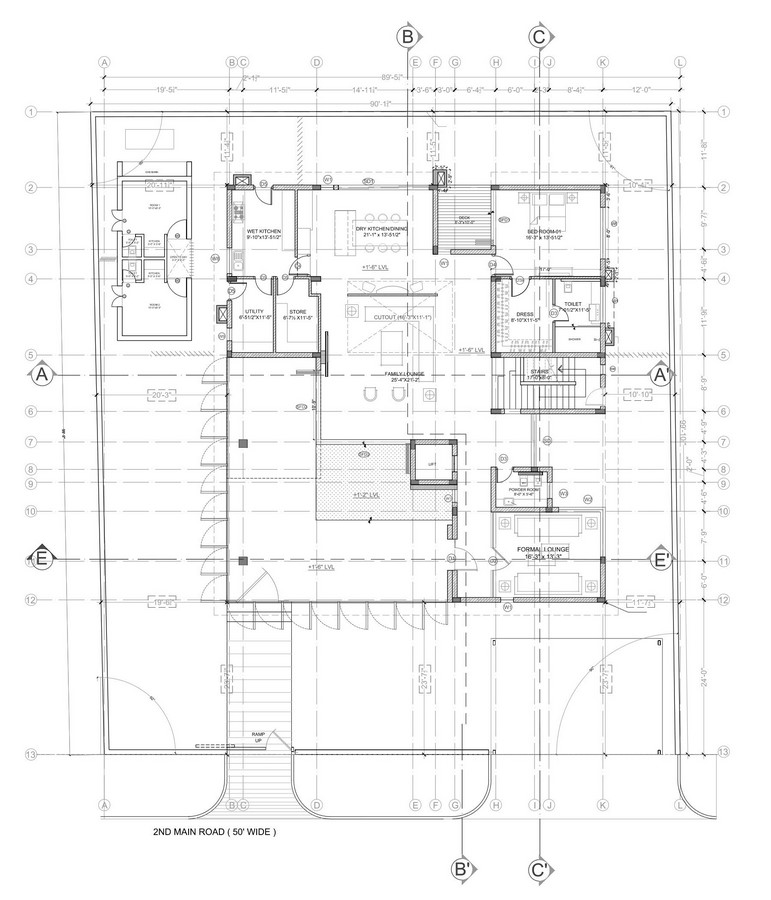
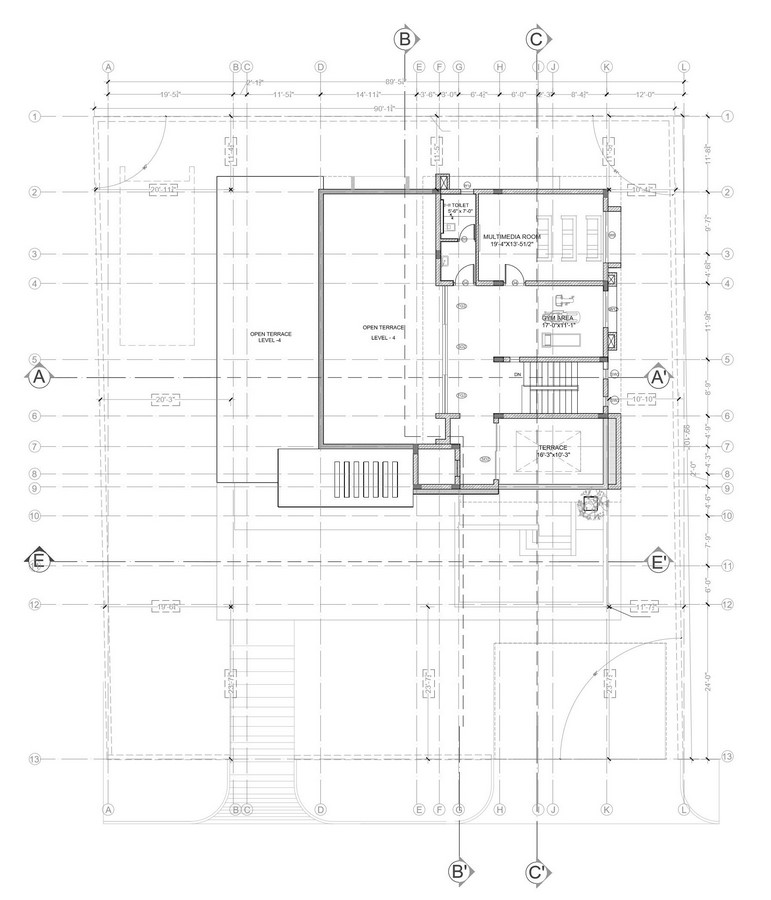
2.Conditioning the concept of space to the degree of privacy sought: Zoning is important and again returns an architect to the basics of separating spaces into various zones of privacy and importance. The need to express via a sense of organisation in spaces, including flexibility but at the same time adapting to the degree of privacy wanted, with each space having its own set of privacy requirements again, like a kitchen to a bedroom.
-
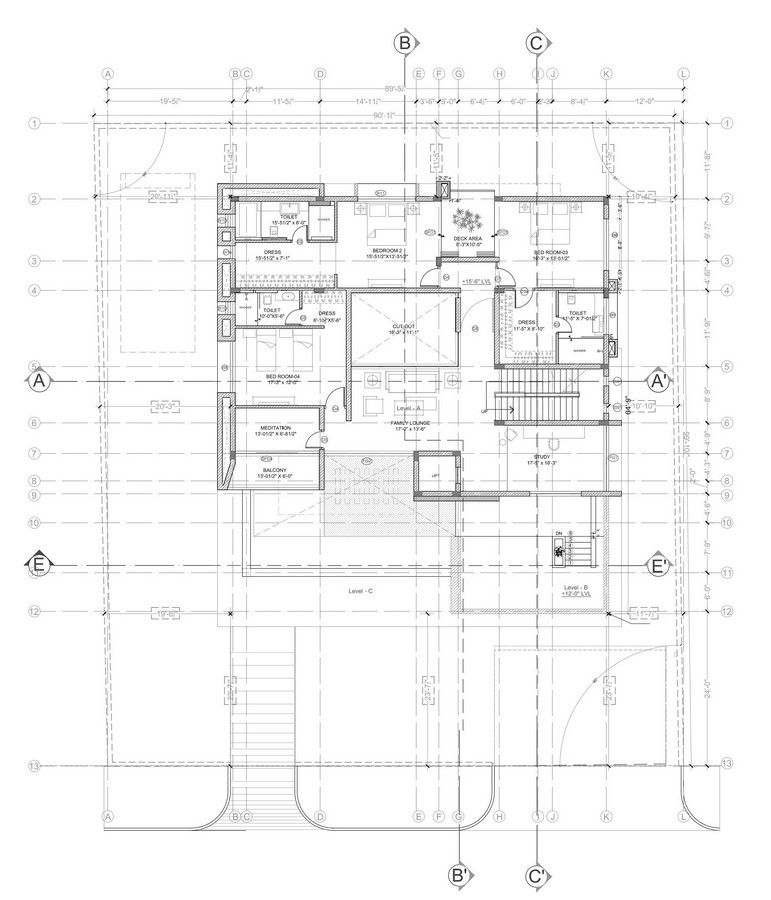
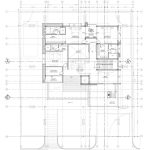
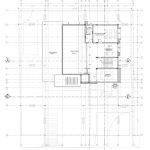
Example: Showing a luxury Villa in Hyderabad designed by Architect Moriq, the spatial arrangement on the First floor ©Home Designing Establishing good acoustical qualities: Along with probably having good luxurious commodities in a house, good interiors, and good spatial arrangement, it is also very important to take care of acoustics, meaning sound mitigation, mostly in spaces of need.
- Taking care of proportions: It is also about understanding the proportional dynamics of spaces and spatial arrangement in a luxury home. Though luxury homes come with more spacious needs, being cautious about at least being different in terms of the proportion of spaces like the living area to a kitchen or a bedroom is essential. As mostly smaller spaces indicate in nature the more private spaces in a home and vice versa. This is again supported by many factors like interior design, placement of furniture, fenestrations, etc.
References:
- Georgiou, M. (2006). Architectural privacy: a topological approach to relational design problems University College London
- Angwin, J. (2014), “Has Privacy Become a Luxury Good?” The New York Times, March 3.
- Day, L. L. (2000), “Choosing a House: The Relationship between Dwelling Type, Perception of Privacy, and Residential Satisfaction,” Journal of Planning Education and Research, 19(3), p. 265.
- Dale N. Dewey, CEO-Luxury Solutions (2009), “Back to the Future of Luxury,” 22 January, Available at: http://static.luxurysociety.com/download/BacktotheFutureofLuxury.pdf.
- Gorgeous Modern Indian Villas With Courtyard, Home Designing Available at: https://www.home-designing.com/gorgeous-modern-indian-villas-with-courtyards (Accessed: July 5, 2023).
- Clarke, K. (2019), “Unravelling Mark Zuckerberg’s Secret Deal for a $59 Million Tahoe Compound,” The Wall Street Journal, May Available at: https://www.wsj.com/articles/unraveling-Mark Zuckerberg’s-secret-deal-for-a-59-million-tahoe-compound-11556811876?mod=searchresults&page=1&pos=4.
- DESIGNING FOR PRIVACY: ARCHITECTURE IN THE SURVEILLANCE AGE (2020) Design Built Review is available at: https://designbuild.nridigital.com/design_build_review_apr20/designing_privacy_architecture_surveillance_age (Accessed: July 4, 2023).