Colonialism, experienced through the lens of architecture, has many layers that span multidimensional contexts. The production of hybrid formation of the built environment in post-colonial places can be understood through various aspects, with cultural and sociological factors being a few of many. When viewed only as a physical instrument, architecture has certain implications regarding global perspectives on the impact of colonialism in the post-independence era. Traces of Western hegemony can be seen in modernist theories articulated and imposed on colonised cities through architecture serving as a visual narrative.

Role of Architecture as an Apparatus in enforcing colonialism
Colonial architecture played a pivotal role as an apparatus in enforcing colonialism, extending beyond its aesthetic appeal. It served as a tangible representation of power and control, with grand structures and administrative centers showcasing the dominance of colonial powers over colonized territories. Additionally, architecture was utilized to establish spatial divisions and segregation, reinforcing social hierarchies and preventing assimilation or resistance. By imposing European styles and erasing indigenous architectural traditions, colonial powers sought to suppress indigenous cultures and marginalize their identities. Moreover, architecture facilitated economic exploitation through infrastructure projects that extracted resources for the benefit of the colonial powers, while disregarding the local population. Colonial architecture perpetuated ideological and racial hierarchies, reinforcing the narrative of European superiority and justifying the subjugation of indigenous peoples.
Understanding the relationship between architecture and colonialism has been a subject of study since the quarter half of the 20th century with an emphasis on experiences relayed by French and British colonialism stretching and covering the vastness of North Africa, the Middle East, and South Asia. With the advent of subaltern studies and an oriental shift brought about by Edward Said in his book ‘Orientalism’, the theoretical manifestations of architectural historians have been subjected to interpretative and speculative studies in the post-independence era.
As nations have attained independence and progressed beyond the influence of colonialism, there has been a rising awareness of how architecture and urban planning were employed as instruments of colonial control and dominance. In light of this realization, architects, and planners have increasingly embraced a critical and introspective approach, one that recognizes the intricate historical consequences of colonialism and strives to foster more inclusive and fair design and planning practices.(James-Chakraborty, 2021)
The emergence of a postcolonial identity
There has been considerable attention brought to the significance of architecture as a marker of identity deeply rooted in a specific place yet susceptible to influence from outsiders and newcomers. Buildings, while often seen as silent structures, possess a meaning that is far from static. Over time, they acquire new associations, often beyond the control of their original creators, depending on the events and activities that unfold within or around them. Throughout history, architectural forms have been shaped by the movement of people, including labourers, artisans, architects, and those who employ them, as well as the objects that carry decorative motifs and ideas about structure.
The influence of ideas on space, structure, and ornamentation can spread along trade routes, independent of the expertise that gave rise to them. In the late 1970s, the publication of Charles Jencks’s “The Language of Postmodern Architecture” marked a significant moment in architectural culture, advocating for symbolic and often ironic architectural forms using semiotic theory. This rejection of modernism preceded and partially influenced the reception of pioneering postcolonial scholars, including Edward Said, by architectural historians. In the 1980s, the term “colonial” was often regarded positively in architecture, especially in the United States, as it represented a stable or pre-industrial past.
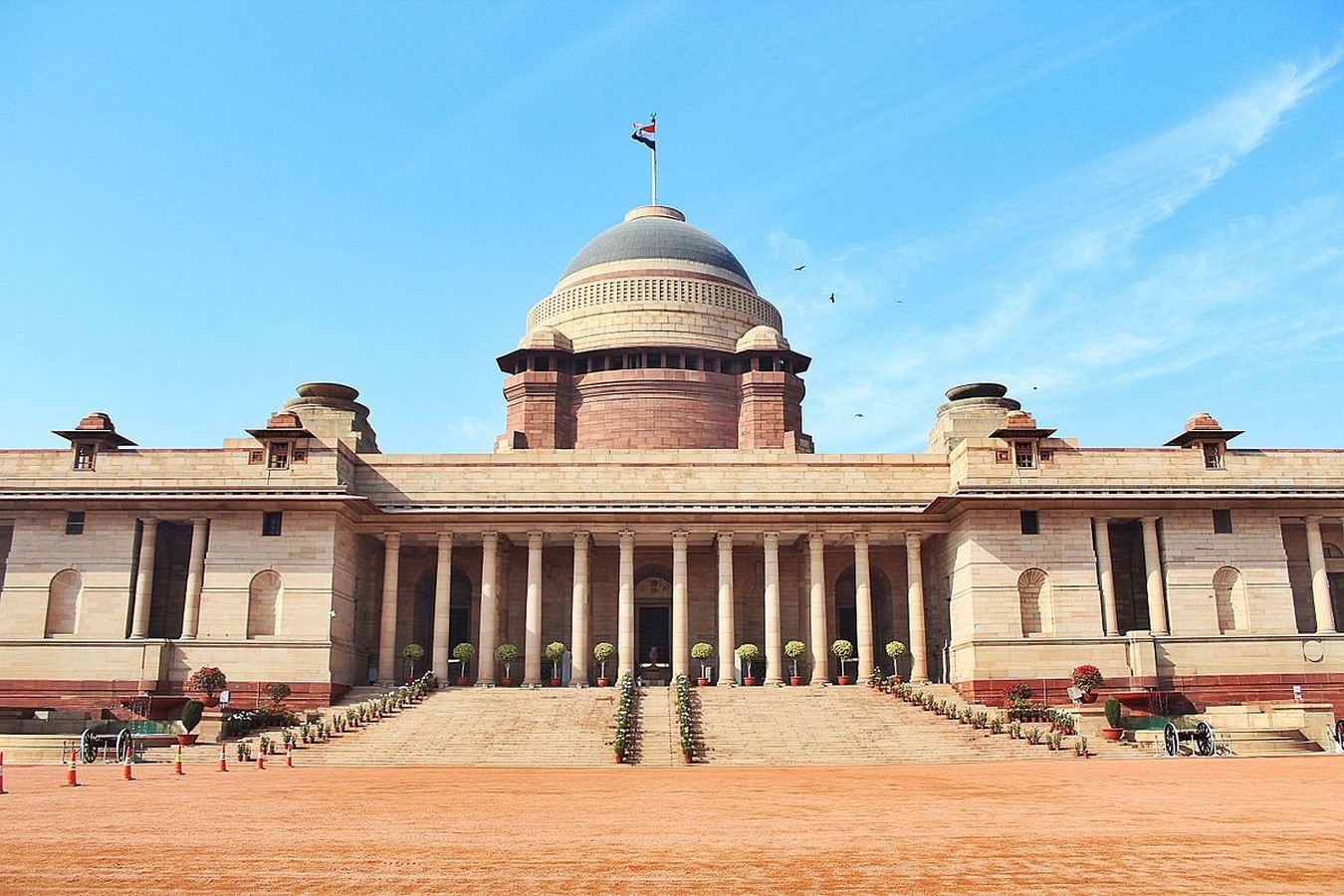
During the colonial period, European powers exerted political and economic dominance, resulting in the imposition of Western architectural styles and planning practices on colonized societies. For instance, the Victoria Memorial in Kolkata is a grand structure built during British colonial rule. Its Indo-Saracenic architecture, blending Indian and European elements, reflects the imposition of Western aesthetics on Indian soil. Similarly, the Rashtrapati Bhavan in New Delhi, formerly known as the Viceroy’s House, exemplifies the neoclassical influence brought by British architect Edwin Lutyens.

This led to the marginalization and erasure of local architectural traditions, disconnecting the built environment from its social, cultural, and environmental contexts. Postcolonial theory has played a crucial role in examining the cultural and political implications of colonialism on architecture. It emphasizes the need to recognize and address the power imbalances and inequalities embedded within the built environment. Postcolonial approaches to architecture and urban planning strive to challenge Western hegemony and foster a more inclusive and contextually sensitive design and planning process. Many architects and planners have embraced postcolonial theory, using it as a framework to develop designs and plans that are responsive and respectful of local contexts.
The colonial legacy
European powers imposed Western architectural styles and planning practices on colonized societies, shaping the built environment according to their political and economic interests. As the field of architectural history has shifted towards examining the use of architecture as a tool for political and economic authority, the analysis of colonial architecture has converged with discussions on identity.
One significant conclusion drawn from this examination is that modernism was not simply imported into colonial contexts but was instead forged within them. Former colonies served as laboratories for architects who found the authority and opportunity to implement their latest ideas. In India, for example, the architecture reflects a blend of European stylistic practices and Indian spatial traditions. The luxury and privilege enjoyed by colonial officials in India came at the cost of a loss of personal privacy, which was influenced by Indian spatial practices. The Indo-Saracenic style, introduced as a colonial variant of High Victorian Gothic, exemplified this fusion. Buildings adorned with ornamental motifs borrowed from Mughal and Rajput architecture often followed European organizational principles.(Evans, 2023)
While the grand palatial settings that the British encouraged local rulers to build continue to captivate locals and tourists alike, there is a growing awareness of the complex dynamics of power and cultural exchange embedded within colonial architecture. The ongoing reevaluation of colonial architectural legacies underscores the need to critically examine the layered narratives and historical contexts they embody.
Reference List
Anon, (n.d.). Colonialism and Architecture – Postcolonial Studies. [online] Available at: https://scholarblogs.emory.edu/postcolonialstudies/2014/06/20/colonialism-and-architecture/.
Djiar, K.A. (2009). Locating architecture, post-colonialism and culture: contextualisation in Algiers. The Journal of Architecture, 14(2), pp.161–183. doi:https://doi.org/10.1080/13602360902867392.
Evans, G. (2023). [online] Commercialarchitecturemagazine.com. Available at: https://www.commercialarchitecturemagazine.com/the-impact-of-postcolonialism-on-architectural-design-and-urban-planning/#the-colonial-legacy-in-architecture-and-urban-planning [Accessed 9 Jul. 2023].
James-Chakraborty, K. (2021). Postcolonial Thought and the Emergence of Global Architectural Histories. Oxford Research Encyclopedia of Literature. doi:https://doi.org/10.1093/acrefore/9780190201098.013.1282.
Online Maps. (2014). Online Maps: French Colonial Empire, 1931. [online] Available at: http://onlinemaps.blogspot.com/2014/02/french-colonial-empire-1931.html [Accessed 9 Jul. 2023].
Parashar, S. and Schulz, M. (2021). Colonial legacies, postcolonial ‘selfhood’ and the (un)doing of Africa. Third World Quarterly, 42(5), pp.867–881. doi:https://doi.org/10.1080/01436597.2021.1903313.
THE FUNAMBULIST MAGAZINE. (2017). Introduction: Colonialism as a Continuous Process Architecture as a Spatial Apparatus. [online] Available at: https://thefunambulist.net/magazine/10-architecture-colonialism/introduction-colonialism-continuous-process-architecture-spatial-apparatus-leopold-lambert.