William J. Mitchell’s City of Bits: Space, Place, and the Infobahn, originally published in 1995, resembles a relic of early cyberculture scholarship, oscillating between visionary insight and embarrassing naiveté. As one of the earliest attempts to reimagine and reconceptualize architecture and urbanism in the digital era, City of Bits offers a thought-provoking and generous glimpse into the cities and citizens of the future. At the same time, Mitchell’s vision for the new millennium, emanating from what may be the most privileged vantage point for the new millennium, substitutes celebratory breadth for critical depth and virtually overlooks crucial social and economic factors.
Through meticulous research and compelling analysis, Mitchell explores the profound implications of the digital realm on our urban spaces, challenging traditional notions of place, community, and communication. As we embark on a journey through the pages of “City of Bits,” we gain a deeper understanding of the interconnectedness between the virtual and physical worlds, and how it continues to shape the cities of today and tomorrow.
Electronic Agoras
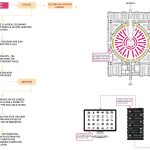
Among the concepts explored within the book, the notion of “electronic agoras” emerges as a compelling idea that reshapes how we understand and experience urban spaces. Electronic agoras can be defined as virtual spaces that replicate the functions and essence of traditional marketplaces and public gathering places in the digital realm. Just as physical agoras fostered social interaction, economic exchange, and the exchange of ideas, electronic agoras utilize computer networks and the internet to facilitate similar activities in a global and interconnected manner.
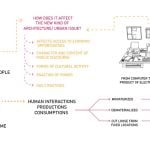
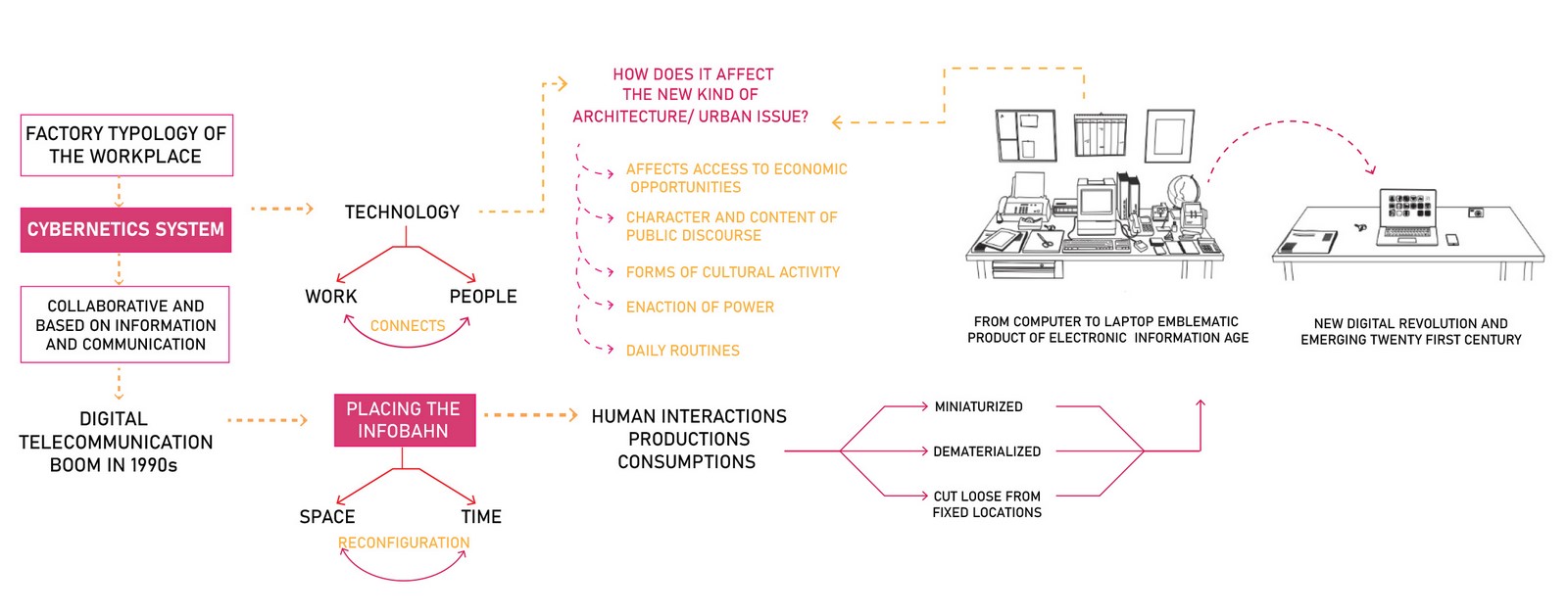
The New Digital revolution has miniaturized, dematerialised and helped the worker to cut loose from all fixed locations. Mitchell talks about a few important topics in the book, some of which are mentioned below.
Spatial & Anti-Spatial
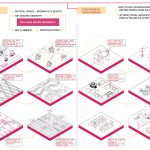
The proliferation of digital technology and the internet has enabled unprecedented connectivity, eliminating the constraints of physical distance. Electronic agoras leverage this connectivity by providing platforms for individuals to engage in a myriad of activities. From online forums and social media platforms to e-commerce websites and virtual worlds, these digital spaces offer opportunities for communication, collaboration, and commerce. The Internet completely negates geometry and is therefore ambient. This De-spatialisation helps in determining, no class-based hierarchy.
Asynchronous and Synchronous
Asynchronous communication refers to the exchange of information or messages that occur without real-time interaction between participants. It allows individuals to communicate at their own pace, transcending geographical and temporal barriers. With email, discussion forums, and social media platforms, asynchronous communication has become integral to our daily lives, offering flexibility and convenience. On the other hand, synchronous communication involves immediate and simultaneous interaction between participants, requiring all parties to be present at the same time. Platforms such as video conferences, instant messaging, and live streaming exemplify synchronous communication, enabling real-time collaboration and engagement. Both forms of communication contribute to the multifaceted nature of the digital city, providing diverse means of connection and interaction in the modern age.
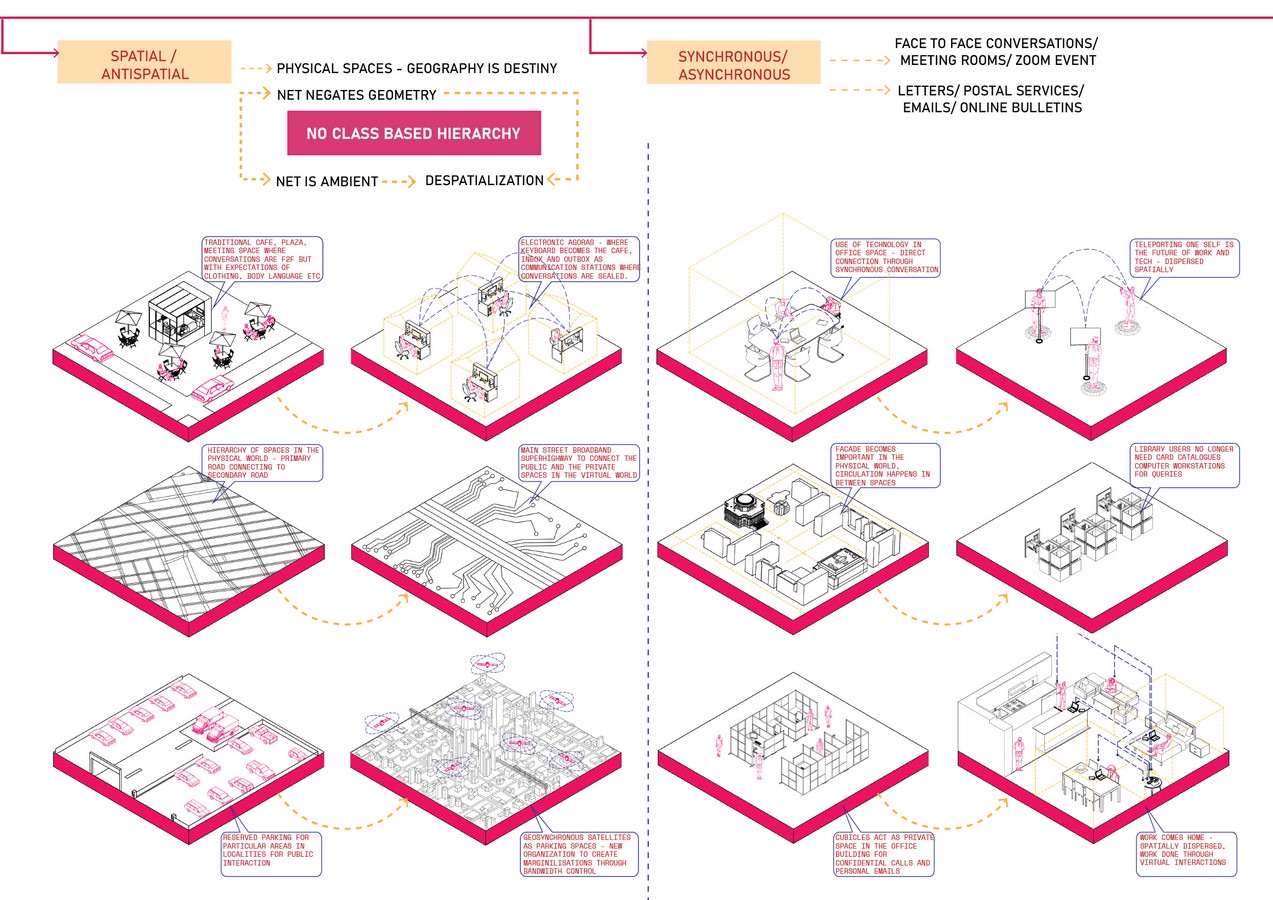
Narrowband & Broadband
Electronic agoras have significant implications for economic activities within cities. E-commerce platforms and digital marketplaces allow for efficient and borderless transactions, challenging the traditional brick-and-mortar retail landscape. The emergence of the gig economy, remote work, and digital entrepreneurship further reshapes urban economies, requiring flexible spaces that accommodate new forms of labor and business models. Interactions have become much more flexible and less intense. This creates a new economy of Landuse and Transport and hence construct a new form of marginalization, where if you’re a digital hermit; you are outcast from the cyberspace.
Contiguous and Connected
A contiguous space refers to a physical environment where different elements or components exist in close proximity to each other, forming a cohesive whole. It emphasizes the spatial arrangement and organization of urban structures. However, the advent of digital technologies has also given rise to connected spaces, where the physical and virtual realms intertwine to create a seamless and integrated experience. Connected spaces transcend physical boundaries and enable constant interaction and exchange of information through networks and digital platforms.

Recombinant Architecture
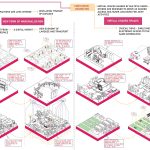
The concept of recombinant architecture revolutionizes traditional urban spaces, leading to profound transformations in the ways physical spaces used to work.
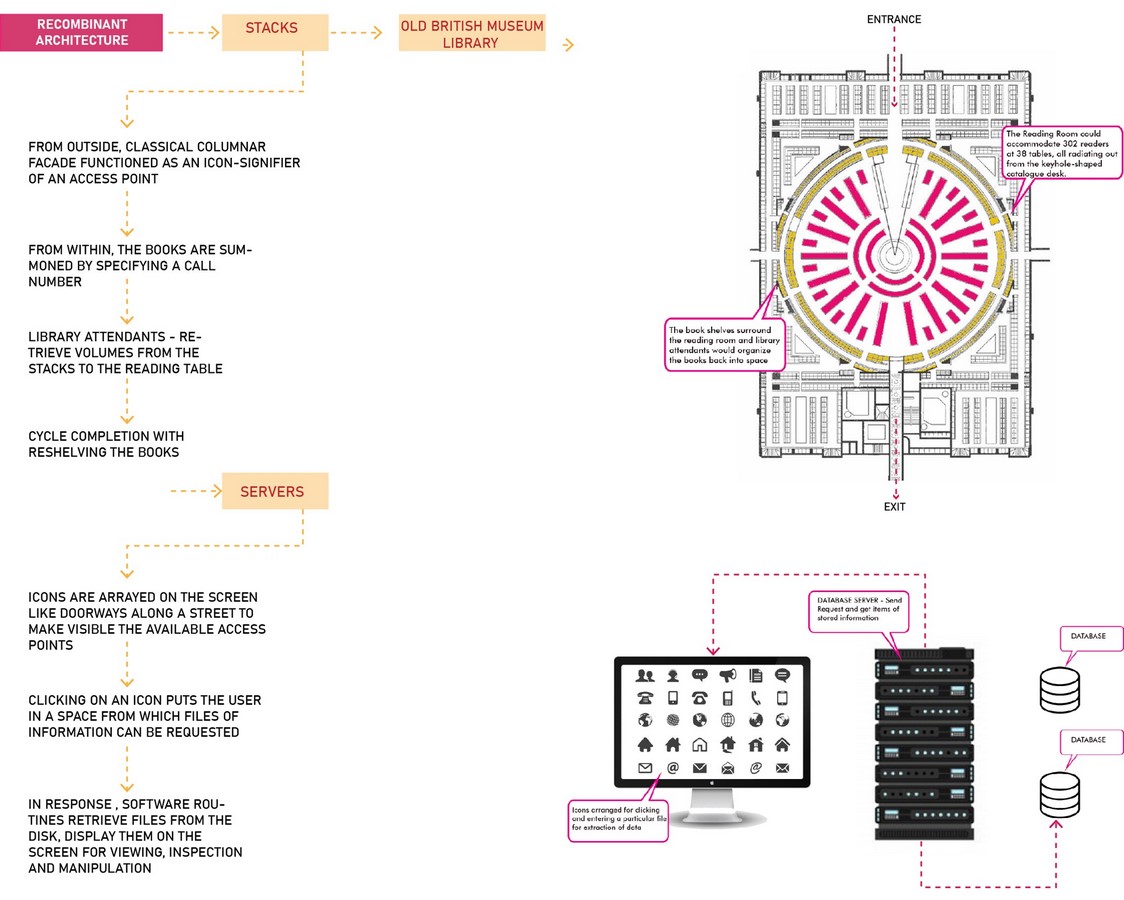
- From Stacks to Servers:
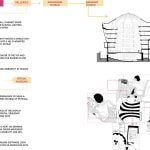
Recombinant architecture has propelled the metamorphosis of stacks, traditionally associated with libraries and archives, into servers capable of storing and disseminating vast amounts of information. The advent of digitization and networked technologies has led to the creation of digital repositories that transcend the limitations of physical stacks. Libraries have evolved into digital platforms, offering extensive collections accessible worldwide. Through online databases and search engines, users can access a wealth of information instantaneously, overcoming barriers of time and space.
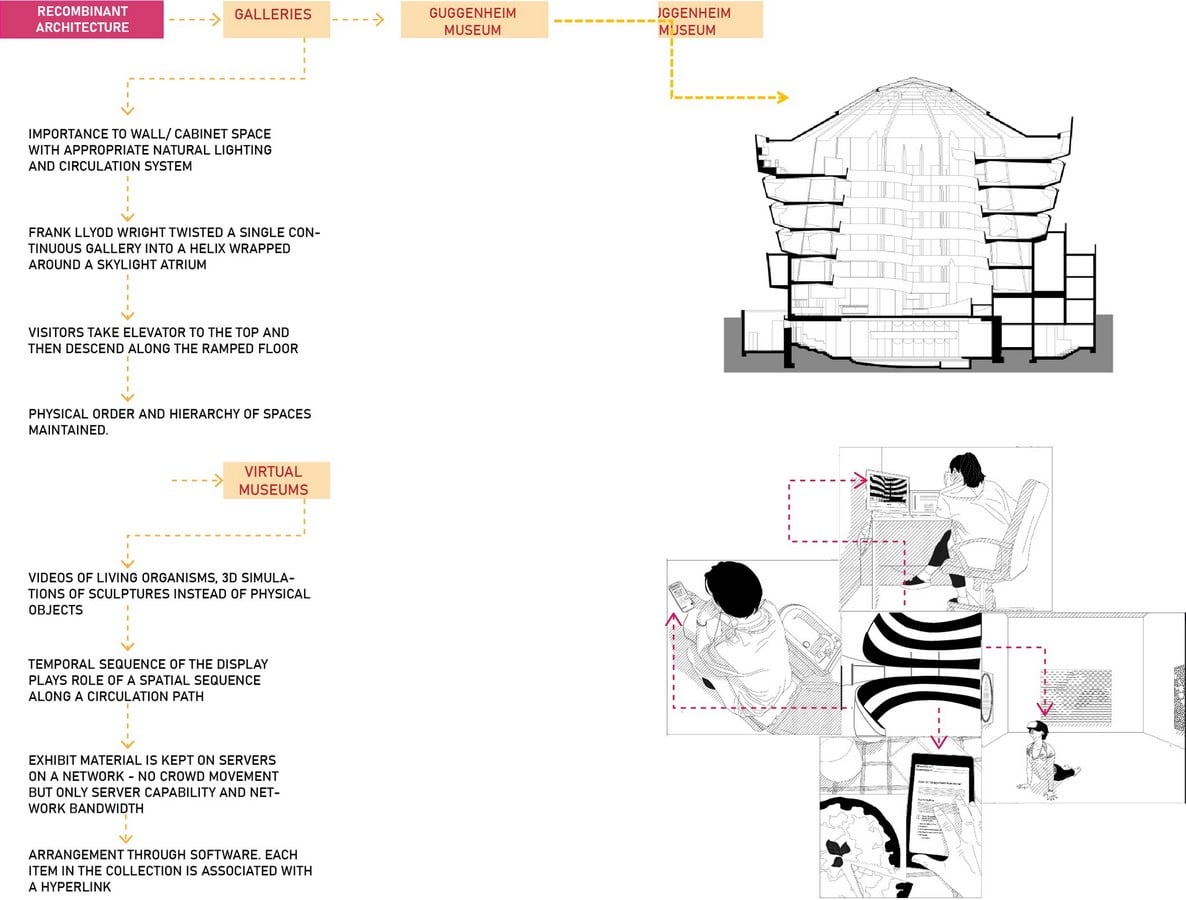
Galleries to Virtual Museums:
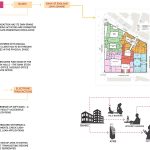
The concept of recombinant architecture has revolutionized galleries, morphing them into virtual museums that redefine the boundaries of art and cultural experiences. Digital technologies have enabled the creation of immersive and interactive virtual environments, facilitating unprecedented access to artistic masterpieces. Virtual museums allow visitors to explore exhibits through high-resolution images, virtual tours, and augmented reality experiences. By transcending physical limitations, individuals can engage with art from different eras and cultures, offering a democratized and inclusive approach to art appreciation.
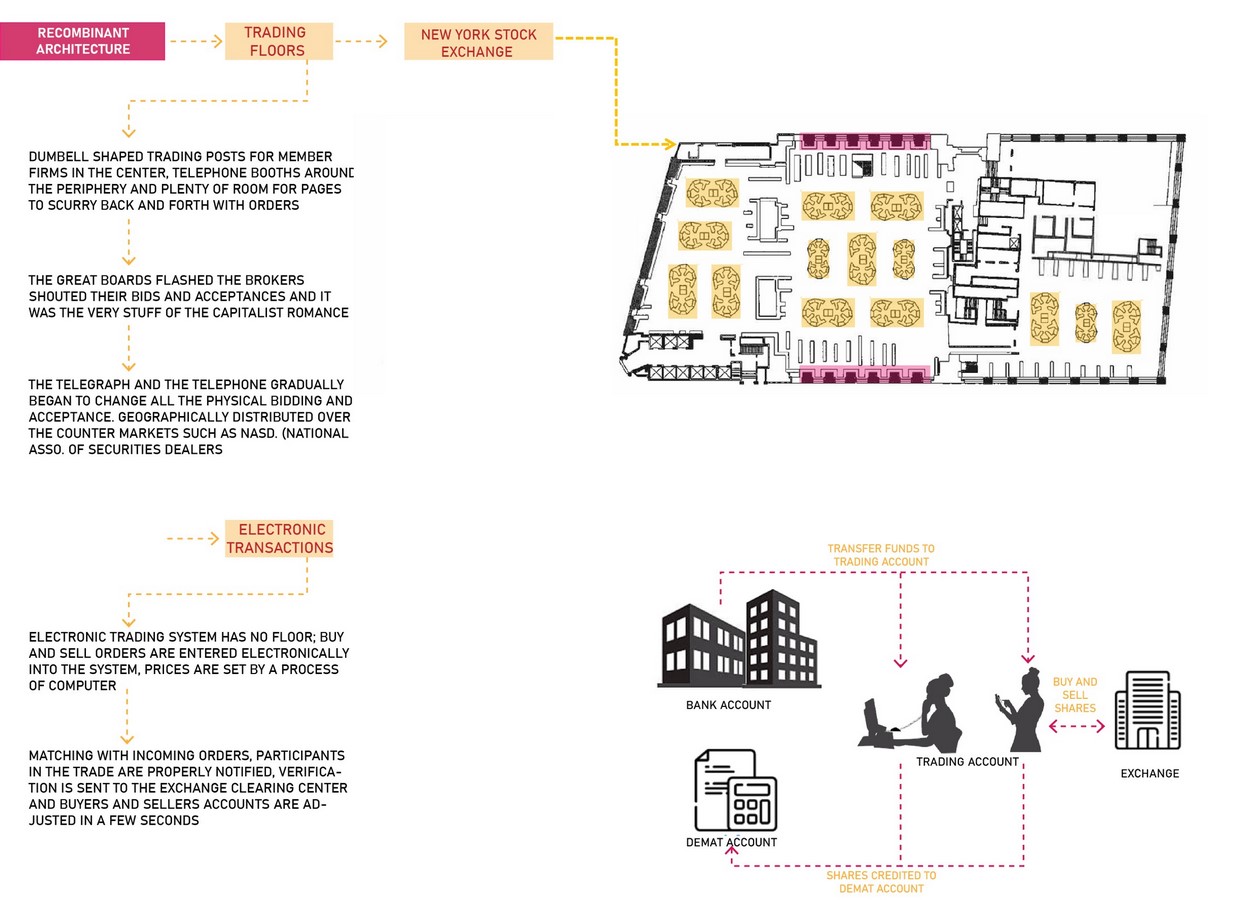
Banks and Trading floors in the Digital Era
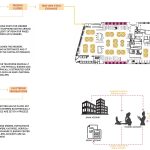
Recombinant architecture has played a pivotal role in reshaping the financial landscape, transforming traditional banks and trading floors into digital domains. The shift towards electronic transactions and online banking has revolutionized the way individuals manage their finances. Banks have embraced digital platforms, offering services such as mobile banking applications and online payment systems that provide convenient, secure, and real-time access to financial resources. Likewise, trading floors have transitioned into electronically connected environments, where complex financial transactions occur through sophisticated electronic trading platforms. This transformation has fostered efficiency, accessibility, and transparency within the financial sector, reshaping the way individuals engage with money and investments.

In conclusion, William J. Mitchell, talks about the concepts of bit and biz intertwine to create a digital landscape that redefines the nature of cities. Bits, representing the digital information and networks, have transformed the way we access knowledge, connect with others, and experience the urban environment. Meanwhile, biz, embodying the commercial and economic activities, has been reshaped by the integration of digital technologies and virtual transactions. In conclusion, “City of Bits” demonstrates the profound impact of bits and biz on the fabric of cities, urging us to critically examine the implications and opportunities that arise from the fusion of the digital and physical realms. As we navigate this ever-evolving landscape, it is crucial to consider how we can harness the power of bits and biz to create inclusive, sustainable, and human-centered cities that embrace the potential of technology while preserving the essence of what makes cities vibrant and liveable for all.
Citations
William J. Mitchell (1996), City of Bits: Space, Place and the Infobahn.