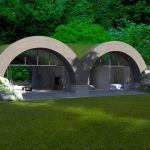
A bermed earth-sheltered house can be the ideal choice if you’re seeking a home with energy-saving features that will offer a cosy, serene, weather-resistant residence. Earth-sheltered homes, especially subterranean homes, are increasingly a viable passive design option. Bermed earth-sheltered homes were once only seen in traditional civilizations or in upscale construction styles. Bermed earth-sheltered dwellings are becoming more popular because of their built-in insulation.

What Is a Bermed Earth-Sheltered Home?
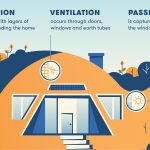
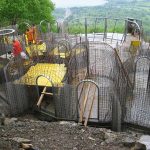
A building with earth (soil) against the walls, on the roof, or completely buried underground is called a bermed Earth-shelter home. Earth’s role as thermal mass makes it simpler to keep a constant indoor air temperature, which lowers the expense of heating or cooling systems. An elevated mound of dirt is called a “berm” used to insulate and protect a dwelling. The outside walls of a bermed earth-sheltered home are constructed of concrete or masonry and strengthened with steel to withstand the weight of the earth or soil deposited on top of them.
Types of Earth-Sheltered Home
In-Hill Sheltered Homes
When an earth shelter is built on a hillside or slope, the walls and the ceiling are covered in earth. One wall is often left unfinished in these earth-sheltered homes so that windows may be added, and the building can be heated using passive solar techniques.

Bermed Earth Sheltered Homes
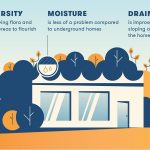
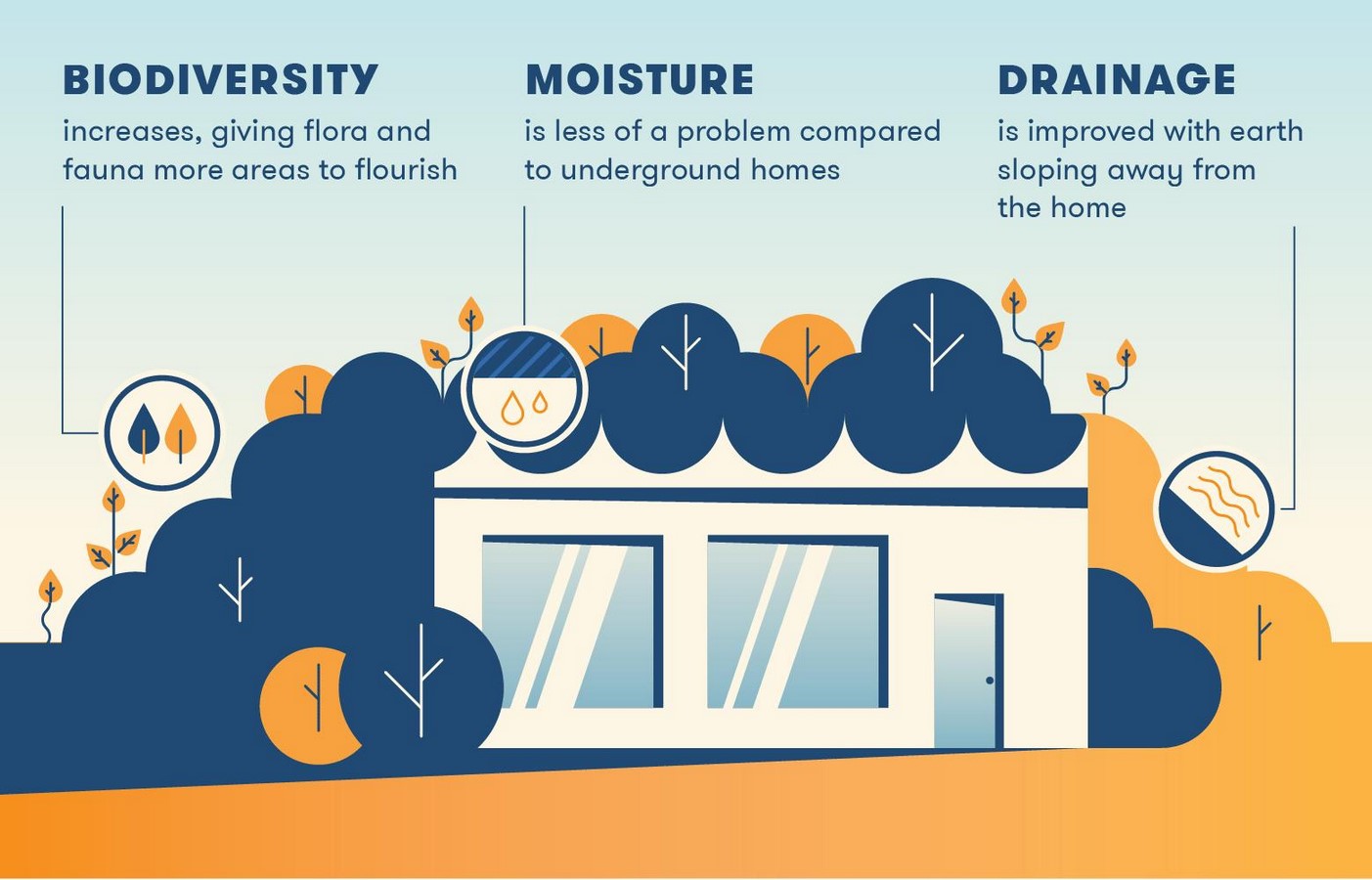
In a bermed Earth-shelter-type home, the earth is banked against the building’s exterior walls and slopes away from it. Bermed Earth-sheltered homes is less expensive to build than underground or fully recessed structures since it has fewer moisture issues because the building is above the original ground level. Earth-covered roofs support considerable weight.
Underground Earth Sheltered Homes
The term “true underground earth shelter” refers to a home built below the ground after the ground has been excavated. At the centre of the shelter, an atrium or courtyard can be built to offer enough light and ventilation.

Site-Specific Factors for Bermed Earth-Sheltered Home Design
Climate
According to studies, bermed Earth-sheltered homes are more economical in regions with extreme temperatures and low humidity, such as the Rocky Mountains and the northern Great Plains. Earth can absorb extra heat from the house in hot weather or act as insulation to keep the house warm in cold winter because earth temperatures in these regions change far less than air temperatures.
Topography and Microclimate
The ease with which the building can be surrounded by soil depends on the topography and microclimate of the site. The most difficult site, requiring substantial excavation, is flat. A moderate slope takes more excavation than a steep one.
Soil
The ideal types for bermed Earth-sheltering are granular soils like sand and gravel. These soils are relatively permeable, allowing water to drain quickly and compact well to support the weight of the building components. The least effective soils are cohesive, such as clay, which expands when wet and has low permeability.
Groundwater level
At the construction site, the groundwater level is also crucial. The easiest technique to prevent water pressure against underground walls is to allow natural drainage away from the building, however, installed drainage systems can also direct water away from the building.
Design and Construction Materials
Design
A typical design for a bermed earth-sheltered home building is to situate all the living areas on the side of the home that faces north or east. This gives kitchens, living rooms, and bedrooms the most solar exposure possible. The bathroom, storage, and utility room are often situated on the other side of the shelter because they only need a little heating or natural light.
Building Materials
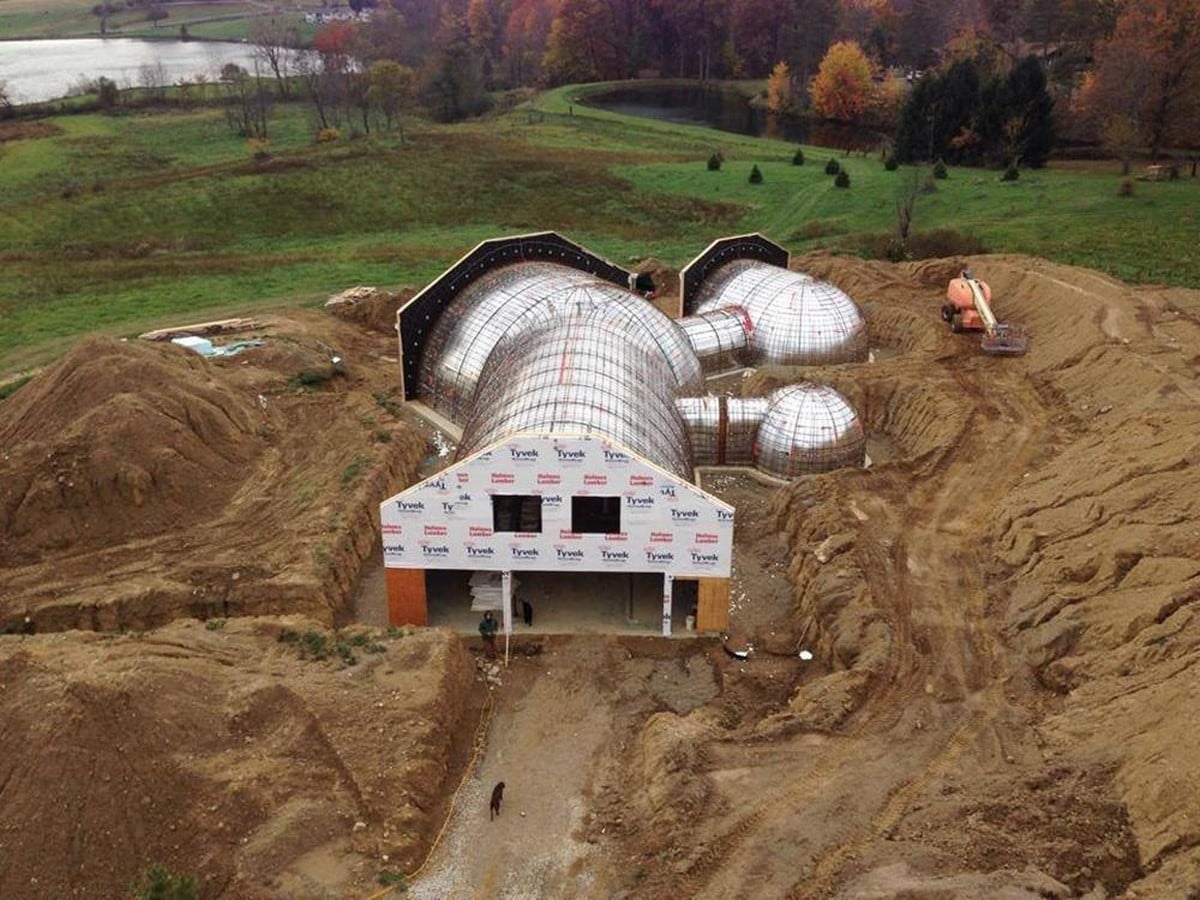
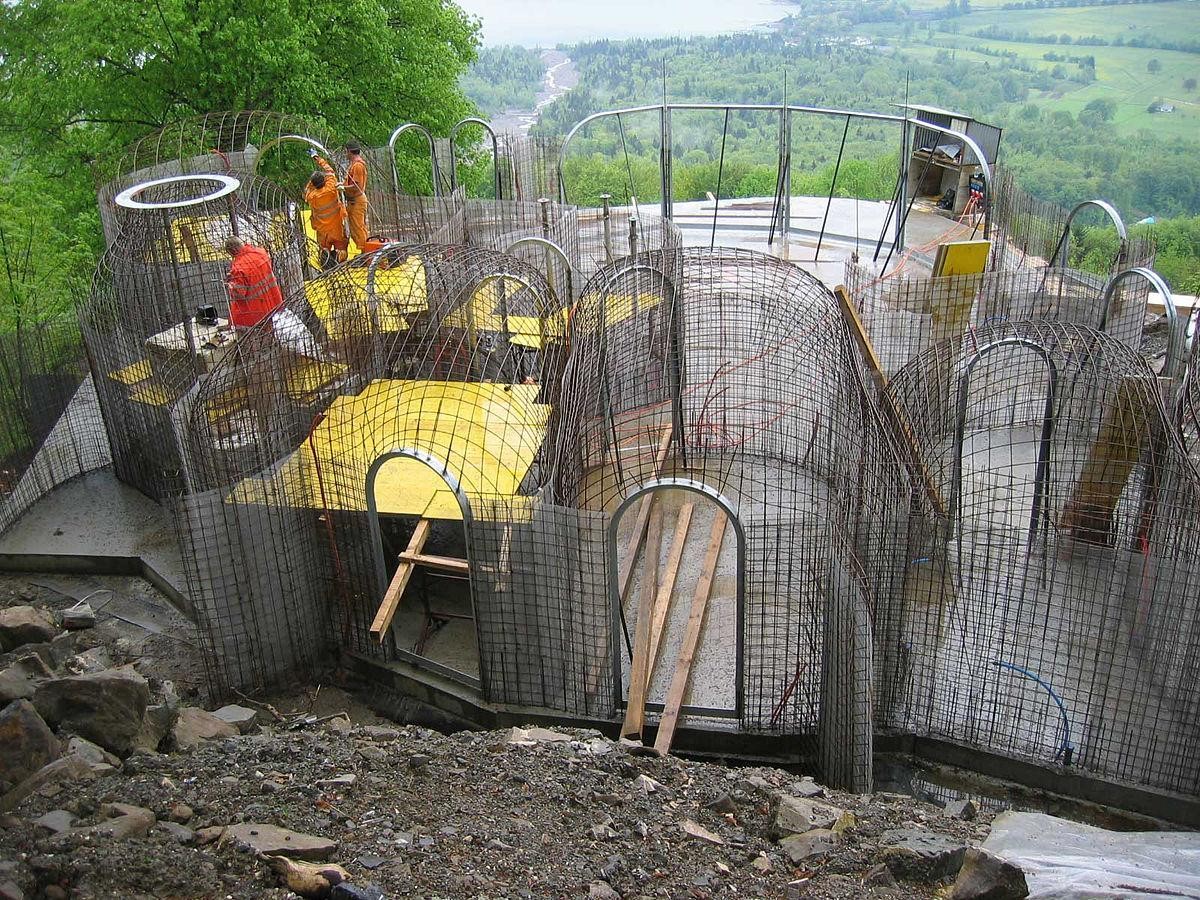
The type of structure, depth below grade, and soil type should all be considered when choosing construction materials for a bermed earth-sheltered home. Structures that are buried deeply call for stronger, more durable building materials. To endure ground pressure and moisture, waterproof and insulated materials should also be used. For instance, steel, wood, and reinforced masonry are all workable materials. Due to its strength, durability, and fire resistance, concrete is the material of choice most frequently for building structures sheltered by the earth. For walls subjected to lateral or vertical pressure from soil cover, brick or stone masonry reinforced with steel bars can be used. In earth-sheltered structures, wood can be used extensively for internal and structural construction, including flooring, roofs, and exterior walls.
Applications
Active and Passive Solar
Bermed earth-sheltered homes are well-suited for both passive and active solar applications. The earth’s insulation properties help maintain a consistent indoor temperature and lessen the need for artificial heating and cooling.
Passive Annual Heat Storage
The idea behind passive annual heat storage is to use direct gain passive solar heating and a thermal battery effect that lasts several months to maintain a consistent temperature within an earth shelter all year round. According to this theory, a bermed earth shelter would absorb the sun’s heat in the summer and gently release it throughout the winter, negating the need for additional heating.
Earth Tube Ventilation
Using a fan or convection, passive cooling moves air from a relatively constant temperature into underground cooling tunnels before entering the interior of the building. It also gives the residents fresh air.

Advantages and Disadvantages of Bermed Earth-Shelter Home
Advantages
- Energy efficient
- Reduced environmental impact
- Protection from natural disasters
- Provide a natural barrier to sound
Disadvantages
- Limited natural lighting
- High initial cost of construction
- Moisture and ventilation issues
- Constrained design flexibility
References:
- NCMA. (n.d.). EARTH-SHELTERED BUILDINGS. [online] Available at: https://ncma.org/resource/earth-sheltered-buildings/.
- The Spruce. (n.d.). Earth-Sheltered and Underground Homes Basics. [online] Available at: https://www.thespruce.com/what-are-underground-homes-1821786.
- Wikipedia. (2020). Earth shelter. [online] Available at: https://en.wikipedia.org/wiki/Earth_shelter.
- Energy.gov. (n.d.). Efficient Earth-Sheltered Homes. [online] Available at: https://www.energy.gov/energysaver/efficient-earth-sheltered-homes.
- Zitzman, L. (2020). The Anatomy of Earth Sheltered Homes | BigRentz. [online] https://www.bigrentz.com. Available at: https://www.bigrentz.com/blog/earth-sheltered-homes.