Behind every famous building stands a designer — Jørn Utzon behind the Sydney Opera House, Gaudí behind the Sagrada Família, I.M. Pei behind the Louvre Pyramid. This guide pairs 15 of the world’s most famous buildings with their architects, from a 6th-century Byzantine dome to a 21st-century airport, with the location and completion year of each.
15 Famous Buildings and Their Architects at a Glance
| Building | Architect | Location | Year |
|---|---|---|---|
| Beijing Daxing International Airport | Zaha Hadid Architects | Beijing, China | 2019 |
| Sagrada Família | Antoni Gaudí | Barcelona, Spain | 1882–present |
| Salk Institute | Louis Kahn | La Jolla, California, USA | 1965 |
| Indian Institute of Management | Louis Kahn | Ahmedabad, India | 1974 |
| Seagram Building | Mies van der Rohe (with Philip Johnson) | New York City, USA | 1958 |
| CopenHill Energy Plant | BIG / Bjarke Ingels | Copenhagen, Denmark | 2019 |
| Grand Louvre Pyramid | I.M. Pei | Paris, France | 1989 |
| The Glass House | Philip Johnson | New Canaan, Connecticut, USA | 1949 |
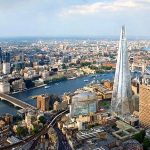
| The Shard | Renzo Piano | London, UK | 2012 |
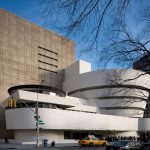
| Solomon R. Guggenheim Museum | Frank Lloyd Wright | New York City, USA | 1959 |
| Sydney Opera House | Jørn Utzon | Sydney, Australia | 1973 |
| Taj Mahal | Ustad Ahmad Lahauri (for Emperor Shah Jahan) | Agra, India | 1653 |
| Petronas Towers | César Pelli | Kuala Lumpur, Malaysia | 1998 |
| Hagia Sophia | Anthemius of Tralles & Isidore of Miletus (for Justinian I) | Istanbul, Turkey | 537 |
| Angkor Wat | Built under King Suryavarman II | Siem Reap, Cambodia | c. 1150 |
Architecture has the power to change the world; the power to give a form to the future, where it takes leaps and new wild forms in the future. Over the years, Architecture has always been shaping mankind through cultural, religious, and political aspects as every marvel makes an appearance, expanding the architectural community. Architectural technology paves the way for succeeding generations to survive. At its roots, famous buildings and its famous architecture represent how our future sees us and as well as the world. But, do we commend the masterminds behind those marvels? This blog post is all about architectural marvels around the world and the masterminds behind them.
1. Beijing Daxing International Airport – Zaha Hadid | Famous Buildings

Developed to lighten the congestion at the capital’s first airport, Beijing‘s second international airport was constructed in 2019 replacing Istanbul as the world’s largest transport hub for the region amidst the world’s fastest-growing demand for the foreign transport system. The structure is known for its sinuous form as ‘the starfish’, its sprawling star shape spans 7.5 million square feet. Originally the airport was serving 45 million passengers per year, and it is planned that it will accommodate 75 million passengers by 2025 and further expansion to make room for 100 million passengers and 4 million tons of cargo annually.
2. La Sargada Familia – Antonio Gaudi
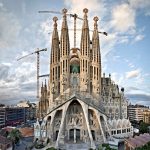
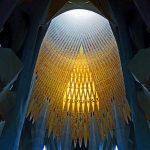
One of Barcelona‘s most famous landmarks, La Sagrada Familia, a cathedral that began in 1882, which was built more than a century ago by Antonio Gaudi 1883 the chief architect of the project, till his death in 1926. The cathedral employs three-dimensional forms containing ruled surfaces, including hyperboloids, parabolas, helicoids, and conoids, were emphasizing the cathedral’s acoustics and quality of light.


The design follows Catalan modernism intricate in each element by Gaudi, though he retained the typical Latin cross plan and features of a gothic cathedral from its foregoing design. Primarily, Flying buttresses were replaced by Angular columns and Hyperboloid vaults, eliminating gothic features in several ways. Literal symbolism is immersed in each aspect of La Sagrada Familia as they possess Christianity beliefs in three facades; the nativity façade facing East, The Glory façade facing West, and The Passion façade facing north. The Nativity façade was done with smooth, intricate corbelling overseen by Gaudi himself. After his death, the passion façade and Glory façade was taken over by Josep Maria Subirachis, who introduced modernism techniques to the cathedral’s design principles.
3. Salk Institute – Louis Kahn | Famous Architecture
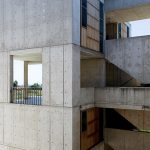
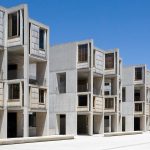
The Salk Institute was established by Jonas Salk in the year 1960, where Salk intended to approach Louis Kahn to design a biological research facility exploring the connotations of the sciences of humanity.

The institute was praised for its prominent aesthetics and functionality, creating a welcoming, minimalistic and inspiring environment for the researchers to work in. Kahn’s impact on the facility lies in the unobstructed laboratory spaces housed on two structures – identical to each other, each six-story tall, bounding the travertine courtyard.

The laboratories were, by design, easily upgraded, and flooded with natural light with the impact of the courtyard as they possess double glass panels, imposing an open airy environment. Two floors have been sunk underground owing to the local building codes, which did not cease the design from its lofty requirements; a series of light wells measuring 40 feet long and 25 feet wide on each side of the building for daylighting even at the lowest level of the building.
4. Indian Institute of Management – Louis Kahn
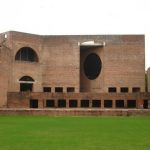
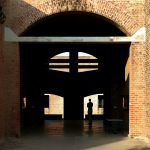
It would be unconvincing not to speak of Ahmedabad Indian Institute of Management, One of Louis Kahn’s finest creations. It was renowned Indian architect BV Doshi who approached Louis Kahn to design the 60-acre campus of IIM, Ahmedabad. Kahn’s mastermind for the design of the institute was more than fulfilling the spatial requirements nonetheless the educational infrastructure as the primary concern. The institute was a personification of modern architecture retaining traditional technologies to enhance the culture enamored with tradition in its context. The façade of the institute is its attribute as the cut-outs as abstract patterns function as extractions paying homage to Indian vernacular architecture. It also flaunts the light wells acting as a natural cooling system for the harsh arid context.


5. Seagram Building – Mies van der Rohe | Famous Buildings

Seagram Building, the epitome of modernism, in the heart of New York City was the first attempt at tall building construction of 515 feet high by Ludwig Mies van der Rohe. Mies’s reciprocation towards the building’s design principles was against the odds. Creating an open active plaza, imposing a setback of 100 feet from the street edge, the architect has set his ideologies apart from the New York urban morphology, the conventional practice of skyscraper construction.

The structure was embellished with a progression of bronze and dark glass, hitting a contrast on the concrete show of the plaza. The façade was fabricated with metal bronze skin and was amorphous yet gives a defined perspective of the structure beneath, along with other vertical elements, compelling a visual expression of the building.
6. Copen hill Energy plant – Bjarke Ingles

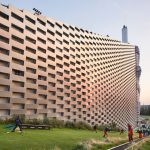
Copen Hill, also known as Amager Bakke has turned into an architectural landmark, as it has become an abode of a Waste-to-energy plant surmounted on the ski slope, a hiking trail to make Copenhagen, the world’s first carbon-neutral city by 2025. The plant has become an exemplary module as a waste management and energy production facility.

The design focuses on the reclamation of an unused invisible building to the public into a public infrastructure through a nature-filled program. The 4,10,00,000 Sqm project includes the urban recreational hub, and environment education imposing “Hedonistic Sustainability” and it was Bjarke Ingles who introduced the concept. The signature park and ski slopes on the rooftop cap the plant as a landmark. The rooftop will allow the visitors to use hiking trails, fitness structures, playgrounds, and views of the city. Beneath the slopes, lies the plant converting 44000 tons of waste from the city into energy.

7. Le Grand Louver – I.M.Pei
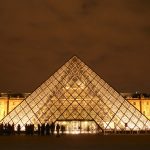
The Louvre museum is still considered to be an iconic artwork as the one it houses inside. During the renovation campaign at cultural institutions in France, I.M.Pei, a Chinese – American architect was assigned for the renovations of the museum, the first foreign architect to work on the Louvre museum. To avoid congestion, the main court was redesigned with a central convenient lobby separating the galleries. Addition and relocation of galleries and exhibits underground aids in the expansion of the lobby of the Louvre museum.

Pei’s addition of the steel and glass pyramid to the Louvre was a symbolic entry to the historical ancient monument, imposing Pei’s architectural mastermind into this cultural significance.
8. The Glass House – Philip Johnson | Famous Architecture
Glass House by Philip Johnson was considered to be a prominent work of modern architecture with its coherence inspired by Farnsworth House by Mies van der rohe. Nonetheless, it did not impress Mies, and it was stated that the latter stormed out as the design lacked interpretation of details.

The house is the primary attraction of the site and measures about 32′ x 56′ enclosed in 18′ wide long glass from floor to ceiling. The clear glass creates lively reflections and interactions between the interior and exterior except for the cylindrical brick structure at one end of the house. The site has incorporated thirteen more structures including the art gallery, sculpture pavilion, and guest house.

9. The Shard – Renzo Piano

Renzo Piano’s “The Shard” is an approach to exploring the urban landscape, being the tallest building in Western Europe, and a welcomed addition to London’s Skyline. The tower is a mixed-use skyscraper, with architecturally striking features including offices, apartments, retail areas, restaurants, and a spa. The skyscraper was planned as a “vertical city“, maximizing the spatial functionality, to address the growing population of the city. Public enclosures are at ground level creating a plaza with restaurants and cafés. The upper floors showcase office spaces with vertically inclined green pockets, hotel rooms, and luxury apartments with prepossessing views.
10. Guggenheim Museum – Frank Lloyd Wright | Famous Buildings

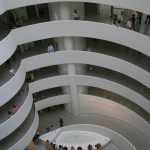
The Guggenheim Museum is one of the most popular and last major projects of Frank Lloyd Wright. The organic curves of the museum give a striking contrast to the rigid context, making it an architectural identity. Wright proposed that “one great space on a continuous floor” was achieved throughout the building, where the curves at the exterior created a stunning impact even on the interiors. The designs as the floors are connected through ramps running spirally along, with a high atrium at 92′ in height to an expensive glass dome.

Although these organic curves are the attributes of the museum, they were not successful in terms of practicality and did not satisfy Manhattan’s building codes or structural technicalities.
11. Sydney Opera House – Jorn Utzon | Famous Buildings
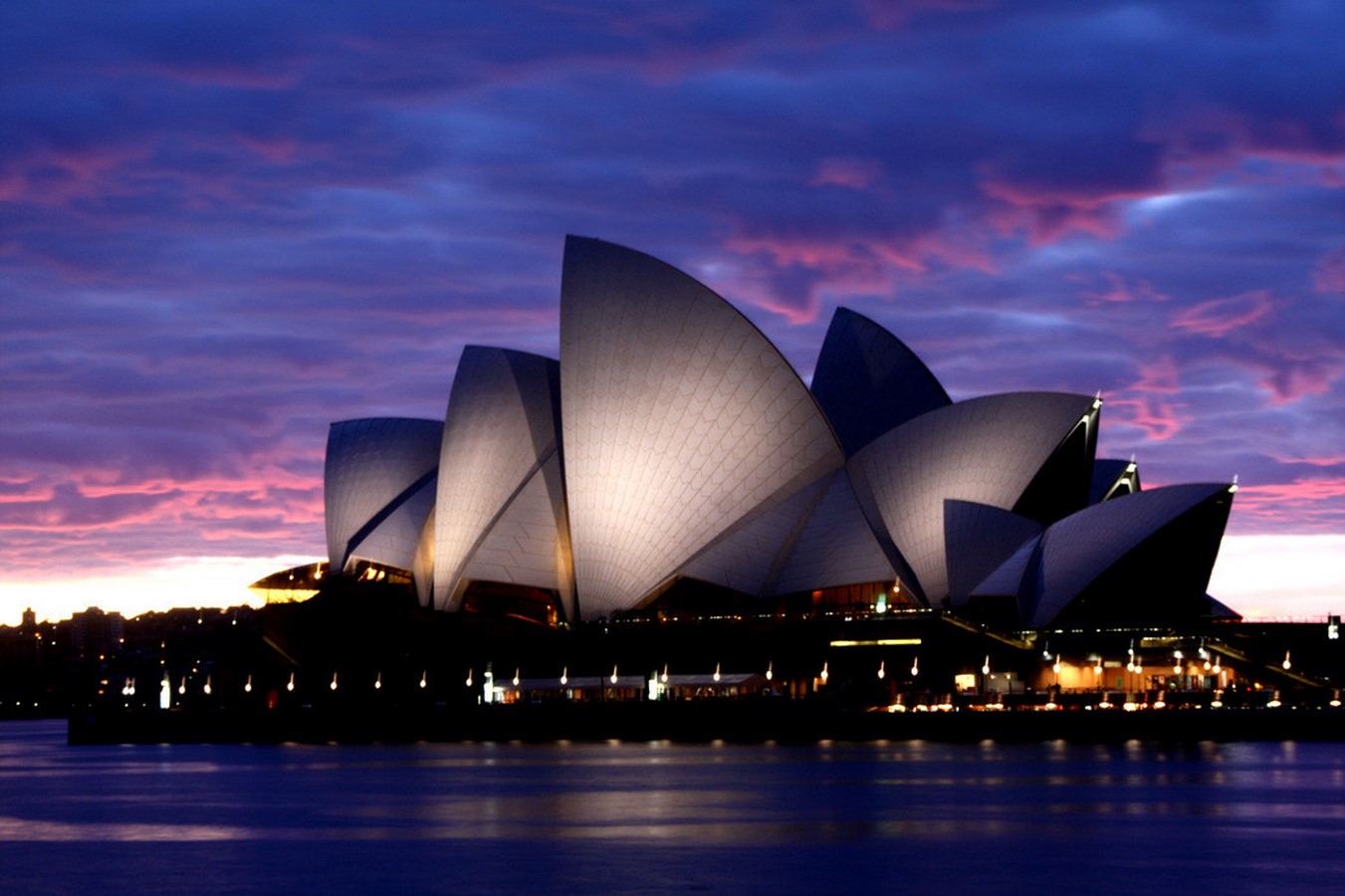
Arguably, among the most famous buildings in Australia, and considered the eighth wonder of the world, the Sydney Opera House constitutes a masterpiece of the 20th century. The construction of the opera house started after the demolition of the existing Fort Macquarie Tram Depot, in three stages ; (i) Foundation of the building and podium overlooking the ocean (ii) development of outer shells (iii) Interior schemes. The concept behind the shells was to be portrayed like large sails with a striking contrast to the blue ocean. True to its concept, the shells were covered with white ceramic tiles from clay and limestone; it took 11 years to complete its iconic roof structure. Interiors were done during the final stage under the supervision of newly appointed architects, where Utzon’s original designs were significantly changed. The planning includes a minor hall, originally intended for stage productions; it was changed into operas and ballet rooms, Grand staircase making way to the auditoriums. Extensive renovations were made by the government to turn the opera house into a monument of technology in the 20th century.
12. Taj Mahal – Shah Jahan
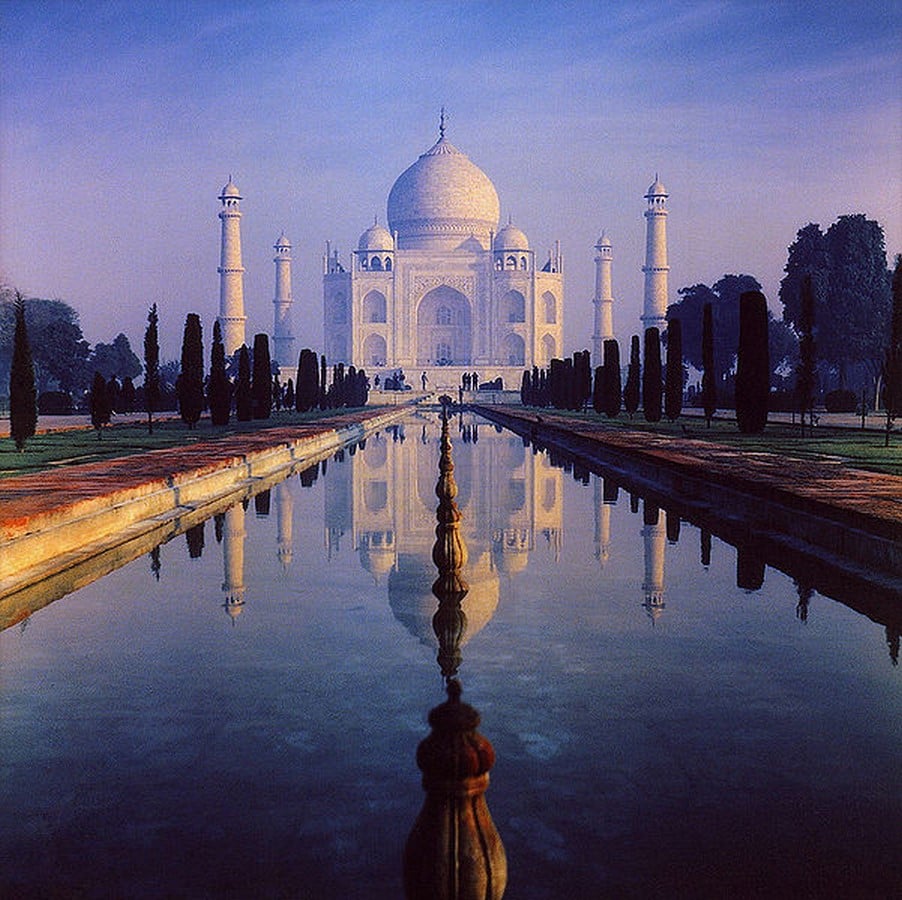
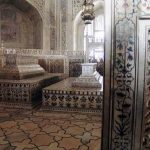
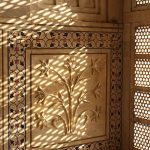
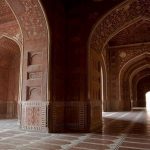
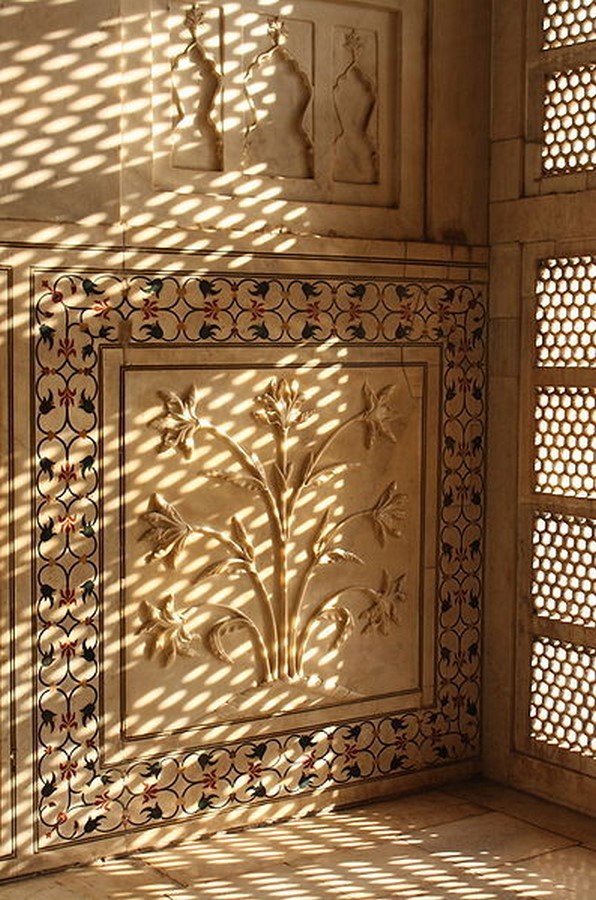
Taj Mahal, one of the easily recognizable structures in the world, unanimously known as the “Symbol of eternal love” was a mausoleum for Mumtaz Mahal by Shah Jahan. The structure is considered to be harmoniously integrated with the environment complimenting the structure itself along with River Yamuna running by. Taj Mahal is a literal symbol of the Mughal style, infusing Islamic, Persian, and Indian styles. More than twenty thousand workers were involved for this magnificent exterior and intricate interior to be completed. Significant features of the complex are symmetrical buildings with the arch-shaped doorway which are originally Persian. The multi-chambered cube behaves as the main structure with vaulted archways on all four sides, where false sarcophagi of Mumtaz and Shah Jahan are placed, whereas the original graves are beneath the ground with minarets which are traditional Islamic elements on boundaries, one at each corner.
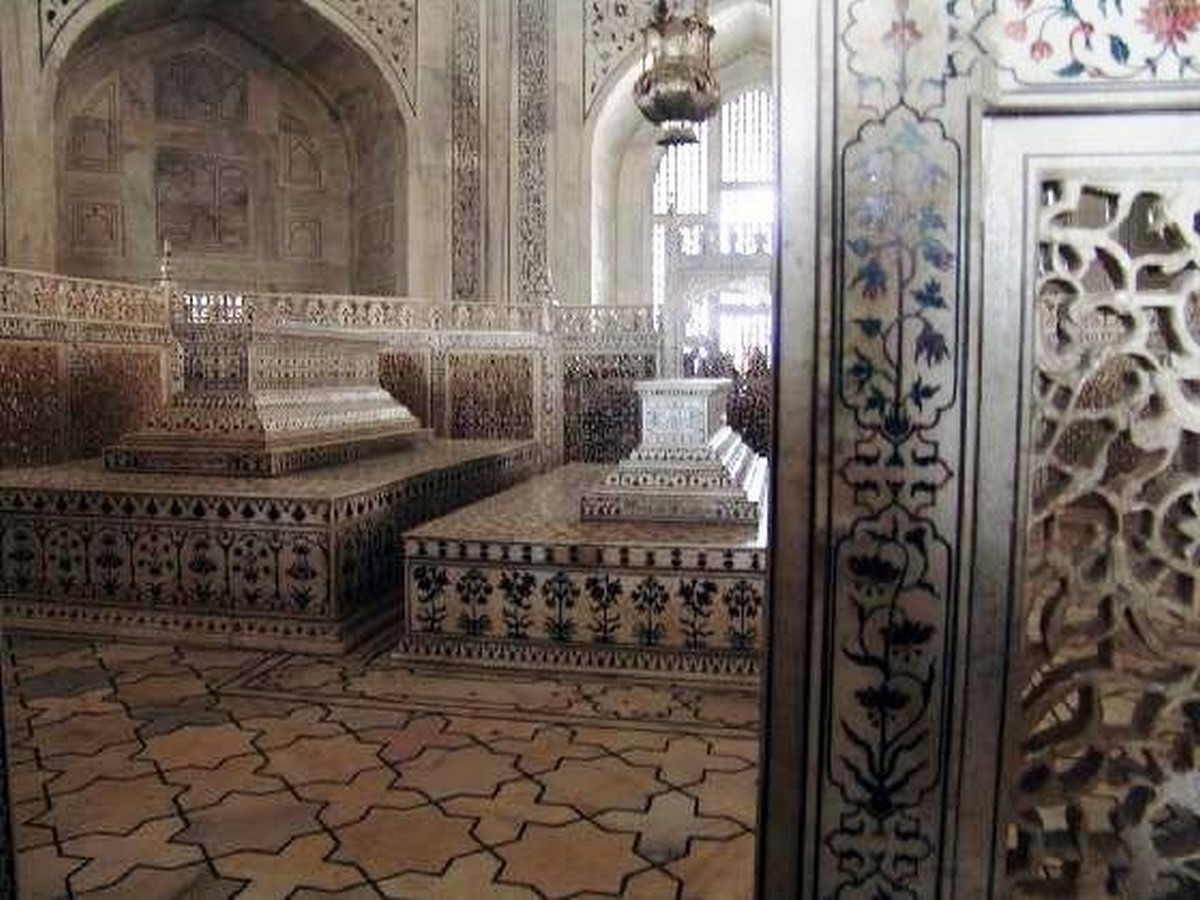
Interiors and exteriors are astonishing equally as it is laid with precious gemstones and detailed carvings creating harmonious and religious encounters with the public.

13. Petronas towers – Kuala Lumpur | Famous Buildings
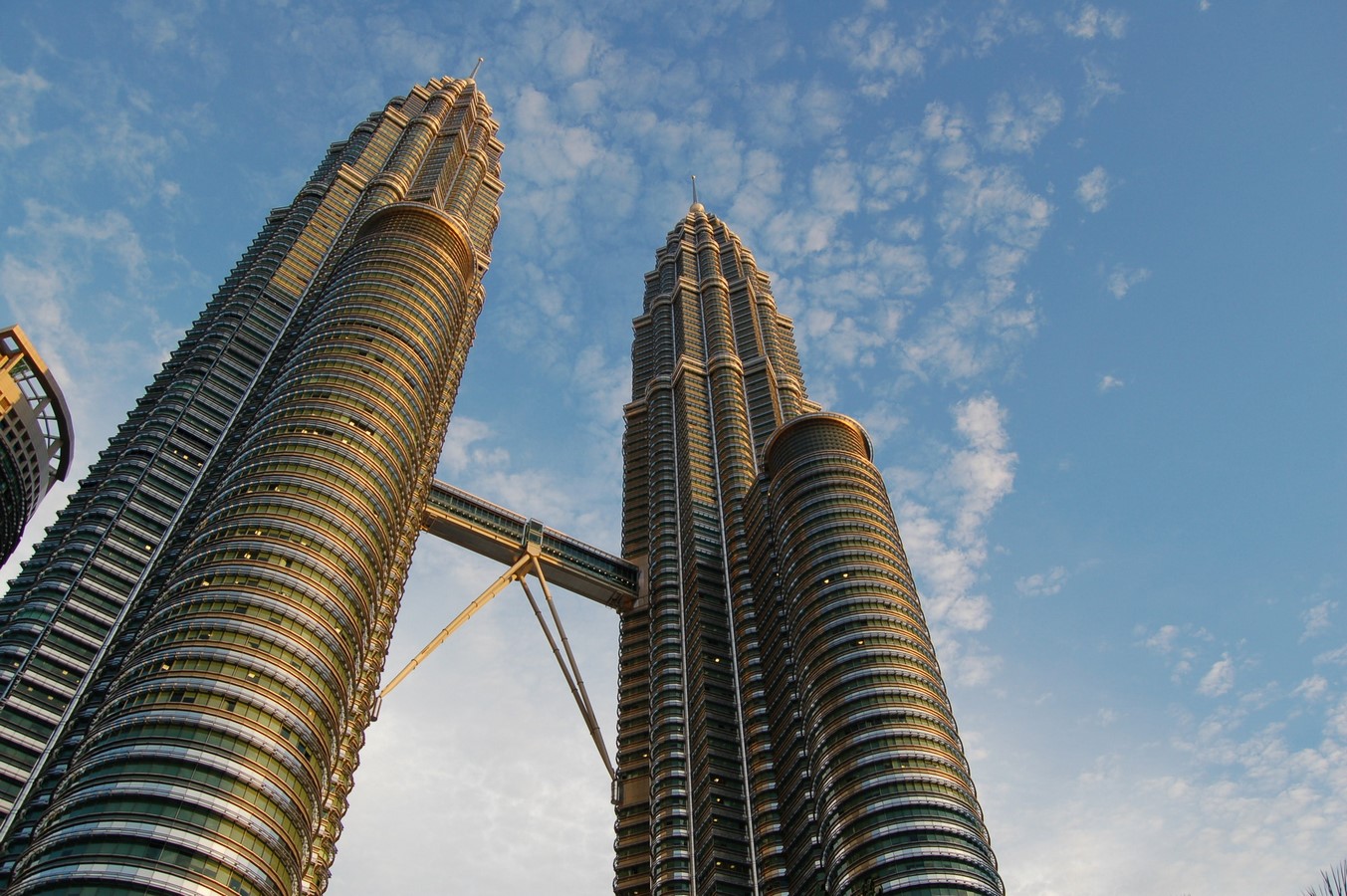
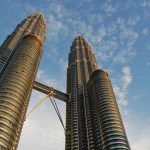
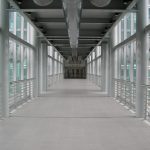
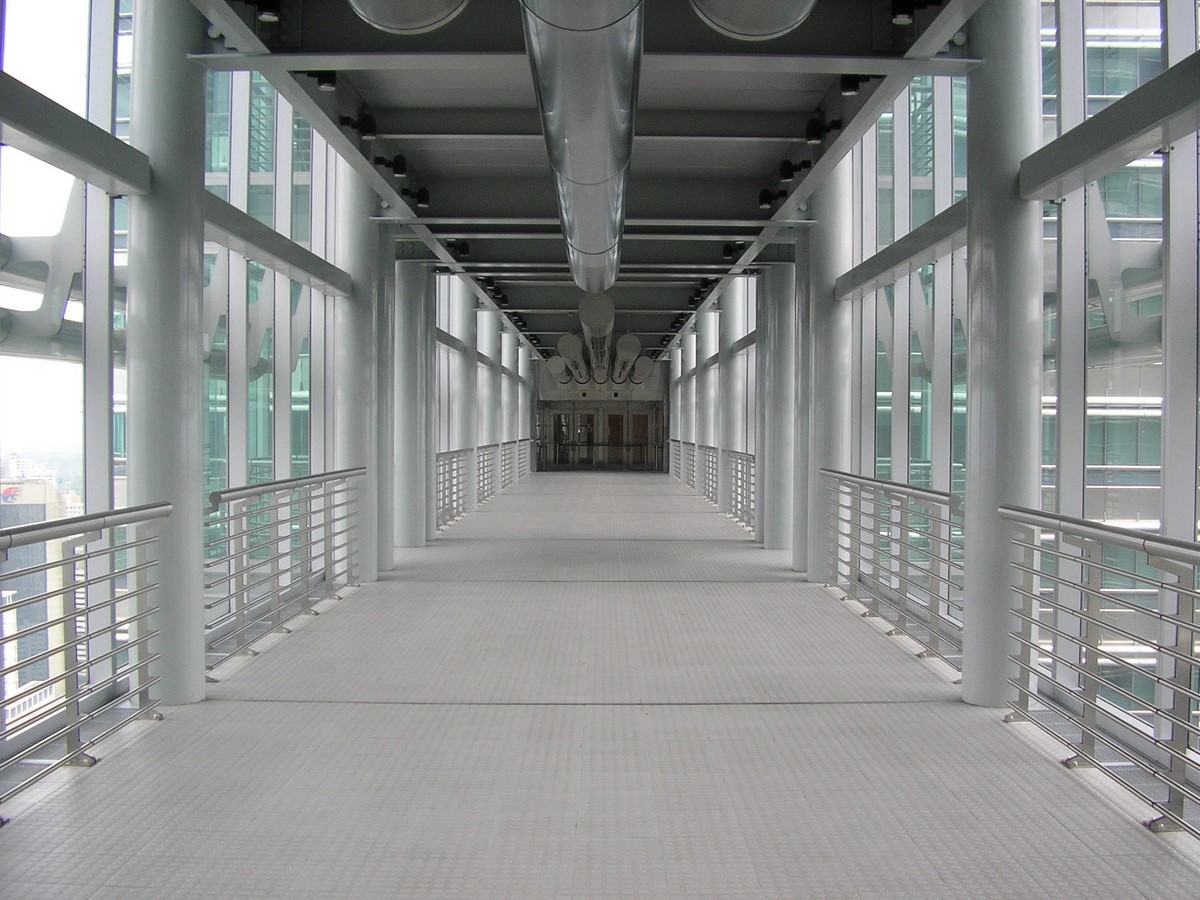
Petronas Towers by Cesar Pelli is a cultural and architectural icon and is considered to be one of the tallest buildings from 1998 to 2004 paying homage to Islamic architecture in Malaysia. The towers were not just fascinated by their height, yet the conceptual ideas of Pelli to integrate Islamic motifs and symbols to evoke the city’s rich cultural ideologies. The tower rises to 452 meters, as it goes tapered towards the top of the tower, stabilizing the towers structurally, and making an elegant perspective of the skyline of Malaysia. Unlike other twin towers, where the towers are connected by Sky Bridge, connecting two floors at 41st and 42nd levels respectively. These bridges, though connected could move independently during harsh weather.
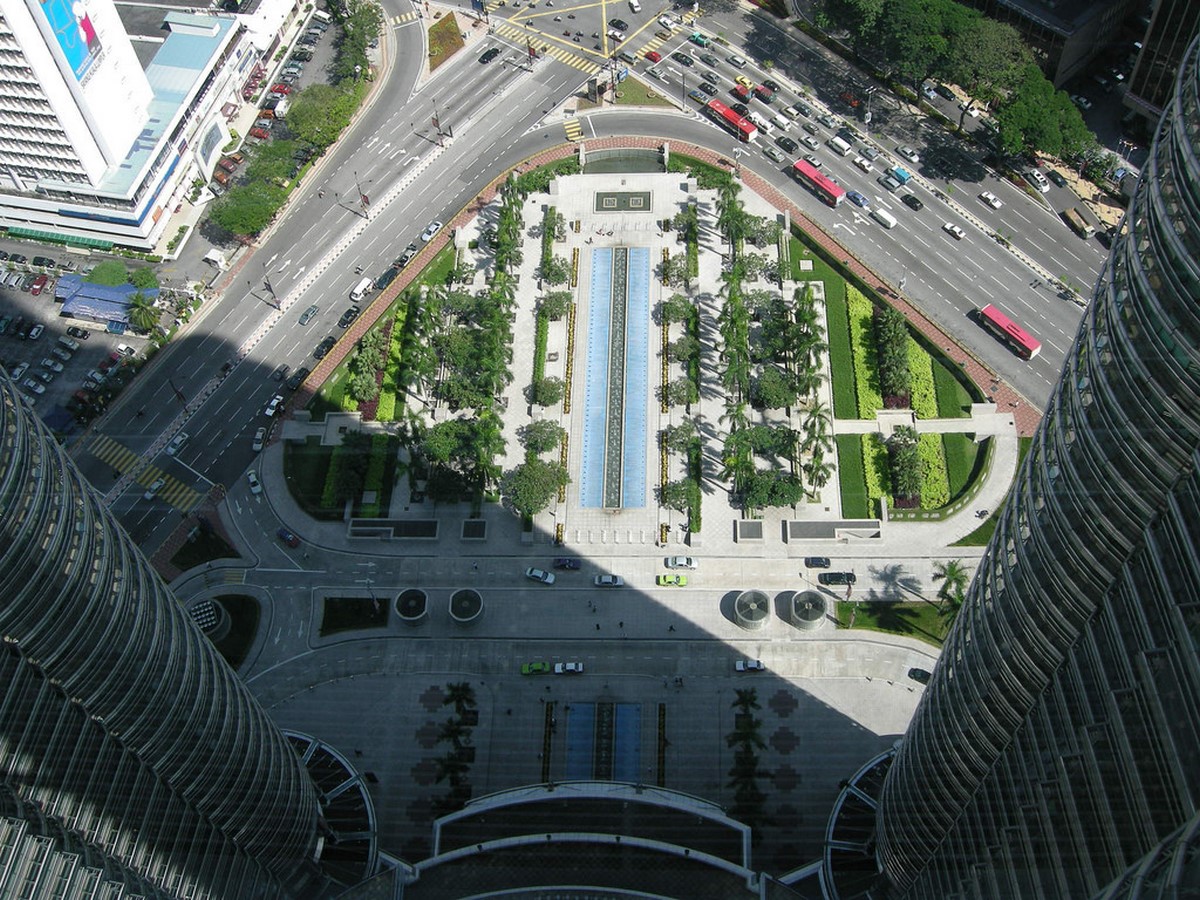
Although the Petronas towers are not the tallest building anymore, it stands as an iconic structure in Malaysia and has diverted people’s radar toward Malaysia’s culture and heritage.
14. Hagia Sophia – Constantine I
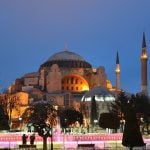
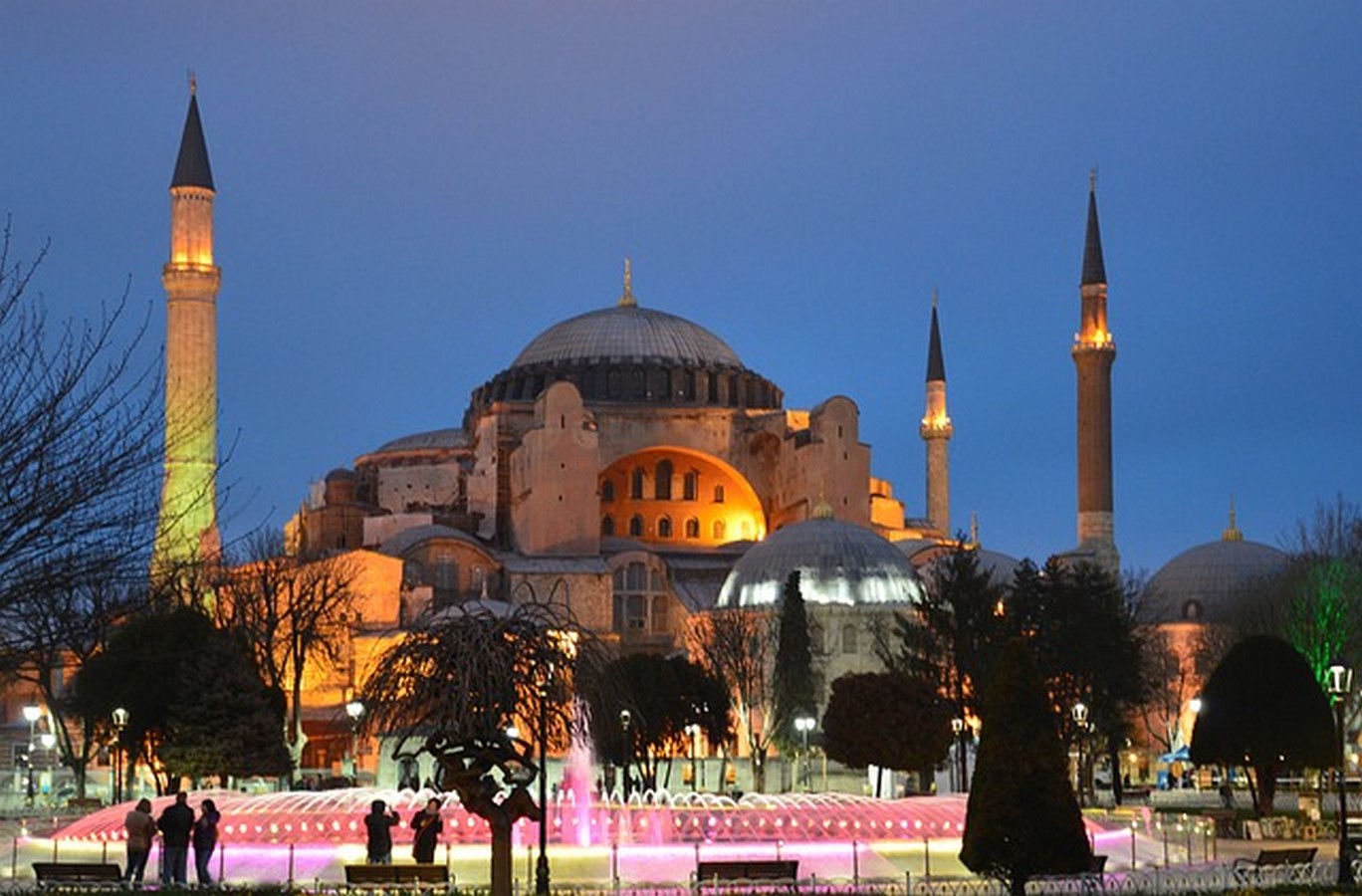
Enlisted as a UNESCO Heritage site, Hagia Sophia in Istanbul, Turkey was the world’s largest cathedral, until the completion of Seville cathedral in 1520. It was an orthodox Greek cathedral from its completion in 537 to1453, briefly a Roman Catholic church from 1204 to 1261, a mosque from 1453 to 1931, and a museum from 1931 to 2020, now reverting as a mosque. Hagia Sophia is truly fascinating imposing enormous cultural, historical, and religious transposes in its architectural history. Originally built, the church incorporated ashlar and brick. It follows typical cathedral planning with the nave being covered with a central dome, resting on four pendentives, which was truly captivating at that time. Over the years, interiors are embellished with golden mosaics, and decors representing Islamic style, whereas the minarets at exteriors, one used red bricks and the other three used limestones and sandstone.
15. Angkor Wat – Suryavarman II | Famous Buildings
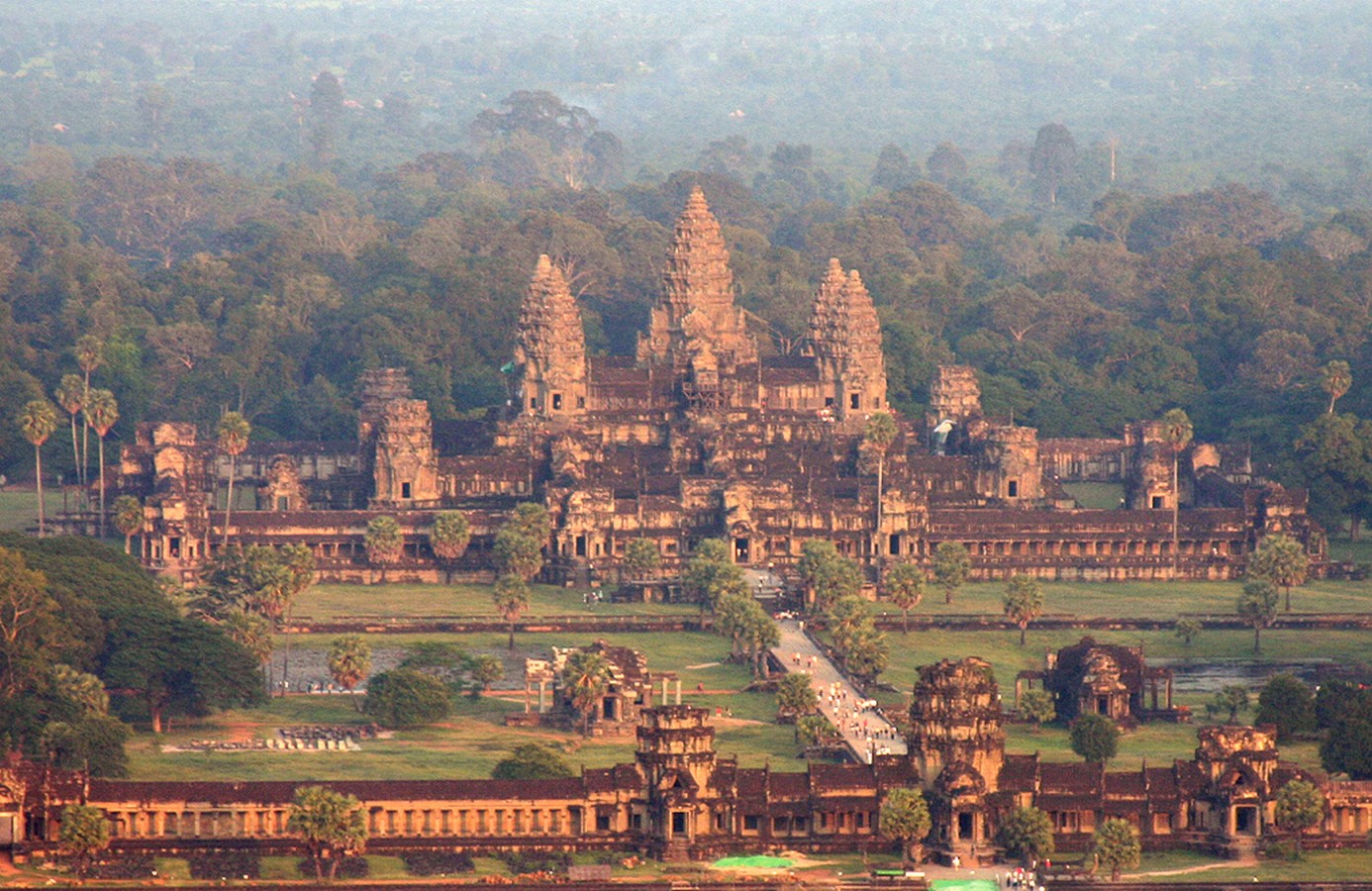
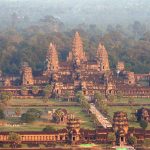
Angkor Wat, One of the largest temple complexes in Angor, area of present-day Cambodia. Originally dedicated to Lord Vishnu as a Khmer temple, it was later dedicated to Buddha as a Buddhist monastery, and still, it behaves as a religious pilgrimage till today.
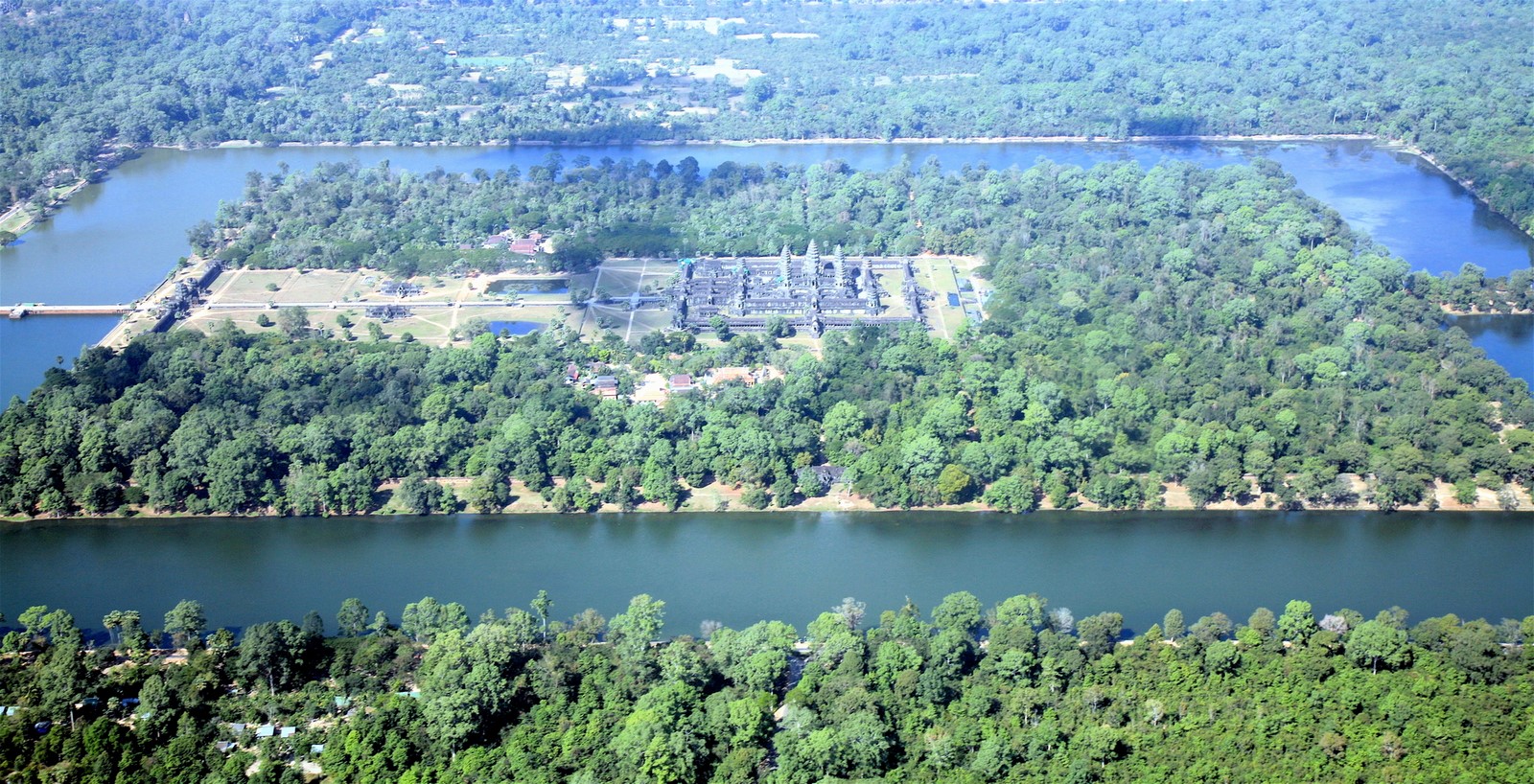
The temple primarily follows Khmer architecture, pyramids, and concentric galleries, where the galleries create pathways to central shrines and pyramids punctuating the corners of the temple. The entire complex faces west as the temple was initially dedicated to Lord Vishnu as he rules the western quadrant of the compass. As mentioned above, Angkor Wat is the largest temple among the complexes, as it is enclosed by a moat and the area spans the outer wall from the moat,1500m from east to west,1300m from north to south.
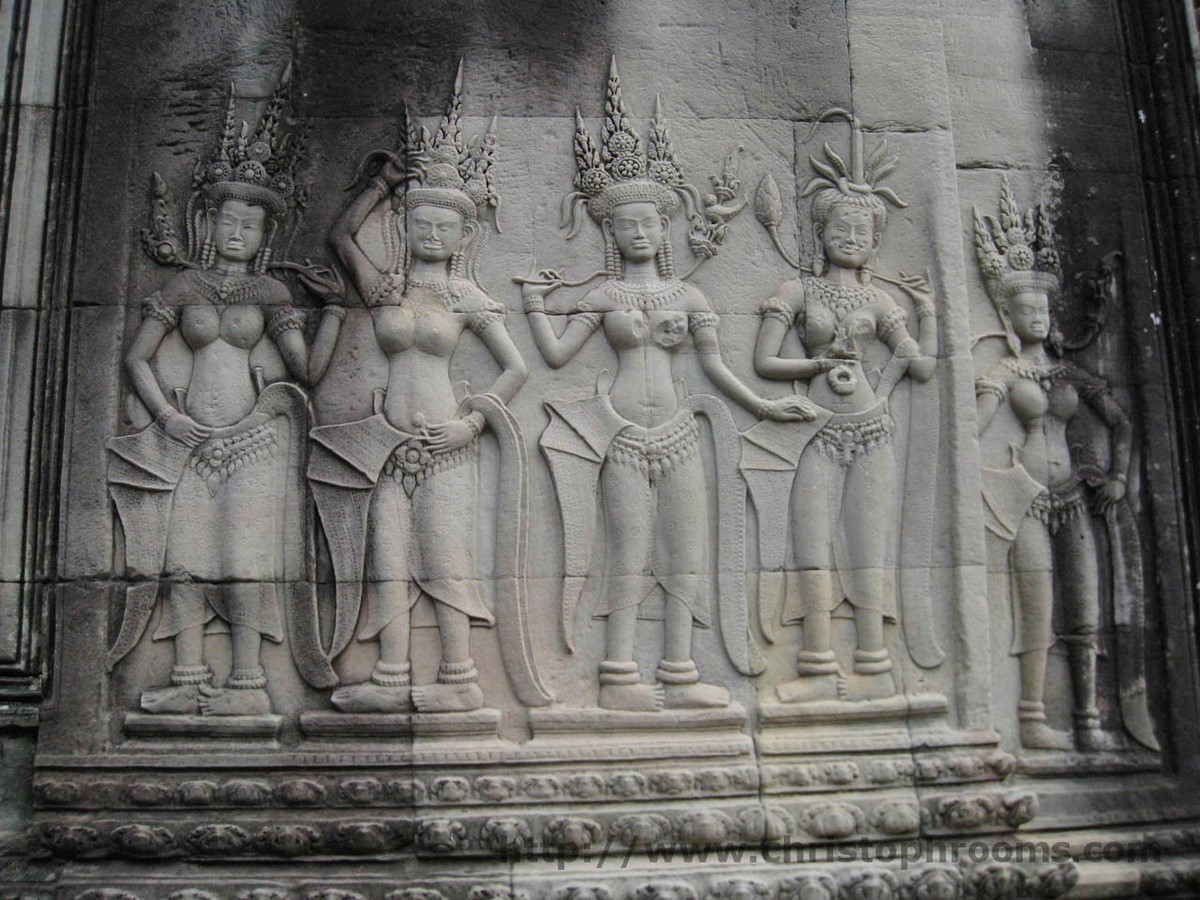
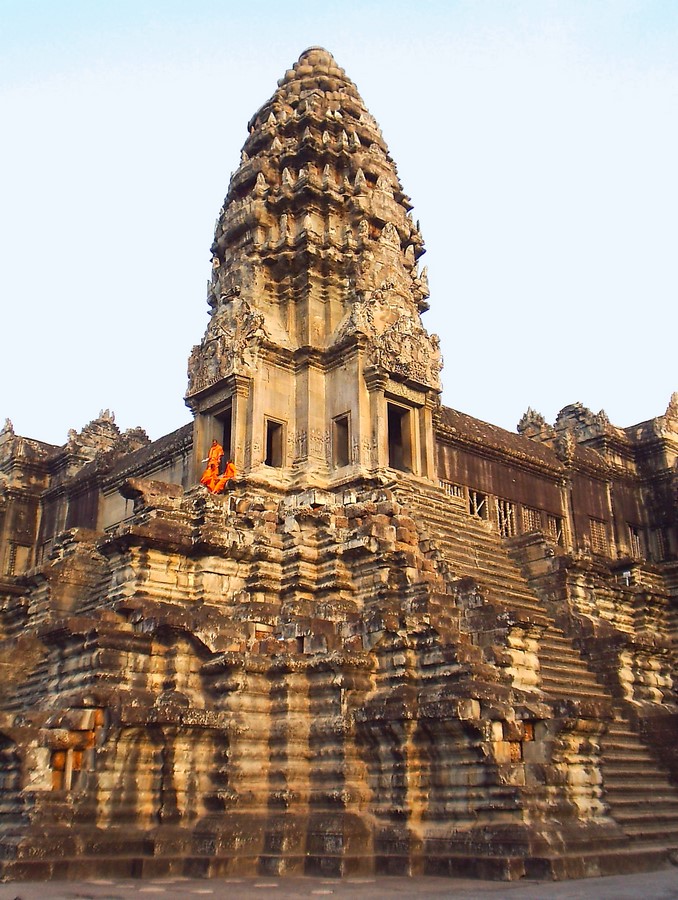
The complex is a literal symbol of Hindu beliefs, as the pyramids represent the peaks of mountains, a succession of concentric galleries as mountain ranges that surround Mountain Meru- Home of Gods and a moat representing mythical oceans.
Frequently Asked Questions About Famous Buildings and Their Architects
What is the most famous building in the world?
There is no single answer, but the most-cited contenders are the Taj Mahal, Gaudí’s Sagrada Família, the Sydney Opera House and Hagia Sophia — buildings so recognisable they stand for entire cities and eras. All four appear in this list.
Who designed the Sagrada Família, and when will it be finished?
Antoni Gaudí took over the Barcelona basilica in 1883 and worked on it until his death in 1926. Construction has continued ever since: its central Tower of Jesus Christ has been slated for completion in 2026 — the centenary of Gaudí’s death — with decorative work continuing beyond that date.
Who designed the Sydney Opera House?
Danish architect Jørn Utzon won the 1957 competition with his sail-like design; the building opened in 1973 and is now a UNESCO World Heritage Site — one of the few modern buildings on the list.
Which is the oldest building on this list — and the newest?
The oldest is Hagia Sophia in Istanbul, completed in 537 AD under Justinian, followed by the 12th-century Angkor Wat. The newest are Zaha Hadid Architects’ Beijing Daxing International Airport and BIG’s CopenHill energy plant, both completed in 2019.
Which architects appear most often among the world’s famous buildings?
On this list Louis Kahn appears twice (the Salk Institute and IIM Ahmedabad), and the roster spans Frank Lloyd Wright, Mies van der Rohe, I. M. Pei, Renzo Piano, Philip Johnson and Zaha Hadid. For the people behind the icons, see the 20 greatest architects in the world — and for where it all began, the life and works of Vitruvius.
Sources for the 2026 update
UNESCO World Heritage Centre, listings for Hagia Sophia, Angkor and the works of Antoni Gaudí (2026). Encyclopaedia Britannica, “Sagrada Família” (2026). Sydney Opera House Trust, building history (2026).
References
- David Douglass-Jaimes. “AD Classics: Angkor Wat” 13 Oct 2018. Available at: Arch Daily.. <https://www.archdaily.com/101004/ad-classics-angkor-wat> ISSN 0719-88849 [Accessed 11 Sep 2022]
- Adelyn Perez. “AD Classics: Sydney Opera House / Jørn Utzon” 23 Jun 2010. Available at: Arch Daily. <https://www.archdaily.com/65218/ad-classics-sydney-opera-house-j%25c3%25b8rn-utzon> ISSN 0719-8884 88849 [Accessed 11 Sep 2022]
- Andrew Kroll. “AD Classics: Petronas Towers / Cesar Pelli” 24 Jan 2011. . Available at:Arch Daily.. <https://www.archdaily.com/105895/ad-classics-petronas-towers-cesar-pelli> ISSN 0719-8884 [Accessed 11 Sep 2022]
- Karen Cilento. “The Shard / Renzo Piano” 28 Aug 2009.Available at: Arch Daily. <https://www.archdaily.com/33494/the-shard-renzo-piano> ISSN 0719-8884 [Accessed 11 Sep 2022]
- Adelyn Perez. “AD Classics: The Glass House / Philip Johnson” 17 May 2010. Available at: Arch Daily. <https://www.archdaily.com/60259/ad-classics-the-glass-house-philip-johnson> ISSN 0719-8884 [Accessed 11 Sep 2022]
- Eduardo Souza. “AD Classics: Le Grand Louvre / I.M. Pei” 18 Nov 2010C Arch Daily. <https://www.archdaily.com/88705/ad-classics-le-grande-louvre-i-m-pei> ISSN 0719-8884 [Accessed 11 Sep 2022]
- Eric Baldwin. “CopenHill: The Story of BIG’s Iconic Waste-to-Energy Plant” 07 Oct 2019. Available at: Arch Daily<https://www.archdaily.com/925966/copenhill-the-story-of-bigs-iconic-waste-to-energy-plant> ISSN 0719-8884 [Accessed 11 Sep 2022]
- Andrew Kroll. “AD Classics: Indian Institute of Management / Louis Kahn” 25 Oct 2010. Available at: Arch Daily. <https://www.archdaily.com/83697/ad-classics-indian-institute-of-management-louis-kahn> ISSN 0719-8884 [Accessed 11 Sep 2022]
- Adelyn Perez. “AD Classics: Seagram Building / Mies van der Rohe” 10 May 2010. Available at: Arch Daily. <https://www.archdaily.com/59412/ad-classics-seagram-building-mies-van-der-rohe> ISSN 0719-8884 [Accessed 11 Sep 2022]
- Luke Fiederer. “AD Classics: Salk Institute / Louis Kahn” 11 Jan 2019. Available at: Arch Daily. <https://www.archdaily.com/61288/ad-classics-salk-institute-louis-kahn> ISSN 0719-8884 [Accessed 11 Sep 2022]
- Rennie Jones. “AD Classics: La Sagrada Familia / Antoni Gaudí” 16 Oct 2013. Available at:Arch Daily. <https://www.archdaily.com/438992/ad-classics-la-sagrada-familia-antoni-gaudi> ISSN 0719-8884 [Accessed 11 Sep 2022]