Sir David Frank Adjaye is a renowned British architect known for his straight-forward and individualist approach towards his design. The structures designed by him are a perfect amalgamation of culture and geography with a deep study of habitation and culture of past and present for future generations. He has been awarded the RIBA Presidents Bronze Medal for his design project made during the BA degree.
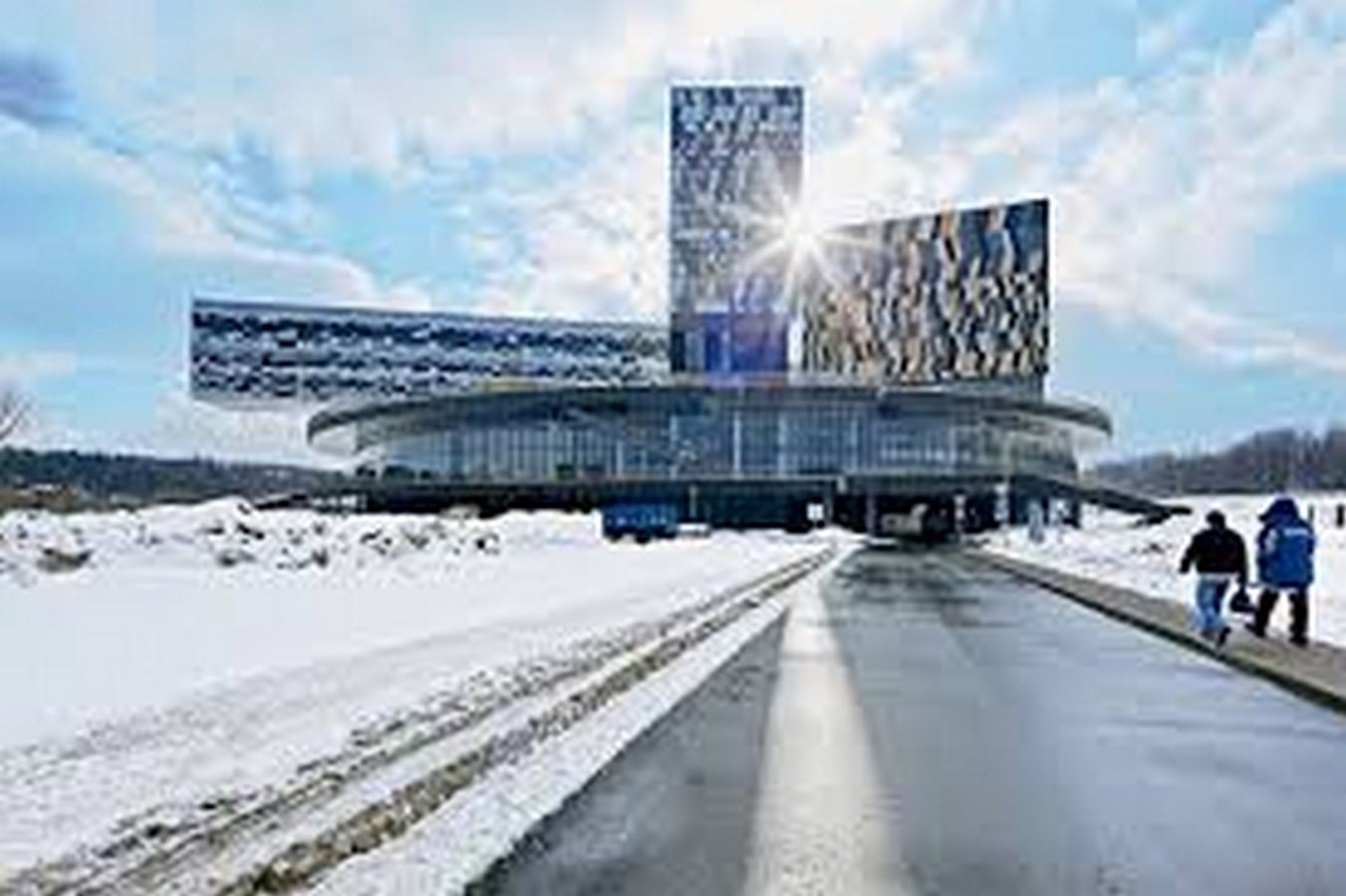
A few of his benchmark and most talked projects by Sir Adjaye are Sugar Hill Housing, New York; Francis Gregory Library, Washington DC; Ruby City, Texas; Dirty House, Shoreditch; Stephen Lawrence Centre, London; Sunken House, London; Moscow School of Management, Skolkovo and National Museum of African American History and Culture, Washington DC. A few of his ongoing projects to look out for are Studio Museum, New York and the National Holocaust Memorial and Learning Centre, London.
Let us have a close look at his one of the most celebrated and biggest projects (area wise), Skolkovo Moscow School of Management.
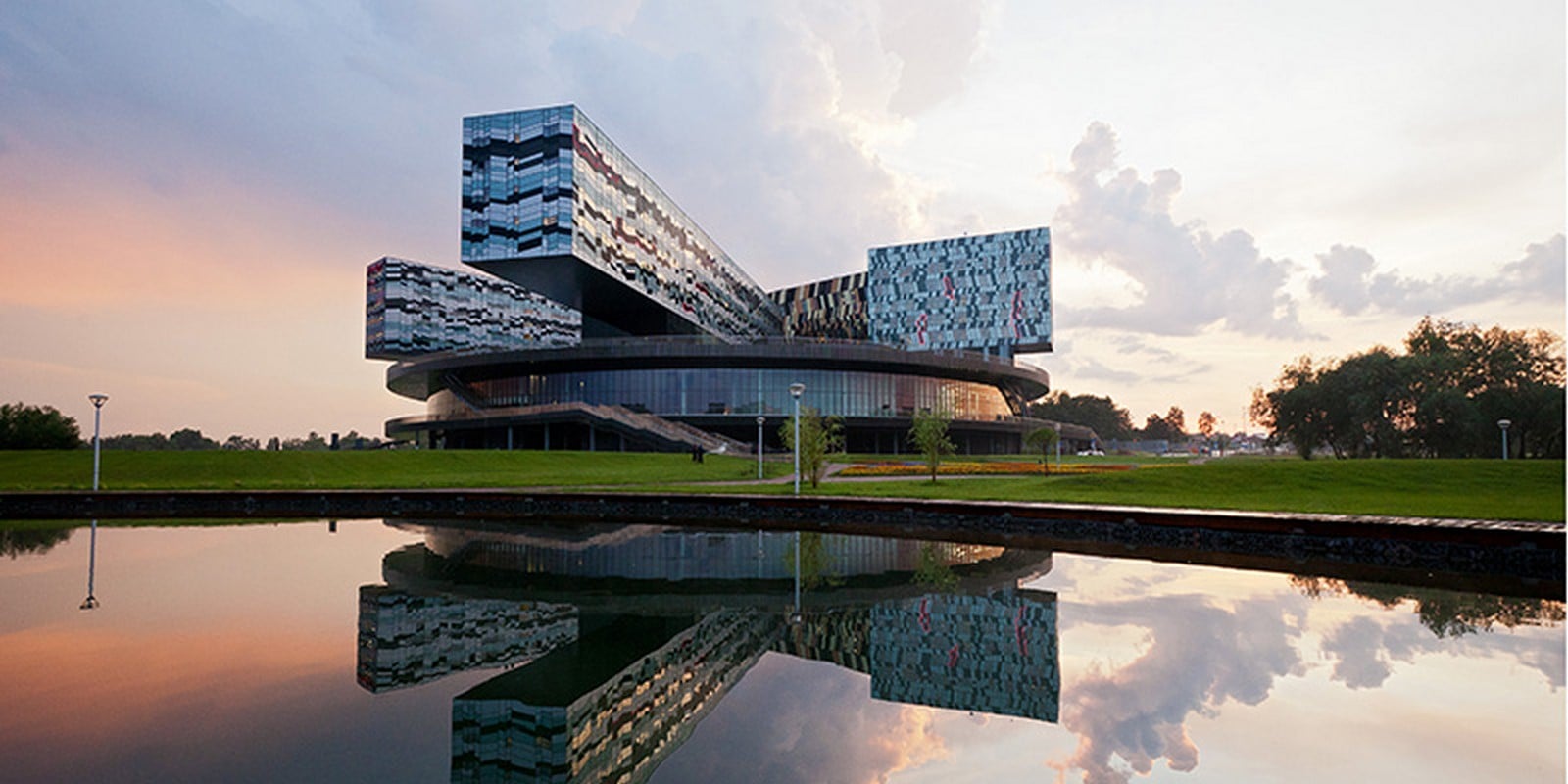
The Moscow School of Management, Skolkovo founded in 2005 is a teaching and research institution. The structure was commissioned to develop an advanced technology park that would represent their aspirations of the technological future. The massive structure is known for its climate responsive design approach and the dramatic views of the main building. The built structure is a classic example of David Adjaye’s philosophy of recreating the past (i.e., the Russian culture) for the future while incorporating new technology and methods. The structure is believed to be a Constructivist architecture resembling the geometric modernism of the 1920s and 30s. Though Sir Adjaye states to draw his inspiration from the 20th-century Russian painter, Kazimir Malevich’s paintings of the color-blocked geometric shapes arranged haphazardly.
Total Area: 42891 sq. m.
Client: Moscow School of Management
Contract Value: USD 360 million
Climatic Responsive Conceptual Planning
Management School is an open site located on the wooded valley on the outskirts of Moscow’s outer motorway ring. Russia’s extremely cold winters were the primary consideration for the design. Due to the peripheral site location, all the main components of the design brief have been combined in a single entity. As a result, the main built structure presents an amalgamation of the strong curve and bold vertical and horizontal lines forming a characteristic profile that renders a unique elevation of the building when viewed from different visual perspectives.
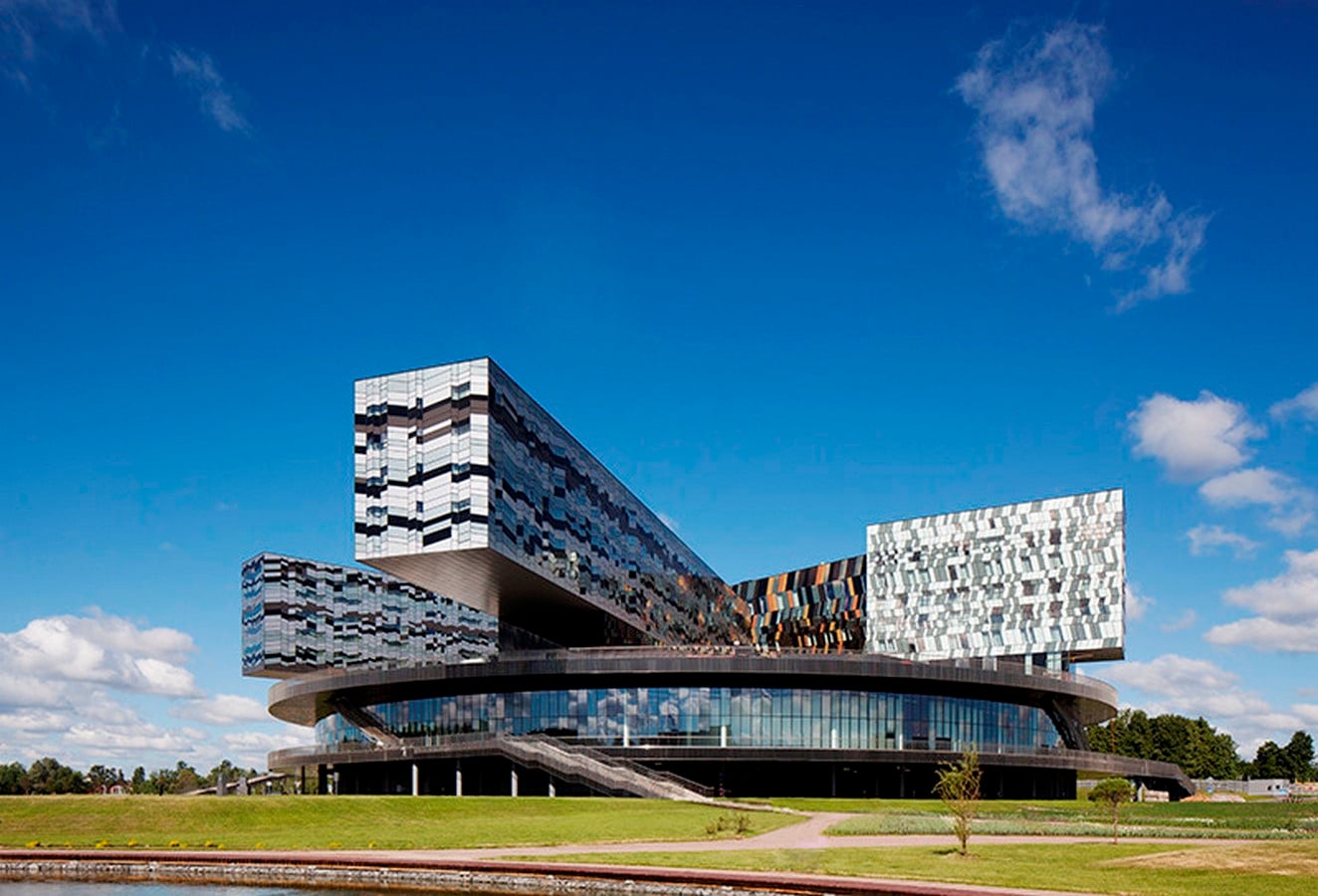
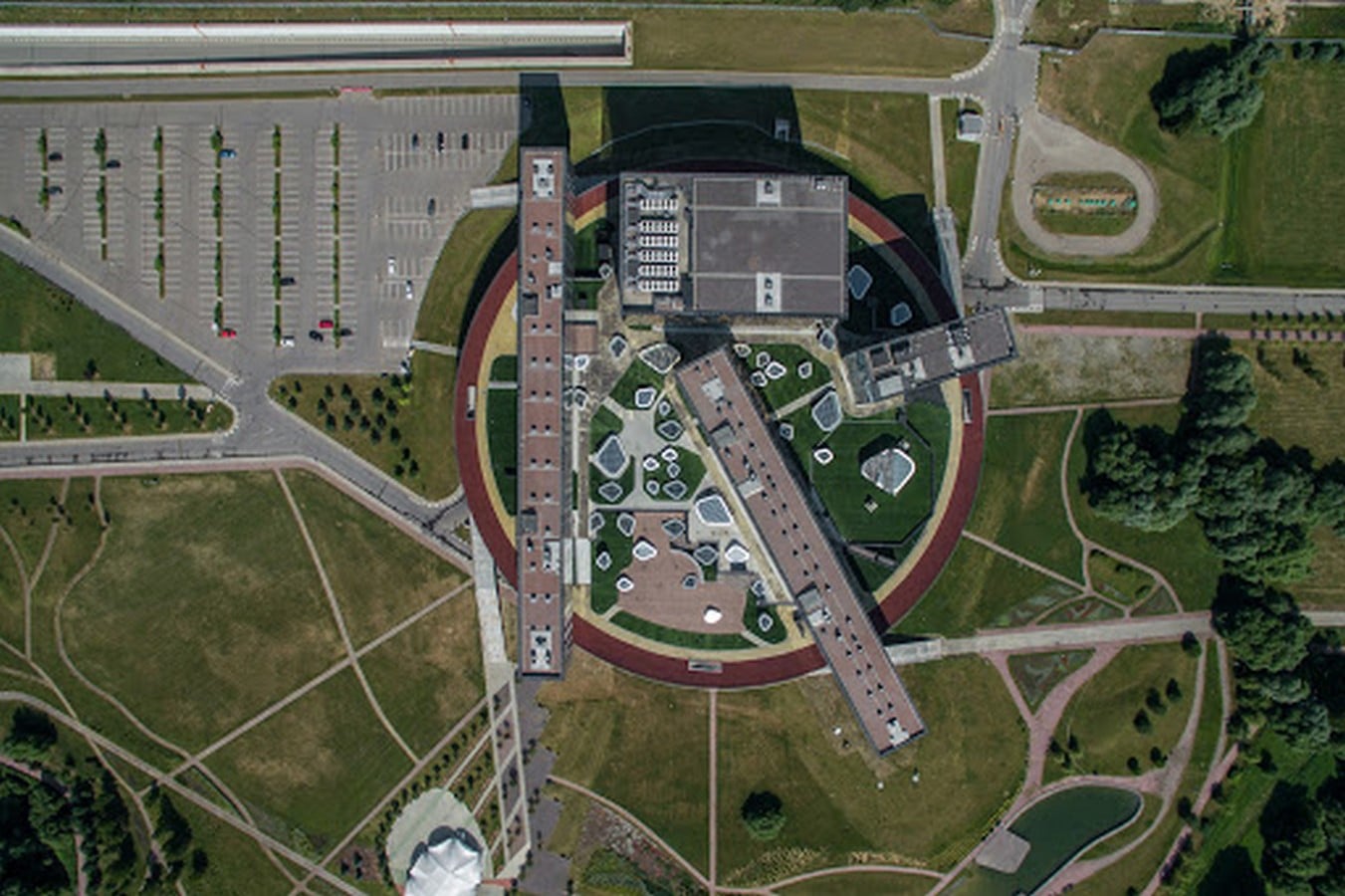
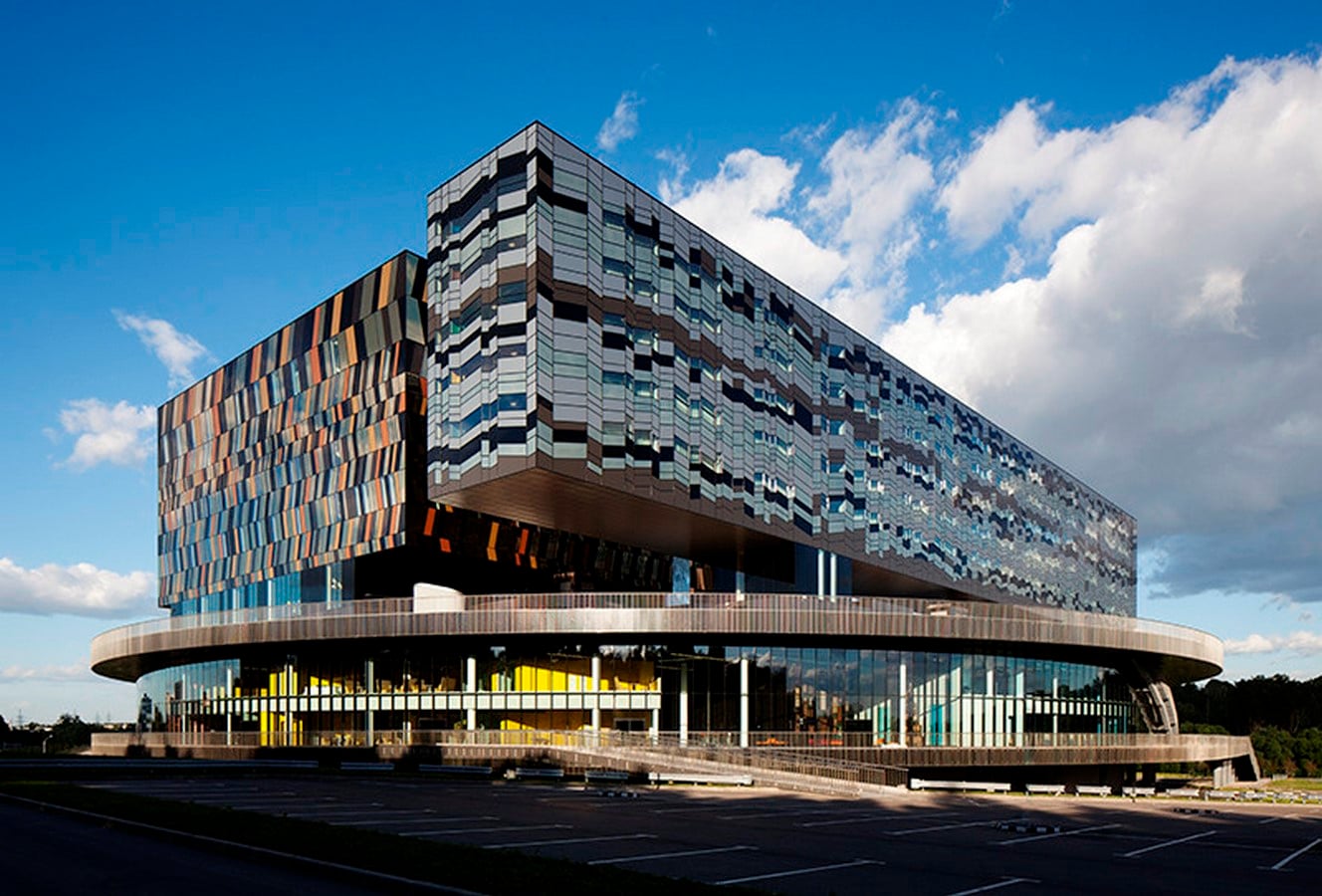
The main four blocks are comprising administration, well-being center, hotel and student accommodation. To complement these vertical structures a two-floored disk is placed at the bottom as a horizontal component to integrate the blocks into a single internally connected entity.
The disk blends with the surrounding landscape of the Setun River. Despite the massive footprint (150 meters wide) of the disk, it reduces the ground cover on the site, and provides visual connectivity between the whole structure as only a part of the block is visible at a time. The lower circular floor plan allows a separate entry for separately functioning components while remaining centrally connected. Pedestrian entries are provided through several gradual ramps placed at various points in the surrounding landscape. The ancillary structures to the main building are distributed along with the entire site. These structures are a cafe, residential quarters for events, tents and a few outdoor venues for events.
Planning
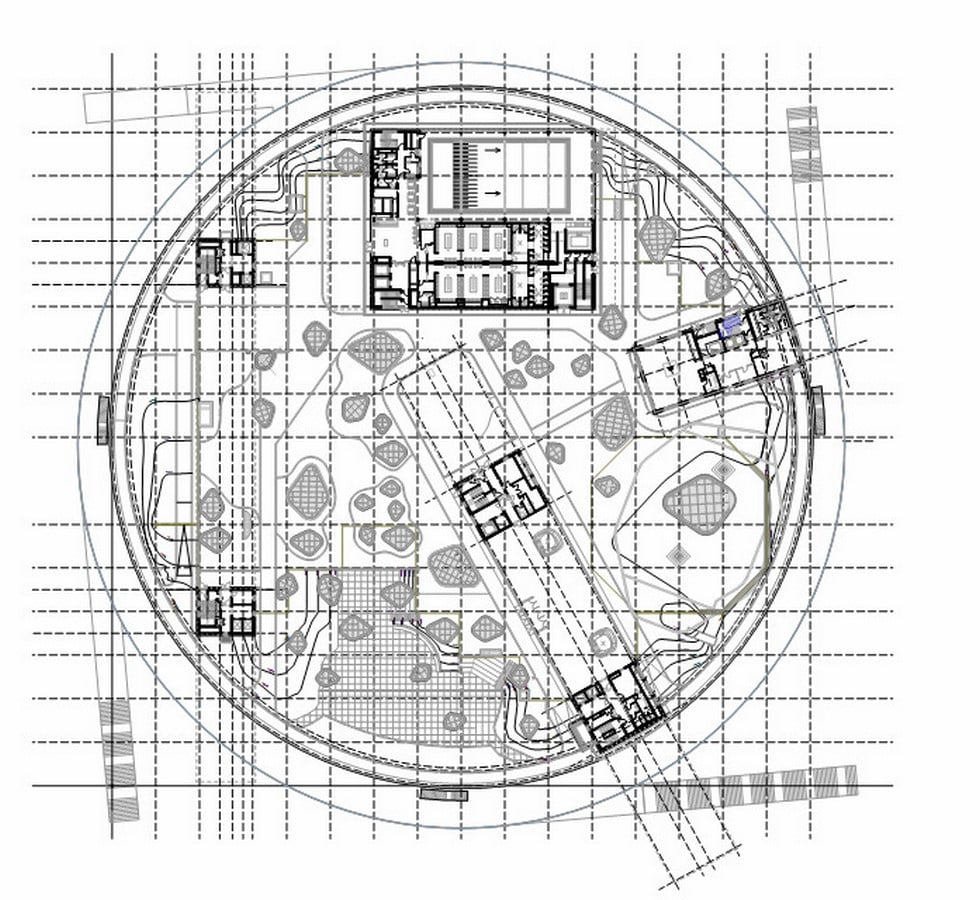
The disk comprises the main teaching facilities that are distributed along the perimeter with a centrally located restaurant that connects the entire school. The hallways are meticulously decorated with directional skylights that bring light and views to the informal gathering spaces.
www.mydentalplace.com/wp-content/languages/new/amitriptyline.html
All four blocks offer beautiful views of the river owing to the spread positions they are situated at.
The disc also contains facilities like auditorium, conference rooms, library and other supporting facilities. The well-being center has a gym, swimming pool and several courts. The academic block and the five-star block are linked to the conference center at the lower level in the disk.
www.mydentalplace.com/wp-content/languages/new/ivermectin.html
The roof of the disk is a landscaped open space.
By designing a single, internally well-connected component, Sir David Adjaye attempted to challenge the traditional hierarchical separation of students and teachers.
Materials used
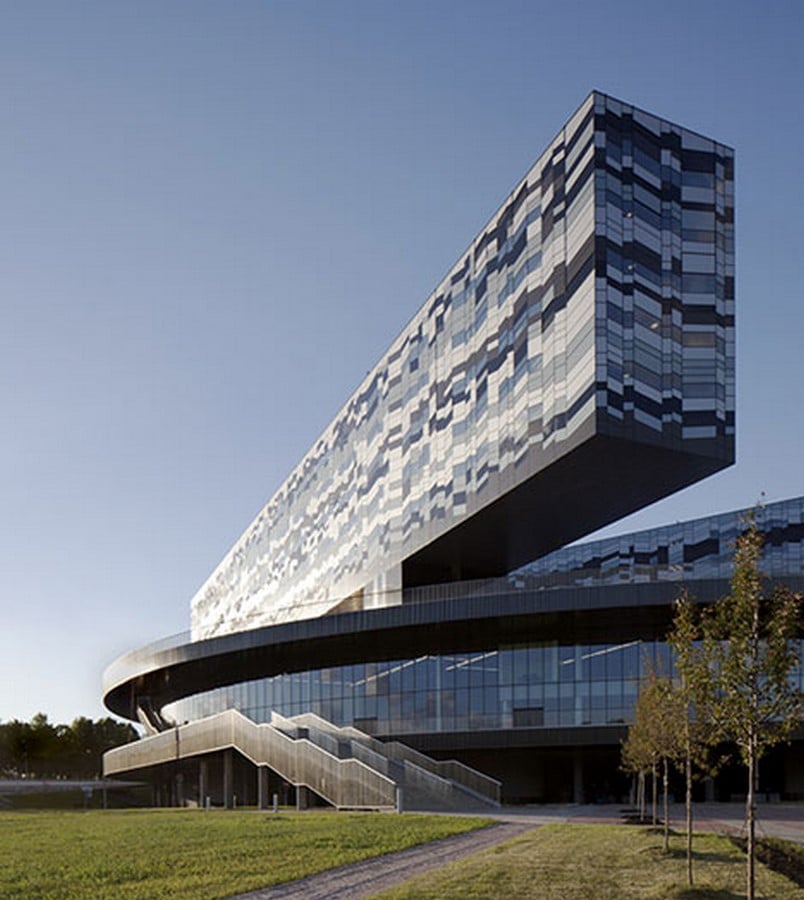
The four blocks have an external façade of herringbone patchwork patterned cladding with aluminium composite panels. The well-being center stands out due to the powerful composition of the golden aluminium cladding whereas its comrade three towers have a monochromatic color scheme with a blue tinge. These aluminium claddings have unique weather ability properties.
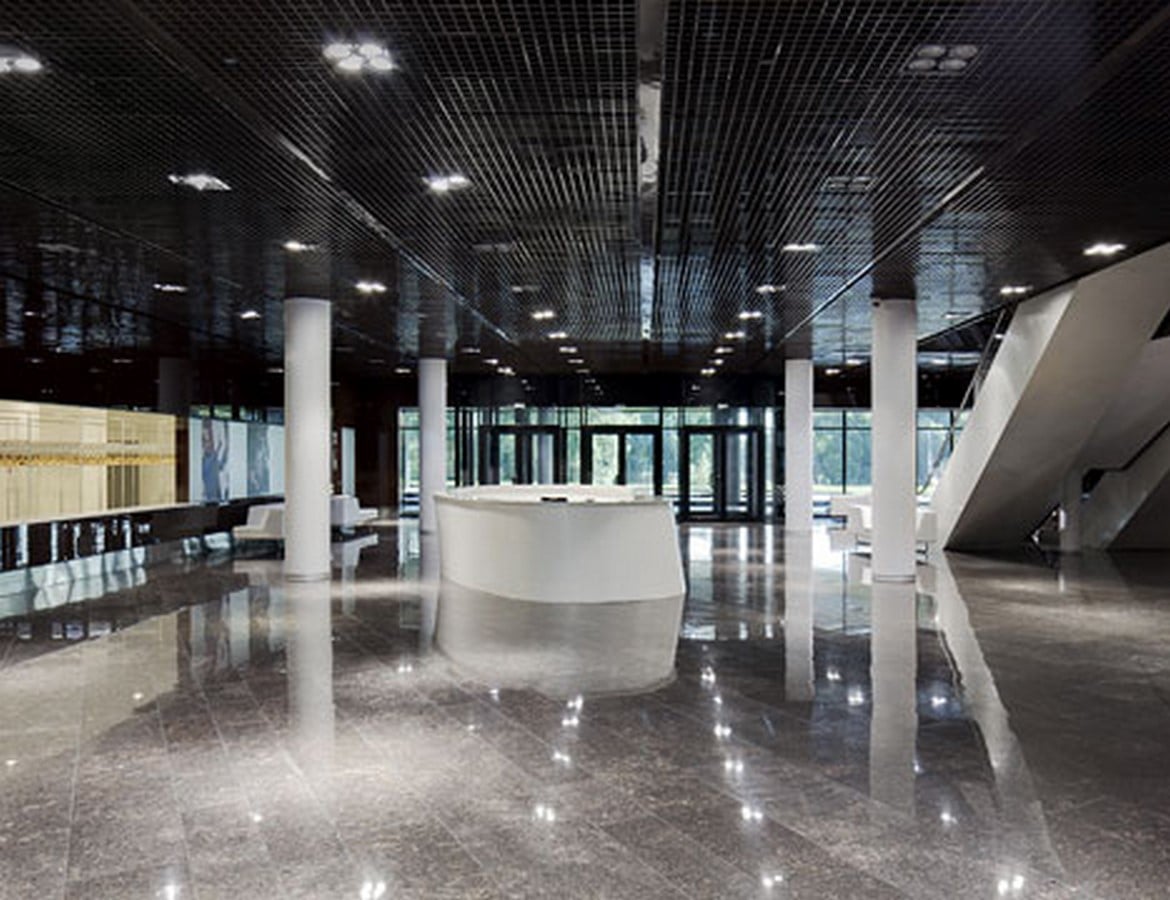
The interiors of the school reflect the signature style of Adjaye’s residential projects with the use of light materials and thoughtful colors.
Construction Technique
The well-being center follows the structural floor plan of the disc and hence pivots the center to the inclined ground along the Setun River. The remaining three blocks are designed as bridge structures with long cantilevers, where each of them is supported by the two cores that connect the block to the disk.
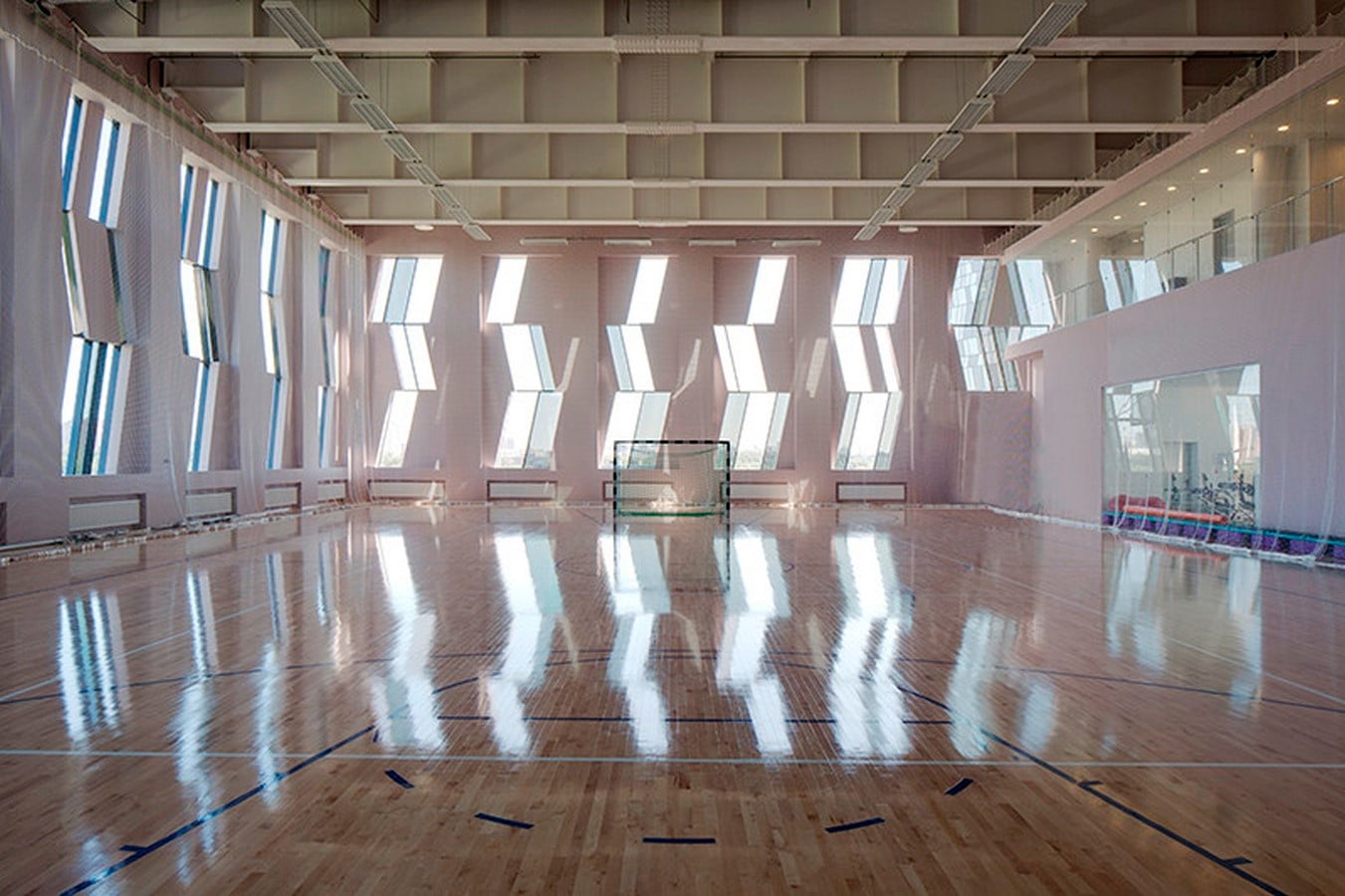
Link for Ed Reeve website – https://editphoto.net/work-section/skolkovo-moscow/