11. Piata Cetatii – The Central Square | Sighișoara
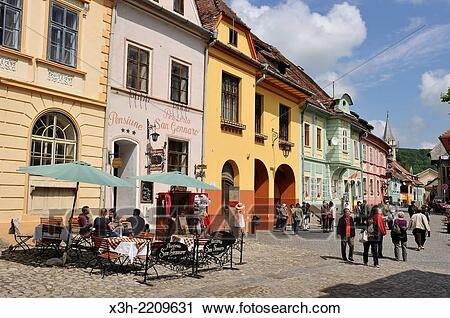
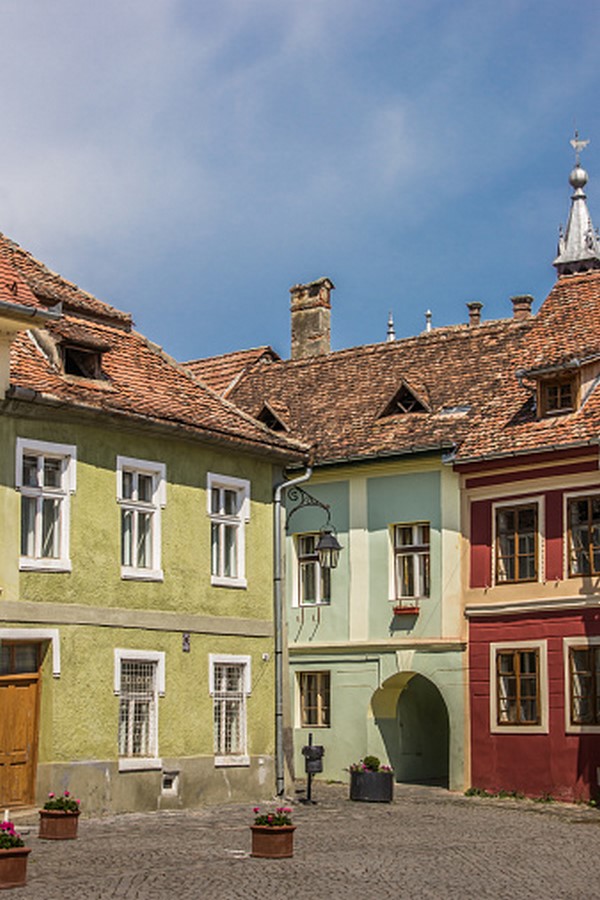
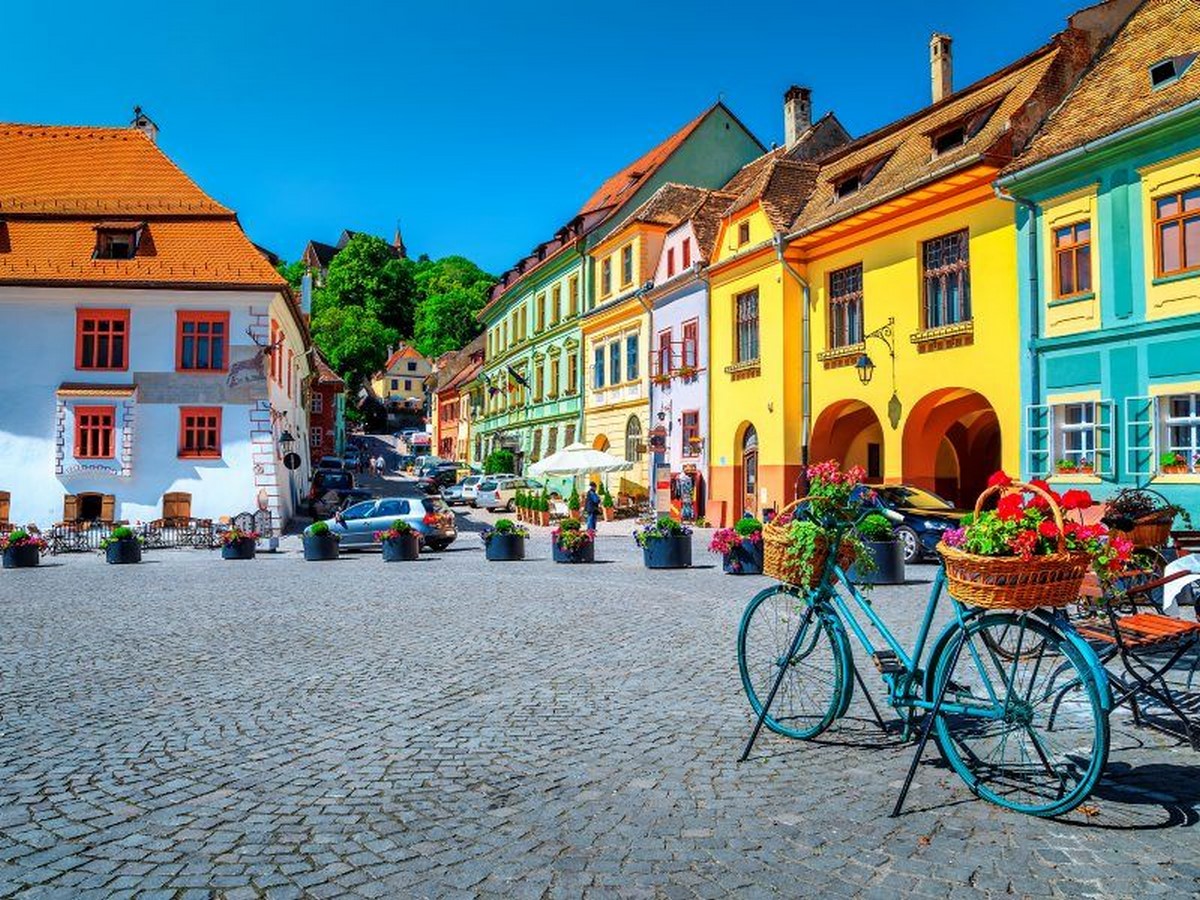
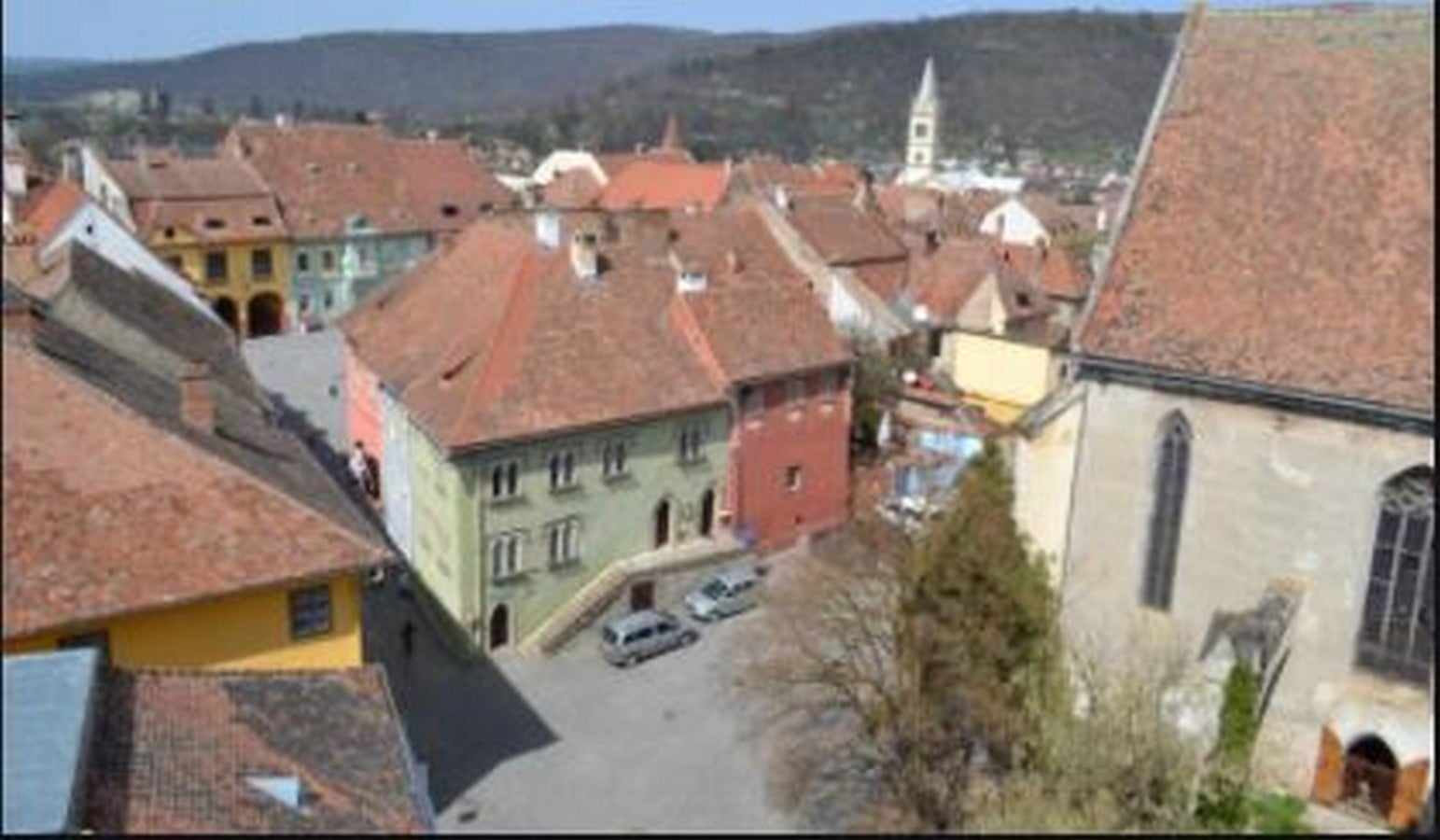
Surrounded by closely clustered pastel abodes bordering the narrow streets, lies a Public Square in the center of the city. Indigenously known as the Piata Cetatii, the polygonal planned plaza employed weekly markets, craft fairs, public executions, and witch trials during the Middle Ages. Sighișoara’s high altitude contributes to the slight inclination of the Square in the North-South Direction.
Today, Central Square occupies restaurants, souvenir shops, and a picturesque view of tinted buildings. A central mound bedecked with flowers is not only a significant pause point in the plaza but also directs the traffic in the massive landscape.

12. Vlad Dracul’s House
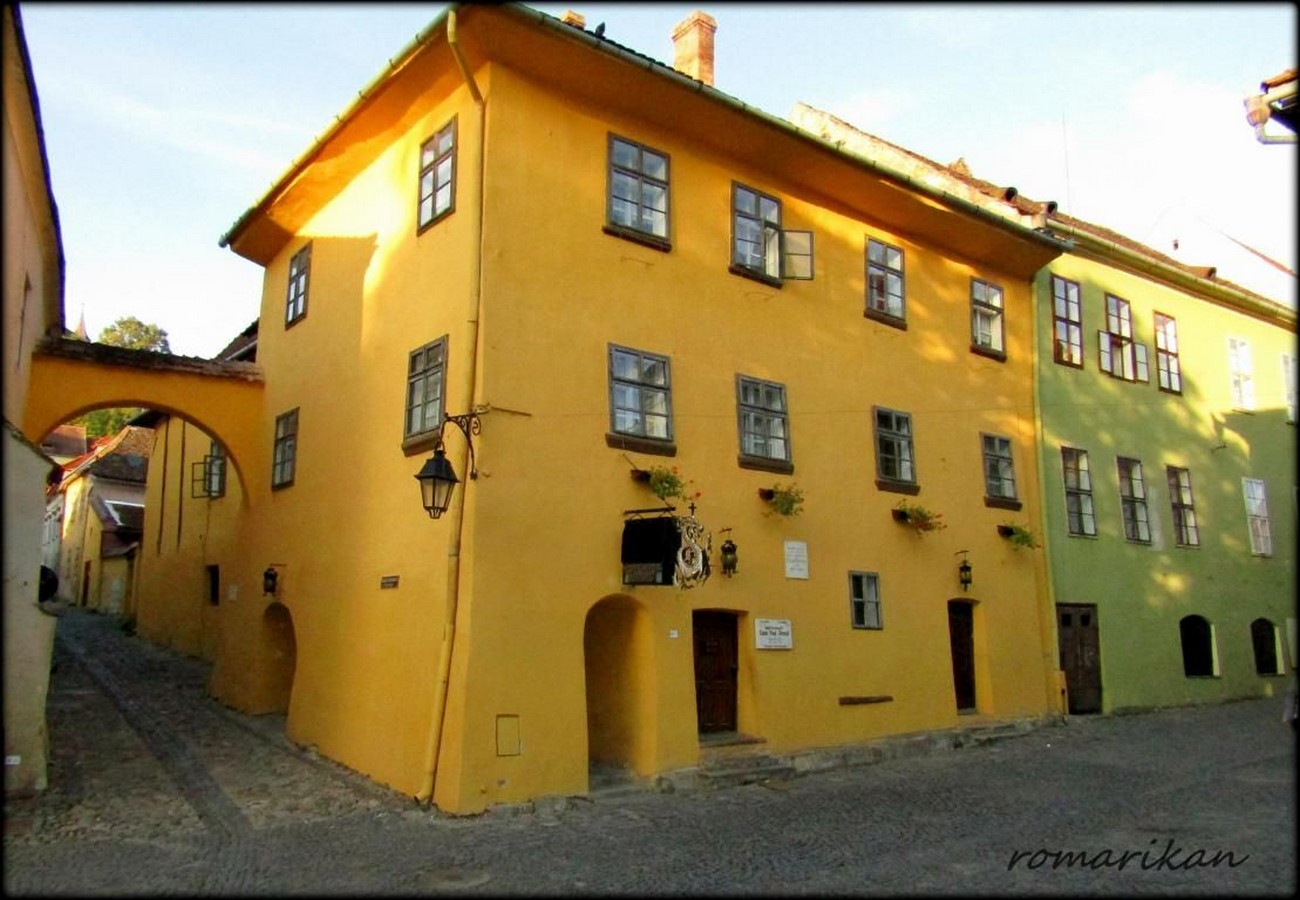
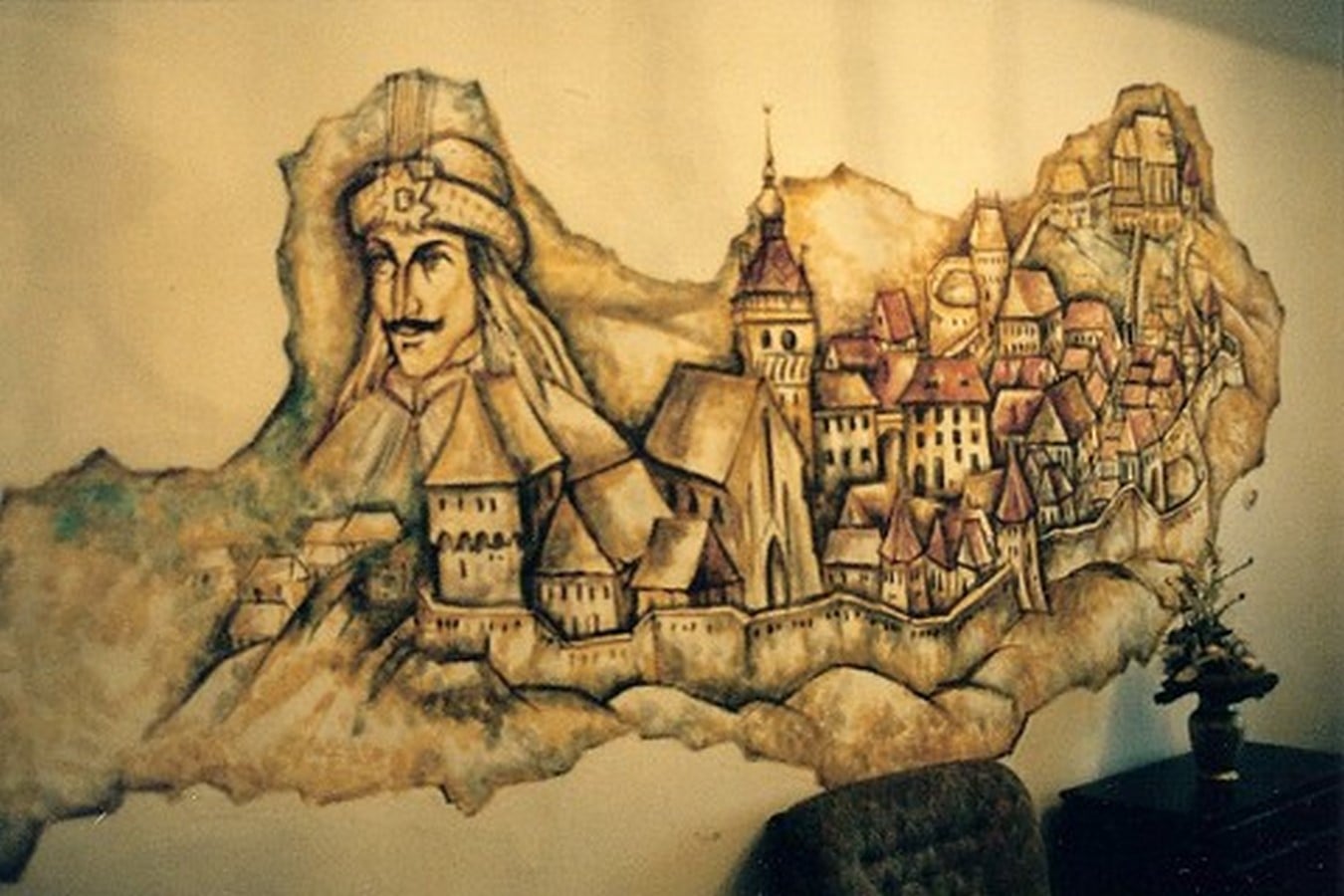
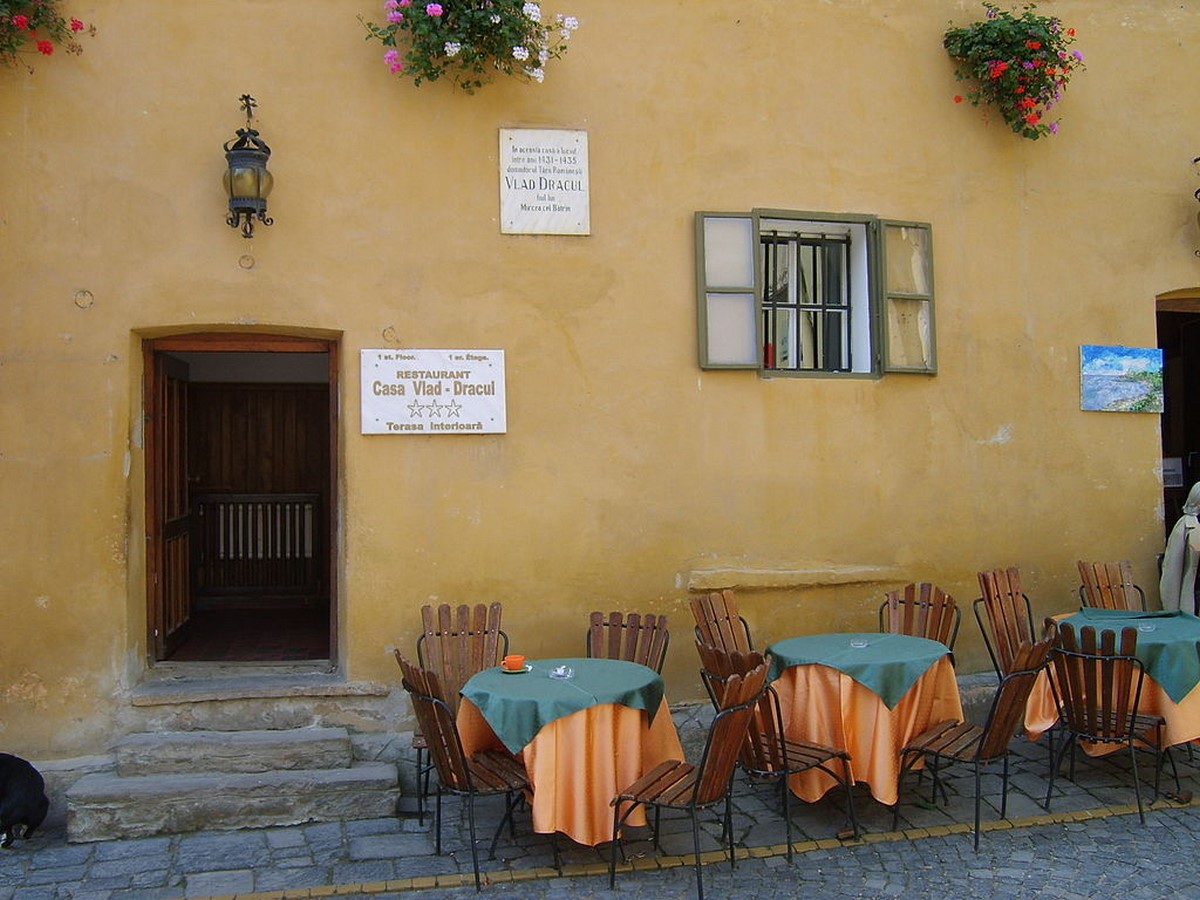
While approaching the main city square of Sighișoara one comes across a marigold-colored building nestling at one end of the street. Differing from its lively appearance, the building once was the birthplace of a notorious ruler of Wallachia, Vlad The Impaler. The residence of Romanian braveheart, the inspiration behind the legendary character Count Dracula, intrigues tourists centuries after his death.
Although rooting from the medieval style, the building displays an unusual character embracing a single buttress on one side and occasional semi-circular arches teeming with rectangular entrances. The thick walls and meticulous rectangular windows behave as tokens of native Transylvanian architecture.
13. The Venetian House | Sighișoara
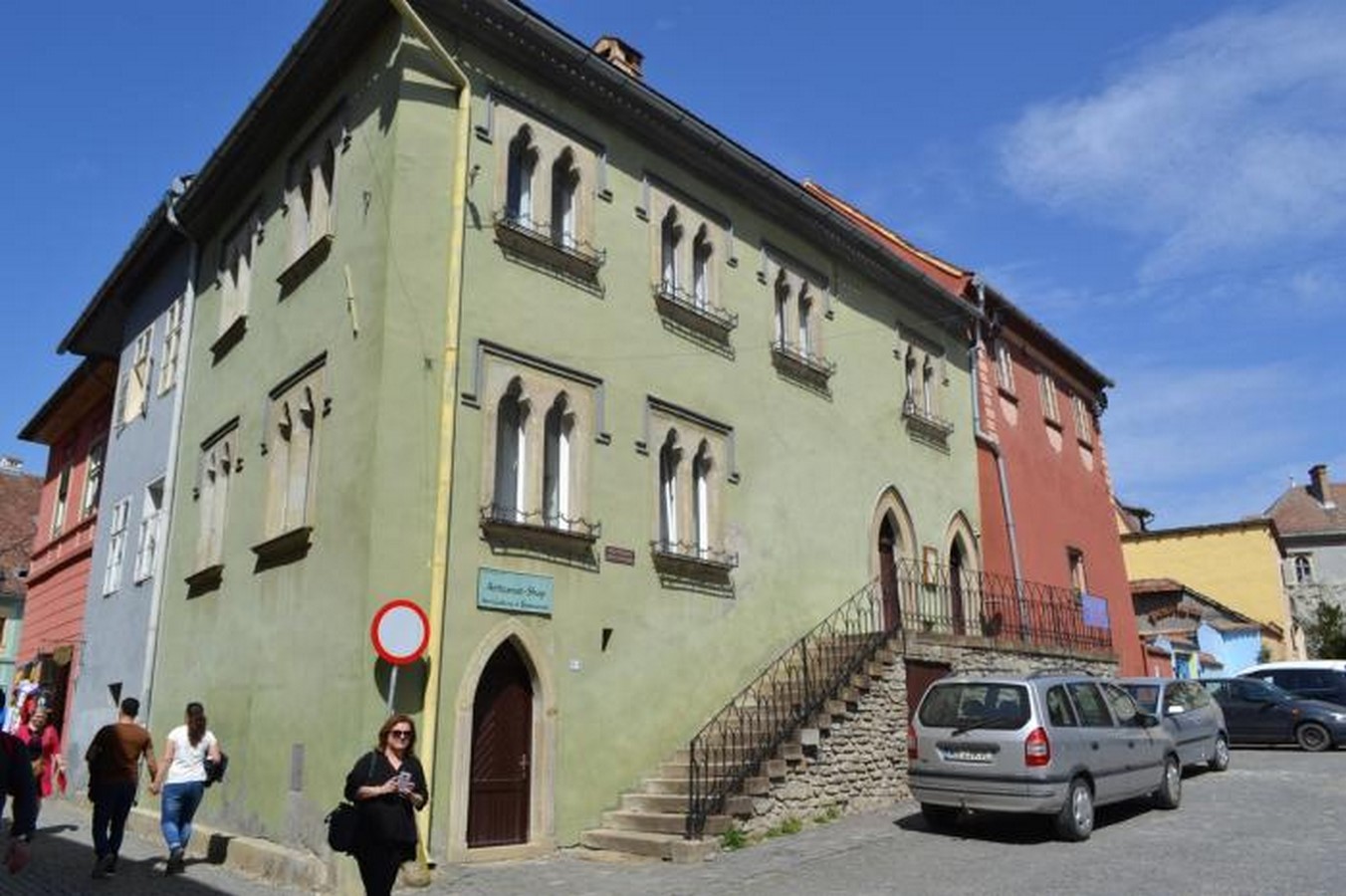
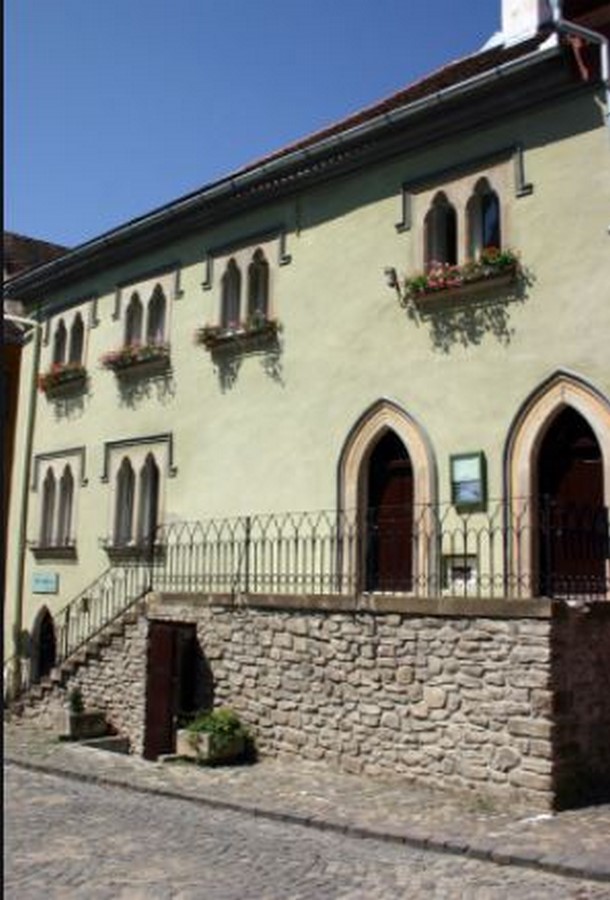
Withdrawing from the Sighișoaraisn style of architecture, lies the Venetian House in the citadel of the city. Its patron, Stephanus Mann, a mayor of the city refurbished his residence paying homage to the Venetian ancestry of his wife. Resembling the Italian Gothic Style of the City of Venice, the polygonal massing demonstrates a wide range of Byzantine and Islamic influences.
The couplet of trefoil arched openings extruding extended sills adorned with filigreed metallic railing imbibes delicacy to a solid building. The geometric stone framing above the pointed openings delivers a classic Venetian aesthetic prevailing in Europe during the 16th Century.
14. The Stag House
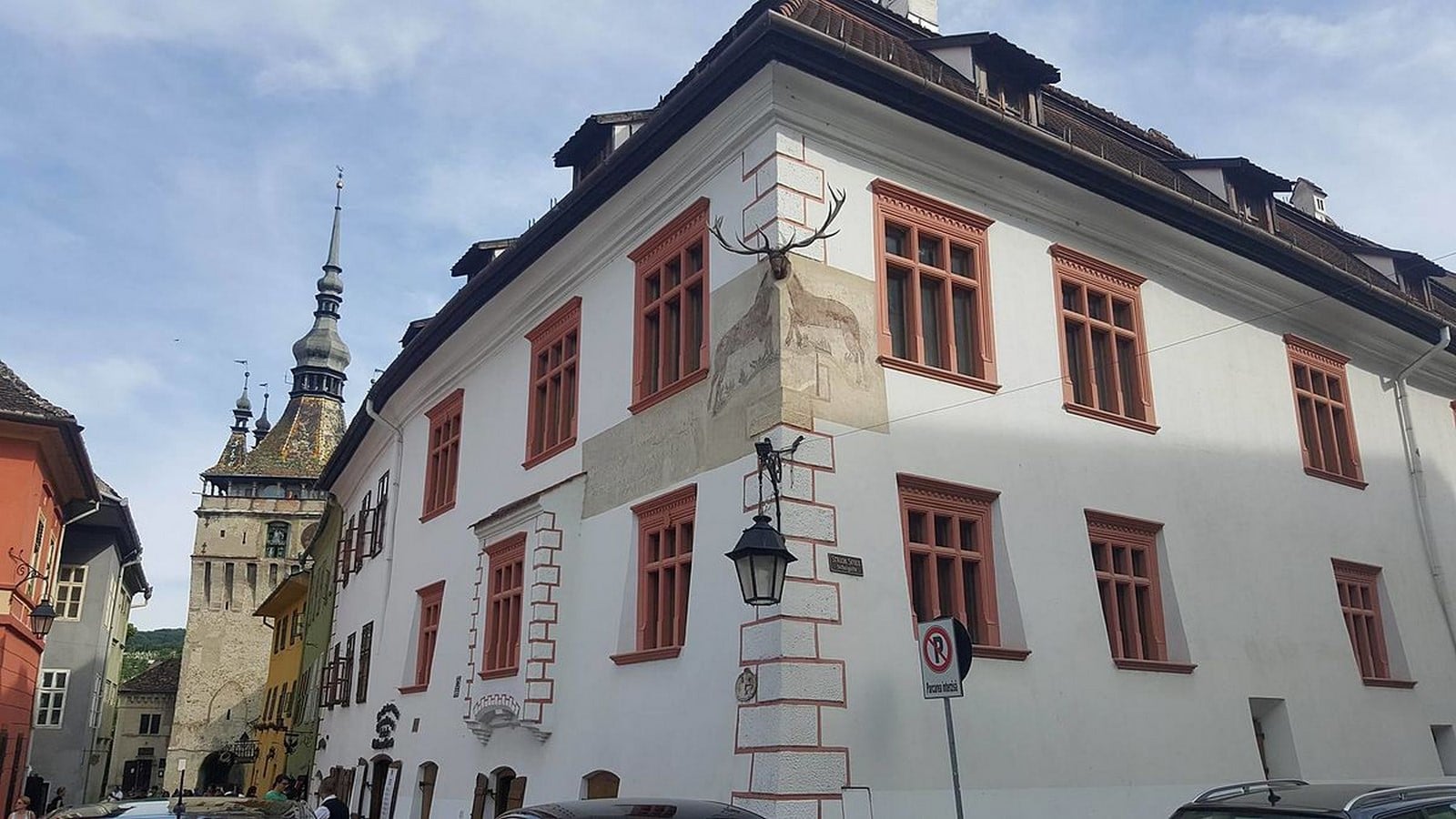
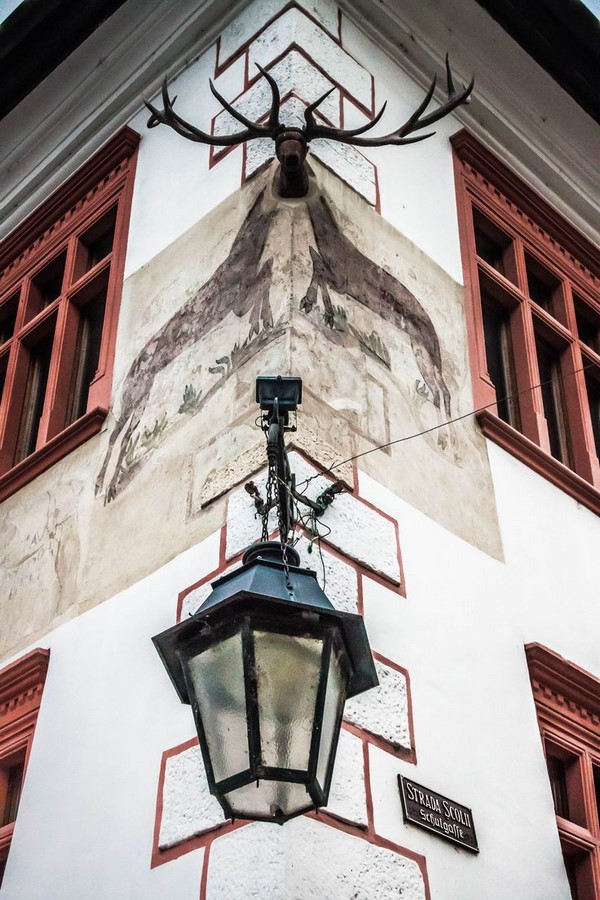
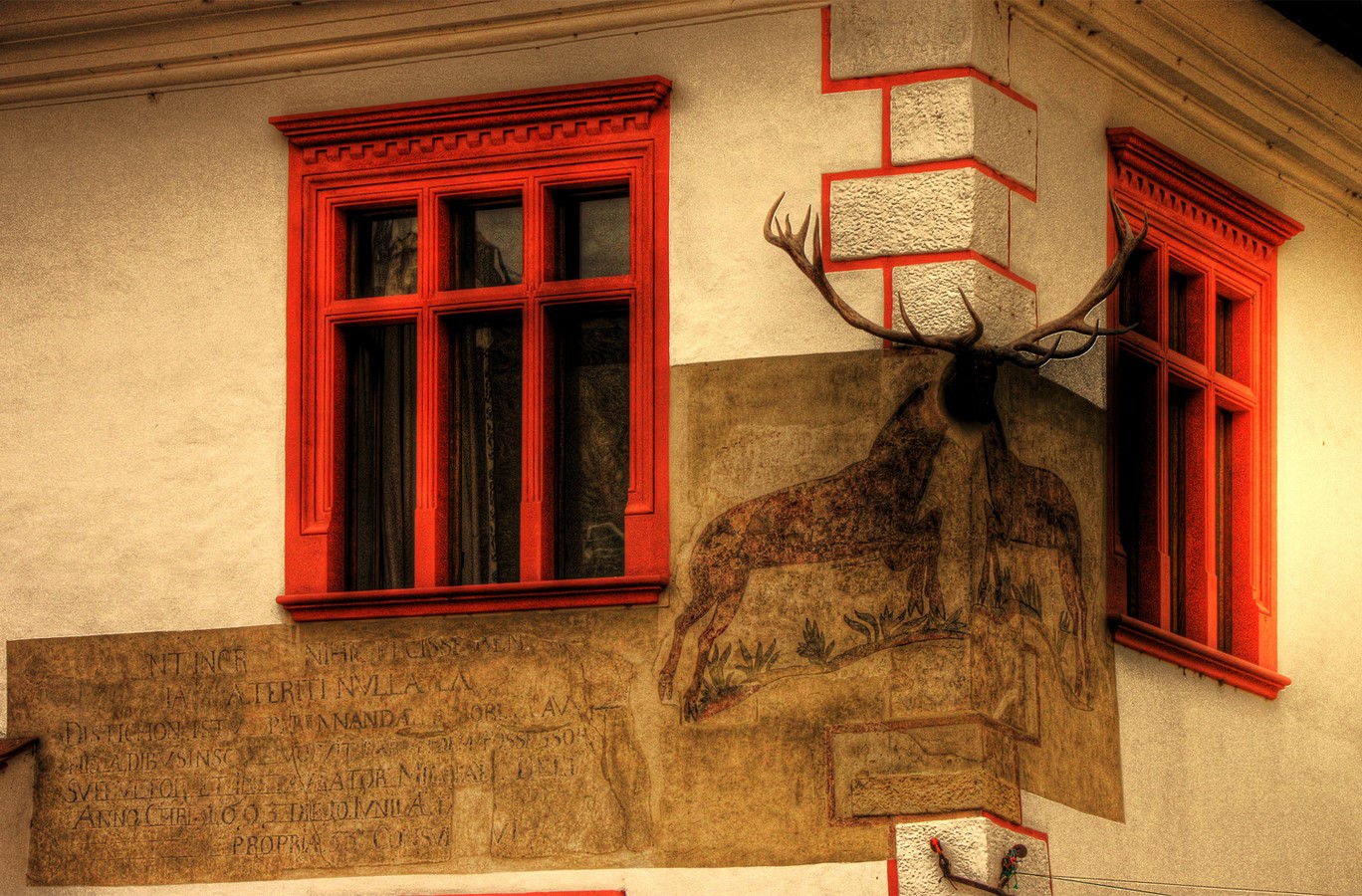
Positioned in the main plaza of the citadel, the Stag House is a typical example of Transylvanian style Renaissance architecture. The unconventional name of the structure derives from the head of the stag, protruding from the North West Corner of the building. Restoration carried out in the early 2000s outlines the body of a stag via a mural.
The facade of the building is dominated by well proportioned, symmetric windows and dictates a static rhythm. Despite the strong intercultural influences the hotel incorporates hipped roofs and dormer windows native to Sighișoara. Hence, the Stag House is a unique blend of immediate regionalism and hybrid experimentation.
15. Breite Oak Tree Reserve | Sighișoara
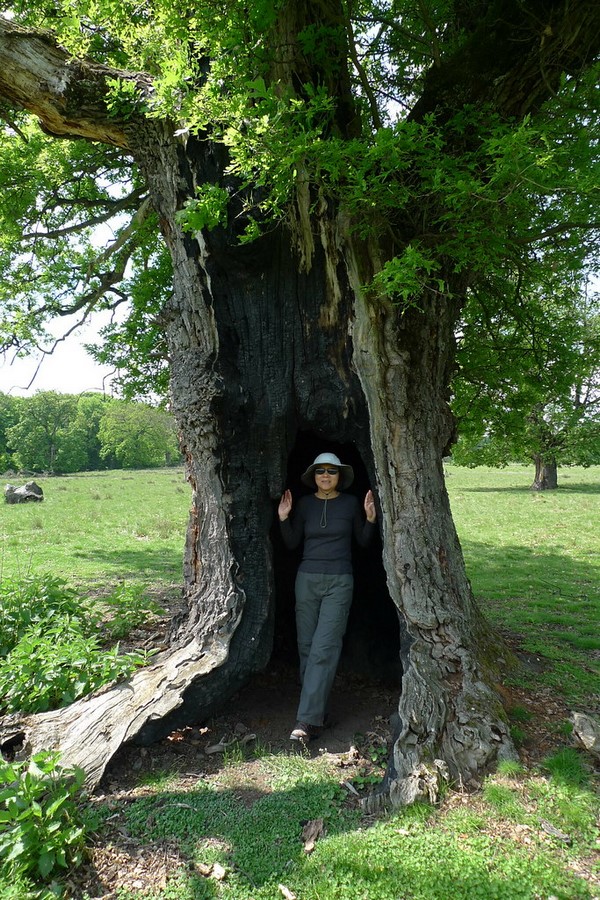
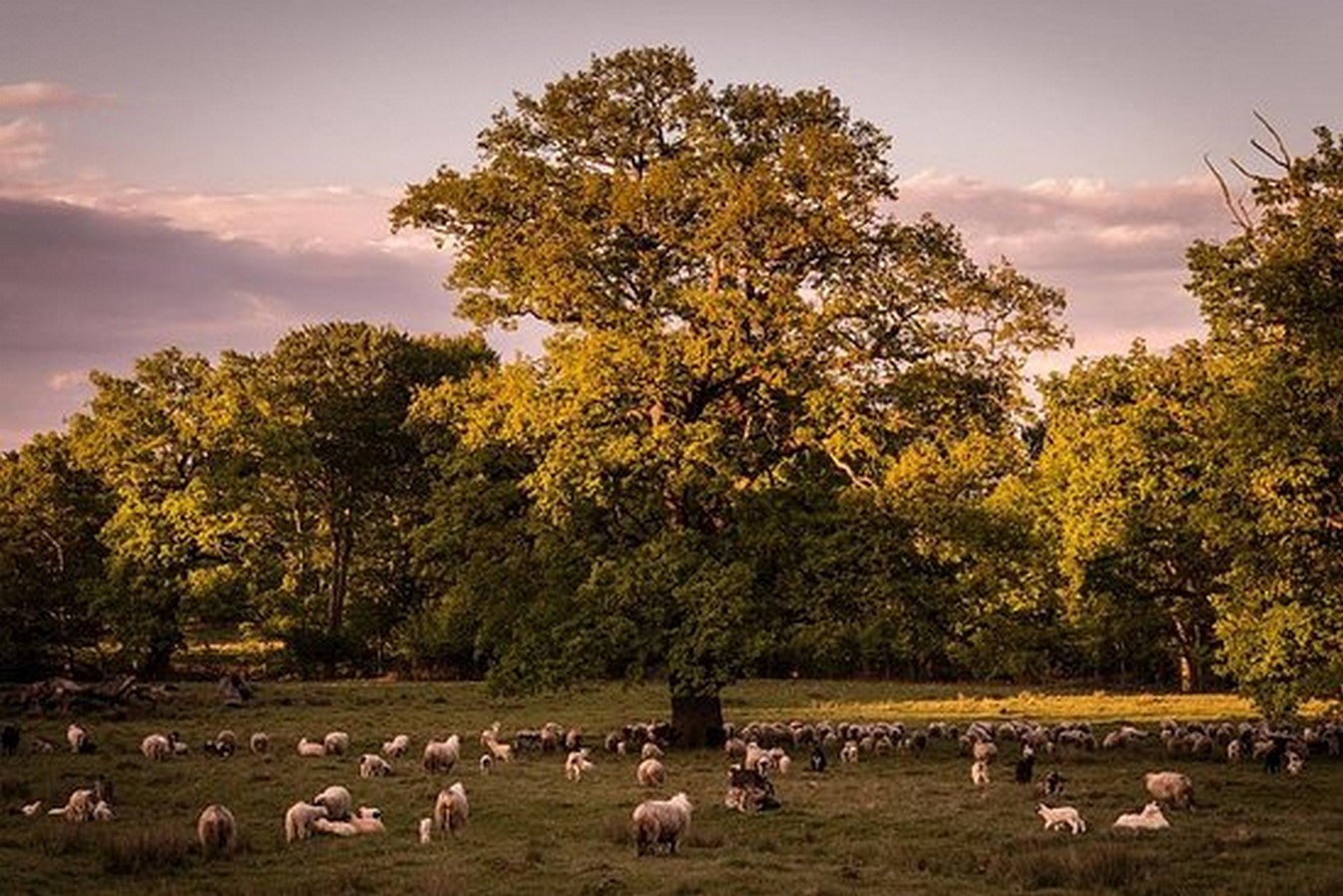
Spanning across the northern end of Sighișoara, the Breite Oak Tree Reserve is the oldest living example of Transylvanian culture. The expanse spreading across a hundred and eighty acres formulates the largest grassland in Eastern and Central Europe. The sanctuary is home to over five hundred Hornbeam and Oak trees aging anywhere between two hundred to eight hundred years.
Hence, these humble species have persisted through changing chieftains, ravaging fires, and devastating earthquakes for more than eight centuries. Rare species of eagles, owls, bee-eaters, bears, and wolves are a few of the many animals residing in the forest. Hence, the Breite Oaktree reserve is an innate aspect of the genealogy of Sighișoara.
Thus, the city of Sighișoara is an archive of the Transylvanian heritage of the Middle Ages. Via the architecture of defense mechanisms, churches, domestic settlements, and town planning principles, it is possible to gauge how the manner of living affects architecture and in turn how architecture affects the manner of living.