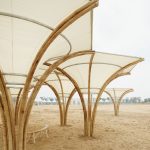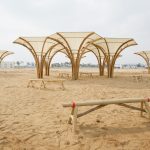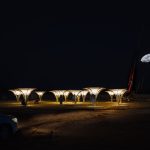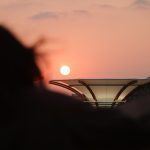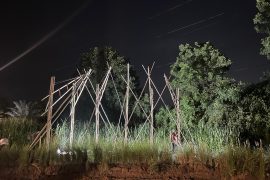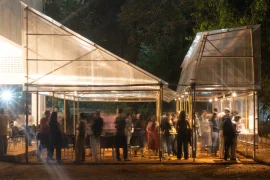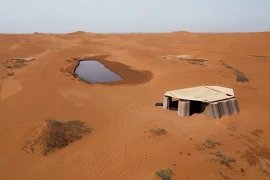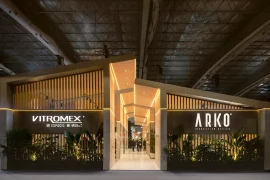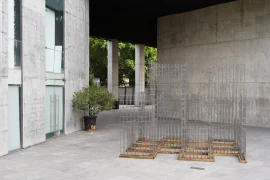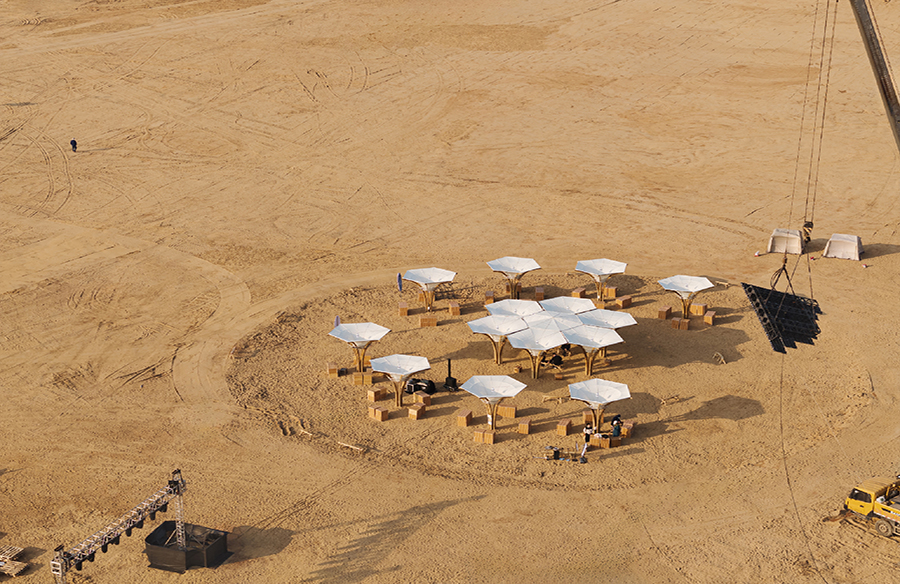
As part of the R-Day Music Festival, Also Architects has created a temporary yet vibrant cultural space along the coast of Chengmai, Hainan. Commissioned by re museum, the installation consists of a modular system of structures that respond to the festival’s spirit of openness and exchange. Designed for rapid assembly, disassembly, and reusability, the project reflects the museum’s commitment to “borderless curation” and offers a model for sustainable, mobile architecture that can adapt across various future contexts.
Project Name: Urban Nomad Art Museum
Studio Name: Also Architects
Project Location: Haikou
Project Area: 350 m2
Event Time: January 2025
Design Team: Valo Xiao, Ziming Ye, Jane Zhang, April Lo
Photography: INSPACE
01 Resonance: Architecture in Rhythm
Resonance occurs when objects share a natural frequency, amplifying vibrations—a phenomenon that transcends physics and finds parallels in emotional and social harmony. Drawing from this idea, the installation visualizes sound waves as a spatial language, turning invisible vibrations into an immersive architectural experience.
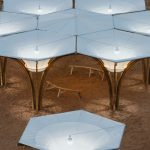
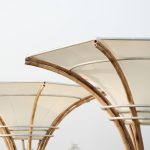
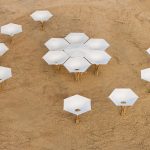
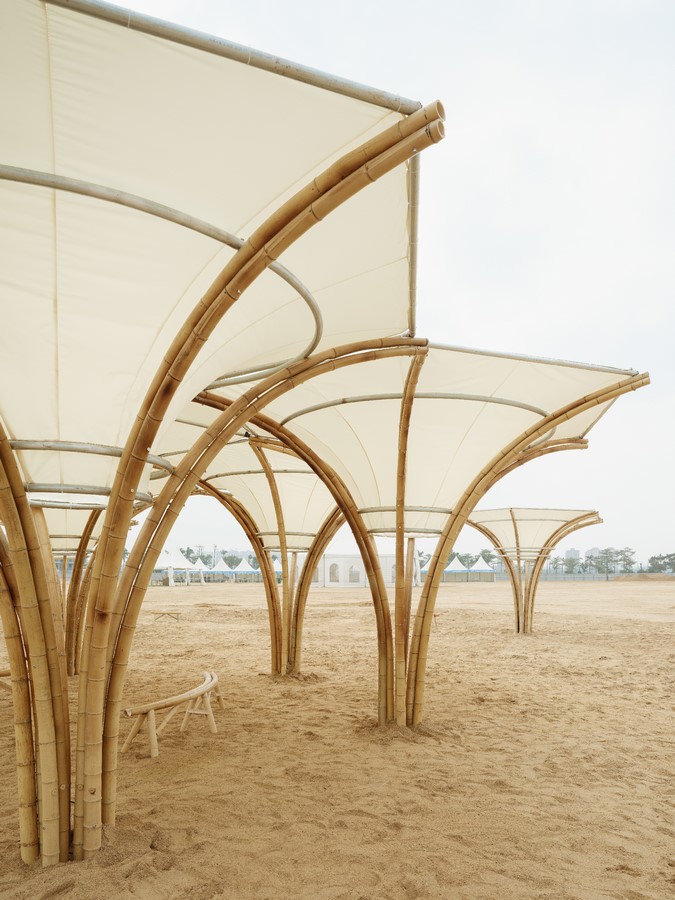
The design features umbrella-like modular structures inspired by the movement of sound. Rising and arching like musical notes, they symbolize the emotional resonance and communal energy that music creates. Their hexagonal footprints echo the concentric ripples of sound diffusion, while their undulating canopies reflect variations in frequency. Visitors are invited into a space where vibration is no longer abstract, but something felt, seen, and shared.
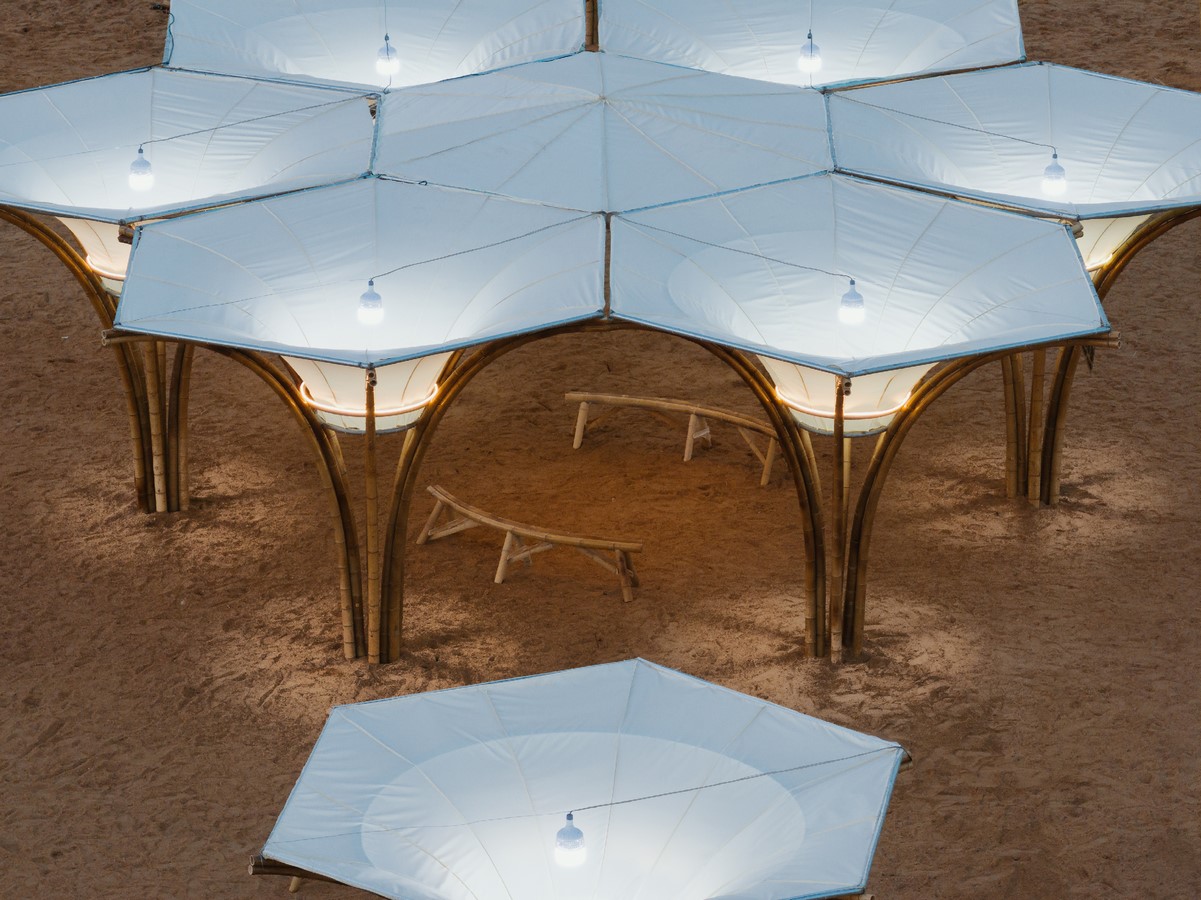
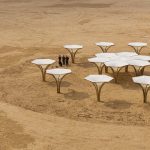
The modules are versatile and can be configured in multiple ways—linear paths, circular gathering areas, or scattered arrangements. At the R-Day Festival, these forms supported diverse functions, from marketplace booths to shaded forums for discussion, seamlessly integrated into the festival’s shifting rhythms.
02 Circular Craft: Sustainable Structure
Material choices play a central role in the project’s ecological ethos. Bamboo, with its natural elasticity and rich cultural symbolism, serves as the core material—paired with precision-engineered metal components to form a system that balances craft with construction logic.
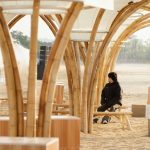
Each structure is anchored by a central steel ring, from which heat-bent bamboo ribs fan outward, meeting tensile steel tubes that stretch a lightweight canopy overhead. These fabric membranes, shaped into funnel forms, reduce wind resistance and invite in light and breeze. Open gaps are intentionally designed to soften environmental pressures and enhance sensory connection with the surroundings.
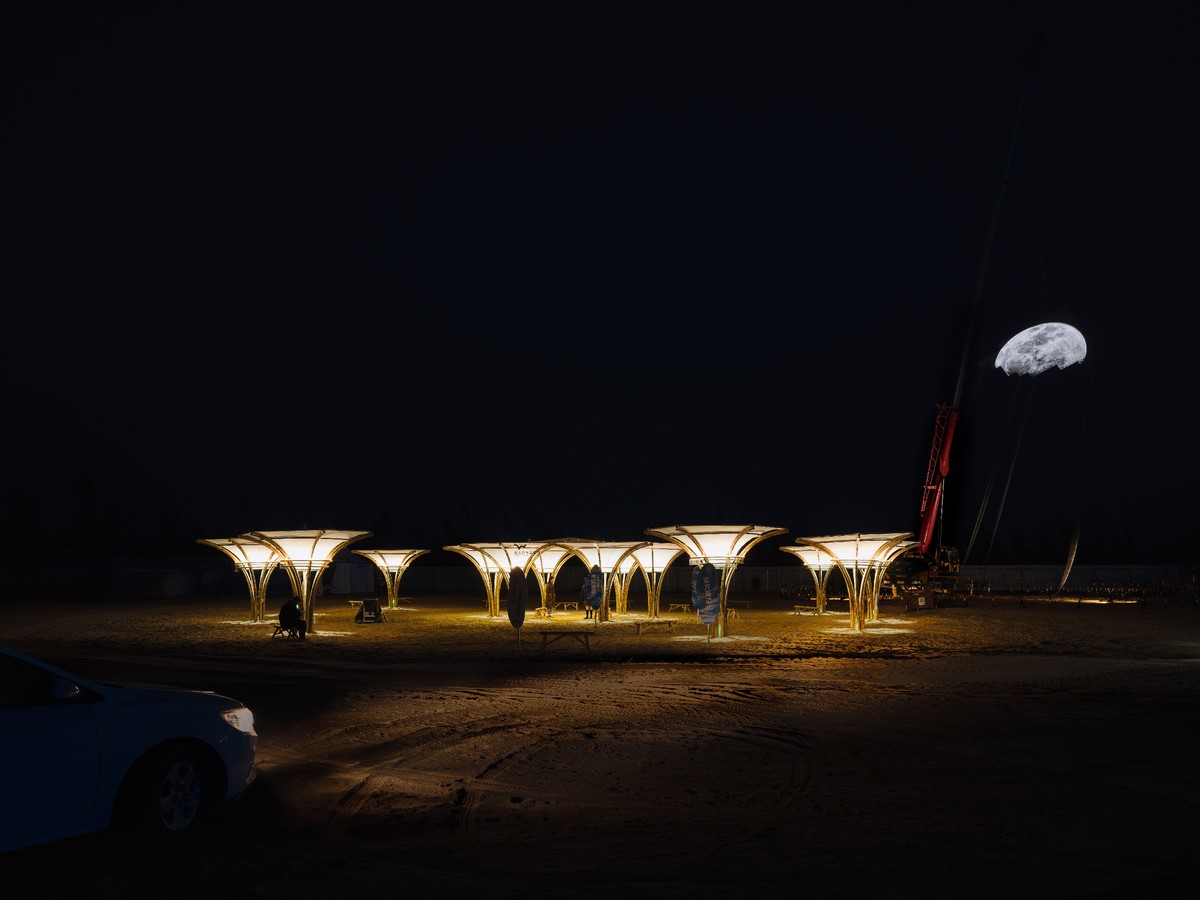
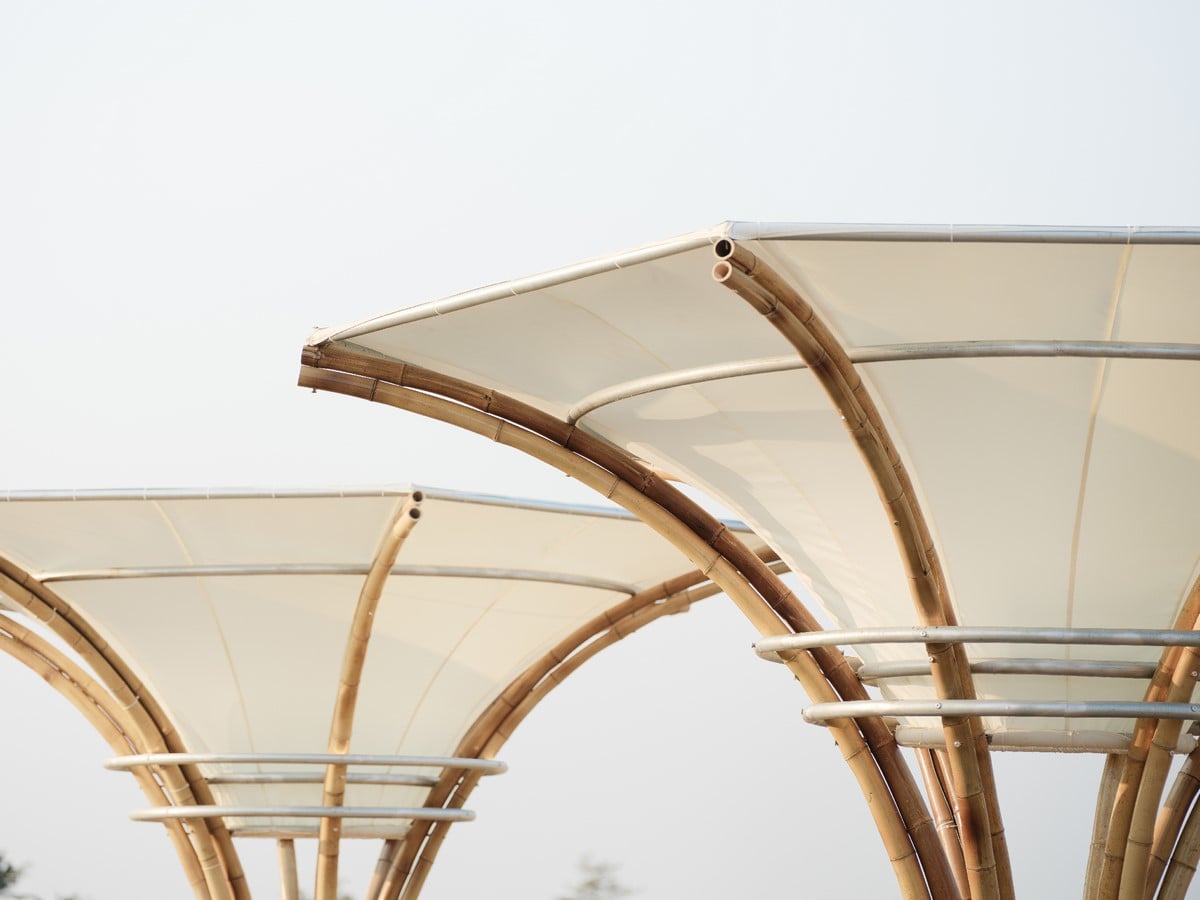
More than a temporary shelter, the pavilion embodies cyclical design. After the festival, its parts are not discarded—the fabric will be repurposed as cultural merchandise, the bamboo adapted into urban furniture. This reversible construction approach breaks away from the single-use mindset, instead creating a regenerative art form that echoes nomadic wisdom: a balance between what is taken and what is returned.
03 Spatial Flexibility: The Language of Nomadism
The installation translates the nomadic lifestyle into a modular spatial strategy. By changing the number, angle, or density of units, the layout can flexibly serve different needs. A continuous canopy forms shaded market lanes, while staggered modules reflect and enhance acoustics in performance areas. In the relaxation zone, open placement invites the breeze and frames the sea.
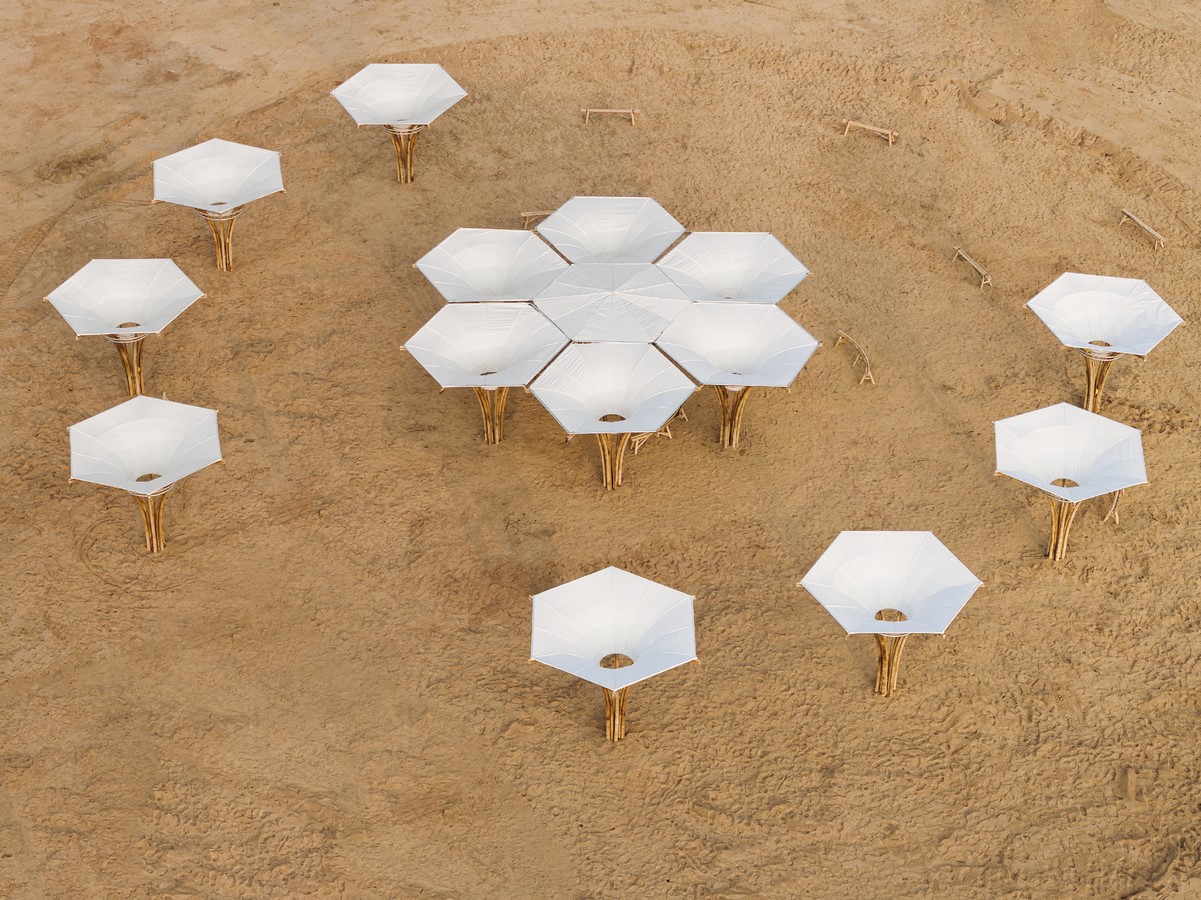
Each functional zone—market, lounge, forum, and exhibition—interacts within a unified whole, offering a rich blend of culture and lifestyle. The geometry of the hexagon, one of nature’s most efficient and flexible forms, reinforces this adaptability. It allows seamless connection and disassembly, just like nomadic dwellings that travel with their communities and reconfigure effortlessly on new ground.
As the festival winds down, these modular bamboo units—imbued with the memory of music and sea air—will travel again, reshaped into new cultural settings. Modularity here is not a sterile industrial concept, but a means of continuity and reinvention. It allows art to respond, migrate, and evolve.
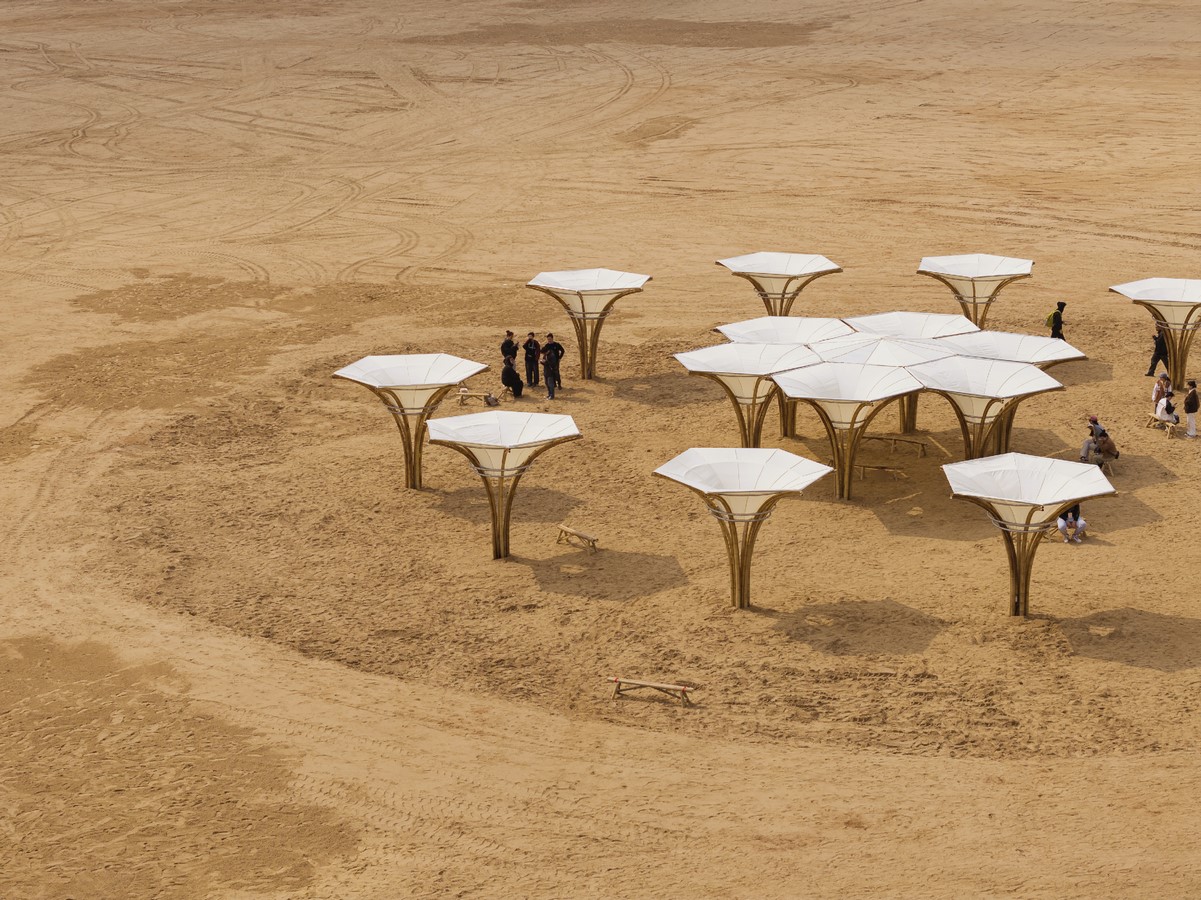
At its heart, re museum explores lighter, more agile ways for art to inhabit public life. Through projects like this, it proposes a vision for sustainable, human-centered design—where architecture is not fixed in place, but alive with possibility.