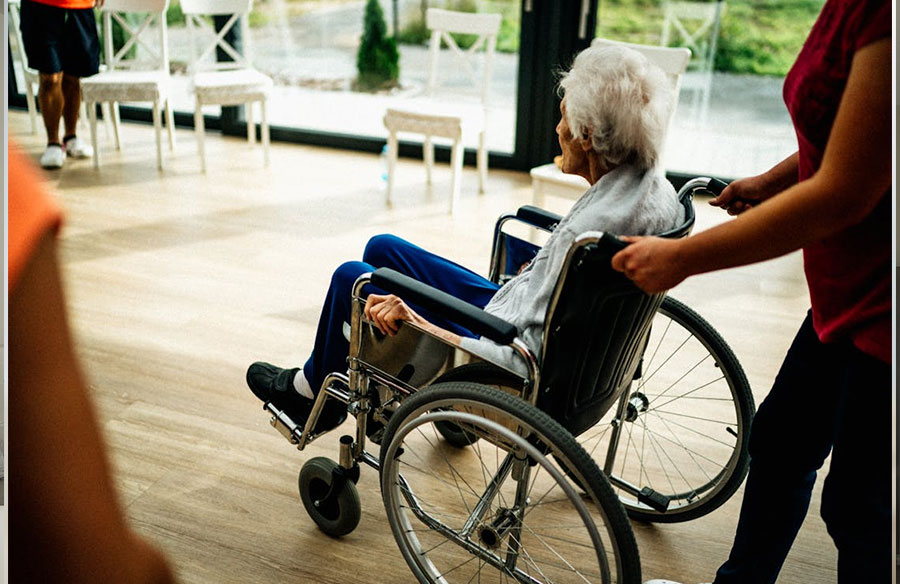
In the modern city, nursing homes are not just places where older adults live. They are pressure-release valves for hospitals, continuity-of-care hubs during disasters, and reliable nodes in the public health network.
As urban populations age, these facilities start to look less like optional real estate and more like essential city capacity.
Nursing Homes as Hospital Flow Infrastructure
Urban hospitals back up when patients cannot safely go home. That gridlock is not just an internal hospital problem. It delays admissions from the emergency department, pushes out elective procedures, and strains emergency medical services across the whole city.
Nursing homes and skilled nursing facilities often provide the “next step” level of care, where people can recover, stabilize, and get daily support when home is not realistic yet. When that capacity is missing, the hospital becomes the default holding area.
In a study by the JAMA Network, researchers tie staffing constraints to the risk of future hospital bed shortages and sustained high occupancy.
The takeaway for cities is straightforward: nursing home capacity is part of how a metro area keeps medical care moving instead of bottlenecking.
Nursing Homes as Power-Outage and Heat-Resilience Infrastructure
Disaster planning used to focus on “big” events. Now it is also about frequent disruptions, such as heat-waves, hurricanes, ice storms, and grid instability.
For nursing home residents, a few hours without cooling, oxygen support, or refrigerated medications can turn into an emergency fast.
That makes nursing homes closer to life-sustaining infrastructure than standard housing. They need reliable backup power, temperature control plans, staffing contingencies, and realistic evacuation partnerships.
When a city treats a facility like critical infrastructure, it changes the questions leaders ask:
- Can the building maintain safe indoor temperatures during a multi-day outage?
- Can it keep medications, oxygen, and clinical equipment running?
- Can staff actually get to work when roads or transit are disrupted?
This is why resilience upgrades in nursing homes are part of citywide risk reduction.
Nursing Homes as Regulated Workforce Infrastructure
If cities depend on nursing homes to protect medically fragile residents and keep hospitals flowing, staffing stops being an internal HR issue. It becomes a public capacity issue.
Hands-on care cannot be fully automated. Safe transfers, dementia redirection, toileting support, and feeding assistance all require trained people on-site.
When staffing falls short, the effects ripple outward: more falls, more infections, more hospital transfers, more family burnout, and more strain on emergency departments.
That is why staffing rules are increasingly framed like infrastructure standards.
Federal policy now sets minimum staffing expectations for long-term care facilities, including baseline hours per resident-day and requirements tied to registered nurse coverage.
Cities may argue over feasibility, but the direction is clear: the workforce is load-bearing.
Nursing Homes as Public Health Monitoring Infrastructure
Nursing homes also function as real-time public health sites because they concentrate high-risk residents and operate with standardized reporting, infection-control routines, and clinical oversight.
In practical terms, that means nursing homes can serve as early warning signals for respiratory illness surges, medication supply disruptions, or gaps in vaccination coverage.
They also provide a ready-made channel for rolling out protective measures quickly when guidance changes.
This is an infrastructure role because it supports the whole city, not just the residents inside the building.
When a nursing home prevents outbreaks, it reduces downstream hospitalizations and helps protect staff, visitors, and the broader community.
Nursing Homes as Care-Transition and Family Stability Infrastructure
A less obvious infrastructure role is administrative: nursing homes help families navigate a high-stakes transition that includes medical decision-making, paperwork, and ongoing costs. In cities, that transition often happens fast, after a hospitalization, and under stress.
Families often ask whether any insurance coverage for seniors exists once a person is already in a facility.
Well, in many cases, nursing home residents can still get life insurance products and may qualify for guaranteed life insurance products, but options may be more limited because risk is higher, and premiums may be paid over a shorter period of time.
Conclusion: The City That Plans for Aging Plans for Everything
Nursing homes increasingly sit at the intersection of health-care capacity, disaster resilience, workforce planning, and public health response. That is what critical infrastructure does: it quietly holds up the rest of the system.
Treating nursing homes as critical urban infrastructure means planning them like essential systems, integrated into city resilience plans and health-system operations – because their performance shapes how well the whole city functions.