New York City’s skyline is defined by brick buildings, many of which have stood for decades. While these facades may appear solid from the outside, their safety often depends on a much smaller element that goes unnoticed: the mortar joints between bricks.
Over time, these joints begin to deteriorate due to weather exposure, moisture, and structural movement. This is where brick pointing becomes essential, not just as a maintenance task but as a critical step in preserving facade safety across residential and commercial properties.
What Is Brick Pointing and Why It Directly Impacts Facade Safety
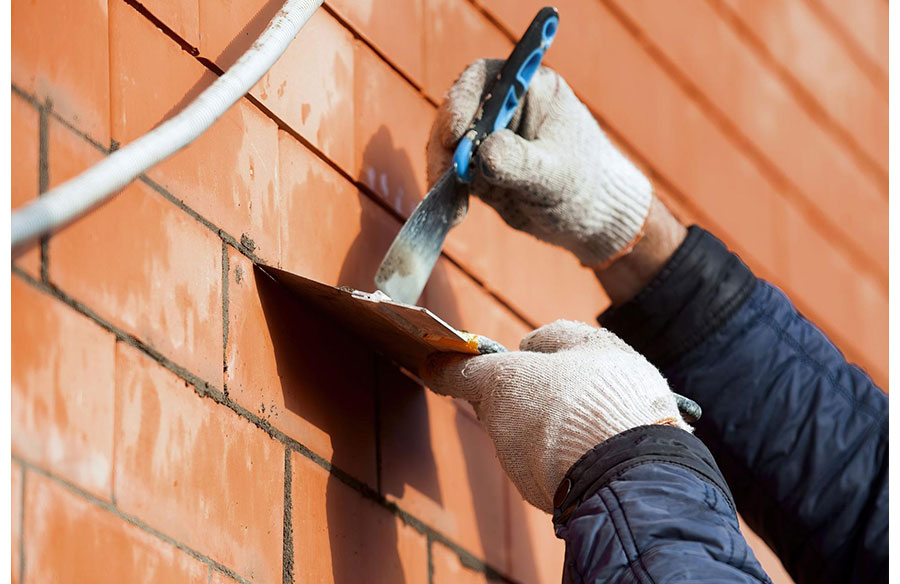
Brick pointing refers to the process of repairing and renewing the mortar joints between bricks. While bricks themselves are durable, the mortar that binds them is more vulnerable to wear. Once it begins to weaken, the entire facade system can gradually lose its integrity.
In NYC buildings, mortar plays a protective role beyond simple bonding. It acts as a buffer against moisture penetration, temperature fluctuations, and minor structural shifts. Properly maintained mortar joints help distribute loads evenly across the wall, preventing localized stress points that can lead to cracks or instability.
From a facade safety perspective, brick pointing is not just cosmetic work. It directly supports the building envelope by keeping the structure sealed, aligned, and stable under changing environmental conditions.
Why Facade Safety Is a Serious Concern in NYC
Facade safety in New York City is not just a structural issue, it is a public safety priority. With high-rise buildings, narrow streets, and constant pedestrian traffic, even minor facade failures can pose significant risks.
Several factors make NYC facades more vulnerable than those in other regions:
- Age of buildings: Many structures are decades old, with original mortar already nearing the end of its lifespan
- Weather exposure: Repeated freeze-thaw cycles cause expansion and contraction, accelerating mortar deterioration
- Urban density: Close proximity to sidewalks and neighboring buildings increases the impact of falling debris
Because of these conditions, facade maintenance cannot be delayed or treated as optional. Small issues within mortar joints can escalate into larger structural concerns if not addressed in time, making early intervention through proper brick pointing a key part of long-term safety planning.
How Damaged Mortar Leads to Facade Failure
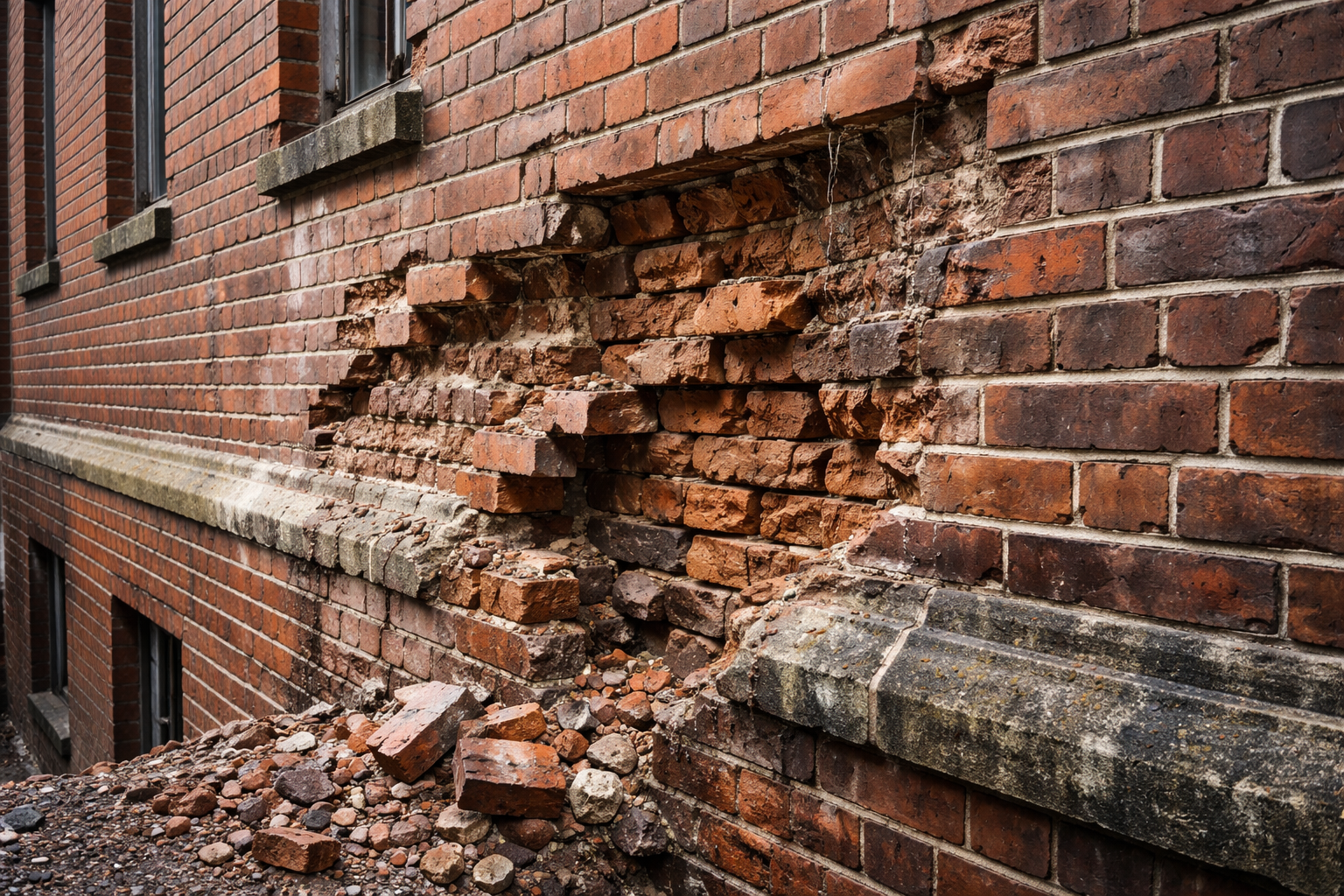 Mortar joints are often the first part of a brick facade to break down, but their failure rarely stays isolated. Once mortar begins to crack or erode, it creates entry points for moisture, which slowly penetrates behind the brick surface.
This internal moisture buildup weakens the bond between bricks and increases the risk of shifting or loosening units. In colder months, trapped water expands during freeze-thaw cycles, widening gaps and accelerating deterioration. Over time, what starts as minor joint damage can lead to visible cracks, bulging sections, or even partial facade failure.
Key structural risks linked to deteriorated mortar:
- Uneven load distribution across brickwork
- Increased pressure on surrounding intact joints
- Progressive loosening of bricks under stress
Because mortar acts as the system that holds everything together, its failure directly compromises the facade’s stability, not just its appearance.
Key Signs Your Brick Pointing Needs Repair
Early signs of mortar deterioration are often visible, but they are frequently overlooked until the damage becomes more serious. Identifying these signs early can help prevent larger facade issues and reduce the need for extensive repairs.
One of the most common indicators is crumbling or powdery mortar between bricks. You may also notice small gaps forming in joints or sections where mortar has receded deeper than the brick surface. These changes suggest that the protective barrier is no longer intact.
In more advanced cases, signs become harder to ignore.
- Loose or slightly shifting bricks
- Water stains appearing on interior or exterior walls
- Bulging or uneven sections in the facade
When these issues appear, it is usually a signal that professional brick pointing nyc services are needed to restore joint strength and prevent further structural impact.
Brick Pointing and Local Law 11 Compliance in NYC
In New York City, facade safety is not only a maintenance concern but also a legal requirement under NYC Local Law 11. This regulation mandates periodic inspections of building exteriors, particularly for properties above a certain height, to identify and address potential hazards.
During these inspections, deteriorated mortar joints are one of the most commonly reported issues. Even when the brick itself appears intact, weakened pointing can lead to unsafe conditions if left unaddressed. Buildings classified as “unsafe” or “SWARMP” (Safe With a Repair and Maintenance Program) often require corrective work, including repointing, within a defined timeframe.
For property owners, proactive maintenance becomes critical here. Addressing mortar deterioration early through proper brick pointing helps avoid violations, reduces liability risks, and ensures that the facade remains compliant with city regulations without last-minute repairs.
Repair vs Repointing: What Your Facade Actually Needs
Not all facade issues require full repointing. In some cases, localized repairs may be enough, but the challenge lies in correctly identifying the extent of damage. Misjudging this can lead to temporary fixes that fail under continued exposure.
Minor repairs are typically suitable when damage is limited to small sections, with the surrounding mortar still in good condition. However, when deterioration is widespread or joints have lost significant depth and strength, full repointing becomes the more reliable solution.
Key factors that influence the decision:
- Depth and spread of mortar deterioration
- Age of existing mortar joints
- Exposure to moisture and weather conditions
- Structural movement or visible facade stress
This is where experience plays a major role. A qualified masonry contractor can assess whether targeted repairs will hold or if full repointing is necessary to restore long-term facade stability.
Why Professional Brick Pointing Makes a Difference
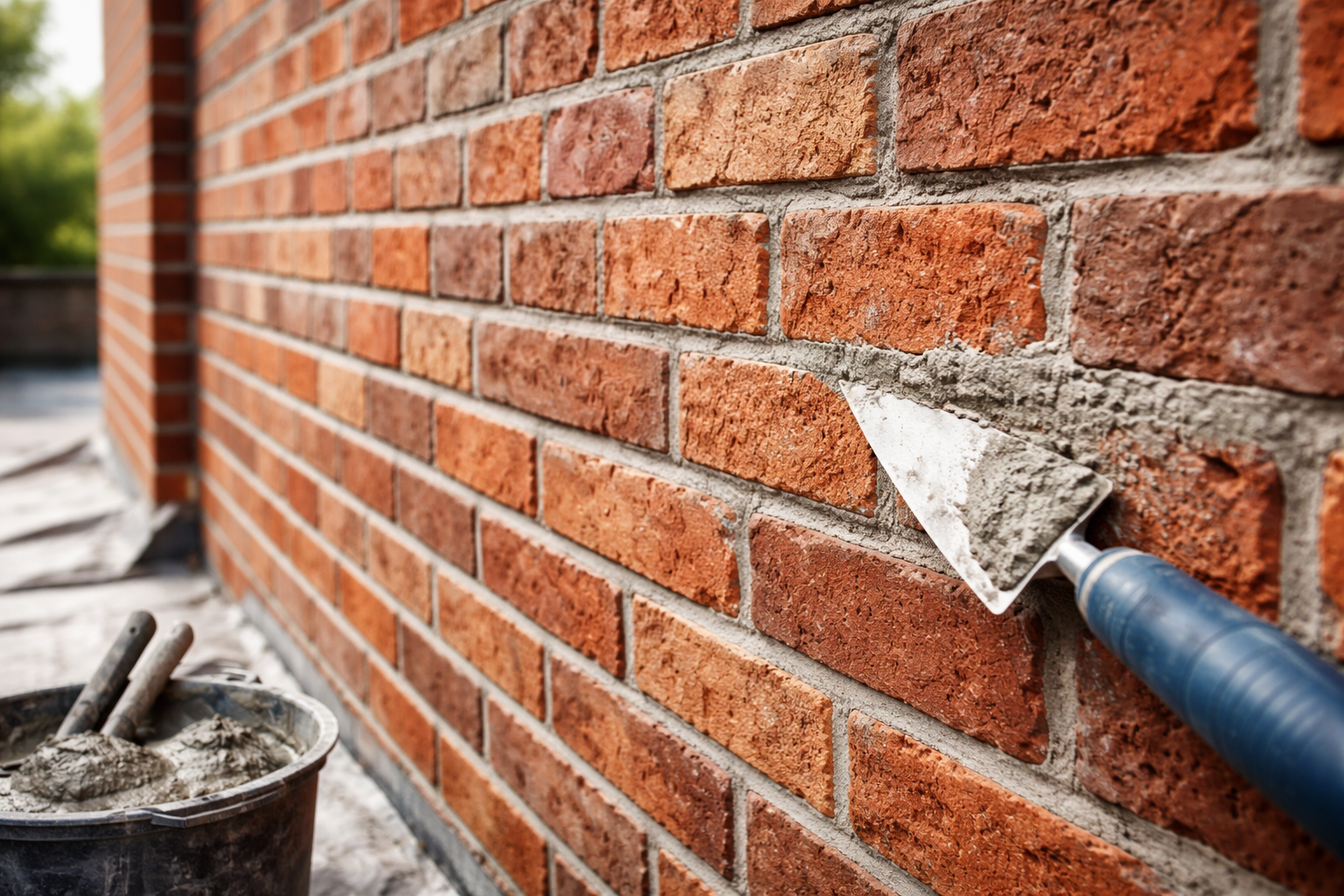 Brick pointing may seem straightforward, but in NYC conditions, the quality of work directly impacts how long a facade remains safe and stable. Incorrect techniques or poor material selection can lead to early failure, even after repairs have been completed.
Professional work ensures that the new mortar matches the original in strength, composition, and flexibility. This balance is critical because mortar must absorb movement and environmental stress without transferring it to the bricks themselves. When done correctly, it reinforces the facade without causing additional strain on surrounding materials.
Beyond materials, proper joint preparation and application also play a key role. Removing deteriorated mortar to the correct depth, applying the mix evenly, and finishing joints in a way that sheds water effectively are all details that influence long-term performance. This level of precision is what separates temporary fixes from durable facade protection.
Final Thoughts
Facade safety in NYC is rarely compromised by bricks alone. In most cases, it begins with something less visible, the gradual breakdown of mortar joints that hold the entire system together.
Ignoring early signs of deterioration can turn manageable repairs into larger structural concerns. On the other hand, timely brick pointing not only restores the facade’s strength but also protects against future damage caused by weather, moisture, and movement.
In a city where building exteriors directly impact public safety, maintaining mortar joints is not optional, it is a necessary part of responsible property care.
FAQs
How often should brick pointing be done in NYC?
Most NYC buildings require brick pointing every 20–30 years, but this depends on exposure, weather conditions, and maintenance history. Buildings facing heavy wind and moisture may need attention sooner.
Can damaged mortar really cause facade failure?
Yes, mortar joints hold the brick system together. When they weaken, bricks can loosen over time, increasing the risk of cracks, bulging, or falling debris in severe cases.
Is brick pointing required under NYC regulations?
Brick pointing itself is not always directly mandated, but under NYC Local Law 11, any unsafe facade condition, including deteriorated mortar, must be repaired to maintain compliance.
What happens if I delay brick pointing repairs?
Delays usually allow moisture to penetrate deeper into the facade. This leads to faster deterioration, higher repair costs, and in some cases, violations or safety risks.
How long does brick pointing last?
When done properly using the right materials and techniques, brick pointing can last several decades. However, its lifespan depends on environmental exposure and the quality of workmanship.
Is there a difference between repointing and patch repair?
Yes. Patch repair addresses small, localized areas, while repointing involves removing and replacing mortar across larger sections or the entire facade for consistent strength.
Does brick pointing improve building safety immediately?
It restores joint strength and reduces risk, but overall safety depends on the condition of the entire facade. A full inspection is often recommended alongside repairs.
How do I know if I need full repointing or minor repair?
This depends on how widespread the damage is. If multiple areas show deterioration or joints have lost depth, full repointing is usually the better long-term solution.