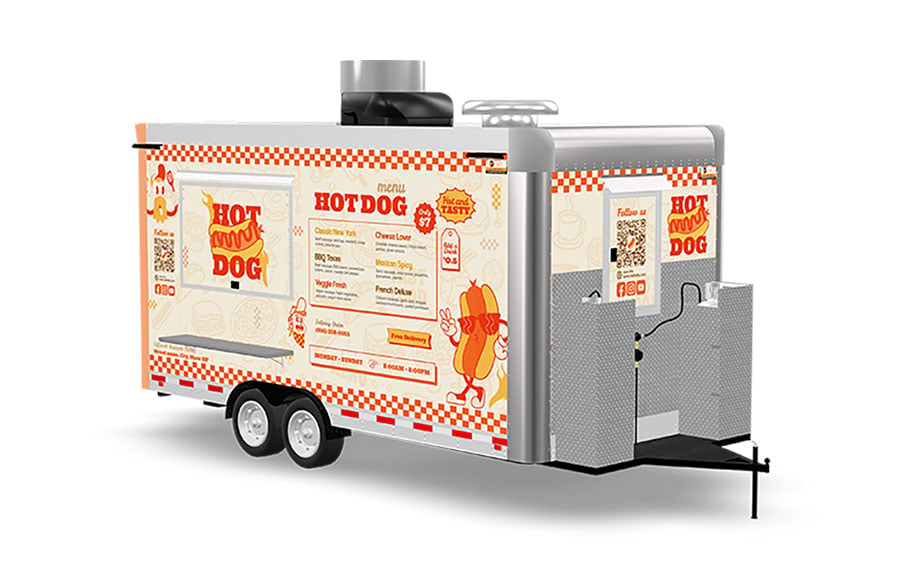
Entering the street food market is often easier with a focused concept rather than a broad menu. Hot dogs and sausages remain a strong choice because they are familiar, affordable, and quick to serve in places with constant foot traffic, including festivals, sports venues, outdoor markets, and seasonal events.
Starting a mobile food business is often easier when the concept is simple, recognizable, and built for speed. That is exactly why hot dog and sausage formats continue to perform well in the street food industry. Customers immediately understand the offer, the ordering process is fast, and the product naturally fits places where people want convenient food without long waits. At festivals, sports venues, outdoor markets, fairs, and busy downtown areas, quick service can directly affect daily revenue, and that makes this format attractive for entrepreneurs who want a practical way to enter the market.
Another major advantage is broad customer appeal. Hot dogs are familiar, affordable, and easy to sell to a wide audience, which reduces some of the risk that comes with niche food concepts. In high-traffic environments, people often choose food they can recognize instantly and eat on the go. A focused menu based on sausages, hot dogs, and quick snacks supports exactly that behavior. Rather than slowing service with too many complicated items, owners can build a compact menu that still feels flexible through toppings, sauces, combo options, and regional flavor variations. This balance between simplicity and customization is one reason the model remains commercially strong.
For first-time operators, a trailer can also be easier to manage than a full kitchen truck. It usually requires a more streamlined setup, less equipment, and a more efficient workflow between storage, cooking, assembly, and service. When evaluating units, buyers should pay attention not only to appearance but also to layout, sanitation systems, refrigeration, storage capacity, and reliable utilities. For many vendors, a hot dog trailer offers the right mix of mobility, operational simplicity, and long-term business potential, making it a smart starting point for building a profitable street food brand.