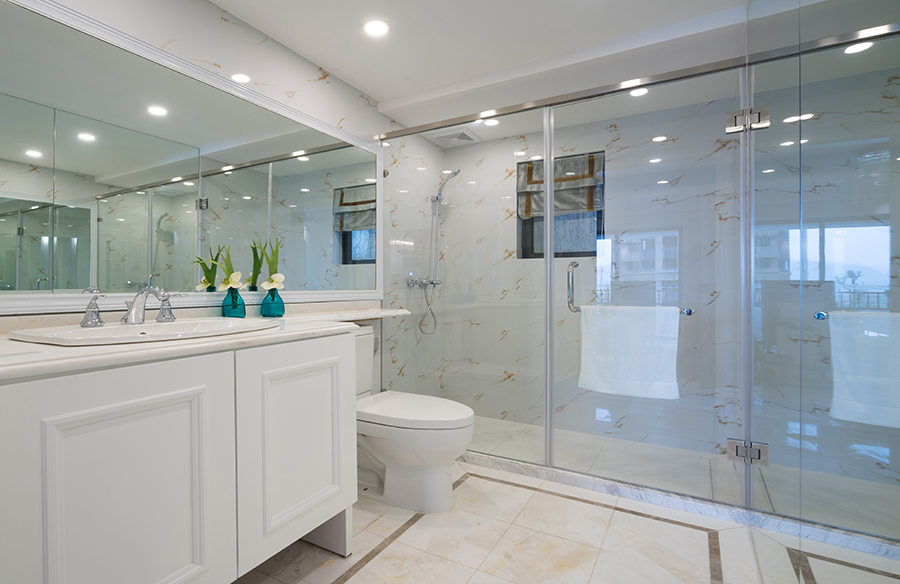
Frameless glass has become the default “aspirational” look for modern bathrooms—and for good reason. It can make a tight space feel open, highlight tile work instead of hiding it behind metal rails, and deliver that clean, hotel-like finish many homeowners want. But frameless isn’t automatically the right choice for every renovation. The smartest approach is to treat it as a design-and-performance decision, not a checkbox on a trend list.
So when does frameless glass make the most sense? Let’s walk through the situations where it shines, where it’s merely “fine,” and where you might be happier with another option.
What “Frameless” Actually Means (and Why It Matters)
A true frameless shower enclosure relies on thick tempered safety glass—typically 3/8″ to 1/2″—with minimal metal: discreet hinges, clamps, and a small threshold or sweep to manage water. That thickness is what gives the structure stability without a surrounding frame.
The practical impact of minimal hardware
Because there’s less metal, there’s less visual clutter. But there’s also less “built-in forgiveness” for walls that are out of plumb or floors that aren’t perfectly pitched. Frameless looks effortless; achieving it can require more precision.
Choose Frameless When You Want the Room to Feel Bigger
If your bathroom is modest in size, frameless glass is one of the few upgrades that can create a noticeable sense of openness without moving walls. Clear glass doesn’t interrupt sightlines, so the eye reads the space as a single volume rather than separate compartments.
Best candidates: smaller baths, tighter layouts
Frameless is especially effective when:
- The shower sits near the entry and a framed unit would visually “stop” the room.
- You’re using large-format tile or a continuous floor pattern you want to showcase.
- Natural light is limited and you want every bit of brightness to travel.
In these cases, the value isn’t just aesthetic. A brighter, more open bath feels more comfortable day-to-day—and tends to photograph better if resale is on your mind.
Choose Frameless When Your Tilework Is a Feature (Not a Background)
If you’re investing in high-end tile, niche details, or a statement wall, a chunky frame can compete with those choices. Frameless acts more like a gallery display: it protects the space without becoming the focal point.
A quick rule of thumb
If you’ve chosen tile with variation—zellige, marble veining, bold terrazzo, intricate mosaics—frameless glass usually complements it better than a metal-heavy enclosure. It lets the material speak.
Around this stage of planning, many homeowners realize that glass isn’t just a “door”; it’s part of the finish package, like lighting or plumbing trim. If you’re renovating in a humid coastal climate, it’s also worth looking at specialists who understand local conditions and code requirements. For example, if you’re comparing options for bathroom glass installations in South Florida, you’ll notice that reputable installers focus on accurate measuring, proper anchoring, and glass thickness—details that determine whether frameless performs as well as it looks.
Choose Frameless When You Want Easier Cleaning (But Set Expectations)
One of the most practical arguments for frameless glass is maintenance. Fewer metal channels means fewer places for soap scum and mildew to hide. That said, frameless is not “no maintenance”—it’s just simpler maintenance.
What gets easier
With frameless enclosures, you typically avoid:
- Grimy bottom tracks that collect water and debris
- Multi-piece frames with seams that trap residue
- Hard-to-reach corners around bulky hardware
What still matters
If you have hard water, you’ll still need a routine—think quick squeegee passes and occasional descaling. Many homeowners add a protective coating to reduce spotting, but even without one, daily habits make the biggest difference.
Choose Frameless When Your Bathroom Can Support the Engineering
This is the part people skip on Pinterest—and the part that determines whether the project feels premium or problematic.
Wall structure and blocking
Frameless hinges and clamps need solid anchoring. In many cases, that means wood blocking behind the tile or reinforced wall construction. If your renovation is already down to studs, it’s straightforward to plan for. If you’re keeping walls intact, it may limit hinge placement options.
Plumb, level, and slope
Frameless glass tolerates less “wiggle room.” Installers can compensate to a point, but if your walls lean or your curb is out of level, you may see uneven gaps or water escape. This is where good prep work pays off: proper waterproofing, correct curb pitch back into the shower, and careful tile layout.
Layouts that are especially frameless-friendly
Frameless performs best when the design naturally manages water:
- Walk-in showers with a fixed panel plus door (the fixed panel acts as a splash guard)
- Corner enclosures where two walls help contain spray
- Showers with a defined curb rather than fully curbless transitions
Curbless can absolutely work—but it requires thoughtful drain placement, floor slope, and sometimes a longer glass panel to control overspray.
Choose Frameless When You’re Thinking Long-Term Value
Frameless tends to cost more than framed, largely due to thicker glass and more precise fabrication. The question isn’t “Is it expensive?” but “Will I appreciate it over time?”
When the investment tends to pay off
Frameless is a strong choice if:
- You plan to stay in the home and want a daily-use upgrade you’ll notice.
- You’re renovating a primary suite where the bathroom experience matters.
- Your overall finish level is mid-to-high (frameless aligns with upgraded fixtures, lighting, and tile).
In higher-end markets, frameless can also feel like an expectation rather than a luxury. Even when buyers don’t name it explicitly, they respond to the clean lines and light.
When You Might Skip Frameless (and Feel Good About It)
Frameless isn’t a badge of honor. There are cases where a framed or semi-frameless enclosure is a better match.
Budget is tight—and you need to prioritize
If choosing frameless means compromising on waterproofing, tile quality, or ventilation, those trade-offs will annoy you more than a visible frame ever would.
Your walls aren’t being opened
If you’re not redoing the shower surround and you suspect the walls are out of plumb, a framed system can hide inconsistencies and simplify installation.
You want maximum water containment
For households with kids, high-pressure showerheads, or frequent splashing, framed enclosures with tracks can be more forgiving. Frameless can be watertight when designed correctly, but it’s less tolerant of chaotic use.
A Simple Decision Check Before You Commit
Before you finalize the choice, ask yourself three questions:
- Is openness the goal? If you want the room to feel larger and brighter, frameless is hard to beat.
- Is the shower build precise? Good slope, solid backing, and clean tile lines make frameless look intentional.
- Will you maintain the glass? A quick daily wipe keeps it looking sharp; neglect shows faster on clear panels.
Frameless glass is at its best when it complements a well-planned renovation: strong bones, thoughtful layout, and finishes you actually want to see. Choose it for the right reasons, and it won’t just look current—it’ll still feel right years from now.