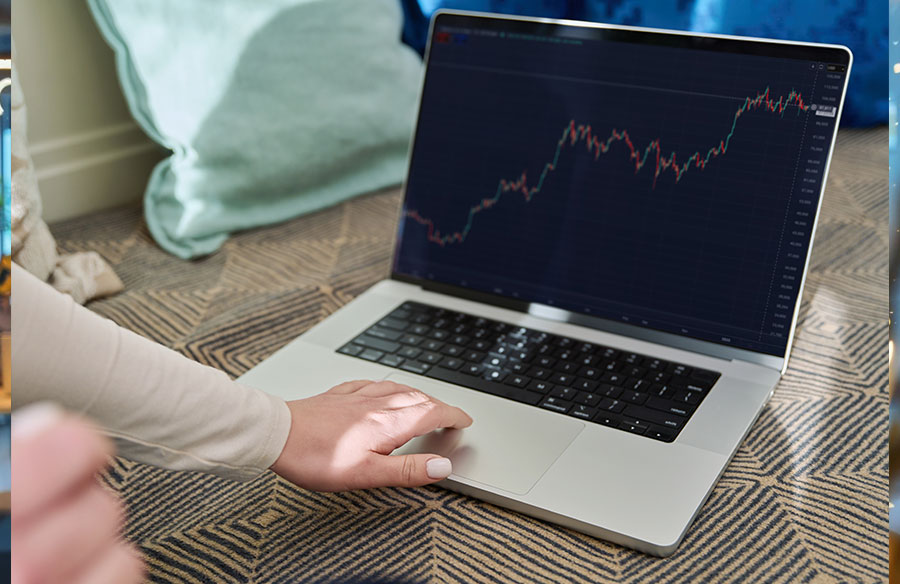
Most creators think a viral trend starts the moment they see it on their feed. They treat it like a random lightning strike. However, overnight market moves show us that sudden shifts usually have deep, structural roots.
In the financial world, a price doesn’t just jump; it reacts to a sudden shift in global energy. Online trends work the same way: both movements rely on timing, a lack of resistance, and human psychology.
If you understand why a stock price surges while you sleep, you can predict how a social media trend will take over your feed by morning. This article explores how observing overnight markets can help explain why online trends surge so quickly.
The “Eastern Engine”: How Timezone Shifts Propagate Momentum Overnight
Global markets operate in a relay race. As the New York floor closes, Tokyo and Hong Kong take the baton. This continuous handoff ensures that momentum never truly stops; it just changes location.
The “Eastern Engine” refers to the liquidity and volatility injected into the system by Asian markets while Western traders sleep. This shift creates a structural baseline for the following day’s activity.
Online trends follow a nearly identical geographic path. A meme might originate in a California dorm room at 11:00 PM PST. While that creator sleeps, users in London and Mumbai wake up to find the post at the top of their feeds. By the time the original creator wakes up, the “Eastern Engine” of global users has already propelled the content into a new stratosphere of engagement.
The Sequence of Momentum From One Market or Platform to the Next
Momentum rarely stays on one “trading floor.” In finance, a surge in small-cap tech stocks often leads to a sympathetic move in larger indices or related sectors as capital rotates. On social media, this looks like a trend that started on TikTok, moved to Instagram Reels, and eventually made its way to X.
Each platform acts as a new liquidity pool, adding fresh volume to the trend. If a topic gains enough mass in the “small-cap” world of niche Discord servers, it inevitably “uplists” to the major exchanges of the Instagram Explore page.
The Global Handover That Transfers Momentum Between Regions
In the financial world, the “handover” occurs when one region’s closing price becomes the next region’s opening baseline. If London closes at a peak, Tokyo starts with a bullish bias. In social media, the handover happens through the “Global Feed.”
Time zones act as structural drivers rather than barriers. Because the internet never closes, the transition between regional peak usage times creates a perpetual motion machine for high-performing content. A post that survives the “graveyard shift” in one hemisphere arrives in the next with enough social proof to be categorized as a “breakout.”
Liquidity Vacuum in Markets vs. the Echo Chamber in Online Platforms
Traders and social media strategists both deal with “thin conditions.” In the stock market, “liquidity” refers to how easily you can buy or sell an asset without changing its price. When liquidity is low (like during overnight hours), even a small trade can cause a massive price swing.
Social media has an “attention liquidity” equivalent. During off-peak hours, there is less “noise” or competing content. If an algorithm identifies a high-engagement post during these quiet windows, the lack of competition allows that post to dominate the feed.
How Low Overnight Market Liquidity Amplifies Price Movement
During the night, major institutional desks are closed. With fewer buyers and sellers active, the “spread” widens. A single large order can skip over several price levels because there are no counter-orders to absorb the impact. This creates a vertical move on a chart that looks like a straight line.
How Low Attention Competition Amplifies Online Trend Visibility
If you post when everyone else in your region is asleep, you face less competition for the “prime real estate” of the feed. If international users start engaging with your post immediately, the algorithm views it as an outlier. Because there are fewer new posts to cycle through, your content remains at the top of the “stack” longer, gaining disproportionate visibility.
Where Market Liquidity and Online Attention Dynamics Converge
Data confirms that financial institutions are increasingly banking on social media to gauge these shifts in real-time. These organizations treat a “trending” topic as a leading indicator of market volatility.
Both systems reward the “first mover.” In a liquidity vacuum, the person who sets the direction usually wins. Whether it is a stock price or a trending audio, the initial move is amplified by the system’s lack of resistance.
The Psychology of Market and Trend “Gaps”: Fear, Urgency, and Momentum
In technical analysis, a “gap” occurs when a stock opens significantly higher or lower than its previous close, with no trading activity in between.
Understanding the stock gap meaning is essential for any trader, as it represents a sudden shift in sentiment that bypasses the normal price discovery process. Gaps represent a “void” in which the market has reached a new consensus without the usual back-and-forth between buyers and sellers.
Online, we see “trend gaps.” This happens when a topic that had zero mentions at midnight suddenly has 50,000 mentions by 6:00 AM. These gaps are psychological shocks. They signal to the observer that the world changed while they were away, forcing an immediate emotional reaction to “catch up.”
Why Price Gaps Trigger Emotional and Reactive Market Behavior
A gap up creates immediate FOMO. Investors who were “on the fence” suddenly feel they are losing a profit opportunity. They don’t wait for a pullback; they buy in at the higher price, which ironically pushes the stock even further.
Conversely, a gap down triggers “panic selling” as investors see their stops hit before they can even log in. In both cases, the gap itself (the visual “jump” on the chart) is the primary driver of the emotion, not the underlying news.
How Sudden Trend Gaps Create Urgency in Online Audiences
If you open Instagram and see five friends posting the same meme or audio, you suddenly feel a shift. That “gap” makes you feel like you missed the memo. This creates an urgent need to participate, comment, or share to re-establish their place in the social hierarchy.
The suddenness of the trend’s emergence makes it feel more important and more “true” than it actually is. In the digital age, speed is often mistaken for significance.
How Observing Momentum Creates More Momentum
Momentum feeds itself. When a stock breaks through resistance, momentum traders pile in, not because they believe in the company, but because the chart is moving. The same thing happens on Instagram. Once a post reaches a certain like count, people engage simply because others have already done so.
People like what other people like because it reduces the cognitive load of deciding what is worth their time. It is a psychological shortcut that helps us navigate an oversaturated information environment. Once a trend has enough “mass,” it creates its own gravity.
How Sentiment Feedback Loops and Algorithms Amplify Momentum
Algorithms are not original thinkers; they are sophisticated echo chambers. They don’t create trends, but they do escalate them at lightning speed. This is identical to how high-frequency trading (HFT) bots operate in the global markets.
These systems are programmed to look for a specific signal, such as a price break, a volume spike, or a change in sentiment, and then execute thousands of orders in milliseconds.
Role of Bots and Automated Systems in Accelerating Momentum
In finance, automated systems look for volatility to exploit. On social media, Instagram financial scams often use botnets to create fake engagement “signals.”
These bots like and comment on a post to trick the algorithm into thinking a trend is organic. Once the algorithm takes the bait, it begins showing the post to real users. By the time the bots stop, the organic momentum is often strong enough to carry the post forward, creating a dangerous feedback loop where fake interest creates real influence.
How Algorithmic Feeds Prioritize and Escalate Emerging Trends
The Instagram algorithm prioritizes “velocity” over total volume. It doesn’t just care about how many likes you have; it cares about how fast you got them in relation to your average.
If the velocity of engagement matches the patterns of a successful overnight market move, the algorithm “buys in” by pushing that content to the Explore page. It acts as the ultimate “market maker,” providing the visibility (liquidity) that allows a trend to scale from a few hundred views to a few million in a matter of hours.
When Human Emotion and Algorithms Reinforce Each Other
This is the “perfect storm” of momentum. A real-world event occurs, such as a major social event, and engagement spikes during an award show or a global holiday. Humans react with genuine emotion.
The algorithm sees the spike in data and amplifies it to more people. This attracts more humans, which creates more data. This loop can sustain a trend for days. Professional traders now use social sentiment investing strategies to predict these moves before they hit the mainstream news, essentially “front-running” the viral curve.
Direct Parallels Between Overnight Market Moves and Online Trend Surges: A Comparative Breakdown
To see how these two worlds mirror each other, we can break down the lifecycle of a “surge” into its core components.
| Metric | Overnight Market Move | Online Trend Surge |
| Inception | News breaks in an offshore market or after-hours when the main floor is closed. | A creator posts during a low-competition time slot, often late at night. |
| Catalyst | A “gap” in price creates immediate urgency and triggers automated buy orders. | A “gap” in the feed makes the content feel ubiquitous and triggers FOMO. |
| Amplifier | HFT bots detect volume spikes and pile into the trade, accelerating the move. | The algorithm detects engagement velocity and pushes content to the Explore page. |
| Peak | Retail traders buy the top of the move due to FOMO, providing the final “exit liquidity.” | Mainstream users share the trend long after the original innovators have moved on. |
| Result | Price eventually stabilizes, or “fills the gap” as the initial hype fades. | The trend becomes “cringe” or settles as a permanent part of digital culture. |
Final Thoughts
The “sudden” viral trend is rarely a mystery when viewed through the lens of market dynamics. Stock markets and social media platforms are large, interconnected systems governed by human emotion and algorithmic responses.
Trends are not random. They move across time zones, explode in quiet windows where there is no competition, and grow because they create “gaps” that make us feel left out.
In a world where attention is the ultimate currency, understanding the mechanics of the surge is the only way to stay ahead of the curve.