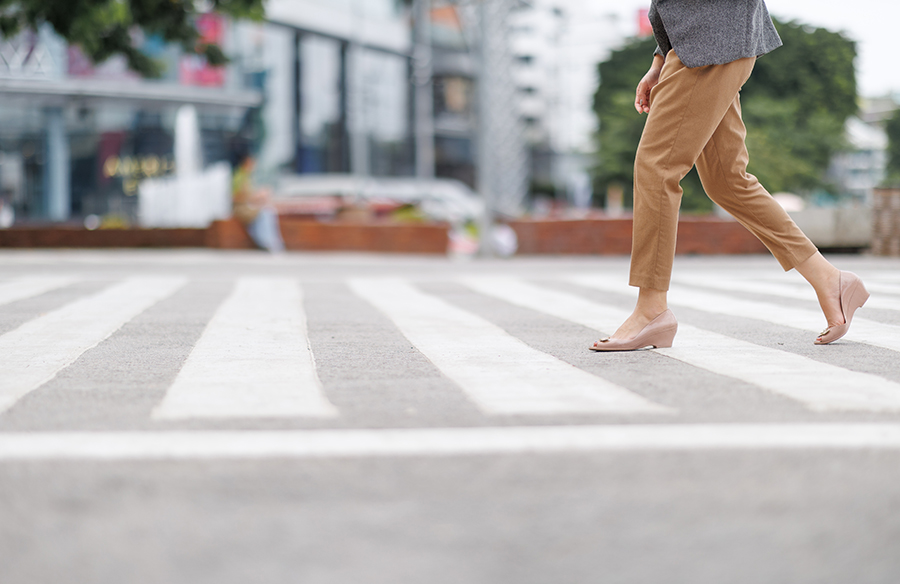
Palm Springs sidewalks photograph beautifully. The bougainvillea, the mid-century facades, the sun-bleached desert boulevards. What the photos consistently miss: crumbling curb cuts, crosswalks bleached invisible by UV exposure, and intersections where a pedestrian’s safety depends almost entirely on whether a driver is paying attention that particular second. The conversation about who bears legal responsibility when those moments go wrong is, quietly, reshaping how American cities think about design.
When the Street Itself Becomes the Defendant
Cities don’t get sued the way individuals do — not exactly. But municipal liability for pedestrian injuries runs deeper than most residents realize, and it surfaces in court far more regularly than city communications departments like to acknowledge. Personal injury law practices that operate in desert jurisdictions — the kind you’d find documented at https://desertinjurylaw.com/, handling cases across the Coachella Valley — have mapped the recurring geography of these accidents for years. Same corners. Same stretches of road. Same design failures, generating injuries with the quiet reliability of a broken machine.
That pattern matters more than any single case. Because when accidents cluster at the same location, the story shifts. It stops being about one unlucky pedestrian and starts being about a design defect with a known address.
Palm Springs has some specific aggravating factors worth naming. Its tourist infrastructure sees pedestrian volumes during seasonal peaks that the mid-century road network was simply never built to handle. The demographic skews older — meaning mobility constraints and reaction times that would be manageable on a well-engineered street become genuine vulnerabilities on a poorly designed one. And the desert light does things to visibility that urban engineers trained in temperate climates don’t always account for: the low-angle afternoon glare on East Palm Canyon Drive in October is not a minor aesthetic inconvenience. It’s a driver visibility event.
The Legal Architecture of a Dangerous Sidewalk
California Government Code Section 835 is where this gets concrete. It holds public entities liable for injuries caused by a “dangerous condition of public property” but only if the entity had actual or constructive notice of that condition. That phrase, constructive notice, is doing a lot of work in pedestrian injury litigation right now.
Here’s what it means in practice. If a city’s own traffic engineers filed an internal memo noting poor crosswalk visibility on a given block, and the city didn’t act on it, and someone was subsequently struck — that memo becomes evidence of constructive notice. The design failure and the legal exposure are, functionally, the same event.
This is not theoretical. Cities generate extraordinary amounts of operational data: 311 complaint logs, traffic incident reports, ADA compliance audits, insurance claim records. That data exists. It circulates through public works departments. When it identifies a problem and the problem doesn’t get fixed, the legal argument writes itself.
Architects and urban designers working on public-realm projects in 2026 need to internalize this. Not as a legal compliance burden — as a design brief. The question isn’t just “does this meet code?” Code is a floor, not a ceiling. The more precise question is, does this design reflect the actual state of knowledge about pedestrian safety engineering? Because when it doesn’t, and someone gets hurt, the gap between code minimum and current best practice is precisely where liability arguments are constructed.
What “Safe by Design” Looks Like When You’re Standing in Front of It
The phrase gets used loosely in urbanist circles. In applied public safety engineering, it’s specific. Consider a few examples.
Curb extensions shorten the distance a pedestrian spends actively in the roadway during a crossing. New York implemented them systematically under the Bloomberg-era pedestrian safety initiative, and the impact on injury rates at treated intersections was not subtle. The intervention is structural. It changes the geometry of the conflict.
Raised crosswalks change the physical conversation between driver and pedestrian. A slightly elevated crossing surface doesn’t just signal priority — it enforces a speed reduction mechanically. Tokyo uses them extensively. American cities have been slower, partly for budgetary reasons and partly due to maintenance liability concerns that, ironically, are often smaller than the liability created by not building them.
Pedestrian signal timing calibrated to actual population characteristics. The standard design assumption of 3.5 feet per second walking speed doesn’t describe an 80-year-old tourist navigating a four-lane boulevard on a 108-degree afternoon. Some jurisdictions now apply 2.5 feet per second for crossings near senior facilities. That 1-foot-per-second difference sounds trivial. In a negligence claim, it’s the difference between adequate and unreasonable design.
High-visibility crosswalk markings require maintenance schedules, not just initial installation. A crosswalk installed to MUTCD standards and left to fade over five summers is a retroreflectivity problem that exists in a specific legal relationship with whoever is responsible for its upkeep.
Vision Zero and the Question of Elevated Duty
Sweden introduced Vision Zero in 1997. The premise: traffic deaths are not random accidents. They are predictable outcomes of system design failures. And design failures have authors.
Dozens of American cities have formally adopted Vision Zero commitments since then — Los Angeles, New York, San Francisco, Washington D.C. among them. The implications for liability law are still being worked through, and courts haven’t issued definitive rulings. But legal theorists have been making the argument for over a decade: if a city formally commits to eliminating pedestrian fatalities as a policy goal, that commitment likely establishes a higher standard of care in subsequent injury litigation.
Does a Vision Zero resolution create affirmative legal obligations? Probably not in an absolute sense — not yet. Does it make it significantly harder for a city to argue that a known hazardous crossing was adequately managed under existing standards? Almost certainly yes.
For architects working on mixed-use corridors, streetscape redesigns, and public plazas in cities with active Vision Zero programs, this matters directly. The professional context you’re operating in has a stated policy position about pedestrian safety. Designing below that position isn’t just a reputational issue.
The Multi-Disciplinary Problem American Cities Keep Solving Poorly
Here’s an honest observation. The cities that have moved the needle on pedestrian safety — Oslo has had years with zero pedestrian fatalities; Helsinki has restructured its entire street hierarchy around pedestrian priority — are cities where traffic engineers, architects, urban planners, and public health professionals are in genuine conversation. Where a designer’s decision about surface material informs a traffic engineer’s assessment of sight lines, which informs a city attorney’s evaluation of risk exposure.
American practice tends to silo these disciplines. Traffic engineers design to vehicle movement standards. Architects design to aesthetic and program requirements. Planners navigate between them at a policy level. The spaces between those disciplines are where pedestrian injuries live — in the unresolved gaps between professional jurisdictions.
The liability record is functioning as a crude corrective. Claims, settlements, and jury verdicts are providing feedback that internal professional review processes miss. That’s expensive feedback. And it’s slow. And it comes after someone has already been hurt.
Which raises the question worth sitting with: does fixing a crosswalk have to wait for a lawsuit?
The Design Obligation That Doesn’t Go Away
The trajectory is visible, even if the pace is frustrating. Procurement language for public infrastructure projects is beginning to include structured safety review requirements at defined intervals. Data-driven maintenance protocols are being attached to liability frameworks in more sophisticated municipal contracts. The connection between operational performance data and design revision is becoming formalized.
Palm Springs isn’t leading this shift. But the conditions that make it particularly vulnerable to pedestrian injury litigation (the demographics, the tourist volumes, the inherited car-centric infrastructure, the desert light conditions) make it a useful place to watch how these dynamics play out.
Urban designers in 2026 are working in a professional environment where the standard of care is actively being renegotiated. Not just by regulators. By courts. The built environment produces consequences, and consequences have authors. That accountability isn’t a constraint on design. It’s a clarification of what design is for.