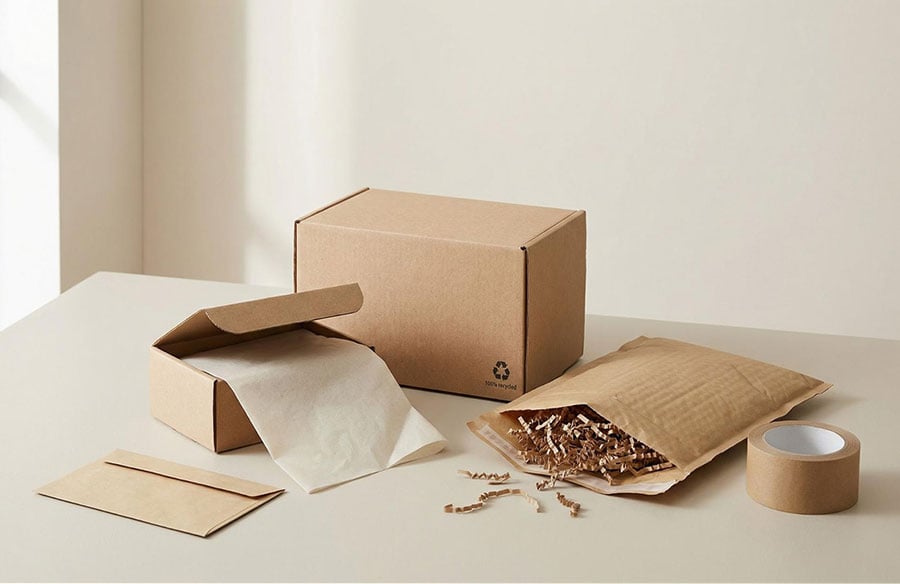
Packaging is the first handshake your product makes with a customer—and that handshake has a waste problem. About 28 percent of U.S. landfill trash is packaging, and global plastic waste has doubled in 20 years while only 9 percent gets recycled (OECD).
Regulators, shoppers, and investors are responding. The European Union will require every package to be recyclable by 2030, several U.S. states are adding Extended Producer Responsibility fees, and analysts expect the sustainable-packaging market to rise from roughly $293 billion today to more than $423 billion by 2029.
For small and indie brands, the shift feels both energizing and intimidating. The upside: you no longer need custom R&D. Specialist suppliers now offer low-minimum, high-PCR boxes, mailers, and wraps with independent certifications—ready to order alongside your logo stickers.
In this guide we’ll introduce five proven partners, share the criteria we used to choose them, and close with practical tips to cut waste without cutting margins.
Why recycled-material packaging matters now
Every gram of recycled content turns yesterday’s waste into a brand asset. Switching from virgin pulp or plastic to post-consumer feedstock cuts carbon emissions, saves raw resources, and keeps material in circulation rather than in landfills or waterways. That single change often delivers double-digit reductions in packaging-related emissions, outperforming tweaks such as ink swaps or filler changes.
 Policy momentum makes the move urgent. The European Union’s Packaging and Packaging Waste Regulation requires all packaging to be recyclable by 2030, and a growing list of U.S. states now levy Extended Producer Responsibility fees on items that are hard to recycle or light on recycled content. Fall behind, and shipping costs can rise through added surcharges.
High-PCR packaging offers the quickest route to compliance and credibility. Suppliers already stock corrugate made from 100 percent recycled fiber and mailers produced from reclaimed ocean plastic. Choosing these options gives your brand a verifiable sustainability claim, lowers regulatory risk, and prepares you for stricter standards ahead. The next section details the criteria we used to select five suppliers that meet those benchmarks.
How we chose the five standout suppliers
Many vendors rely on vague eco claims, so we applied a four-point filter to find partners that meet real-world needs.
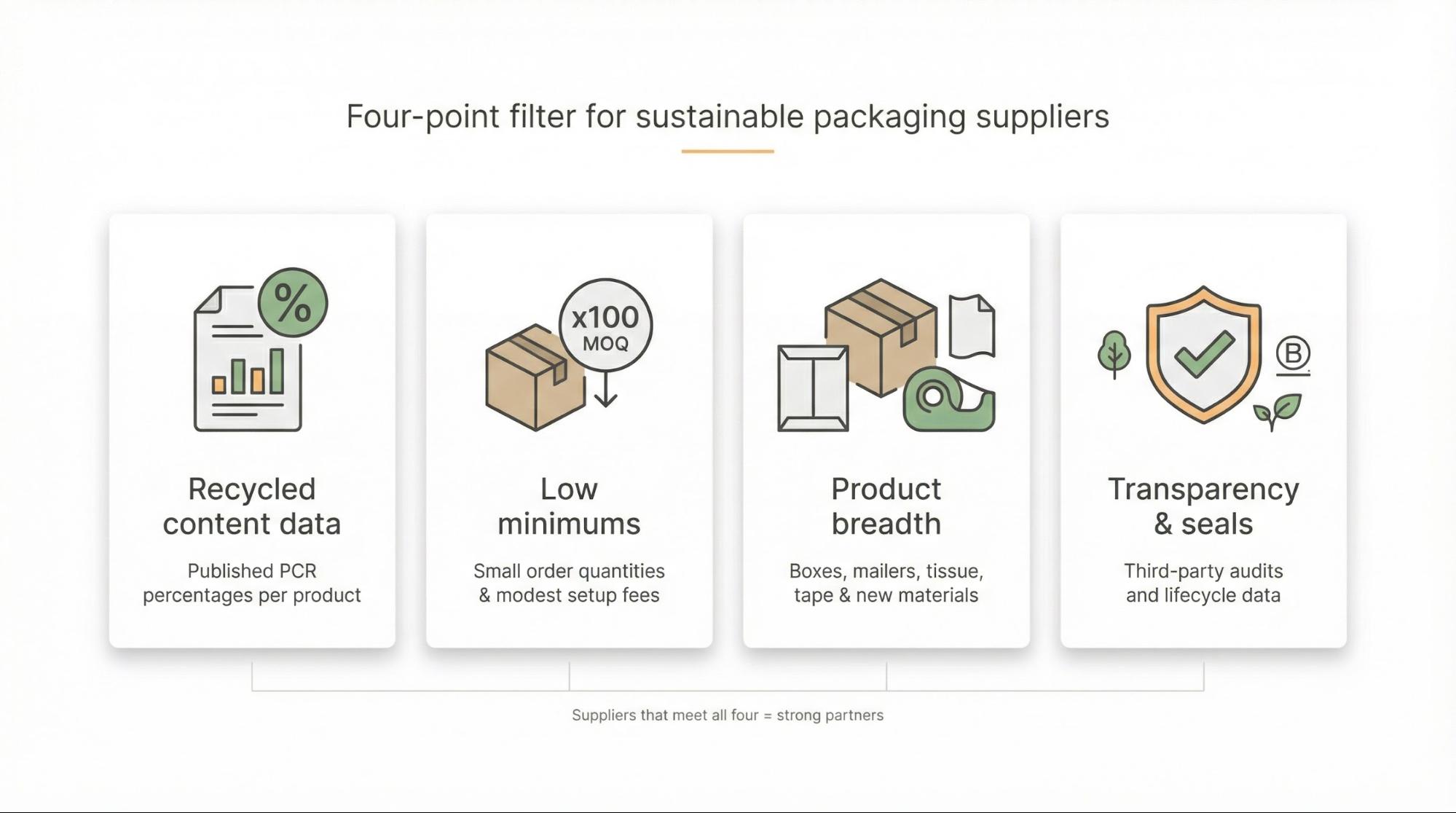 First, we required hard numbers on recycled content. Vendors had to publish the exact percentage of post-consumer or post-industrial feedstock for every product, and those figures had to appear in verifiable specifications, not just marketing copy.
Second, minimums mattered. Low order quantities and modest setup fees were non-negotiable because a supplier that demands 20,000-unit runs will never serve a growing storefront or a crowdfunding launch.
Third, breadth counted. Shipping boxes solve only part of the puzzle; tissue, tape, and envelopes complete the customer experience. We preferred suppliers that cover the full range and experiment with materials such as seaweed film or mushroom foam.
Fourth, we checked transparency. Seals from FSC, B Corp, or TÜV OK Compost show that a company backs its claims with third-party audits. When those certifications aligned with published life-cycle data, the supplier earned a place on our list.
Zenpack: custom packaging that walks the sustainability talk
Zenpack began as a design studio in San Jose and still thinks like one. Instead of forcing your product into a stock box, they reverse the process: they engineer the box around the product and then choose the greenest material that still protects and impresses.
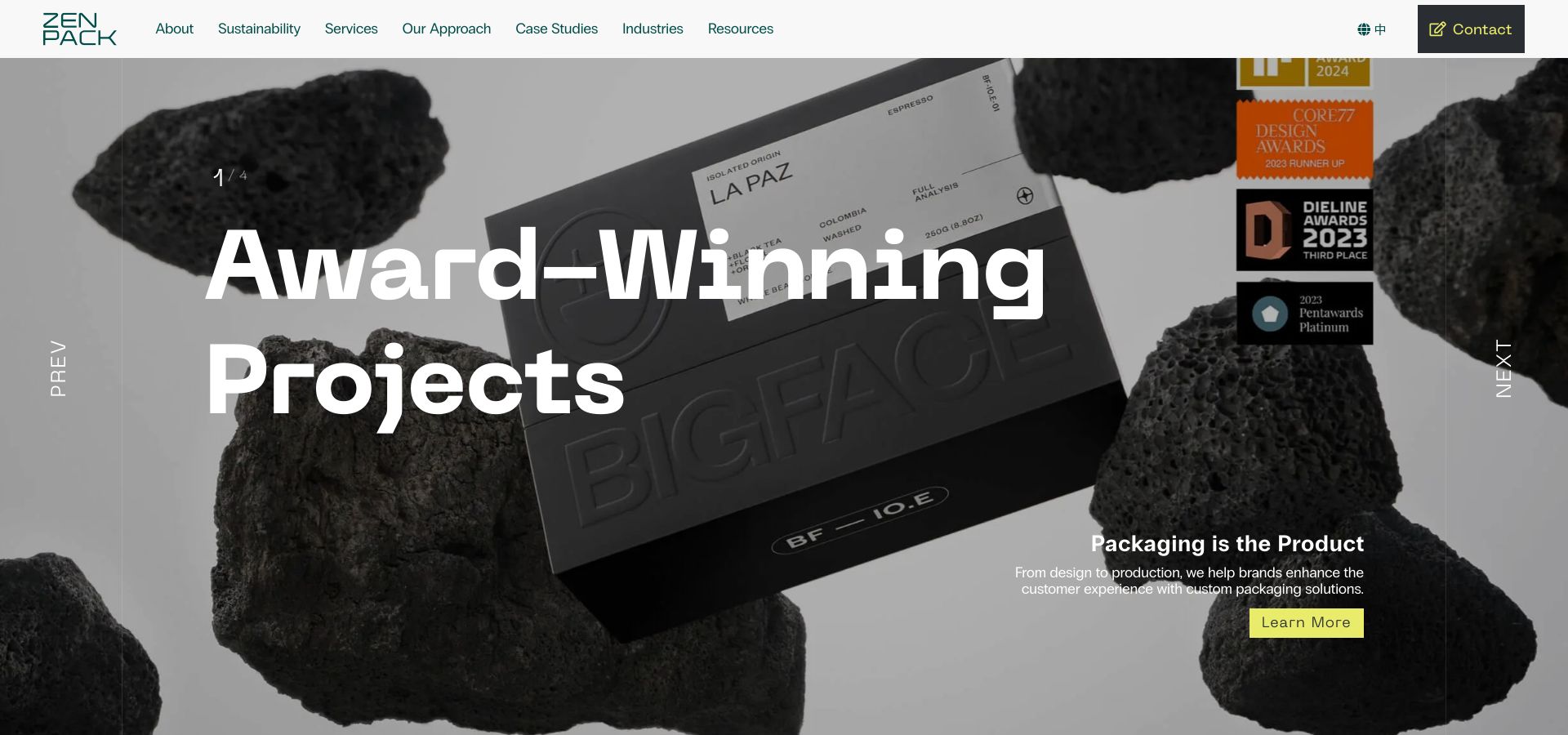 Zenpack custom sustainable packaging website screenshot
Most materials are 100 percent recycled paperboard certified by the Forest Stewardship Council. Plastic is a last resort. When cushioning is unavoidable, Zenpack trials mushroom-grown foams or water-soluble films. This range of next-generation options gives small brands access to technology normally reserved for enterprise budgets.
The company also addresses a common pain point: global fulfillment. With two production hubs (one in the United States and one in Asia), Zenpack builds close to your customers, cutting freight emissions and lead times. The team handles design, prototyping, printing, and logistics under one roof, which results in fewer emails and faster approvals for you.
Keep in mind that fully bespoke work needs extra planning. Projects often start at a few hundred units and require collaboration on dielines and finishes. Brands that invest that time receive packaging that doubles as a marketing asset and arrives ready for tomorrow’s recycling rules.
EcoEnclose: recycled shipping gear for the e-commerce reality
EcoEnclose speaks the language of online retail. Every product in its Colorado warehouse is designed for parcel shipping and made from waste, not virgin stock. Open a sample kit and you find corrugated boxes crafted with 100 percent post-consumer fiber, padded mailers lined with shredded newspaper, and packing tape that swaps petroleum adhesive for plant resin.
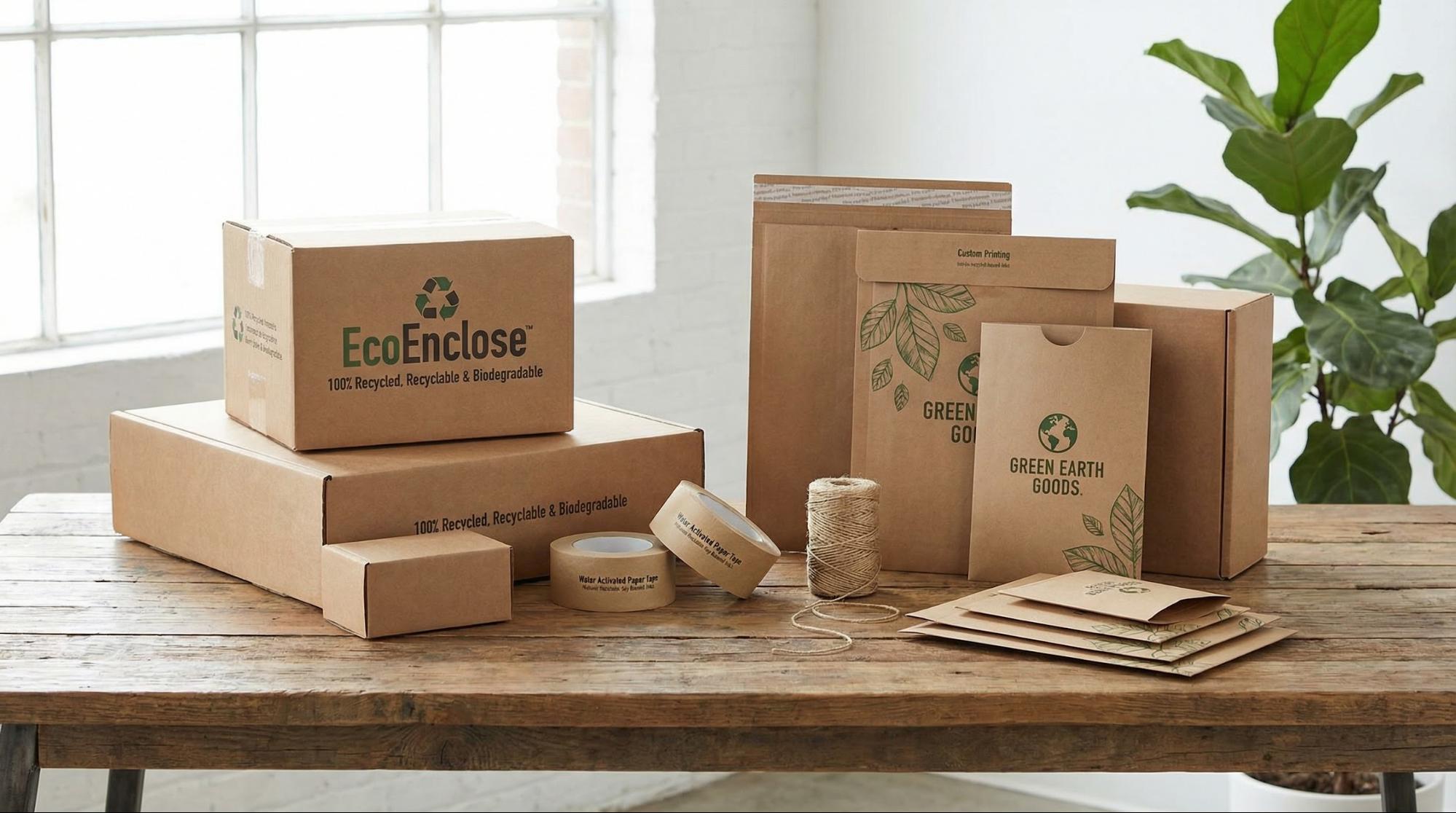 EcoEnclose recycled shipping supplies website screenshot
Transparency is their trademark. Click any SKU and the exact recycled percentage, sourcing notes, and disposal route appear in clear text. That honesty wins loyalty from brands like Ritual and Stio, which count on EcoEnclose to keep sustainability claims airtight.
New releases keep the catalog current. Recent launches include a seaweed-based poly film that breaks down if it escapes the curbside bin, along with algae ink that replaces petrochemical pigments. Because production stays domestic, turnaround is quick and carbon miles remain low.
Small orders fit right in. Need just ten mailers for a product photo shoot? They will ship them. Custom printing starts around 250 units, and the support team is ready to adjust dielines or advise on box strength. The only trade-off is aesthetic: recycled kraft paper leans rustic, not bleached white. For mission-driven brands, that earthy tone becomes a badge of authenticity.
Noissue: designer flair without the mega-volume barrier
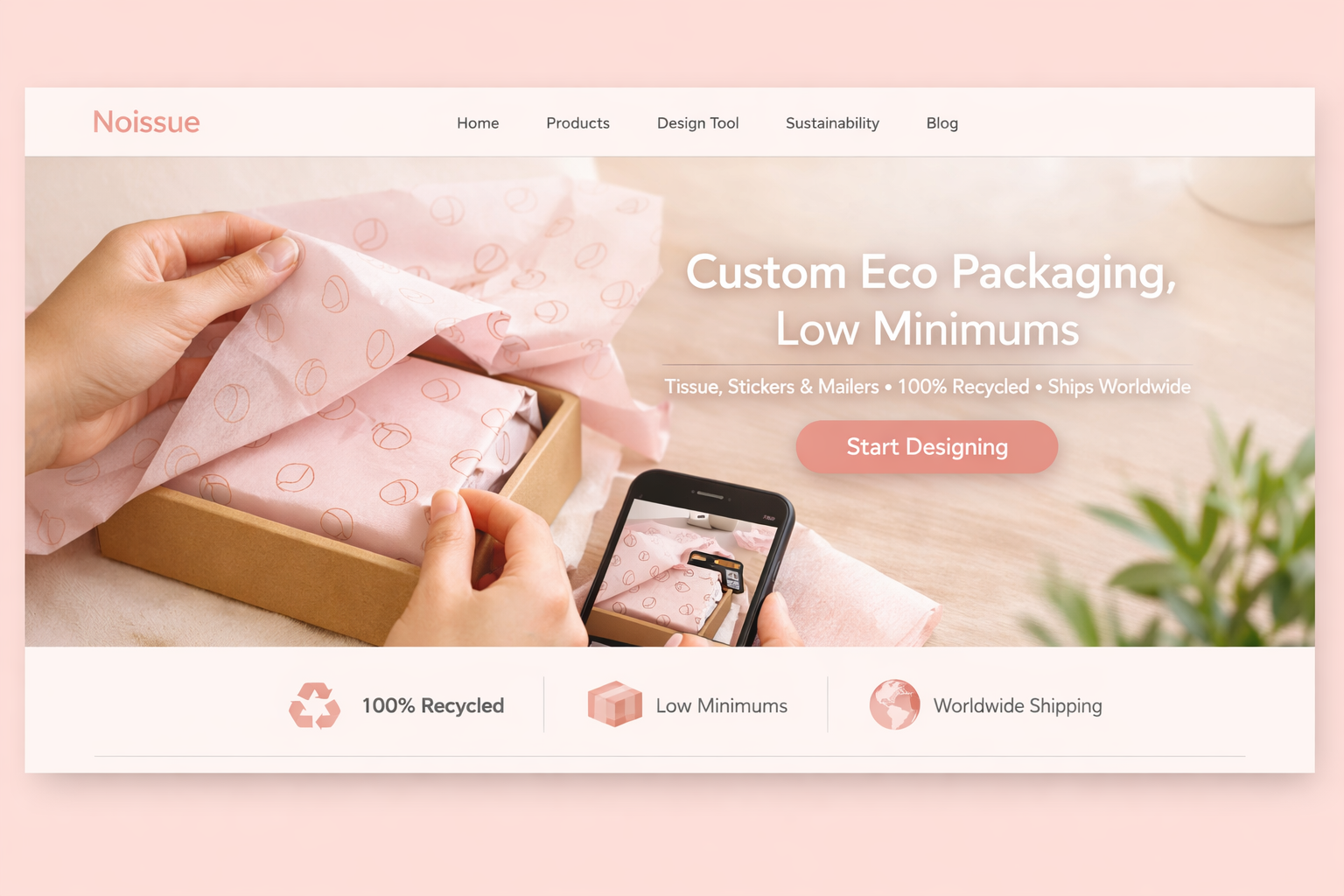 Noissue turns the unboxing moment into a marketing channel. Open their online editor, drop in your logo, and in minutes you can order tissue, stickers, or tape that match your palette and ship worldwide, starting at just 100 units.
Sustainability runs through each layer. The tissue is 100 percent recycled and acid free. Mailers offer two paths: a home-compostable blend of PLA and PBAT or a fully recycled polyethylene option. Soy-based inks reduce toxins, and FSC certification confirms responsible sourcing.
Speed and simplicity are the draw. Instant pricing, clear timelines, and a user-friendly design tool let you handle packaging during the same coffee break you use to update Instagram. Join the Eco-Alliance and one tree is planted for every order; you also receive a badge to share that impact with customers.
Noissue will not supply heavyweight cartons, yet it excels at the finishing touches that prompt customers to pause, snap a photo, and share. For a boutique candle maker or a growing Etsy store, these small branded moments build noticeable equity.
Better Packaging Co.: turning ocean waste into brand statement
If your brand identity centers on plastic reduction, Better Packaging Co. backs that promise in every parcel. The company’s courier satchels are made from 100 percent recycled plastic collected along Southeast Asian coastlines. Each bag carries a GPS-traceable batch code, allowing you and your customers to verify where the material was recovered.
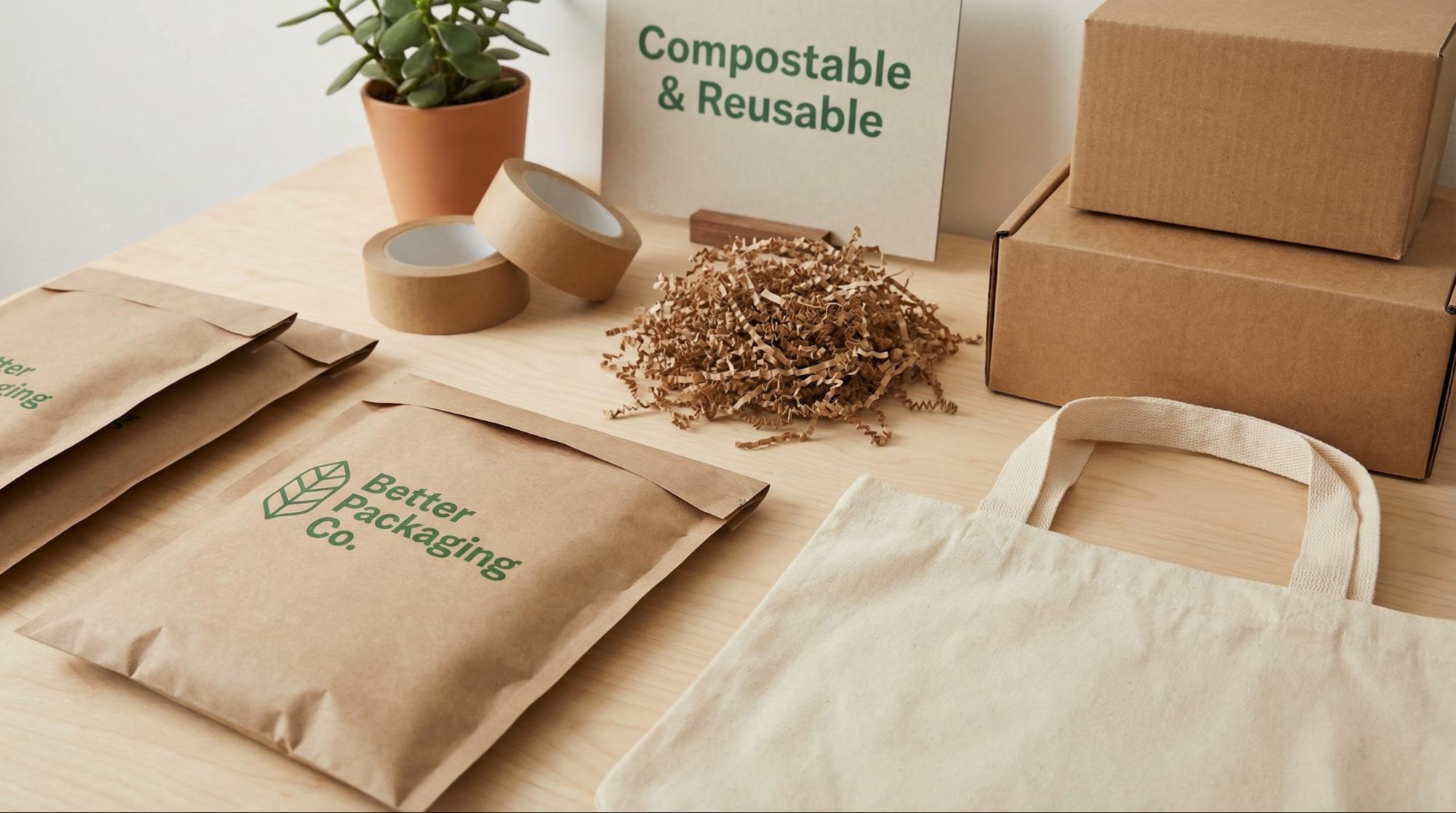 Better Packaging Co. ocean plastic mailers website screenshot
Certifications support the claim. TÜV OK Compost and a B Corp scorecard confirm that the satchels break down safely or return to curbside recycling. A take-back program extends each mailer’s life by cycling it into another production run.
Orders begin at a ten-pack, ideal for small launches or seasonal drops. When volume grows, warehouses in North America, Europe, and Australia shorten freight routes and lower emissions. Prices run higher than commodity poly mailers, but the ability to tell shoppers “This bag once littered a shoreline” delivers a measurable lift in engagement and repeat sales.
For apparel, accessories, or any product that ships flat, Better Packaging Co. provides a literal cleanup story that customers share willingly.
Tiny Box Company: luxury look, recycled core
Across the Atlantic, Tiny Box Company shows that recycled can still feel premium. Its jewelry and gift boxes arrive in matte paper yet hide an impressive fact: up to 100 percent of the inner board has lived a prior life. No plastic laminates, no mystery coatings—just sturdy fiber ready for another round in the curbside stream.
What makes Tiny Box stand out is its flexible scale. Order a single sample, a sleeve of 25, or ramp up to thousands as sales grow. In-house printing and embossing add brand polish without the long lead times often linked to luxury packaging.
Sustainability extends beyond materials. A reuse program invites customers to return gently used boxes for refurbishment or donation, stretching each unit’s lifespan. Compostable window films and molded inserts move the catalog even further from landfill territory.
For indie beauty brands, chocolatiers, and craft jewelers seeking an upscale reveal without eco guilt, Tiny Box Company delivers a solution that can leave the warehouse within one business day.
Emerging trends shaking up sustainable packaging
The classic recycled box is only the opening act. In labs and pilot lines worldwide, innovators are growing cushioning from mushroom roots, pressing takeout bowls from seaweed, and spinning fabric-like wrap from sugarcane waste. Many of these bio-based materials safely decompose in backyard compost or dissolve in seawater, solving end-of-life gaps that curbside recycling cannot handle.
Reusables are gaining ground as well. Picture a mailing envelope that travels between seller and customer for up to 20 cycles, tracked by a simple QR code. Large retailers are piloting these loops, and their blueprints are beginning to reach startups that want both differentiation and savings on single-use supplies.
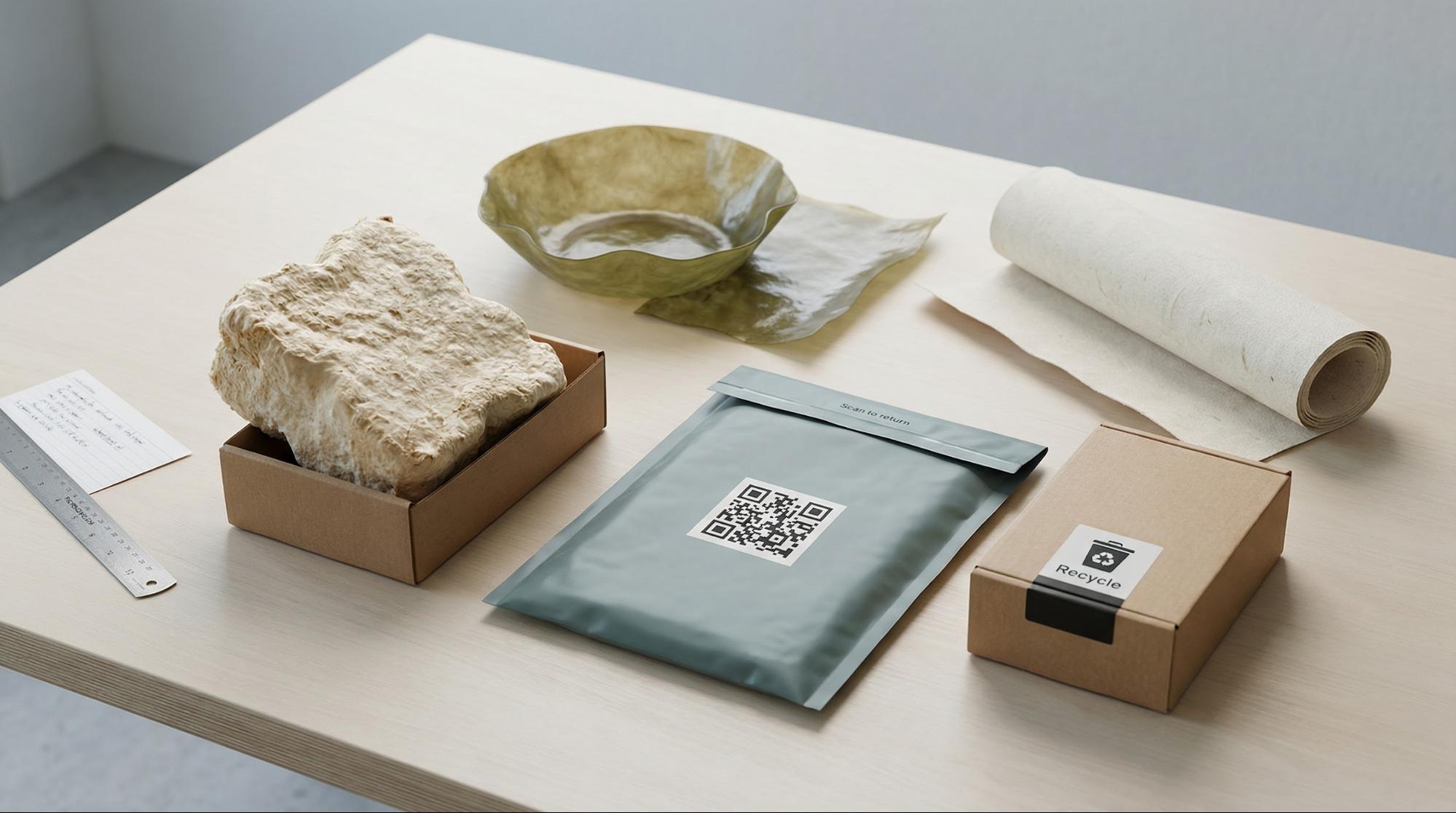 Policy puts extra wind behind the shift. The European Union and at least five U.S. states now apply fees or outright bans to packaging with low recycled content or unclear disposal labels. Forward-looking suppliers respond by printing How2Recycle icons on every unit and publishing exact PCR percentages so brands stay compliant from day one.
Five quick wins for brands new to recycled packaging
- Start with facts. Ask suppliers for exact post-consumer content and third-party certifications. Verified numbers outshine slogans and give you proof to share with shoppers.
- Choose the right end-of-life path. If most buyers lack access to composting, a curbside-recyclable box made from high-PCR fiber beats a compostable film that ends up in trash.
- Plan for a modest cost premium. Recycled or compostable formats usually run 5–15 percent more than conventional options, a gap that 43 percent of companies flag as a concern in Sourceful’s 2025 survey. Balance it by ordering slightly larger batches or trimming excess filler.
- Test in real conditions. Ship a handful of orders, drop boxes from waist height, and leave them through rain. It is cheaper to refine now than to replace damaged goods later.
- Tell the story. Print a How2Recycle icon or a one-line disposal note on the box. Clear guidance helps each package reach the correct bin and shows customers where their money goes.
Conclusion
Sustainable packaging is no longer a fringe experiment—it’s a practical upgrade that protects margins, meets regulations, and strengthens brand trust. The five suppliers highlighted here prove that small and indie brands don’t need massive volumes or in-house R&D to make the switch. From high-PCR corrugate and ocean-recovered plastics to compostable films and reusable systems, these partners are already stress-testing the materials and logistics of the future.
By choosing vendors that publish verified recycled content, offer low minimums, and back claims with third-party certifications, brands can move fast without greenwashing risk. The result is packaging that ships safely today, complies tomorrow, and tells a story customers want to repeat. Sustainability, in this context, stops being a cost center and becomes a quiet competitive advantage—one box, mailer, or wrap at a time.
Frequently Asked Questions
Is sustainable packaging always more expensive?
Not always, but expect a 5–15 percent premium for recycled or compostable materials compared with conventional options. Brands often offset this by ordering slightly larger runs, eliminating unnecessary inserts, or switching fillers. Many also find that eco-conscious customers are willing to absorb small price increases when the value is clearly communicated.
Which certifications actually matter?
For paper-based packaging, FSC (Forest Stewardship Council) certification confirms responsible or recycled fiber sourcing. For compostable materials, look for TÜV OK Compost or BPI marks that verify safe breakdown. A B Corp certification indicates the supplier meets rigorous social and environmental standards across its entire operation, not just packaging lines.
Compostable mailer or recycled poly mailer—which is better?
It depends on your customers’ disposal access. In regions without industrial composting, a curbside-recyclable mailer made from high post-consumer recycled (PCR) plastic often delivers a better real-world outcome than a compostable film that ends up in landfill. Match the material to how people actually discard it.
How can I make my sustainability investment visible to shoppers?
Clarity beats claims. Print a How2Recycle icon, include a one-line disposal instruction, or briefly explain the recycled content on the package itself. These small cues help customers use the correct bin and turn your packaging choice into part of the unboxing story—without adding clutter.