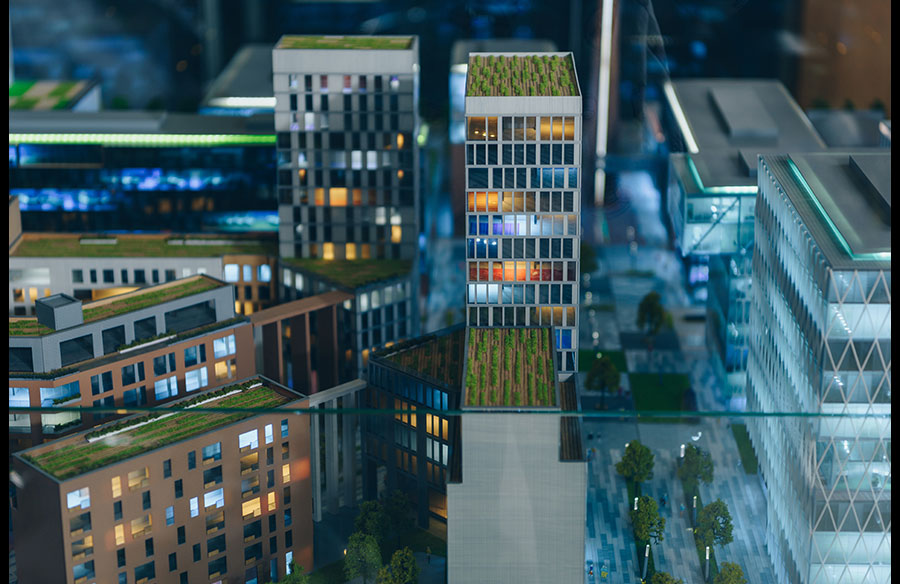
Modern architecture is no longer defined solely by aesthetics, structure, or material innovation. Today, buildings are expected to perform intelligently, respond to occupant needs, optimize energy consumption, and support long-term sustainability goals. As urban density increases and operational costs continue to rise, smart building technologies have become an essential component of contemporary architectural design rather than an optional upgrade.
From commercial office towers and healthcare facilities to educational campuses and mixed-use developments, architects and developers are increasingly integrating intelligent systems into the built environment. These technologies are transforming how buildings operate, how occupants interact with spaces, and how infrastructure is managed throughout a building’s lifecycle.
What Are Smart Building Technologies?
Smart building technologies refer to integrated digital systems that automate, monitor, and optimize various building functions in real time. These systems typically combine sensors, software platforms, IoT connectivity, and data analytics to improve operational efficiency and occupant comfort.
Unlike traditional building management systems that operate independently, modern smart buildings rely on interconnected infrastructure. Lighting, HVAC, water systems, indoor environmental controls, access management, and energy monitoring are often integrated into a unified platform.
The goal is not simply automation. The real value lies in creating buildings that can adapt dynamically to changing conditions while reducing waste and improving user experience.
Why Smart Buildings Are Becoming Essential in Modern Architecture
Several factors are driving the rapid adoption of smart building technologies in architecture.
Rising Energy Costs and Sustainability Targets
Buildings account for a significant portion of global energy consumption. Governments, developers, and investors are under increasing pressure to reduce operational emissions and improve energy performance.
Smart technologies allow buildings to optimize energy usage continuously instead of relying on fixed operational schedules. Occupancy-based lighting systems, intelligent HVAC controls, and real-time energy monitoring help reduce unnecessary consumption while maintaining comfort levels.
For architects pursuing LEED, WELL, or net-zero building certifications, intelligent building systems are now closely tied to sustainability performance metrics.
Occupant Expectations Have Changed
Modern occupants expect buildings to provide healthier, more comfortable, and more responsive environments. Indoor air quality, thermal comfort, humidity control, and lighting conditions directly affect productivity and wellbeing.
Smart environmental management systems help buildings maintain stable indoor conditions while adapting to occupancy patterns and external weather changes. In commercial environments, this can improve employee satisfaction and operational efficiency simultaneously.
Building Operations Are Becoming More Complex
Contemporary buildings contain increasingly sophisticated mechanical and electrical systems. Manual monitoring is no longer sufficient for large-scale facilities.
Smart infrastructure enables facility managers to detect inefficiencies, monitor system performance remotely, and identify maintenance issues before equipment failure occurs.
This shift toward predictive maintenance is particularly important in hospitals, airports, data centers, and high-occupancy commercial developments where downtime can create significant operational disruptions.
Key Smart Technologies Used in Modern Buildings
Intelligent HVAC Systems
Heating, ventilation, and air conditioning systems are among the largest contributors to building energy consumption. Smart HVAC technologies use occupancy data, environmental sensors, and automated controls to regulate indoor conditions more efficiently.
Instead of operating continuously at fixed settings, intelligent HVAC systems adjust airflow, temperature, and ventilation rates based on real-time demand.
For example, conference rooms, lobbies, and shared workspaces may require different ventilation levels throughout the day. Smart systems help reduce unnecessary energy use while maintaining indoor comfort.
Smart Lighting Systems
Lighting automation has become a standard feature in many commercial and institutional buildings.
Modern lighting systems can automatically adjust brightness according to occupancy levels and natural daylight availability. This reduces electricity consumption while improving visual comfort.
In architectural design, smart lighting also supports adaptive spatial experiences. Different lighting conditions can be programmed for specific activities, events, or occupancy scenarios.
Building Energy Management Systems
Energy management platforms collect and analyze real-time data from multiple building systems.
These platforms provide insights into energy consumption patterns, peak demand periods, and operational inefficiencies. Facility managers can identify areas where energy waste occurs and make data-driven adjustments.
For large buildings and multi-site developments, centralized monitoring also improves operational consistency across different properties.
Smart Water Management Technologies
Water efficiency has become a major concern in modern architecture, particularly in urban developments facing resource constraints.
Smart water management systems help buildings monitor water quality, detect water leaks, and optimize consumption. Advanced systems may also support greywater recycling, rainwater harvesting, and water quality monitoring within building infrastructure.
In high-rise buildings, hotels, hospitals, and mixed-use developments, intelligent water management contributes directly to sustainability targets and operational resilience.
Indoor Environmental Quality Monitoring
Indoor environmental quality has gained increased attention following growing awareness of occupant health and wellness.
Modern buildings often incorporate systems that continuously monitor factors such as:
- Temperature
- Humidity
- Carbon dioxide levels
- Ventilation efficiency
- Particulate matter
- Air quality conditions
Architects and developers are recognizing that healthy indoor environments are no longer secondary considerations. They are becoming central to workplace design, educational environments, and residential architecture.
How Smart Technologies Influence Architectural Design
Smart building technologies are not only changing building operations. They are also influencing architectural planning and spatial design decisions.
Flexible Space Planning
As buildings become more data-driven, architects can design spaces that respond more effectively to actual occupancy patterns.
Smart occupancy tracking helps identify underutilized areas, traffic flow patterns, and peak usage zones. This information supports more efficient space allocation and future renovation planning.
Flexible workspaces, adaptive learning environments, and multi-functional public areas all benefit from this data-oriented approach.
Integration Between Architecture and Infrastructure
Modern architecture increasingly requires collaboration between architects, engineers, technology consultants, and facility management teams from the earliest design stages.
Technology infrastructure can no longer be treated as a secondary layer added after construction. Sensor placement, connectivity pathways, environmental controls, and equipment accessibility all influence architectural layouts.
Buildings designed with integrated smart infrastructure tend to achieve better long-term operational performance.
Supporting Sustainable Building Design
Sustainability goals are now closely tied to measurable operational performance rather than theoretical design intentions alone.
Smart technologies provide the operational intelligence needed to support:
- Energy efficiency
- Water conservation
- Carbon reduction
- Indoor environmental optimization
- Resource management
This allows sustainable architecture to move beyond conceptual design toward continuous operational improvement.
Common Challenges in Smart Building Implementation
Despite the advantages, implementing smart building technologies also presents several challenges.
System Integration Complexity
Many buildings still operate with disconnected systems from multiple vendors. Integrating HVAC, lighting, security, and environmental monitoring into a unified platform can be technically challenging.
Without proper planning, fragmented systems may reduce efficiency rather than improve it.
Cybersecurity Risks
As buildings become more connected, cybersecurity becomes increasingly important.
Unauthorized access to building management systems can affect operations, occupant safety, and sensitive infrastructure. Developers and facility managers must prioritize secure network architecture and regular system updates.
Long-Term Scalability
Technology evolves rapidly. Buildings designed around proprietary systems may face compatibility issues in the future.
Architects and developers increasingly favor scalable and interoperable solutions that can adapt to future technological changes without requiring complete infrastructure replacement.
The Growing Role of Data in Building Management
One of the most significant changes in modern architecture is the transition toward data-driven building operations.
Buildings now generate continuous streams of operational information. This data supports smarter decision-making across multiple areas, including:
- Energy optimization
- Occupancy analysis
- Maintenance scheduling
- Environmental management
- Resource allocation
Rather than relying on reactive maintenance or static operational schedules, facility teams can make proactive adjustments based on real-world building performance.
This shift improves operational efficiency while extending equipment lifespan and reducing maintenance costs.
Conclusion
Smart building technologies are becoming increasingly interconnected with broader urban infrastructure systems. Modern buildings are expected to communicate with energy grids, transportation systems, environmental monitoring networks, and city-wide sustainability platforms.
In many cities, intelligent buildings are now viewed as critical components of smart urban development strategies. However, successful smart architecture is not defined by technology alone. The most effective buildings combine intelligent infrastructure with practical design, occupant-centered planning, operational efficiency, and long-term adaptability. Technology should enhance architecture rather than dominate it.