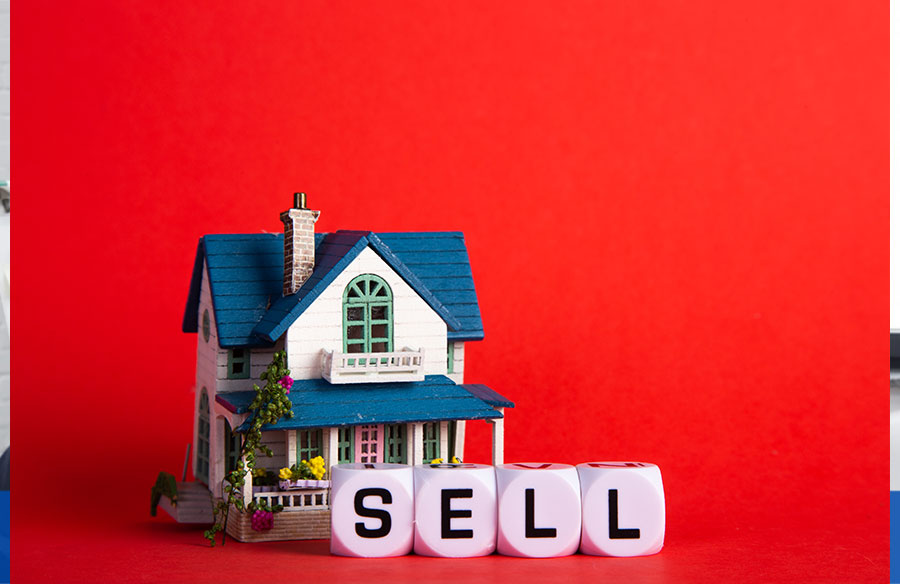
The idea of selling a home has long been tied to patience.
Viewings, negotiations, paperwork and waiting — often for months — have defined the traditional property journey. But in 2026, that model is being challenged.
Across the UK and beyond, homeowners are increasingly seeking faster, more certain ways to sell, driven by changing lifestyles, economic pressure and the evolution of property technology.
The question is no longer can you sell quickly?
It’s how should you sell — and what are you willing to trade for speed?
A Slower Market Is Driving Faster Decisions
Despite advances in technology, the average UK property transaction still takes around 4–6 months to complete, with delays caused by legal processes, mortgage approvals and fragile property chains .
Recent market conditions have made this even more complex. Buyer hesitation, economic uncertainty and reduced affordability are all contributing to longer selling times and higher fall-through rates .
This tension — between a slow system and the need for speed — is reshaping how people approach selling their homes.
The Shift Towards Speed and Certainty
For many homeowners, the priority is no longer achieving the absolute highest price. Instead, it’s about:
- Certainty of sale
- Control over timelines
- Reducing stress and disruption
This has led to the rise of alternative selling methods that prioritise efficiency over tradition.
Among these, direct cash buyers and we buy any house services have become one of the fastest routes to completion, often enabling sales within 1–3 weeks compared to months on the open market .
These transactions are typically chain-free, removing one of the biggest causes of delays in the UK property system .
Speed vs Value: A New Design Problem
Selling a home quickly introduces a fundamental design challenge:
How do you balance speed, price and experience?
Traditionally, property sales were optimised for maximum value — waiting for the right buyer, negotiating offers and navigating the chain.
Today, the system is being re-optimised for time efficiency.
This creates a spectrum:
- Traditional estate agents → Maximum price, minimum speed
- Auctions → Moderate speed, variable outcome
- Cash buyers → Maximum speed, reduced price
Rather than a single “best” option, sellers are now navigating a decision framework based on priorities.
The Role of Property Type and Place
Not all homes behave the same in the market.
In 2026, smaller, well-priced homes in high-demand areas — such as two-bedroom terraces or semi-detached houses — tend to attract buyers more quickly than larger or more complex properties .
Location also plays a critical role. In some parts of the UK, homes can sell in under a month, while others take significantly longer depending on demand and affordability .
This reinforces an important idea:
Speed is not just about method — it’s about context.
Preparing for Speed: Designing the Sale
Fast sales don’t happen by accident. They are often the result of preparation.
In architectural terms, this is about presenting a space in its most legible, desirable form.
Home staging — from decluttering to reconfiguring interiors — can make a property more appealing and help it sell more quickly by allowing buyers to imagine themselves within the space .
At the same time, legal readiness — having documents, surveys and information prepared — can remove friction from the process.
In a system where delays are common, readiness becomes a design advantage.
The Future of Selling Homes
The property market is gradually moving toward a more fluid, technology-driven model.
Digital valuations, automated workflows and data-led decision-making are reducing the time between listing and completion.
At the same time, homeowners are becoming more aware of their options — and more willing to challenge traditional routes.
What emerges is a new way of thinking about property transactions:
- Less about waiting
- More about choosing
- Less about process
- More about outcome
Rethinking What “Fast” Really Means
Selling a house fast is not just about speed.
It’s about alignment — between the seller’s needs, the property’s characteristics and the method chosen.
For some, fast means selling in 7 days.
For others, it means avoiding months of uncertainty.
In 2026, the real shift is not just in how quickly homes can be sold — but in how homeowners are redefining value itself.
Because in a changing world, time is no longer just part of the process.
It’s part of the price.