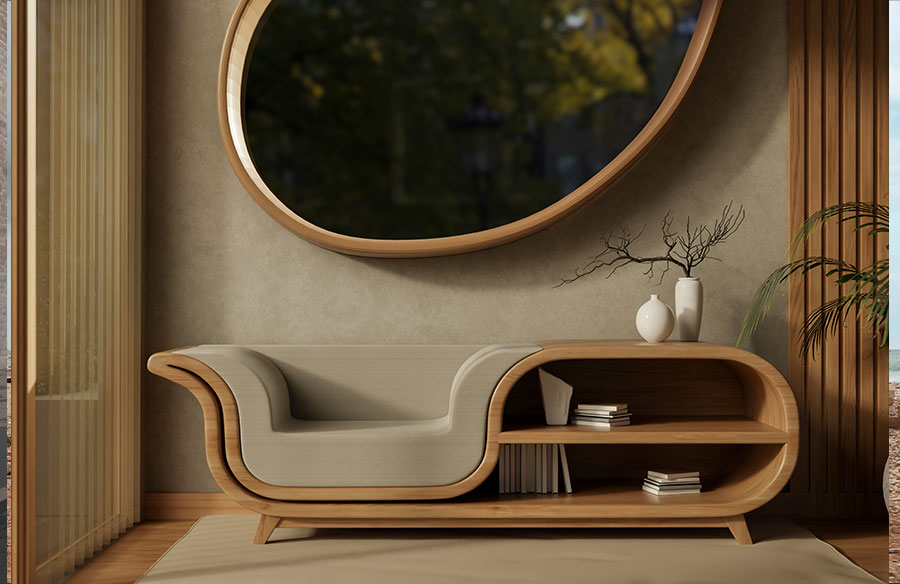
You like “sophisticated” furniture, but what does that mean? Browsing through the quick-ship furniture collection of your favorite interior décor and furniture shop, you can tell at a glance which one qualifies and which doesn’t. You just know, because certain pieces exude a palpable yet indefinable sense of refinement, urbanity, and finesse, and that speaks to you.
The Concept of Sophistication
Sophistication reflects worldly wisdom or worldliness. Experienced and cosmopolitan also closely tie in to the concept. Complexity is another.
Furniture you associate with this word is something that commands attention, with a sense of quality, authenticity, craftsmanship, and identity. It fulfills a definite function, but in a way that transcends its role.
People look at sophisticated furniture the way they appreciate art. It is complex, but never overdesigned. It can anchor a space, fill it, balance it, and elevate it. It may not even match a room visually or conceptually, but it feels right anyway. It’s in the curvy back of an accent chair in a room filled with sharp creases and lines, the irregularly shaped sculptural legs of a rectangular dining table, or the visually stunning colored kilim pattern on the back and sides of a studded leather armchair.
Sophistication in furniture is often associated with elegance, but that’s because the intention behind the design is executed so impeccably that it looks and feels right. Sophisticated furniture is also typically linked with luxury for the same reason: It’s so beautifully and sturdily made that it deserves (and often comes with) a high-ticket price tag.
The Elements of Sophistication
Sophistication is not one style or design, so an Art Deco chair can be just as sophisticated as its French Country counterpart. A minimalist stool can be just as sophisticated as an ornate Victorian-era dresser. After all, sophistication is not measured in simplicity but the intentionality of its design and the material, artistry, and unshakeable quality that underpin it.
Premium Materials
The material determines how furniture will turn out. Sophisticated furniture is made from premium materials that look and feel luxurious, particularly those that age well and gracefully resist wear.
The popular materials in sophisticated furniture are:
- Solid wood: Unlike plywood or medium-density fiberboard (MDF), solid wood has excellent longevity. Solid-wood dining tables can be passed through generations. Oak (strength and distinctive grain), walnut (rich color and fine grain), and mahogany (reddish brown color and smooth texture) are popular solid wood options.
- Natural stone: There’s just something about natural stone that looks glorious on the surface of dining, console, and coffee tables. Marble is particularly valued for its distinct, one-of-a-kind veining.
- Tempered glass: Durable tempered glass lets light through or reflects it, making spaces appear lighter or larger.
- Metals: Metals are a favorite, too, as they can easily provide structural and sculptural shapes. Brass, often used for handles and accents, adds warmth and a golden hue. Stainless Steel offers a polished, minimalist finish ideal for modern spaces. Meanwhile, iron is stunning in rustic and industrial luxury settings.
- Upholstery and textiles: Nothing beats leather, especially full-grain leather, in sophisticated furniture construction. It’s breathable but durable. It definitely ages well, as it grows darker and develops a patina all its own over time. Velvet, especially cotton or silk velvet, has stunning color depth and tactile plushness. Wicker (especially made of rattan) also has its place for its sustainability and warmth.
Timelessness
Sophisticated furniture has a decidedly timeless appeal. No matter how ornate (or simple) it is. It looks exquisite despite its age, or maybe even because of it. It owes part of that to the premium materials used to make it. It’s also partly because of its intelligent, intentional design that is both beautiful and functional, as well as the superior craftsmanship that turned the vision into reality.
Function
A dining table is for eating, a console table is for holding things, and a chair is somewhere for you to sit on. Sophisticated furniture, however, serves more than just its literal function.
- Light modulation and regulation: Light-colored surfaces brighten spaces. Reflective furniture (e.g., glass, polished metal) reflects and amplifies light. Meanwhile, darker pieces anchor a space, absorbing light to create a cozy and intimate feel.
- Boundary-setting and flow direction: In open-plan layouts, furniture delineates and defines spaces. This is why you can have one big space and still know which is the living area, the dining area, the gaming area, etc. Strategically placed furniture also creates tangible boundaries that dictate traffic flow and direction.
- Defining purpose: A sofa provides space for social activities, while a chaise lounge by the window, flanked by bookshelves and bookstands, indicates a space for solitary pursuits, like reading.
- Balancing spaces: Large and oversized sofas and tables are necessary in high-ceiling rooms. They act as weights, pulling the ceiling down and scaling the vastness to human proportions.
- Extending architecture: The metallic legs on a table echo the metallic hardware on the windows, while the curved arms of a chair serve as a counterpoint to the straight lines of the built-in shelves.
Of course, it does its literal function exceptionally well, too, due to its exceptional craftsmanship.
Craftsmanship
True sophistication is often invisible to the untrained eye but evident in the construction. It has unique features, such as non-standard cuts and shapes, some of which are even handmade. It is constructed really well, with flawlessly polished edges, paints, and finishes. Use it, and it feels extremely solid and stable; no shaking or wobbling. Naturally, it’s comfortable, too, due to its intentional design.
Beauty in Convergence
Sophistication in furniture is a convergence of premium materials, construction mastery, a transcendent function, and a beauty that does not erode (and may even grow) with the passing of time. Sophisticated furniture often has an indefinable quality that inadvertently draws the eye.
For most people, developing the ability to discern sophisticated furniture takes time, a lot of practice, and much hands-on experience. This is why it’s best to consult an interior designer, particularly one enrolled in a designer trade program (so you’re assured they have a vast collection of furniture to choose from at the best price), and seek guidance on your furniture choices.