

The global market for electric vehicles (EVs) is growing at an unprecedented pace, with car manufacturers racing to meet increasing demand from both eco-conscious consumers and governments pushing for cleaner alternatives to internal combustion engines. According to the International Energy Agency (IEA), global EV sales exceeded 10 million units in 2023, marking a significant milestone in the industry’s transition towards a more sustainable future. With this shift comes an urgent need for widespread and efficient charging infrastructure, which poses both challenges and opportunities for innovation in EV charging technology.
In response to these challenges, tech companies and automakers are doubling down on research and development efforts to create faster, more reliable, and universally accessible charging solutions. Traditional EV chargers are often plagued by long charge times and limited availability, which can deter potential buyers from making the switch to electric. As a result, the industry is exploring innovative solutions, including ultra-fast charging systems and scalable infrastructure that can accommodate the increasing number of EVs on the road.
These innovations are not only reshaping the technical landscape but also influencing how consumers perceive EVs as a practical choice for daily transportation. No longer limited to city centers or high-end vehicles, EV chargers are being installed in suburban areas, along highways, and in rural communities. The future of transportation hinges not just on the production of electric cars, but on the evolution of the charging systems that will power them.
Wireless Charging: The Next Frontier
Among the most groundbreaking advancements in EV charging technology is wireless charging, which could soon revolutionize the way drivers refuel their electric cars. Wireless or inductive charging relies on magnetic fields to transfer energy between a pad on the ground and a receiver in the vehicle, eliminating the need for physical cables. While still in its early stages, the potential benefits of wireless charging are significant: greater convenience, improved safety, and the ability to charge vehicles while they are parked or even on the move.
Companies like BMW and Mercedes-Benz have already begun testing wireless charging systems in select markets, signaling that the technology is closer to becoming mainstream. With improvements in efficiency and scalability, wireless charging could dramatically reduce the hassle of plugging in, especially for those living in urban environments where access to charging stations might be limited. This ease of use is expected to play a crucial role in accelerating EV adoption in the years ahead.
Despite its promise, there are still technical hurdles to overcome. One of the key challenges is ensuring that wireless charging systems are as efficient as their wired counterparts, minimizing energy losses and maximizing transfer speed. Furthermore, as with any emerging technology, cost will be a factor, particularly in the early phases of deployment. However, as innovation continues to advance, wireless charging is poised to become a major component of the EV ecosystem.
Ultra-Fast Charging: Speeding Toward the Future
One of the most significant bottlenecks for EV drivers has been the time it takes to fully charge a vehicle compared to traditional refueling methods. Recognizing this, companies have been working to reduce charging times through the development of ultra-fast charging systems. Today, the fastest chargers, known as DC fast chargers, can provide up to 350 kW of power, enabling vehicles to gain 80% of their battery capacity in as little as 20 minutes.
Ultra-fast charging is made possible by advancements in both battery technology and charging infrastructure. High-capacity batteries, like those developed by Tesla and Porsche, are designed to handle rapid energy input without degrading performance. On the infrastructure side, companies like ChargeTronix are leading the charge (pun intended) with modular and scalable charging solutions. ChargeTronix’s latest offerings, such as their distributed power cabinets, enable multiple EVs to be charged simultaneously, providing efficiency and minimizing downtime. This intelligent design allows businesses to easily expand their charging capabilities as demand grows, helping to future-proof their operations in a fast-evolving landscape.
As these ultra-fast charging solutions become more widespread, they are set to address one of the key concerns holding back potential EV buyers: range anxiety. The ability to quickly top up a battery during long journeys or daily commutes could significantly ease the transition from gasoline to electric, making EVs a more convenient option for a larger portion of the population.
Smart Charging Systems and Grid Integration
As the adoption of electric vehicles continues to rise, so does the strain on local electrical grids. To mitigate this, EV charging is becoming smarter and more integrated with energy networks. Smart charging systems, which can balance demand and supply by optimizing charging times, are playing a critical role in this effort. These systems allow EVs to charge during off-peak hours when energy costs are lower and the grid is less stressed, benefiting both consumers and utility providers.
Moreover, vehicle-to-grid (V2G) technology is emerging as a revolutionary concept that allows EVs to send unused energy back to the grid. This creates a two-way flow of electricity, transforming parked EVs into mobile energy storage units. V2G could have profound implications for renewable energy sources like wind and solar, which are intermittent by nature. EVs can store excess energy when production is high and feed it back to the grid when demand surges, helping to stabilize the electrical system and reduce reliance on fossil fuels.
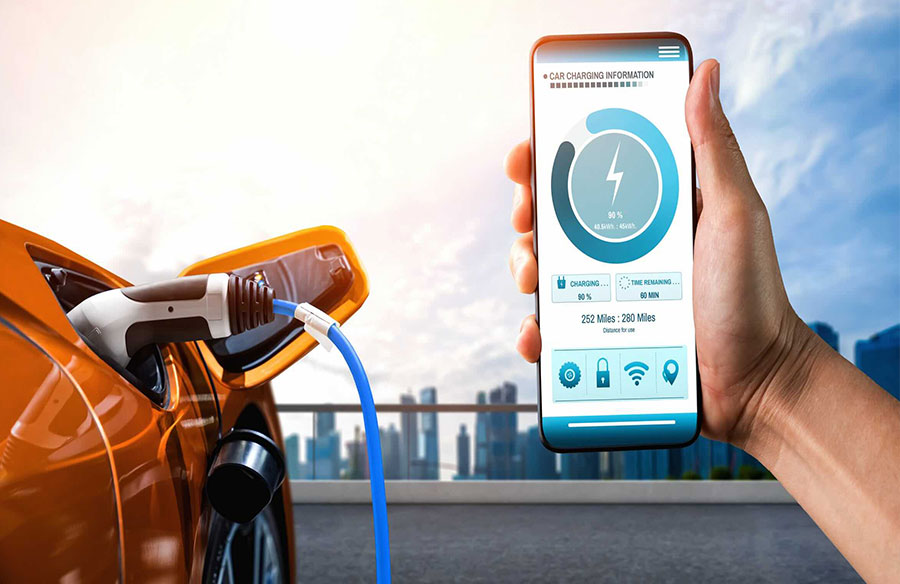
These smart systems are also paving the way for more personalized and user-friendly charging experiences. With features like mobile apps, EV owners can schedule charging sessions remotely, monitor energy consumption, and even select green energy sources. In this connected environment, the charging station of the future will not only power vehicles but also serve as an integral part of a broader, intelligent energy ecosystem.
The Role of AI and Data Analytics in Charging Optimization
Artificial intelligence (AI) and data analytics are playing an increasingly important role in optimizing EV charging networks. AI can predict peak charging times, identify patterns in energy consumption, and even recommend charging station locations based on real-time traffic and weather data. These capabilities are crucial for both reducing wait times at charging stations and ensuring that the infrastructure is used efficiently.
For instance, machine learning algorithms can analyze data from thousands of charging sessions to optimize how energy is distributed across a network. This ensures that chargers are operating at maximum efficiency and helps prevent power outages or bottlenecks in high-demand areas. AI is also being employed to monitor the health of charging equipment, predicting when maintenance is required to minimize downtime and prolong the lifespan of the infrastructure.
As more vehicles hit the road, data-driven insights will be essential for scaling EV charging infrastructure in a cost-effective and sustainable way. Utilities, governments, and private companies are collaborating to develop smarter, more resilient grids capable of handling the increasing demand for electricity. By leveraging AI and analytics, the EV industry is laying the groundwork for a seamless and efficient charging experience.
Sustainability in Charging Technology
The push for electric vehicles is driven not only by the desire for better performance but also by the need for sustainability. As the world moves toward cleaner energy solutions, the environmental impact of EV chargers themselves is under scrutiny. Manufacturers are now exploring ways to design charging infrastructure that is not only more energy-efficient but also built with sustainable materials and powered by renewable energy sources.
Solar-powered charging stations, for instance, are emerging as a viable solution in areas with abundant sunlight. These stations reduce the reliance on traditional power grids and lower the carbon footprint associated with charging EVs. Additionally, many companies are experimenting with bi-directional chargers that can both draw energy from and supply energy to the grid, further enhancing sustainability.
From recyclable materials used in construction to the integration of green energy, sustainability is becoming a core focus in the evolution of charging technology. Companies that lead in this area are positioning themselves to meet growing consumer demand for environmentally responsible solutions. The intersection of technology and sustainability will play a pivotal role in shaping the future of EV charging infrastructure.
The Road Ahead: Challenges and Opportunities
While the progress in EV charging technology is impressive, there are still significant challenges that need to be addressed before widespread adoption becomes a reality. One of the primary concerns is the cost of building and maintaining a robust charging network. Unlike gas stations, EV chargers require significant investment in electrical infrastructure, especially for ultra-fast and wireless charging systems.
Moreover, standardization across regions remains a challenge. Different countries and manufacturers often use varying plug types and charging standards, making it difficult for drivers to charge their vehicles seamlessly across borders. Harmonizing these standards is essential to creating a globally integrated EV charging network that works for everyone, regardless of location or vehicle type.
Despite these obstacles, the opportunities are vast. The advancements in charging technology are helping to accelerate the shift toward electrified transportation, offering immense benefits for both the environment and the economy. As innovations continue to emerge, the future of EV charging promises to be faster, smarter, and more sustainable than ever before.







