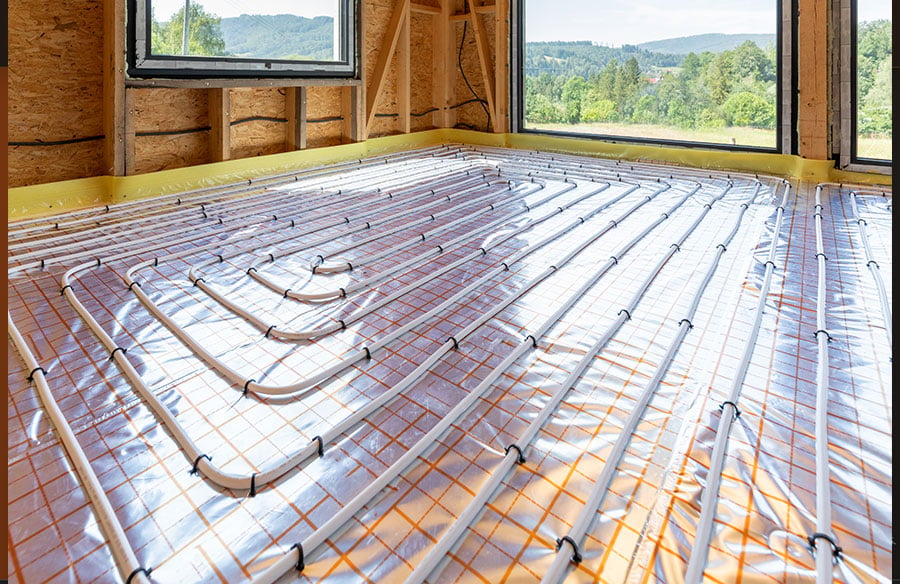
There’s so much more to the right house heating beyond its mere operational capability. Both radiators and heated floors have their benefits, but performance depends on energy costs, the layout of the room and how you like to live. Some homeowners like fast heat, while others prefer even, invisible heat.
It’s important to know efficiency, comfort and installation. LBC Mortgage company recommends in most of the cases to consider long-term energy cost and home value when selecting a heating position, as investments impact permanent comfort and your budget.
This reference offers practical strategies for homeowners to make solid decisions. But whether you are renovating or building new, the trade-offs between conventional and floor heating will help save money as well as frustration.
Energy Efficiency and Cost: Which System Saves More
Old types of heating including radiators use water or air, whereas modern systems are more likely to be underfloor. Efficiency is heavily influenced by the type of boiler and insulation, with older boilers losing up to 25 percent of heat through pipeline.
High-efficiency condensing systems can achieve 90–95% efficiency, however regular cycling on and off creates large energy demand. On the other hand, heated floors (especially electric ones) are designed at lower temperatures (typically 27–29 °C) and can still keep comfort. Due to the reduced temperature of the water in the system, energy savings can exceed 10–30% depending on the floor covering and insulation.
Although the up-front expense of installing heated floors can be relatively high — from $30 to $50 per square meter for electrical mats, and between $50 to $70 for hydronic systems — lower heating costs may eventually cancel out that initial investment.
Radiators are less expensive to install, but you may end up with higher monthly energy bills if the system has a hard time keeping all rooms evenly warm. The decision is based on a trade-off between installation budget and lifetime utility savings.
Comfort and Heat Distribution: Feeling the Difference at Home
Convection currents form around radiators, which heat the closest air first. Rooms tend to have temperature gradients, with warmer places near the radiator and cooler ones around the room. Warm floors ensure even heat that rises from the ground upward, so there are no cold spots and air movement is minimized.
The floor temperature has a large impact on human comfort. This is because they are warmer, and even though the air temperature of a room might be 22 °C, the floor (which our skin is in contact with) may have reached as high as 25–28 °C. This may reduce the necessity to adjust the thermostat, which can save you energy and money and will bring improvement to your levels of comfort. The warmth from a heated floor is particularly appreciated in bathrooms and bedrooms.
In addition to comfort, warmed floors can contribute to overall energy efficiency and lower operating costs over time. They provide even heat distribution, so you can leave the thermostat on lower settings while remaining comfortable.
Maintenance is minimal — lower even than for radiators or boilers, and electric systems have fewer mechanical components, which means there’s less opportunity for something to go wrong. Hydronic systems If they are a bit more complicated to install, hydronic units are built to last when well taken care of and provide efficient years of service.
Installation and Maintenance: Time, Effort, and Expenses
When you’re deciding which type of heating system to install at home, it pays to compare installation costs, maintenance and long-term efficiency. Radiator installation is not particularly difficult to install in an existing home, typically requiring a few hours per unit and even less when tapping into an existing pipe. It takes more preparation for heated floors, especially in renovations.
Electric mats can be installed under tile, wood, or laminate flooring but make sure to think about floor height and the condition of your subfloor. Hydronic heating systems use pipes under the floor, and they must be thought out during the building process.
Maintenance of the apparatuses are also different. Boilers and radiators require servicing at least annually to keep the system running reliably and efficiently, while minimizing leaks. Don’t have a project that involves retiring the floor or repouring concrete, which can be very pricey. Key points to consider:
- Radiators: Fast installation, connects easily, annual servicing required, reliable, durable, convenient, widely compatible, moderate cost.
- Electric heated floors: Easy to maintain, fewer mechanical parts, efficient, versatile, quiet, safe, energy-saving, compatible with tiles, wood, laminate.
- Hydronic floors: Require careful installation, occasional flushing prevents sediment buildup, durable, energy-efficient, quiet, long-lasting, compatible, flexible design, higher cost.
Suitability for Different Spaces: Matching Heating to Your Home
Radiators are a flexible heating type and perform best in big homes, or those that have more than one level because they can quickly change temperature. They are perfect for rooms that get rearranged a lot, as they don’t take up floor space. Radiant floor heat really shines in rooms where comfort dictates hiring consistency, such as bathrooms, kitchens and sleeping quarters. Under stone, tile wood is where they hide.
Radiant floors also offer design flexibility, free of wall-hung radiators and built-ins. Radiators can restrict furniture placement and in some cases even decor. Energy efficient Plans For homeowners who turn off the heat in unused rooms’ year round, a combination of the two systems — heating solely with radiators and then warming comfort zones via radiant floor heat — can provide the best of both worlds: efficiency and flexibility.