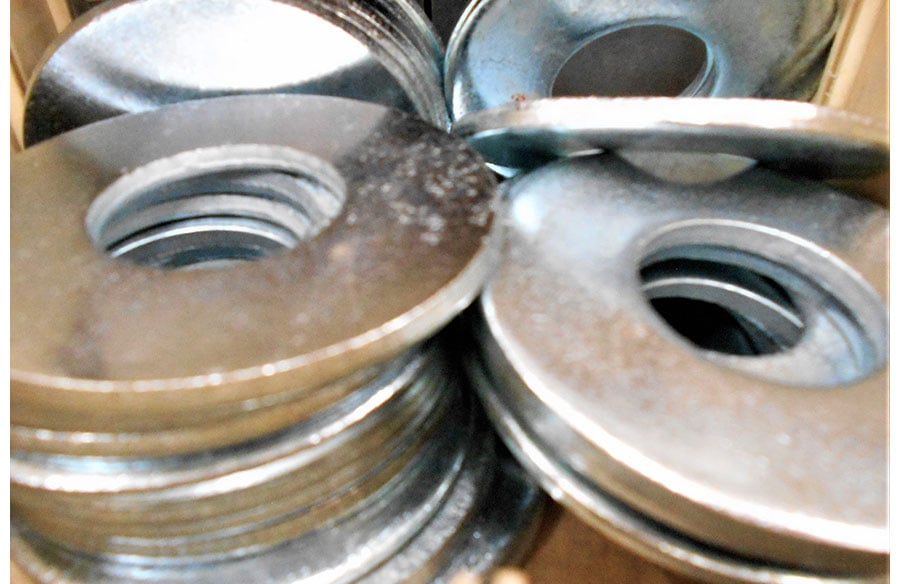
Grade 8 washers are essential in fastener assemblies that require high strength. These solid components guarantee secure connections under high-stress conditions. Understanding how their properties support and strengthen different equipment can help users select the right kind of washers. Let’s understand this in detail in this post.
What Are Grade 8 Washers?
Grade 8 washers are flat, circular metal discs commonly used with bolts and nuts. They come in a variety of materials, shapes, and sizes. These washers apply uniform pressure to keep the surface safe and secure. They are made out of hardened steel, which makes them ideal for applications where extensive torquing is required.
Material and Strength
Grade 8 washers are manufactured from alloy steel. This steel is heat-treated to give the washers optimum longevity. They are incredibly strong, and that’s why they can bear great loads without bending. These attributes make them reliable and popular in heavy-duty projects.
Key Features
A grade 8 washer’s most important characteristic is its hardness. These washers resist cracking and bending under pressure. They undergo yellow zinc plating or coating, which promotes corrosion resistance. This makes them ideal for indoor and outdoor purposes.
Applications in Different Industries
Grade 8 washers are widely used in industries like automotive, construction, and heavy machinery. In vehicles, these washers are used to support engine assembly and suspension systems. Construction crews use them when securing steel frameworks because they offer the assurance that the structures being installed or built will stay resilient and hold.
Why Strength Matters
If the washers used on construction are of inferior quality, joint failure can occur, which may lead to expensive bodywork repair. Grade 8 washers have a secure gripping power that locks fasteners in place. With their superior strength, joints or connections stay tight despite exposure to continuous vibration or shifting loads.
Comparing Washers by Grade
Washers come in various grades, each suited for specific needs. Grade 2 washers suit lighter loads, while grade 5 options handle moderate demands. Grade 8 units work well in situations where maximum strength is required, thereby outlasting other options under stress.
Industry Standards and Specifications
Certain organizations have defined specific standards for grade 8 washers. They cover factors such as material composition, hardness, and size. Such specifications make it easy to find matching bolts and nuts, ensuring that joints remain secure at all times.
Identifying Authentic Grade 8 Washers
You can identify real grade 8 washers by their markings and color. One visual cue is, of course, the yellow zinc plating. Their packaging also indicates compliance with industry requirements.
Installation Tips for Optimal Performance
The performance of washers hinges on proper installation. Make sure the washer is flat against the surface prior to tightening the fastener. Check whether the washer fits properly so that no part extends over the edge or moves around during assembly.
Common Mistakes to Avoid
Using the wrong type of washer can be dangerous. Do not use incompatible bolt and washer grades, which can lead to uneven distribution of pressure around the washer. Do not reuse washers, as the material may be weakened from previous stress.
Care and Maintenance
Even if designed to be corrosion-resistant, washers still need to be checked at regular intervals. Clearing debris or buildup is necessary, as it can impact washer performance. If there are any signs of surface rust or decay, the washer must be replaced immediately to ensure safety.
Environmental Considerations
Grade 8 washers are resistant to challenging environments such as moisture and temperature fluctuations. Their protective coating makes them rust-resistant and therefore usable for outdoor projects. Store them properly, as they have a high service life, and take them out for use when required.
How to Select a Washer for a Specific Task
Choose washers based on loads and environmental conditions. To ensure the highest reliability, verify that the washer is compatible with the bolt and the application. While choosing, some assurance can also be drawn from technical datasheets.
Conclusion
By understanding grade 8 washers, you can learn everything you need to know about achieving secure joints and connections in high-stress applications. They are an excellent option for projects where safety is essential. They offer high-strength elements and consistency in performance. They come with top-grade certifications for complying with industry standards. Choosing the right washer helps ensure safer, more durable assemblies.