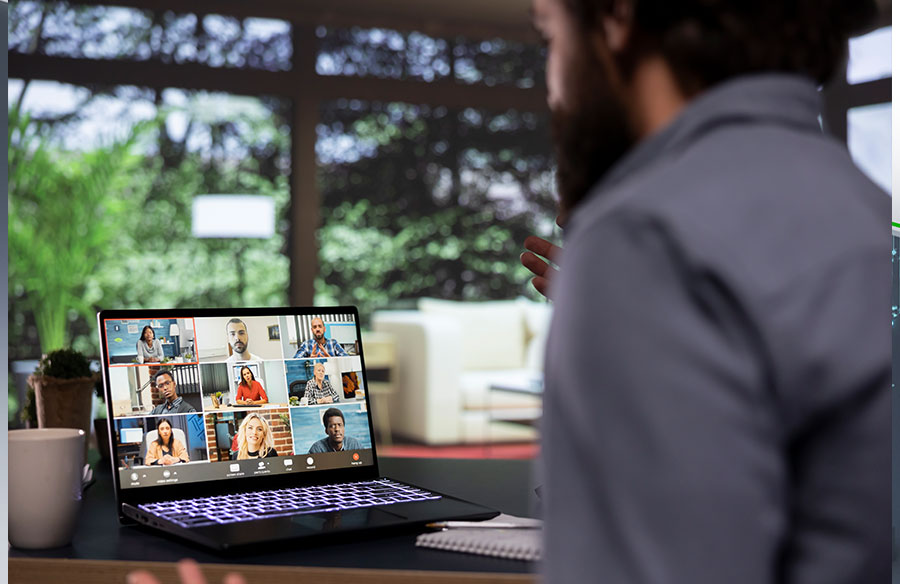
The transition to remote work has changed in a fundamental way the business consideration of team building and management. What was initially a temporary measure necessitated by global disruptions has turned into a lasting characteristic of the contemporary workplace. However, while a large number of enterprises have welcomed remote work, only a handful have figured out how to construct highly effective and stable remote teams that are able to deliver top results over a long period of time.
The making of a remote team that is successful is not simply a matter of giving employees the freedom to work from home. It is a matter of implementing deliberate strategies related to communication, culture, and accountability which are vastly different from those of the traditional office. The organizations that flourish under such conditions are those which understand remote work as an entirely different entity that has to be managed with its own set of best practices rather than a mere adjustment of old ways to new situations.
Establishing Clear Communication Frameworks From Day One
Communication is the basis of any successful remote team, however, it is usually considered as a last thing that should be done, instead of being the main structural element. Communication in physical offices is done naturally through conversations in the hallway, spontaneous meetings, and visual cues. Remote environments take away these natural touchpoints, which means that teams have to create communication structures intentionally that will replace what was happening automatically before.
Most productive remote teams set up clear rules about which communication channels are used for which purposes. Quick questions might be exchanged through instant messaging, while complicated discussions take place in video calls that are scheduled. Project updates may be in a dedicated collaboration tool, while strategic planning is a deeper synchronous engagement. When everyone knows where different types of communication are, information is shared more efficiently and team members have less time looking for the context or asking for clarification.
Hiring for Remote Work Competencies
Not all people can live in remote environments, and if a company pretends that everything is fine, it will result in frustration of both, the business and individual team members. The talents that make a person successful in an office environment are not always the same for remote work. Establishing a stable remote team starts from understanding these differences in the hiring process.
Self, direction could be considered the most important remote work skill. Without the organization and social pressure of a physical office, remote team members have to create their own drive and keep their productivity without any external supervision. During interviews, ask questions that will reveal evidence of self, motivated achievement. Find candidates who have independently managed projects, who set their own goals without being instructed, and who solve problems on their own instead of waiting for the manager.
In remote settings, communication skills become even more important than before. A team member has to be able to explain his/her thoughts clearly in writing because most of the communication is done via text. They should also be comfortable in asking questions and seeking clarification instead of assuming. What is more, they need the emotional intelligence to interact effectively since they do not get the help of body language and other non, verbal cues that make the interaction easy in person.
Creating Cultural Cohesion Across Physical Distance
Company culture remains largely the same in remote settings but it is slightly more vulnerable. The shared experiences and informal connections that are usually formed through daily in, person interactions thus, without them, these things have to be consciously created. The most stable remote teams are those that do not wait for their culture to emerge naturally but rather they deliberately invest in cultural development.
Frequent video calls are one of the ways through which human connection is preserved and this is something that text, based communication alone cannot achieve. The psychological bonds are thus created through seeing people’s faces, hearing their voices and getting their reactions rather than just the exchange of information. Intelligent teams arrange regular video check, ins that also provide time for informal conversation besides business updates. These times of engagement accumulate over time and thus have the power to carry the teams when times become hard.
Shared rituals form the basis of continuity and belonging. This may consist of regular meeting structures, celebration protocols for success, or recurring social activities that have been adapted for the virtual environment. When team members are able to foresee and take part in regular shared experiences, they feel a sense of belonging to something bigger than themselves. These rituals become the landmarks that define team identity.
Implementing Accountability Systems That Don’t Feel Like Surveillance
Those who are skeptical about remote work often think that employees will not be productive if there is no direct supervision. While such worries are, in most cases, exaggerated, studies repeatedly find that remote workers are as productive as, or even more than, their office, based counterparts. Still, there is a need for genuine accountability. The difficulty is in choosing methods that increase performance without causing a kind of surveillance that leads to loss of trust and low spirits among employees.
The best method to achieve this goal is to be concerned with results rather than activities. By no means should an employer be tracking every move of an employee, or constantly demanding updates, rather the focus should be on deliverables that are clear and have a defined timeline. When employees understand what success looks like and when it needs to be achieved, most of them will arrange their work in such a way as to meet those requirements. A result, oriented approach is one that accounts for a professional’s freedom and at the same time keeps clear performance standards.
Developing Career Paths That Work Remotely
Perhaps, the biggest problem relating to the stability of remotely working teams is career growth. Typically in offices, career progression is basically a result of increased visibility, thus being noticed, making positive influences on the management team, and getting indirectly guided by the mentors. Remote working environments may unintentionally introduce “out of sight, out of mind” situations which therefore, lead to stagnation of career progression and as a result, the most talented team members decide to look for jobs elsewhere.
Without intentional career development systems, this decline is inevitable. Holding regular one, on, one meetings that are solely focused on growth and development is a way of ensuring that career, related conversations happen all the time and not only during annual reviews. These conversations ought to discuss achieving skill development objectives, having career advancement aspirations, and taking definite steps towards progression. If employees identify attainable objectives ahead of them, they then become committed to achieving success in the long, term instead of looking for external opportunities.
Mentorship programs adapted for remote work help team members develop relationships with more experienced colleagues who can guide their growth. Structured mentorship with defined meeting cadences and developmental objectives works better in remote contexts than informal arrangements that depend on spontaneous interactions. Partnering with organizations like Connect can provide access to experienced remote team leaders who understand how to develop talent in distributed environments.
Building Resilience Through Flexibility and Support
Remote work is very flexible, but it can also be a source of different kinds of stress. The boundaries between work and personal life being blurred, the loneliness due to lack of contact with colleagues and the difficulties of managing distractions at home while keeping good performance on the job are the reasons for the pressures that a traditional office environment doesn’t have. Stable remote teams recognize these conditions and create systems of support that help their members to be successful despite them.
Flexible scheduling is one of the best uses of the remote work model and at the same time it recognizes that everyone has different periods of peak productivity and personal obligations. Try to concentrate on the results rather than fixing the working hours strictly, if it is possible. Giving the opportunity to team members to work when they are most efficient and can take care of personal responsibilities makes them more loyal and less prone to burnout. Such flexibility has to be combined with core hours for collaboration when the whole team is available, but even within those limits, autonomy is both more productive and gratifying.