Linear lighting has become one of the most versatile tools in sustainable interior design. It shapes mood, clarifies circulation, and boosts energy efficiency without drawing attention to itself. But delivering a lighting plan that is both environmentally responsible and visually seamless takes careful choices around materials, controls, and installation strategies. Designers today are looking beyond simple LED swaps and focusing on lifecycle, embodied impact, and long term maintainability.
A major shift toward high efficacy LED modules paired with smart systems that reduce unnecessary energy use is underway. That reflects a broader trend: sustainability is no longer about picking efficient fixtures, but about creating entire lighting ecosystems that waste less over time. And since linear forms can disappear into architecture, they’re uniquely suited to this new direction.
Understanding Sustainable Lighting Performance
Designers who want to specify responsibly need to evaluate more than lumen output. Modern sustainability frameworks require a closer look at how a fixture is made and how it functions across its lifespan.
Key considerations during specification
- Evaluate product longevity, upgradability, and serviceability
- Review environmental product declarations or lifecycle data
- Check compatibility with daylighting and dynamic controls
Modular LED linear systems can significantly reduce material waste because individual components can be upgraded without replacing entire fixtures. This also makes it easier to refresh lighting scenes in the future while staying within sustainability guidelines.
Another useful reference is the Lighting Industry Association’s sustainability guides, which outline methods for measuring embodied carbon and circularity. Their resources help designers assess whether a fixture’s materials, manufacturing, and end of life planning align with modern expectations around ecological responsibility.
Choosing Materials and Construction Wisely
Not all linear lighting is built the same. Sustainable interiors rely on details that might not be obvious at first glance, like the origin of aluminum housings or the recyclability of optical lenses.
Many manufacturers have shifted toward recycled aluminum, low VOC finishes, and supply chain transparency. In one industry overview from The Lighting Industry Association, experts highlighted how responsibly sourced metal channels and polycarbonate optics can meaningfully reduce embodied carbon.
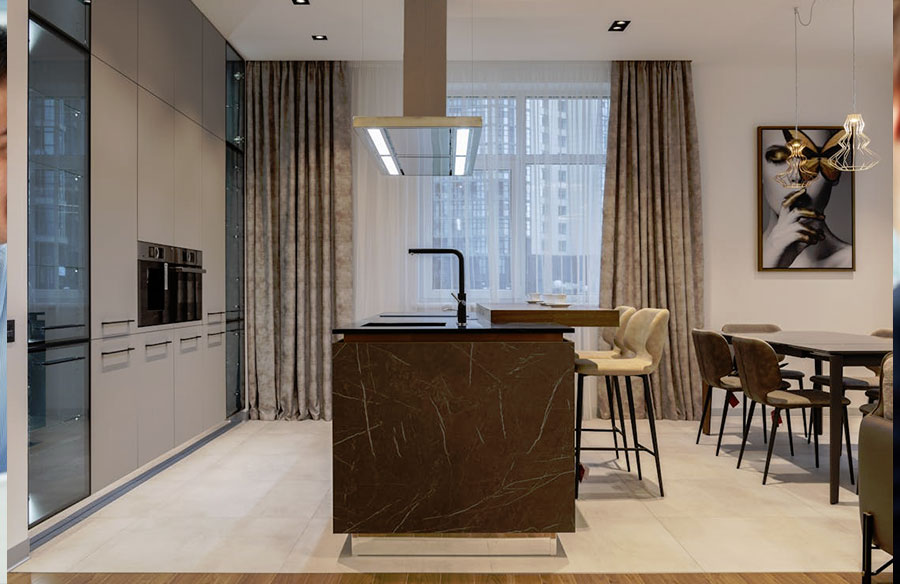
Fixture integration is also a major consideration. For example, designers specifying linear lighting for kitchen islands, conference tables, or hospitality spaces often look for solutions that blend construction quality with modularity. This ensures the lighting element fits seamlessly into the interior while minimizing long term waste.
Avoiding common pitfalls
Many designers unintentionally compromise sustainability by using:
- Overly customized housings that can’t be repaired
- Fixtures without clear end of life documentation
- Systems lacking controls integration
These issues can lock a project into higher energy use and early product replacement. Focusing on standard profiles, accessible components, and transparent environmental data can simplify future upgrades and reduce material impacts.
Integrating Lighting Controls For Efficiency
Controls are now just as important as fixture choice. High efficacy hardware loses much of its benefit if it runs at full output all day. Networked systems can dim based on occupancy, daylight, or schedules, lowering operational carbon and extending component longevity.
In research shared by TKI, energy reductions of over thirty percent were documented in commercial spaces where linear lighting was paired with sensors and task tuned output. Even small reductions add up across a building lifespan, making controls one of the most impactful decisions in sustainable interiors.
Controls strategies that naturally pair with linear forms
Since linear luminaires distribute light evenly, they work well with:
- Absence detection in circulation areas
- Daylight harvesting near windows
- Tunable white systems for occupant comfort
These strategies cut waste and can transform how a space feels throughout the day.
Creating Atmosphere Without Excess Wattage
One of the most appealing qualities of linear lighting is its ability to create soft, diffused illumination. Instead of relying on high wattage point sources, linear fixtures wash surfaces or highlight architectural lines with gentle brightness. Minimal outputs often look better in real spaces and help reduce total connected load.
Indirect linear solutions are becoming increasingly popular in homes, studios, and lounges because they offer a premium look without large energy demands. Integrating these effects into coves, wall slots, or under‑shelf details helps designers achieve atmosphere without compromising efficiency.
Circularity and Long Term Stewardship
Sustainability also includes how lighting can be reused, refreshed, or disassembled. Circular economy principles encourage designers to choose fixtures that can be refurbished instead of discarded.
In practice, this means selecting lights with replaceable LED boards, drivers, and optics. A fixture that can be updated after several years prevents the waste associated with full replacement, especially in large commercial or institutional spaces.
Balancing Aesthetics, Function, and Responsibility
Specifying sustainable linear lighting isn’t about sacrificing visual impact. It’s about making intentional decisions that support environmental goals while creating comfortable, modern interiors.
By pairing high efficacy LEDs with smart controls, choosing recyclable materials, and prioritizing circularity, designers can build lighting schemes that stay beautiful and responsible for many years.