Whether or not you’re an eco-warrior trying to be a good environmental steward, sound sustainability habits at home can save you a lot of money.
Energy efficiency at home provides numerous benefits to you and your family — something you’ll appreciate even if you’re not the biggest environmentalist. And who doesn’t want to have more money in their wallets or purses at month’s end?
There’s an added benefit to making your home more sustainable — and that’s a higher valuation, whether you stay put or sell and move elsewhere. That’s a win-win.
If you’re interested in making your home more environmentally friendly and saving money, here are five exterior home improvement projects to add to your to-do list.
1. Upgrade to Energy-Efficient Windows
One of the factors responsible for energy wastage is having outdated or damaged windows. Such windows will trigger heat loss during the winter and heat gain during the summer — thereby causing your HVAC system to work harder than necessary.
You can remedy this problem by getting energy-efficient replacement windows with features like the following:
- Low-E (low-emissivity) coatings to reflect heat but allow sunlight to pass through
- Double or triple-pane glass to minimize heat transfer
- Gas fills like argon or krypton between panes for added insulation
- Enhanced airtight seals to minimize air leakage
These features can regulate interior temperatures without overstressing your AC or furnace. You’ll have a more sustainable home, lower energy bills, better interior comfort, and no uncomfortable drafts to contend with.
Additionally, new windows will improve curb appeal and potentially raise your home’s resale value due to, firstly, the aesthetics and, secondly, the energy efficiency.
You’ll get the best results for your replacement windows project if you invest in quality products and get them installed by a reputable exterior remodeling contractor.
2. Install or Replace Insulated Siding
Your home’s siding can contribute to the overall exterior aesthetics, but it also serves a functional purpose by helping to control the interior temperatures of your house. Many residential buildings have thin or inadequate siding installations that do little to insulate homes — but instead create avenues for heat to escape or gain entry into residences.
Installing insulated siding helps create a good thermal barrier. This may include insulated vinyl siding, cement siding, or advanced composites to safeguard against heat transmission for both winter and summer seasons.
In addition to energy efficiency, insulated siding improves moisture resistance, enhances structural integrity, reduces exterior noise, and increases property value.
3. Roof Replacement or Installing a Cool Roofing System
Your roof gets plenty of heat, especially during the summer months. When your roof is too hot, it tends to transfer heat to your attic, in particular, and your house in general.
If your roof is near the end of its lifecycle, you might want to consider replacing it. Finding an exterior construction contractor that does roofs is the first step. You’ll learn about options and get the information needed to make informed choices.
4. Seal and Upgrade Exterior Doors
It’s easy to forget to periodically check your external doors to see if they leak. If air from inside and outside can get out or in, respectively, when the door is closed, that’s a problem. You’ll wind up with higher utility bills every month.
You can upgrade your doors by using weatherstripping for sealing gaps, installing door sweeps to keep drafts out at the bottom, installing new energy-saving doors, and putting in storm doors for extra protection and insulation.
Energy-saving doors have features such as cores for insulation, strong material components, and advanced weather seals to reduce air leakages.
5. Solar Power or Solar-Powered Exterior Features
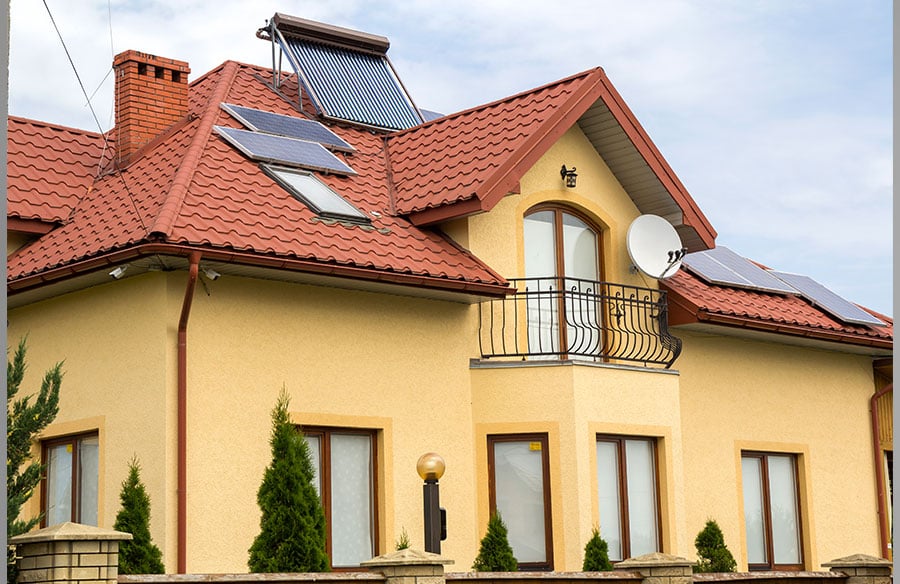
Solar power is one of the most popular home efficiency solutions. Installing solar power will allow you to produce power that can be used to power your home without relying on the power grid. You’ll appreciate that benefit when there are power outages.
When upgrading your home’s windows, siding, roof, doors, and solar components, you won’t only use less energy but also save more of your hard-earned money. Whether your mission is to find new ways to upgrade your home or to simply reduce your energy consumption bills, these five recommendations can help you get there.
After all, you don’t have to be an eco-warrior to enjoy the cost savings that sustainability brings.