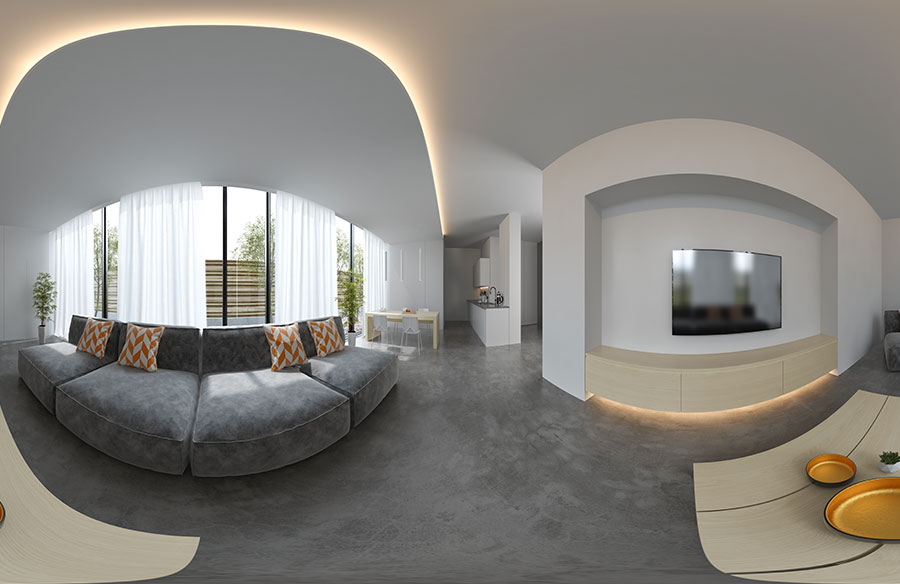
Interior architecture is experiencing a cultural shift. The past decade was about open-plan layouts, higher ceilings and big, shared spaces. Today, the future direction is less about scale and more about responsiveness. Homes and workplaces are expected to flex, change, and evolve with the person inside them — without requiring costly structural remodeling every time life circumstances adjust.
This shift has been driven by a mix of technology, wellness research and new expectations around how interiors should serve us. It’s no longer enough for a space to look impressive. The future of interior architecture is an environment that actually works harder for the human body, mind and routine that lives within it.
Adaptive Rooms With Multiple Purposes
The biggest future trend isn’t aesthetic — it’s configurability. Rooms will increasingly be designed as “multi-mode” spaces. A den can become a home office during the day, then a movie lounge at night. A guest bedroom might convert into a fitness zone. Storage systems that slide, furniture that rotates, and partitions that reconfigure are starting to appear more widely in new construction and remodels.
Smart Shading in Architectural Forms That Are Harder to Cover
One corner of future interiors that gets overlooked is shading for complex window shapes. Homes are being designed with bold roof lines, angled clerestory windows and dramatic glazed peaks. These forms look incredible, but they also demand shading systems that aren’t generic.
Gable end windows are a perfect example. As more homes integrate striking triangular glazing at the peak of vaulted ceilings, shading that space becomes critical for glare, thermal control and privacy. Automated gable end blinds are emerging as a go-to solution because manual operation on angled peaks is impractical and unsafe. Motorized systems allow homeowners to enjoy the architectural statement of the gable geometry while still being able to manage comfort and climate control with ease.
Wellness-Centered Interiors
There is measurable scientific evidence that daylight exposure influences circadian rhythm and sleep quality. Because of this, interior architecture of the future is starting to incorporate wellness standards that go beyond typical building code. We’re seeing more frequent inclusion of daylighting strategies, acoustic zoning, air purification integration, and materials that are low in VOC emissions.
Flexible spaces help here too — by allowing someone to shift their activity to a zone that fits their physiological energy, rather than forcing routine into one static room.
Technology That Blends In
Smart-home technologies used to feel like add-ons. Today, the future trend is subtle integration. Lighting control is hidden in the millwork. Sensors disappear behind panels. Surfaces double as displays only when needed.
The future interior is not a showroom of screens. It is a quiet environment that becomes tech-forward only when summoned — then disappears again.
A Return to the Tactile
It’s counterintuitive, but more tech has pushed designers back to texture. Interior architecture labs across the U.S. are finding that people crave tactile contrast: natural woods, textured upholstery, soft floors, hand-feel surfaces. As digital interfaces increase, physical warmth matters more. Future interiors won’t feel sterile; they’ll feel tactile and comforting.
Conclusion: Architecture That Works for People, Not Just Aesthetics
Interior architecture of the future is responsive, programmable and human-centered. The next generation of homes isn’t just “smart” — it is intuitive. Rooms won’t just store furniture; they will store purpose, flexibility and personal comfort.
The built environment is turning into something living in its own way — adjusting quietly, reshaping discreetly, and enabling better daily routines without forcing the user to constantly fight the space they’re in.