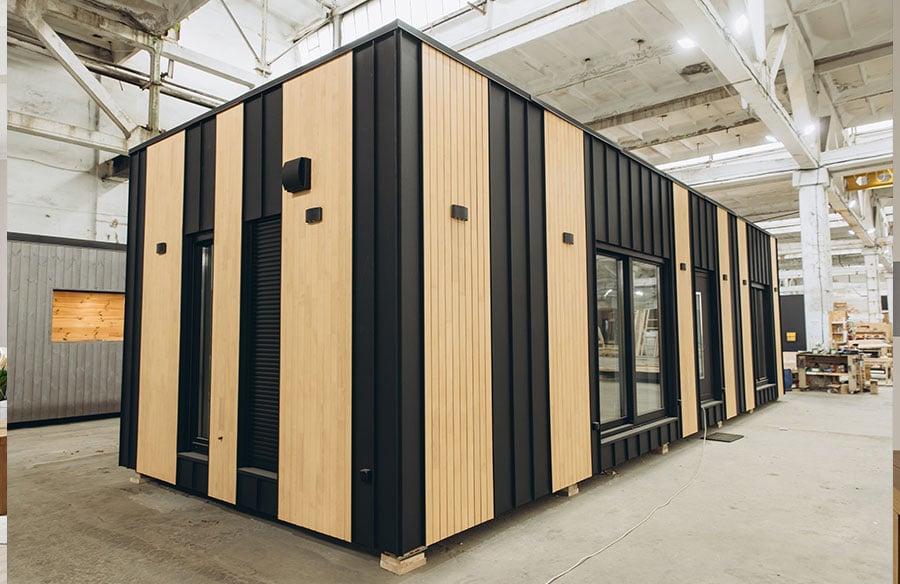
The concept of the office is rapidly changing from rigid, permanent structures to flexible, adaptive on-site office solutions. Innovative, prefabricated units known as modular office containers drive this architectural shift forward in terms of how businesses achieve rapid expansion, project management, and disaster recovery.
The Rise of Speed, Sustainability, and Operational Flexibility
The advantages of shipping container offices and other prefabricated office containers are all about their inherent agility. Traditional construction is a very long, expensive, and usually disrupting activity. In sharp contrast, modular construction offers speed, substantial cost savings, and unparalleled flexibility. It is best for temporary office spaces that require rapid deployment with low commitment.
- Speed of deployment: Much of the construction of container offices is done offsite in controlled factory environments, greatly reducing the on-site construction timeline. This process minimizes weather delays and on-site complications. A fully functional mobile office container can be delivered, installed, and operational in just a fraction of the time required for a conventional build; often reducing total project time by as much as 50%.
- Cost Efficiency: The streamlined production processes, bulk purchasing of materials, and reduced labor costs on site all contribute to making it very cost-effective. Businesses have predictable upfront costs for modular offices, without the overruns that seem to always come with traditional construction projects. If a business requires temporary office space, it is a very financially smart decision.
- Scalability and Relocation: By simply adding or removing individual steel office containers, businesses can scale up or down with relative ease. The inherent modularity of the offices means an organization is never paying for more than the space it currently needs. When a project has been concluded or a temporary need has passed, these portable office containers can then easily be dismantled and moved onto their next location to establish and maintain themselves as the ultimate portable workspace containers. All this mobility ensures that capital investment remains productive across multiple projects and sites.
Versatility in Application: More than Just a Basic Enclosure
Where the term “container” might evoke images of no-frills, utilitarian boxes set up for storage, the modern modular office building is sophisticated, structurally sound, and fully customized. They are an indispensable asset to a remarkably varied range of industries and operational needs, showing versatility that permanent structures cannot compete with.
- Construction and Industrial Sites: These immediately provide on-site offices for project managers, engineers, safety personnel, and administrative staff on site, where the action is, putting the essential support functions right at the heart of the construction or industrial activity. They offer a safe and climate controlled environment withstanding harsh site conditions.
- Emergency and Disaster Relief: Their fast manufacturing and deployment capabilities make them very important in establishing temporary field command centers, makeshift hospitals, quarters for the first responders, and relief operations centers right after a catastrophic event.
- Retail and pop-up events: Brands also use bespoke office containers to create spectacular, modern, and interactive temporary retail stores, showrooms, or administrative centers at festivals and trade shows. Their unique aesthetic often serves as a marketing tool in and of itself.
- Corporate Expansion and Renovation: Firms often use portable office containers as quality swing spaces where there is extensive renovation to offices. They provide a fast and low-risk way to test new locations or deploy additional human capacity quickly without committing to long-term commercial lease or permanent new construction.
Sustainability and the Circular Economy of Modular Construction
Besides speed and flexibility, the critical advantage that raises modular office containers beyond other methods is their contribution toward sustainability and the circular economy. Traditional construction is extremely wasteful, generating huge amounts of debris. On the other hand, the factory-built nature of modular offices minimizes material waste and allows better control of inventories. More importantly, the inherent mobility of shipping container offices means they are prime examples of reusable infrastructure.
When a business is through with a steel office container, it is not demolished. It is merely uninstalled and redeployed elsewhere, thus giving the asset a second or third life. This reusability slashes the demand for new materials and reduces the environmental footprint associated with demolition and landfill waste, making prefabricated office containers a truly eco-conscious alternative for temporary office spaces.
Conclusion:
The modular office solutions are resilient-sustainable and adaptive-providing high-quality professional workspaces precisely where and when they are most needed. With worldwide businesses increasingly focused on operational flexibility, fast response, and sustainable building practices, demand for these agile steel office containers and prefabricated office containers will continue to grow exponentially, confirming their status not as a passing fad but as a permanent, flexible, and essential feature of the modern global commercial landscape.
Companies like CMG Containers epitomize this shift by providing high-quality modular offices designed for the needs of contemporary business. Their prefabricated structures give flexible, fast, and affordable workspace solutions. It is time to elevate your operational capacity and redefine your workspace adaptability with the proven quality of CMG’s modular solutions.