Architectural videos walk a fine line between documentation and storytelling. Far from recording walls and windows, you’re actually capturing how a space feels. The right lighting can reveal form, texture, and emotion in a way natural light alone rarely can. Whether you’re working in a historic building or a modern high-rise, good lighting turns a static structure into a living subject.
Why Lighting Matters in Architectural Storytelling
Architecture is defined by light and shadow. Every curve, texture, and surface was designed with illumination in mind. When filming architecture, your job is to respect that intention while guiding the viewer’s eye through the space. A well-lit shot can express warmth, scale, or minimalism just as effectively as the architecture itself.
I like to think of architectural lighting as a collaboration between the building and the camera. You’re working with its existing light sources, reflective surfaces, and design features to tell a visual story.
Understanding the Space Before You Light It
Before you unload a single case, walk the space. Note where natural light enters and how it shifts during the day. Identify reflective materials, such as glass, metal, or polished stone, that may create hot spots or unwanted glare. Look for architectural features that could be emphasized with light: textured concrete, curved staircases, long window lines.
Every building has a different visual rhythm. A high-ceilinged lobby needs a different approach than a narrow corridor or an open studio. Take time to understand how light moves through it, and let that guide your placement and intensity choices.
Choosing the Right Tools
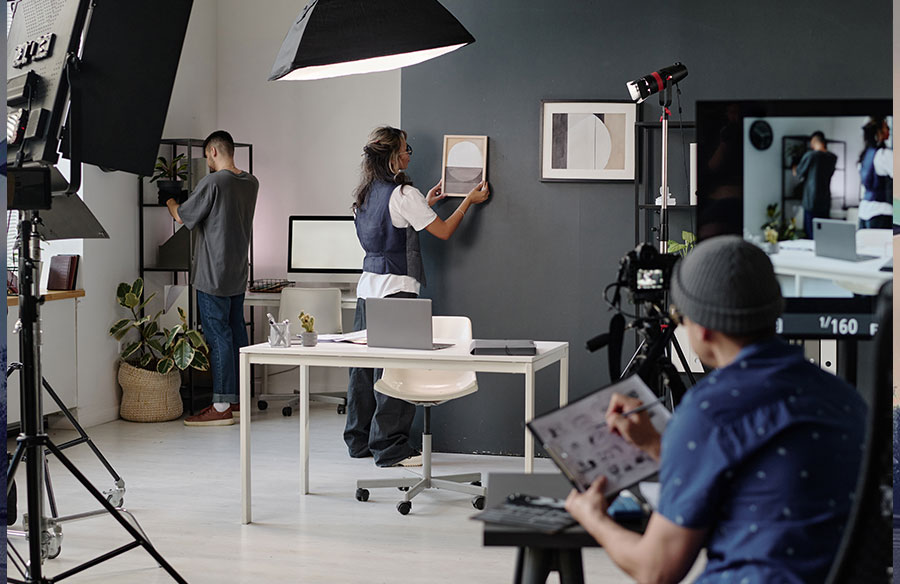
Architectural shoots demand control and consistency. Soft, even sources like LiteMats or Aputure Novas provide natural illumination without overpowering the space. Tube lights such as Astera Titans or Nanlite Pavotubes can accent edges and add color contrast when needed. For surfaces that need a touch of dimensionality, a Creamsource Vortex or point-source LED can add crisp highlights without flattening detail.
Diffusion frames, grids, and bounce materials help maintain the balance between structure and softness. Think of these tools as sculpting aids that let you define shape while keeping transitions subtle.
Working on Location
Filming architecture on location often means adapting to challenges: limited power, tricky rigging points, or the need to move fast without damaging the space. This is where strong local support becomes invaluable. Reliable options like grip truck rentals in Denver allow crews to transport lighting, stands, and diffusion safely between sites in and around cities like Boulder, Colorado Springs, and Fort Collins.
Having a grip truck on location gives your team flexibility. You can pivot between setups without wasting time packing and unpacking cases. Everything stays organized, accessible, and ready to roll, which really matters when daylight hours are short or clients are on a tight schedule.
Balancing Natural and Artificial Light
One of the biggest challenges in architectural cinematography is matching your fixtures to the environment. Start by observing how natural light defines the space. Then, supplement it in ways that feel believable. A large soft key bounced into the ceiling can lift shadows without making the room look artificially bright.
Color temperature is another key factor. Mixing tungsten and daylight sources can cause color imbalance unless corrected with gels or careful white balance. Keep your tones unified so materials render as they appear to the eye. That cohesion makes the final image feel more polished and professional.
Avoiding Common Mistakes
It’s easy to overlight a scene when you have access to powerful LEDs, but restraint often produces better results. Too much fill flattens texture, while uneven exposure can make vertical lines warp under contrast. Keep your subject — in this case, the space — slightly brighter than the background so it reads naturally on camera.
Reflections are another hazard. If you’re working in a glass-heavy environment, use flags or diffusion to cut glare. For darker materials, maintain enough ambient lift so shadows retain depth without crushing.
Lighting That Honors Design
Great architectural lighting supports the space. The best setups don’t compete with the structure. When you light thoughtfully, you’re respectfully preserving the design’s intent. Whether you’re filming a modern office in downtown or a restored landmark on Main Street, good light is what connects architecture to emotion. With the right gear, careful observation, and a little planning, any building can become a story worth capturing.
FAQs
What types of lights work best for architecture videos?
Soft panels, tube lights, and large LED sources are ideal for architectural filming. They provide even illumination without harsh shadows and can highlight texture or color.
How do you balance natural and artificial light in architectural spaces?
Use natural light as your foundation. Then supplement with controlled artificial sources to fill shadows or emphasize detail, keeping color temperatures consistent across all fixtures.
Why are grip trucks important for architectural productions?
Grip trucks keep equipment organized and mobile, allowing you to move lighting setups quickly between spaces while protecting gear and maintaining efficiency on set.