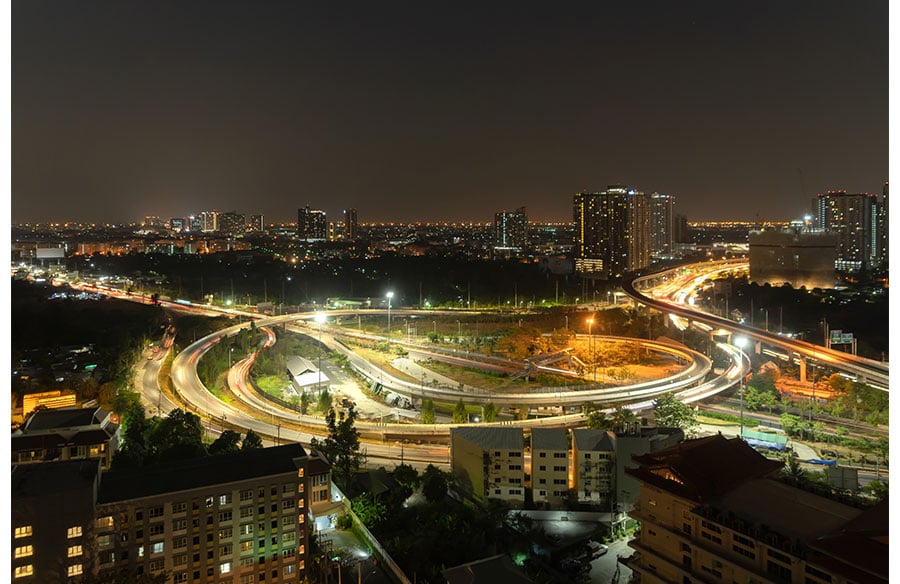
Some cities have been doing it for eons, but other, less touristy cities are now also starting to rethink how they function after dark. Once touted as a time to power down, the night is now being recognised as an opportunity. A vital part of urban life, a period when creativity, culture, and community can thrive. From hospitality workers and late-night office workers, to commuters, students, artists, vendors, and families, millions of people move through cities long after the sun goes down.
As this “nighttime economy” grows, urban design is shifting with it. Well-lit parks, illuminated laneways, safe transport hubs, inviting public spaces and nighttime entertainment aren’t just about aesthetics or safety. They reflect a city’s values, culture, and how well it fosters inclusivity. Nighttime design has become a barometer of care and connection.
The Psychology of Light
Lighting is one of the most powerful tools in shaping how people experience cities at night. For decades, the default response to safety concerns has been more light, and brighter light, yet that approach often backfires. Flooding an area with harsh white light can heighten uncomfortability and vulnerability rather than reduce it. Creating glare and deep shadows that make people feel exposed rather than secure.
Warm, soft lighting, typically between 2700K and 3000K, tells a different story. It creates a glow that feels warm, welcoming and social. Faces appear friendlier and more recognisable, and spaces feel curated rather than controlled. Cooler, blue-toned light may appear cleaner, but it often makes places seem cold and detached.
Good lighting also depends on how it’s placed. Illumination should reach faces, signs, and building fronts, not just the ground. People feel safer when they can see and be seen. When light is evenly distributed and glare is reduced, streets feel safer and easier to navigate.
 Designing for Visibility and Activity
A safe city at night is one that feels abuzz with activity. Music and merriment rather than alarms, sirens or guard dogs barking.
When cafés, restaurants, market stalls, shops and food vans stay open, they create a sense of shared presence that naturally deters unease. The spill of light from a window, the glow of a sign, the beat of music, or the hum of conversation are all evidence that people are around, the area is secure.
By contrast, blank graffitied walls, abandoned car parks, and shuttered buildings send the opposite message. Streets feel isolated and uninviting. Urban designers are increasingly encouraging buildings to engage directly with the street, through transparent façades, illuminated artworks, extended opening hours, and well-lit ground-floor activity.
Subtle elements such as low fences, tidy landscaping, and clear sightlines make pedestrians feel visible and safe. These small design details show care and intention, both essential for creating comfort, cohesion, trust, and importantly attendance in shared spaces.
The Tactile City
Lighting is only part of the design. Other materials are also hugely impactful in how we experience the city after dark. Pale pavements, light-toned stone, and reflective surfaces can amplify ambient light, reducing the need for overly bright fixtures. The result is a space that feels evenly lit without being blinding.
Wayfinding is also more crucial as visibility drops. Clear signage, illuminated maps, and distinctive landmarks help people orient themselves and navigate different zones. Small touches, textured paths, distinctive benches, or pieces of local art, make a street easier to identify and recognise and also attractive features make people want to explore. Cities that integrate these elements invite exploration rather than avoidance.
 Lighting as Public Art: The Geelong Example
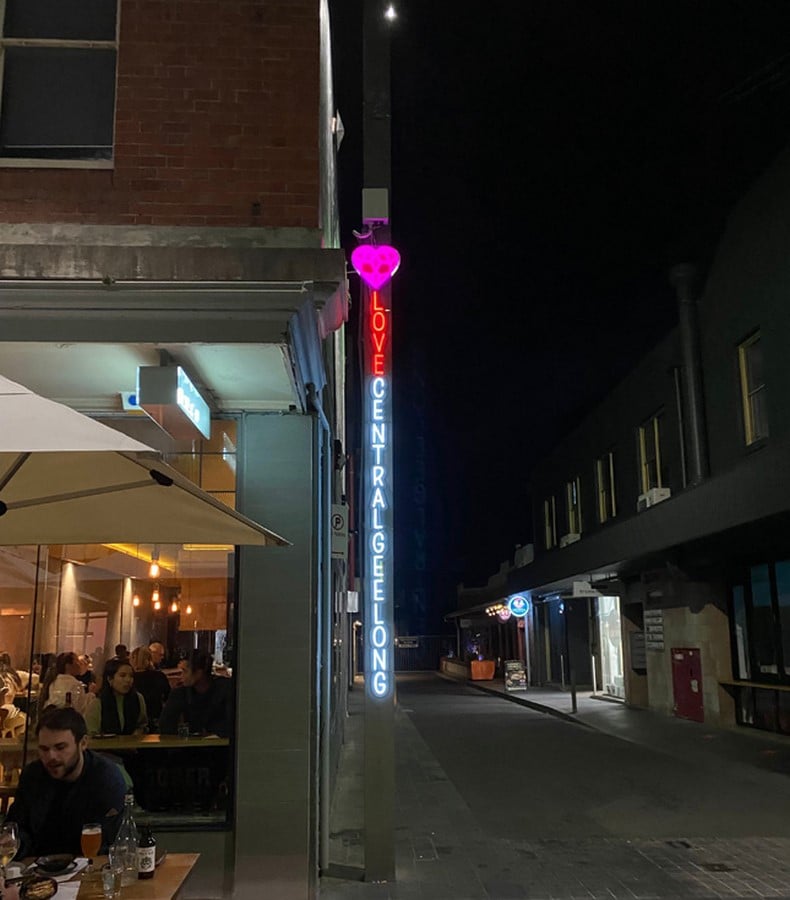
In Geelong, Victoria, strategic design has helped reimagine what nighttime activations can look and feel like. The EON Artworks project, a collaboration between the Victorian Government and the City of Greater Geelong, has transformed several public areas with vibrant,local artist-led neon installations. The goal was to make the city centre more inviting after dark and to support local businesses in the evening economy.
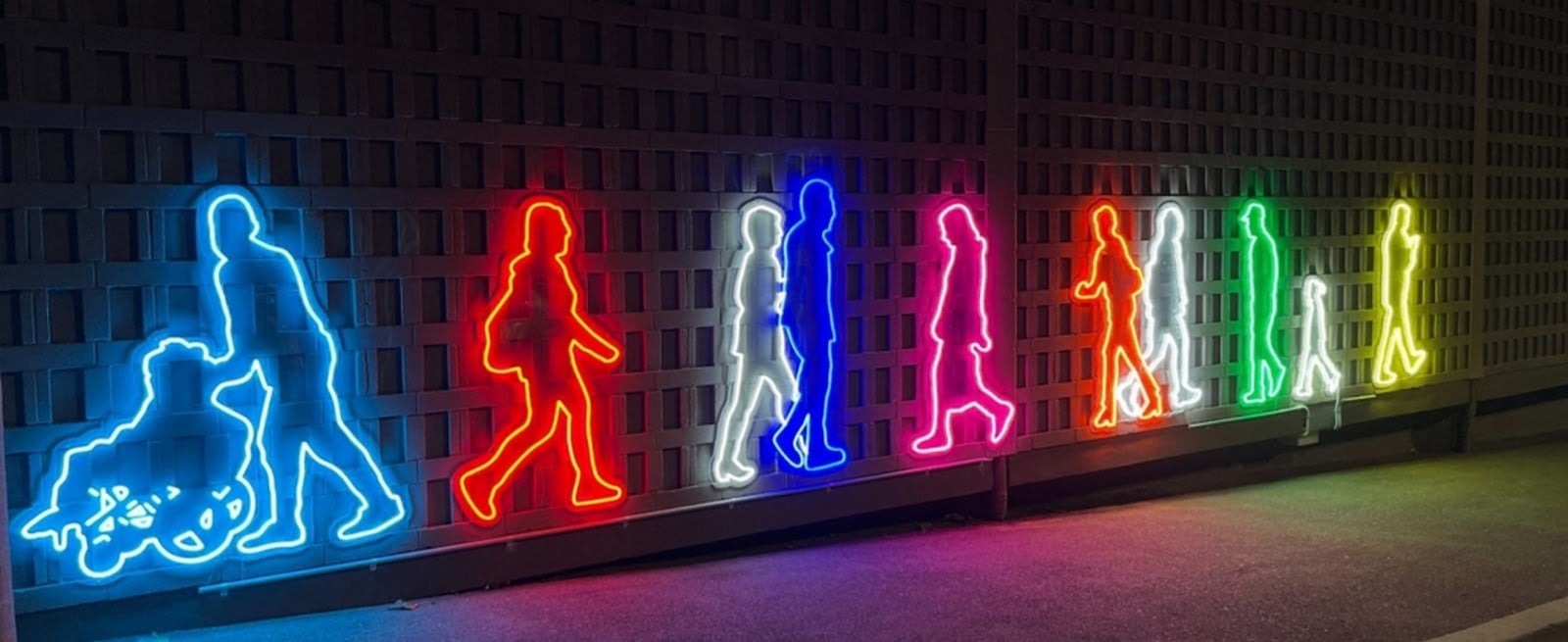
The installations, produced by Custom Neon in Newtown and installed by Lifestyle Electrical, feature work by local artists Glen Smith and George Rose. Smith’s “Clare Street” piece, mounted on The Grace Church, reinterprets John Brack’s 1955 painting Collins Street, 5pm as a glowing mural of figures heading home from work, their neon outlines casting soft reflections on the façade. “I wanted to celebrate how Geelong is changing,” Smith said. “The artwork reflects the joy, colour, and movement of the city at night.”
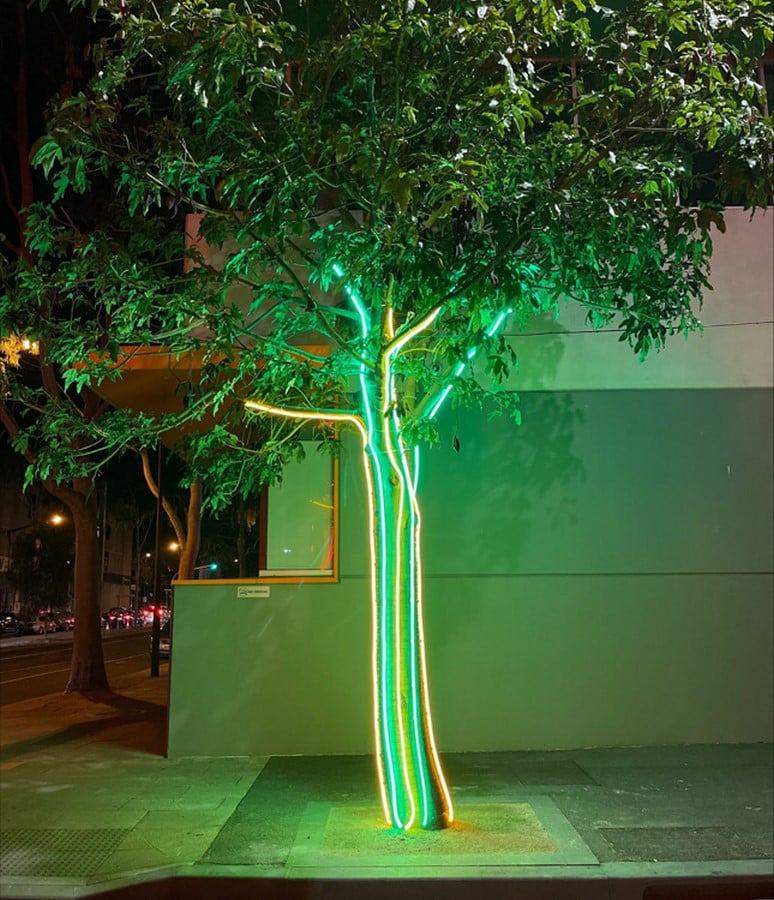
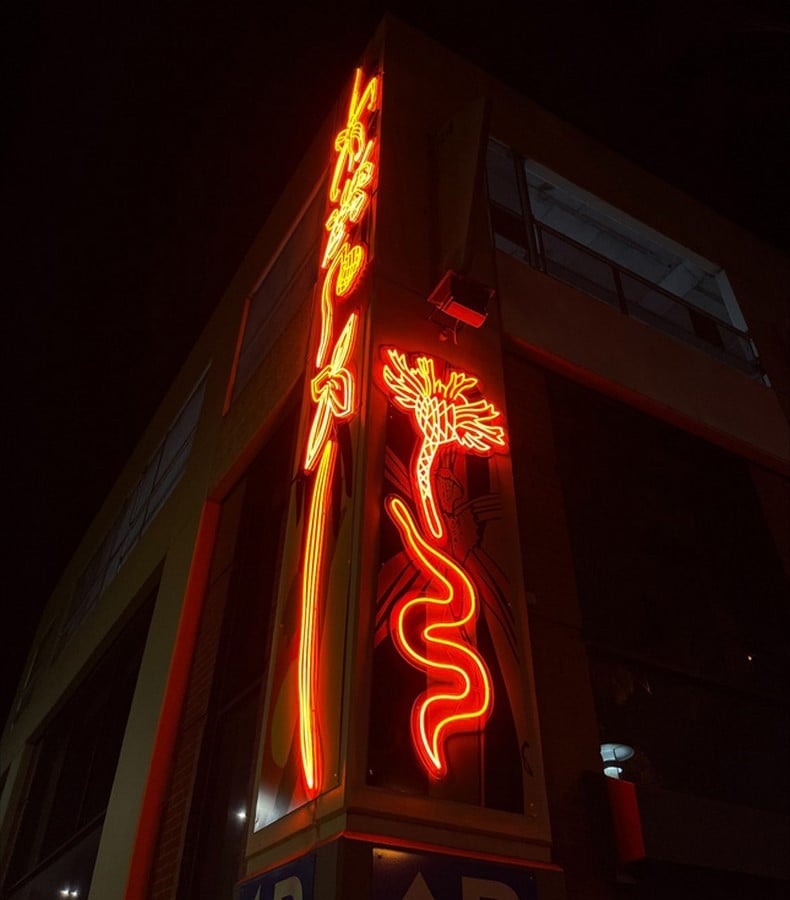
George Rose’s contribution, displayed on the Busport Building at Clare and Brougham Street, features luminous depictions of native Geelong flora in bright yellows and greens. Elsewhere, Love Central Geelong neon signs and illuminated trees line Little Malop Street, adding atmosphere to the dining and entertainment precinct.
 Deputy Mayor Trent Sullivan described the project as a creative success story. “Our local tradespeople usually install neon for businesses, so it’s exciting to see their skills used in collaboration with artists to create something beautiful for everyone,” he said. The initiative doesn’t just add light; it adds belonging. It transforms public spaces into shared, expressive places where art and safety coexist.
The Night as an Economic and Social Asset
Globally, cities are beginning to understand that the night isn’t a gap between days, but a full part of the urban cycle. Amsterdam’s introduction of a “Night Mayor” in 2012 was one of the first policies to formally recognise this. The role acts as a bridge between residents, policymakers, and nightlife operators, ensuring the night is managed with the same care as the day. The idea has since spread to more than 60 cities worldwide, proving that a healthy night economy can boost culture, safety, and inclusion.
 As temperatures rise in many regions, night-time activity is also becoming a tool for climate resilience. In hotter climates, parks, beaches, and markets are staying open later to offer cooler spaces for social life and exercise. The night is no longer seen as a period of risk, but as a resource a time for connection, rest, and renewal.
Designing for Dignity After Dark
Geelong’s approach reflects a broader truth: designing for safety after dark is not about flooding streets with light or increasing surveillance. It is about empathy, collaboration, and respect for how people actually use space. Warm lighting builds comfort, open shopfronts create visibility, and small night-time anchors, from cafés to late-night cultural venues, help sustain a sense of community.
When these ideas are combined, cities become more inclusive and humane. They recognise that everyone deserves to feel secure walking home, meeting friends, or enjoying public life at night. Light becomes more than a functional necessity; it becomes a language of dignity and connection.
Projects like the EON Artworks show what’s possible when creativity meets thoughtful design. By reimagining how cities operate after sunset, we can build places that are safe, social, and alive not just by day, but all night long.