When it comes to commercial construction projects, every decision counts. One often overlooked but critical element is lighting. As businesses and property owners continue to seek ways to cut down on operational costs and reduce their carbon footprints, energy-efficient lighting solutions are becoming more than just a trend—they’re becoming a necessity. If you’re in charge of a construction project, working with a contractor in commercial lighting could be the key to not only meeting regulatory requirements but also ensuring long-term savings and sustainability.
The Growing Importance of Energy-Efficient Lighting
The rise of energy-efficient lighting in construction isn’t just about being environmentally conscious—though that’s certainly part of the equation. It’s about making smart, forward-thinking decisions that benefit both your bottom line and the environment. Take, for example, LED lighting. Once a niche solution, LEDs have now become the standard for modern construction. Why? Well, they use at least 75% less energy than incandescent lighting, and they last up to 25 times longer. That means fewer replacements and lower energy consumption over the long term. Not bad, right?
But here’s the thing: it’s not just the lighting itself. It’s the system around it. Automated systems with sensors, daylight harvesting, and dimming controls can enhance energy efficiency even further. These intelligent systems adjust lighting based on real-time conditions, ensuring that you’re not wasting energy on lights that aren’t needed.
I remember working on a commercial office building project where the owner was initially hesitant to switch to LEDs, mainly due to the upfront costs. Fast-forward a year later, and not only did they save 30% on energy bills, but the quality of the lighting was also better, creating a more comfortable working environment for the employees. Sometimes, it takes seeing it in action to truly understand the impact.
Why You Should Care: The Business Case for Energy-Efficient Lighting
I often get asked, ‘Why should I prioritize energy-efficient lighting in construction?’ Well, the answer lies in both immediate savings and long-term sustainability. According to the U.S. Department of Energy, lighting accounts for approximately 17% of all electricity consumed in commercial buildings. Imagine slashing that figure by 50%, 60%, or even 70%. It’s a game-changer.
Beyond the financial savings, there’s the matter of compliance with ever-stricter regulations. As governments around the world push for greener building practices, energy-efficient lighting isn’t just a bonus—it’s a requirement. For example, in Singapore, the Building and Construction Authority (BCA) has made sustainability a core part of its Green Building Masterplan. Commercial projects aiming for high Green Mark certification need to meet stringent energy efficiency standards. That means working closely with a knowledgeable commercial lighting contractor who can guide you through this process.
You can’t ignore the numbers either. Case studies show that buildings that invest in energy-efficient lighting systems tend to have lower operational costs, higher occupancy rates, and even better resale values. Take Keppel Bay Tower in Singapore, for instance. The building achieved a remarkable 70% reduction in lighting-related energy costs by installing a smart lighting system that integrated sensors and automated controls. The results speak for themselves.
The Technology Behind Energy-Efficient Lighting
Okay, let’s get into the nitty-gritty of what’s out there today. In recent years, advancements in lighting technology have made it easier for construction projects to adopt energy-efficient solutions without compromising on quality. Here are some of the top options you should consider:
1. LED Lighting
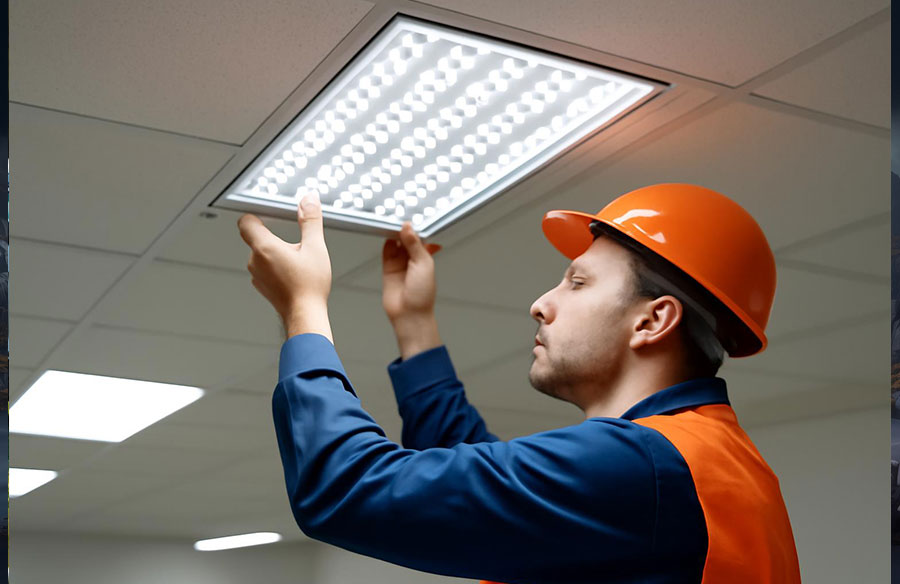
LEDs are the undisputed champion of energy-efficient lighting. They use a fraction of the energy compared to traditional bulbs and last much longer, which means fewer maintenance costs. They’re versatile, too, with options available for everything from overhead office lighting to outdoor security lights.
The thing that really sets LEDs apart, however, is their adaptability. With the right setup, LEDs can be controlled by smart systems, adjusting based on factors like room occupancy or the amount of natural light entering a space.
2. Fluorescent Lighting
While LEDs have taken over, fluorescent lighting still has its place. If you’re working on a project with a tighter budget but still want to reduce energy consumption, fluorescent lights are a viable option. They consume less energy than incandescent bulbs and have a longer lifespan, though not quite as long as LEDs.
3. Induction Lighting
Induction lighting might not be as common, but it’s worth mentioning. These lights are highly durable and efficient, especially for high-ceiling environments like warehouses or factories. They’re often found in spaces that require constant, uniform lighting, and they can last up to 100,000 hours—so no need for constant replacements.
4. Smart Controls and Automation
This is where the magic happens. You’ve got the right lights in place, but how do you make sure they’re used efficiently? This is where smart lighting systems come into play. Occupancy sensors, daylight harvesting, and automated dimming can cut energy consumption even further. Imagine lighting that adjusts based on time of day, available natural light, or movement in the room. It’s like your building is working to save energy all on its own.
One project I worked on involved installing a system that would automatically adjust the lighting in the hallways depending on how many people were walking through. The result? We cut hallway lighting energy usage by over 40%. And no, the building’s occupants never noticed the difference—except for the reduced utility bills, of course.
The Benefits Beyond Savings
While the financial incentives are great, let’s not forget about the other benefits that come with adopting energy-efficient lighting. Let’s start with the environment. By reducing energy consumption, you’re also lowering the carbon footprint of the building. That’s a huge plus for businesses looking to demonstrate their commitment to sustainability.
But the benefits don’t stop there. Energy-efficient lighting can also contribute to better quality of life for building occupants. Studies show that well-lit spaces are not only more productive but also more comfortable. For businesses, that translates into happier employees and higher performance. As an added bonus, energy-efficient lighting often comes with a higher quality of light, which can help reduce eye strain and fatigue.
Navigating Regulations and Incentives
If you’re still on the fence, consider the incentives. Many governments and local authorities offer tax credits, rebates, and other financial incentives to encourage the adoption of energy-efficient technologies. In Singapore, for instance, businesses can receive financial support for upgrading to energy-efficient systems through programs like the Energy Efficiency Fund (E2F).
However, it’s not just about saving money. There’s also the long-term value of building a facility that’s future-proof. As sustainability becomes a more important factor in property valuation, the energy-efficient systems you install today could make your building more attractive to future tenants or buyers.
Conclusion: The Future of Construction Lighting
As we look ahead, the role of energy-efficient lighting in construction projects will only continue to grow. From the immediate cost savings to the long-term environmental benefits, these solutions are becoming a standard rather than an option. Whether you’re working on a commercial building or a large industrial project, partnering with trusted commercial lighting contractors can help ensure that your lighting systems are optimized for maximum efficiency.
And don’t forget: the value of energy-efficient lighting goes far beyond the electrical savings. It’s an investment in a better, brighter future—for your building, your occupants, and the environment.