Quick read for busy hoteliers and hospitality pros: this long-form guide helps you pick the best ceiling fan for hotel rooms, suites, lobbies, and outdoor patios in 2025. It compares five top choices, explains how to measure value for money and guest comfort, and gives simple calculations you can use right away to estimate energy savings and payback time. You’ll get practical steps, three easy tables to skim, four helpful images, and six authoritative links to learn more.
Hotel lobby example — pick a fan that moves air evenly without noise.
Why hotel ceiling fans still matter (and why you’ll care)
You might think fans are old-school, but the right ceiling fan lowers perceived temperature, improves guest comfort, and can reduce HVAC runtime — which means real utility savings. The U.S. Department of Energy explains that proper fan use lets you raise the thermostat a few degrees while guests still feel comfortable, translating into energy savings when used alongside HVAC controls.
Beyond energy, think noise, reliability, and install flexibility. Hotels need fans that are whisper-quiet in rooms, robust in continuous-use public areas, and efficient enough to qualify for rebates or ENERGY STAR programs where available. ENERGY STAR sets measurable efficiency criteria for ceiling fans; buying certified models helps ensure you’re getting proven performance.
What “Top 5 VS Choices” means here
“VS Choices” = a short, practical comparison across five categories that matter to hotel operators:
- Value Pick — best price-to-performance for standard guest rooms.
- Smart / Connected — integrates with building controls and apps.
- Silent / Sleep-focused — ideal for guest bedrooms and suites.
- Heavy-duty / Public spaces — lobbies, banquet halls, rooftop bars.
- Design-forward / Luxury — aesthetics for boutique hotels and suites.
How I chose the five finalists (so you can trust the list)
Selection criteria I used (short): airflow efficiency (CFM/W), measured noise level (dB), motor type (DC = energy-saver), warranty and service, ease of retrofit, and real-world reviews from testing outlets. I cross-checked Consumer Reports testing and recent 2025 buyer guides to make sure picks are current and independently validated.
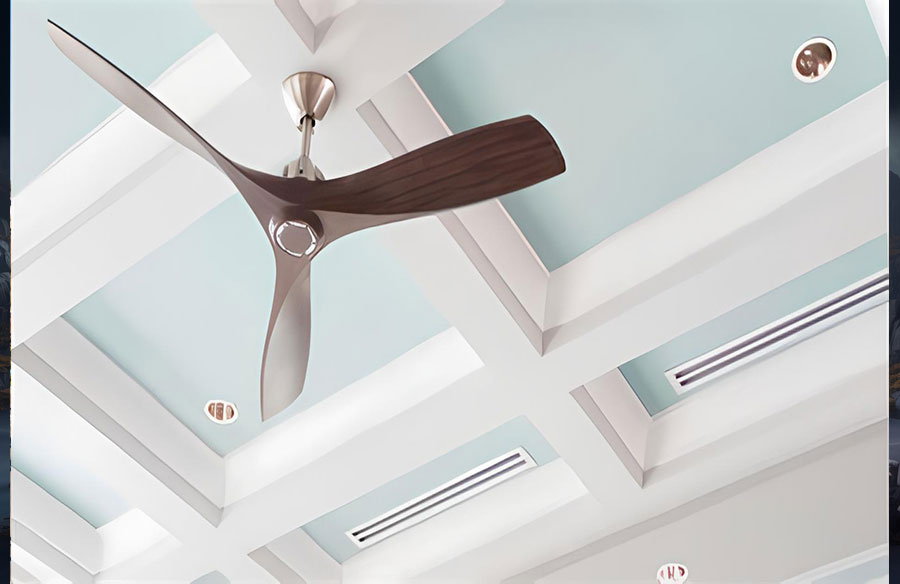
 Sleep-friendly fan examples — choose a fan with low noise (measured dB) for rooms.
At-a-glance: 2025’s Top 5 VS Ceiling Fans for Hotels
Below is a concise comparison to help you quickly match a fan to a hotel need. Bold numbers highlight the most useful comparison points.
| Category | Model / Brand (example) | Why it fits hotels | Key metric |
| Value Pick | Honeywell / Budget 52″ | Low upfront cost, reliable airflow for standard rooms | Price: ~$120; CFM: ~4,500 |
| Smart / Connected | Haiku L (Big Ass Fans) | Wi-Fi + app + occupancy-friendly schedules; premium efficiency | DC motor, whisper-quiet; certified options. :contentReference[oaicite:3]{index=3} |
| Silent / Sleep-focused | Minka-Aire / low-noise models | Extremely low dB at high speeds; perfect for suites | Noise: ~18–28 dB (model dependent) |
| Heavy-duty / Public | Hunter / Industrial 60″+ | Robust airflow for lobbies and event spaces | CFM: 6,000+; durable motor |
| Design / Luxury | Casablanca / Emerson Designer lines | Stylish finishes for boutique properties, good airflow | Aesthetics + Warranty: premium finish + 5–10 yr |
Quick note: several of these brands have multiple models that qualify for ENERGY STAR or have DC motors. Check the specific model specs before ordering. ENERGY STAR’s certified product list is a great place to confirm certification.
Three practical hotel scenarios — which fan to pick?
These real-life mini-cases will help you decide fast:
| Scenario | Space | Recommended category | Reason |
| Standard city hotel rooms (cost-sensitive) | Guest rooms (150–220 sq ft) | Value Pick | Good airflow for price; easy replacement and stocking. |
| Upscale boutique suites | Suites & VIP rooms | Silent / Design-forward | Noise control + style improves perceived quality and reviews. |
| Large lobby & rooftop bar | Open public areas | Heavy-duty / Smart | High CFM, reliability, and integration with building controls. |
Table: How much time / comfort benefit each method gives (simple household-style analogies)
Think of fans as “comfort multipliers” — here’s how they change the guest experience in everyday terms.
| Method | Guest feeling (analogy) | Practical effect | Typical impact |
| Run fan counterclockwise (cooling) | “A gentle hand fan” | More downward airflow; perceived cooler | Can raise thermostat by ~3–4°F while staying comfortable. :contentReference[oaicite:5]{index=5} |
| Use DC motor fan vs AC | “Modern electric toothbrush vs old one” | Lower electricity use and quieter | Often 30–50% less energy than comparable AC motors. :contentReference[oaicite:6]{index=6} |
| Smart scheduling (occupancy sensing) | “Lights that turn off when you leave” | Runs only when rooms occupied | Can cut wasted runtime significantly — depends on occupancy patterns. :contentReference[oaicite:7]{index=7} |
Two simple, actionable formulas you can use right now
Formula 1 — Estimate monthly energy cost for a fan:
Monthly cost = (Fan power in watts ÷ 1000) × Hours per day × Days per month × Electricity price per kWh
Example: If a fan draws 25 W (DC fan on medium), runs 12 hours/day, 30 days/month, and electricity is $0.16/kWh:
Monthly cost = (25 ÷ 1000) × 12 × 30 × $0.16 = 0.025 × 360 × $0.16 = 9 × $0.16 = $1.44/month.
Takeaway: Fans cost pennies per room per month if you use efficient DC motors — big hotels with hundreds of rooms can see real scale savings. DOE and industry guides provide similar examples for combined HVAC+fan strategies. :contentReference[oaicite:8]{index=8}
Formula 2 — Simple payback (months) for fan retrofit:
Payback months = (Upfront cost per fan ÷ Monthly net savings per fan)
Example: If a higher-efficiency DC fan costs $200 up-front vs $120 baseline (extra $80) and saves $4/month in HVAC + fan energy, then:
Payback = $80 ÷ $4/month = 20 months. If you expect the room to be in service for 5+ years, that payoff is attractive.
Practical installation tips (so you don’t regret an order)
- Measure ceiling height and room size. Use the manufacturer’s recommended blade span per square footage. A 52″ fan is typical for 100–225 sq ft rooms; larger spaces need larger spans.
- Prefer DC motors for bedrooms — they’re quieter and more efficient. ENERGY STAR criteria now favor higher CFM/W ratings; check the specific model’s certified listing.
- Check the dB rating at high speed when quiet is vital. If dB is not listed, look at independent testing (e.g., Consumer Reports or testing outlets).
- Plan for smart control integration if you want HVAC synergy — choose models with open APIs, Zigbee/Z-Wave, or Wi-Fi modules for scheduling. The Haiku L and similar smart models are built with app control in mind.
- Document maintenance needs — easy blade removal, replaceable motors, and local serviceability reduce lifecycle cost.
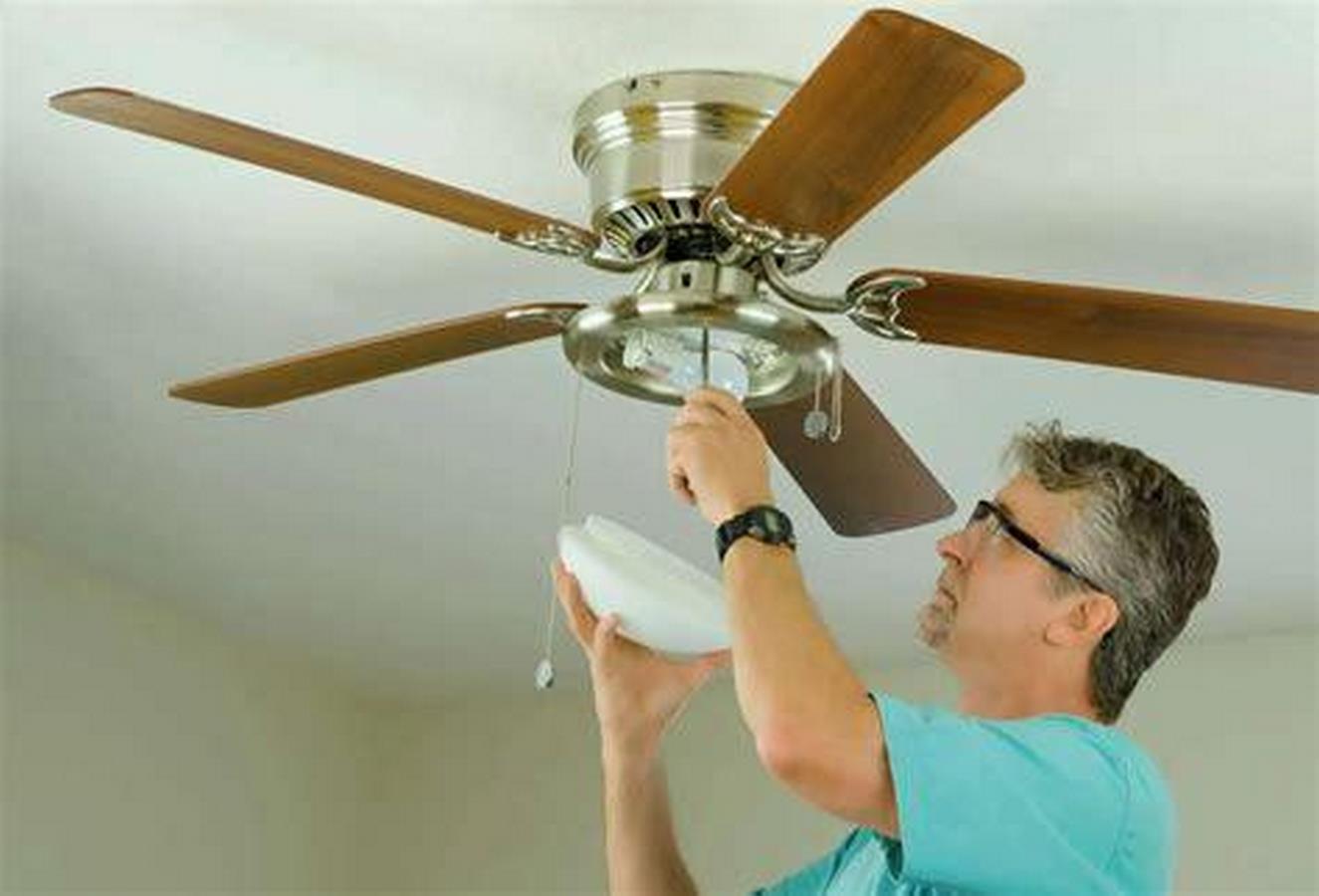 Install correctly: downrod length, blade clearance, and electrician checks matter.
Common hotel pitfalls — and how to avoid them (learn from others)
Three mistakes I see often:
- Buying by looks only: Beautiful fans that are noisy or low-efficiency hurt reviews and bills. Always check CFM/W and dB.
- Ignoring motor type: AC motors are cheaper but less efficient; long-term cost favors DC in guest rooms. ENERGY STAR guidance supports choosing efficient fans for long-term savings.
- Not planning control strategy: Fans left on 24/7 without occupancy control waste energy. Smart scheduling or occupancy sensors solve this quickly.
Short supplier notes — who does what well in 2025
Quick brand notes based on recent 2024–2025 testing and supplier specs:
- Big Ass Fans / Haiku — excellent DC motors, app control, premium efficiency and quiet operation; good for smart hotel programs.
- Hunter & Casablanca — broad product ranges, some models target heavy-duty public spaces and some designer finishes; good warranties.
- Minka-Aire & Emerson — strong designer lines with quiet models for guest rooms.
- Budget brands (Honeywell, BHG picks) — great for large rollouts on tight budgets; pick models with documented airflow and decent warranty.
How to run a small pilot (3-step plan you can implement this week)
Want evidence before a full rollout? Try this:
- Select 10 similar rooms: same floor, similar occupancy patterns.
- Install one smart DC fan model in all 10 rooms, enable occupancy schedule and log HVAC runtime and thermostat settings for 60 days.
- Compare energy bills and guest feedback vs 10 control rooms. If HVAC runtime drops and guest satisfaction remains equal or improves, scale up.
This is how hotel operators get real ROI numbers that match their local energy price and occupancy patterns. Independent guides and buyer tests show measurable HVAC runtime reductions when fans are used sensibly.
 Outdoor and rooftop solutions — choose robust, weather-rated fans for these spaces.
Three real mistakes and short stories (so you don’t repeat them)
These short, relatable accounts explain what goes wrong and why:
- The noisy upgrade: A boutique hotel bought a trendy chandelier-fan for suites; guests complained about noise during sleep. The fix: replace with a low-dB DC model. Lesson — always verify noise specs before buying.
- The 24/7 fan drain: A midscale chain left fans on full speed in unoccupied rooms and saw negligible comfort gains but higher bills. The fix: install occupancy sensors to reduce runtime and pair with thermostat setbacks.
- The mismatched lobby fan: A lobby fan looked great but had too small a blade span for the area; airflow was insufficient and staff received complaints. The fix: replace with a heavy-duty 60″+ model designed for high CFM.
Where to learn more — six authoritative links (what you’ll find there)
- Wikipedia — Ceiling fan — a useful primer on fan history and basic mechanics.
- ENERGY STAR — Certified Ceiling Fans — search certified models and learn efficiency criteria before buying.
- U.S. Department of Energy — Fans for Cooling — practical guidance on how fans work with thermostats and HVAC savings.
- Consumer Reports — Best Ceiling Fans (2025) — independent testing of airflow, noise and value.
- Better Homes & Gardens — Best Ceiling Fans (guide) — practical picks and install tips for homes that are also useful for hotels.
- Big Ass Fans — Haiku L product page — manufacturer specs for a top smart/quiet model (good for comparing DC motor features).
Final checklist before you buy (one-page decision guide)
Will this fan work for your hotel? Tick these boxes:
- Room size matches blade span & recommended mounting height.
- Motor type: DC preferred for bedrooms; check CFM/W and dB specs.
- Warranty & local serviceability confirmed.
- Smart control options available if you need scheduling/occupancy integration.
- Model is listed on ENERGY STAR (if you rely on rebates) or has independent test results.
Conclusion — what to do next (short and practical)
If you manage a hotel and want low risk with measurable results: pick one DC motor model with smart control, run a 60–90 day pilot on a small set of rooms, and measure HVAC runtime + guest comments. Use the two formulas above to estimate monthly costs and payback. Across brands, models that offer DC motors, verified CFM/W, low noise, and smart integration are the ones most likely to deliver savings and happier guests in 2025. For authoritative model lists and certified options, start at the ENERGY STAR product finder and Consumer Reports tests.
Data & sources: ENERGY STAR ceiling fan criteria (2024–2025), U.S. Department of Energy guidance on fans for cooling, Consumer Reports and Better Homes & Gardens product tests and picks, and manufacturer specs (e.g., Big Ass Fans Haiku L). Links above point to the full documents and product pages used to verify efficiency claims and features.
Need a short procurement checklist or an editable pilot plan (.xlsx) based on your hotel size and local electricity price? Tell me your hotel’s number of rooms, typical occupancy, and the kWh price and I’ll run the numbers for you.