Introduction
Formaldehyde is a common indoor pollutant found in wood products, paints, and adhesives. At high levels, it can cause respiratory issues, eye irritation, and even cancer.
As indoor air quality (IAQ) becomes a priority in healthy, sustainable buildings, detecting formaldehyde is essential—not optional. The right detector helps you spot risks early, stay compliant, and create safer spaces.
This guide will show you what to look for and why it matters.
Why Formaldehyde Monitoring Is Essential in Architecture
As healthy building standards like WELL and LEED become more common, architects and designers are under increasing pressure to address indoor air quality—especially the risks posed by formaldehyde, which is commonly found in materials like pressed wood, paints, and adhesives.
In both new construction and renovation projects, keeping formaldehyde levels under control is essential—not just for compliance, but for creating safer, healthier environments. Good air quality enhances occupant well-being and strengthens the long-term value and credibility of your design.
 Quick Guide to Choosing the Right Formaldehyde Gas Detector
Choosing the right formaldehyde detector comes down to a few key factors: sensitivity, detection range, sensor type, and the specific needs of your project.
For most indoor environments, aim for a detector with at least 0.01 ppm sensitivity and a range of 0–1.0 ppm to meet health and safety benchmarks. Reliable sensor types include electrochemical and photoelectric, both known for accuracy and durability.
- For everyday home environments—such as bedrooms or vehicles—what matters most is ease of use, portability, quick feedback, and overall value, rather than advanced technical integration. In that case, the formaldehyde (HCHO) gas monitor for home is a perfect fit.
- For standard residential or commercial spaces, a portable detector with a detection range of 0–1.999 mg/m³ is usually sufficient. It’s cost-effective, easy to install, and offers real-time alerts for quick action.
- For high-end projects, such as smart homes, wellness spaces, or modern offices, a more advanced detector may be worth the investment. Look for features like wireless connectivity, data logging, and remote monitoring—ideal for continuous IAQ tracking and integration with building systems.
Ultimately, you don’t need the most expensive model—you need the one that aligns with your space, budget, and performance requirements.
Which Type of Detector Is Best for Your Space?
Choosing a detector that fits your environment is key to getting accurate, reliable results. Use the chart below to match the detector type to your project or space:
| Environment / Project Type | Recommended Detector Type | Why It Works |
| Homes & Apartments | Portable or Wall-mounted | Easy to use, budget-friendly, ideal for daily IAQ checks |
| Offices & Commercial Buildings | Fixed (Network-capable) | Supports continuous monitoring and BMS integration |
| Children’s Rooms / Classrooms | High-Sensitivity, Low-Range | Detects even low-level emissions, safer for kids |
| Smart or Automated Buildings | Industrial-grade with Modbus / 4–20 mA | Allows remote access and system-level integration |
How to Choose the Best Formaldehyde Detector for You
Still deciding which type of detector fits your project? While this guide emphasizes commercial and architectural applications, many modern buildings—especially residential projects—also require attention to indoor air quality, particularly after renovations. In those settings, a reliable consumer-grade detector can help confirm air safety before move-in or long-term use.
With that in mind, here are two detector options that suit both small-scale residential use and larger commercial or industrial environments.
These two top-rated options cover most residential and commercial needs.Let’s quickly go over their key features in a straightforward way:
1. GasDog Formaldehyde Gas Monitor for Home
Perfect for: Homes, small offices, and temporary use
- What it does:
This compact, easy-to-use monitor detects formaldehyde levels in your home or office. It instantly alerts you when levels exceed safe limits with a color change.
- Why choose it:
It’s affordable and perfect for people who want a simple way to keep track of air quality. Plus, it’s portable, so you can move it around easily. - Range: 0–2 mg/m³ (approx. 0–1.6 ppm), with a typical resolution of 0.01 ppm under standard conditions.
- Price: $133 (as of 2025)
Ideal for: Those who want quick, reliable monitoring for smaller spaces without the complexity.
2. Industrial Portable Formaldehyde Gas Detector
Perfect for: Larger spaces, offices, industrial settings
- What it does:
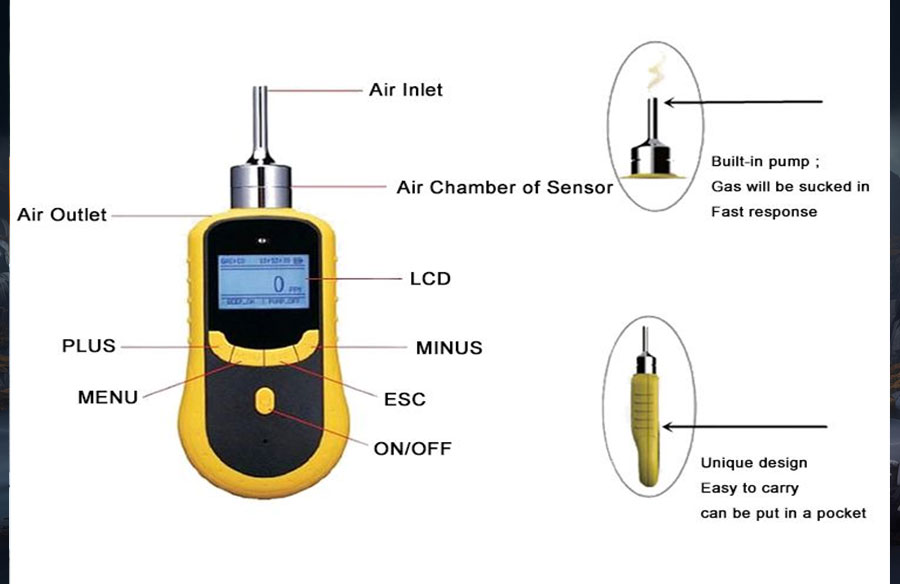
This handheld detector is designed to measure formaldehyde levels in environments where air quality needs constant attention. It’s a great fit for businesses or larger areas like factories or warehouses.
- Why choose it:
Ideal for factories, warehouses, or expansive facilities, this handheld detector offers accurate real-time readings and runs up to 10 hours without recharging. - Range: 0–1000 ppm, resolution down to 0.01 ppm, ±3% accuracy, ATEX/CE certified
- Price: $668 ~ $1,500 (as of 2025)
Ideal for: Businesses or large facilities needing reliable, precise air quality monitoring.
Common Misconceptions
“Formaldehyde is only a concern during construction.”
False. Off-gassing can last for months or even years, especially in humid environments.
“If it doesn’t smell, it’s safe.”
Also false. Formaldehyde may be present even when undetectable by odor.
“Air purifiers are enough.”
Not entirely. While air purifiers can reduce VOCs, they do not offer precise, real-time concentration data or alerts when thresholds are exceeded.
Frequently Asked Questions (FAQ)
- Is formaldehyde monitoring required for WELL or LEED certification?
Yes. Both WELL and LEED include indoor air quality criteria that reference formaldehyde. WELL sets a formaldehyde threshold of 27 ppb, which equals approximately 0.033 mg/m³, not 0.027 ppm. Using a reliable detector can help verify compliance and earn credits toward certification. - When should formaldehyde detection be implemented in a project?
Ideally, formaldehyde detection should be planned during the design or pre-construction phase, especially for projects using pressed wood, laminates, or composite materials. Early integration allows for better placement of detectors and preventive action before occupancy. - Can formaldehyde detectors be integrated into a building automation or BMS system?
Yes. Industrial-grade detectors often come with output options like Modbus RTU or 4–20 mA, which allow seamless integration into building management systems (BMS) for centralized, real-time monitoring and control.
Conclusion
Choosing the right formaldehyde gas detector isn’t about picking the most high-tech or expensive model—it’s about finding the one that fits your project’s specific needs. Whether you’re working on a home, office, or large commercial space, focus on what truly matters: the health, safety, and comfort of the people using that space.
Integrating formaldehyde detection into your design not only helps you meet regulatory requirements, but also shows a real commitment to creating healthier indoor environments.
Start building healthier spaces—choose the right detector for your project today.