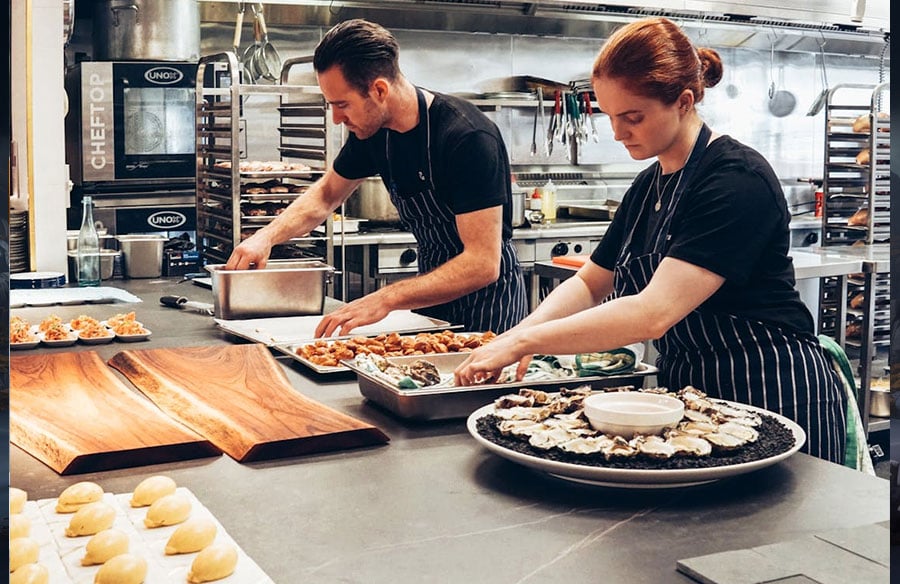
The design of a professional kitchen does more than impact workflow; it shapes how sustainable restaurant operations can be.
Thoughtful choices in things like layout, materials, and equipment create greener kitchens that save energy, conserve resources, and reduce environmental impact.
Selecting Materials for Durability and Eco-Friendliness
Choosing materials that are both durable and eco-friendly directly impacts a restaurant’s sustainability.
Long-lasting surfaces, such as stainless steel counters or ceramic tiles, reduce the need for frequent replacements. This minimizes waste over time. Stainless steel is particularly favored because it:
- Resists corrosion
- Is easy to clean
- Can be recycled at the end of its lifecycle
Additionally, prioritizing materials sourced sustainably makes a significant difference. Bamboo flooring or reclaimed wood panels serve as examples of renewable options with reduced environmental footprints compared to non-renewable alternatives.
And for insulation or walls, opt for low-VOC (volatile organic compound) materials to improve indoor air quality while also aligning with green building practices.
By making thoughtful material selections during kitchen design, restaurants not only create efficient workspaces but also contribute toward reducing their overall ecological impact.
Designing Layouts to Minimize Energy Waste
The layout of a professional kitchen greatly influences its energy efficiency. Placing equipment strategically reduces unnecessary energy consumption during daily operations.
For instance, grouping heat-producing appliances, like ovens and stoves, together can help maintain consistent temperatures without overworking cooling systems in other areas.
Efficient workflows also contribute to sustainability. When frequently used tools and prep stations are arranged logically, staff move less between tasks. This prevents doors on refrigeration units from being opened too often or for too long.
Pathways for ventilation matter as well. Poorly designed layouts trap heat and increase the demand on HVAC systems to cool the space down. Thoughtful design allows air to flow more freely.
By considering these aspects early in kitchen planning stages, restaurants can save significant amounts of energy while maintaining operational productivity.
Optimizing Ventilation Systems for Sustainability
Ventilation (which we touched upon briefly) plays a crucial role in creating an energy-efficient and sustainable kitchen. Poorly designed systems lead to wasted energy and uncomfortable working conditions.
Efficient exhaust hoods, placed correctly above cooking stations, ensure that heat, grease, and smoke are removed without overusing power.
Energy recovery ventilators (ERVs) are another smart option. They capture excess heat from the air being vented out of the kitchen and repurpose it to reduce heating demands elsewhere.
Selecting variable-speed fans is also impactful. These fans adjust their speed based on the intensity of cooking activity instead of running at full power constantly.
And installing filters that improve indoor air quality while requiring minimal replacement cuts down waste further.
With proper ventilation planning during design stages, kitchens can create better airflow while conserving resources effectively over time.
Choosing Eco-Friendly Kitchen Equipment
Investing in eco-friendly kitchen equipment reduces energy usage, cuts operational costs, and aligns with sustainable practices.
Many modern appliances are designed to consume less power while delivering the same level of performance as traditional models.
For instance, you could incorporate a RestaurantSupply fridge-freezer combo, as RestaurantSupply recognizes the importance of sustainability within the foodservice industry and is committed to promoting environmentally responsible practices, such as:
- Eco-friendly product selection.
- Sustainable sourcing.
- Energy efficiency and conservation.
Additionally, consider induction cooktops over gas burners. Induction technology heats cookware directly instead of wasting heat into the surrounding air.
Similarly, dishwashers with water recycling features save thousands of gallons annually without compromising cleanliness.
Selecting equipment that meets ENERGY STAR certifications ensures long-term efficiency while lowering environmental impact for professional kitchens aiming for greener operations overall.
Incorporating Water-Efficient Design in Kitchens
Water efficiency is a key consideration for sustainable kitchen operations. Restaurants often consume significant amounts of water, but strategic design choices can drastically reduce waste.
Installing low-flow faucets and pre-rinse spray valves cuts down water usage without sacrificing functionality.
And positioning sinks near prep areas reduces the time staff spend walking back and forth, minimizing unnecessary water flow during busy shifts.
Reusing greywater for non-potable applications, such as cleaning or landscaping purposes, further enhances sustainability efforts. Integrated filtration systems make this option viable while ensuring hygiene standards remain uncompromised.
Additionally, equipment like high-efficiency dishwashers that use less water per cycle contributes to overall savings without impacting performance.
By focusing on these practical solutions during the kitchen design phase, restaurants can significantly lower their environmental impact while managing resources more responsibly.
Maximizing Natural Lighting to Reduce Energy Use
Lastly, natural lighting is a simple yet effective way to reduce energy consumption in restaurant kitchens.
Designing spaces with large windows or skylights minimizes the need for artificial light during daytime hours. This reduces electricity costs while creating a brighter, more pleasant working environment.
Positioning workstations near sources of natural light ensures staff can carry out tasks efficiently without relying on overhead lighting throughout the day.
Using reflective surfaces like stainless steel counters further amplifies available daylight by bouncing it across the space.
Supplement natural lighting with energy-efficient LED fixtures for areas that require consistent illumination, such as walk-ins or storage rooms.
Thoughtful placement of these fixtures avoids overlighting and cuts down power usage significantly.
By integrating well-planned natural light into kitchen designs, restaurants will benefit from lower energy bills while supporting eco-friendly practices.