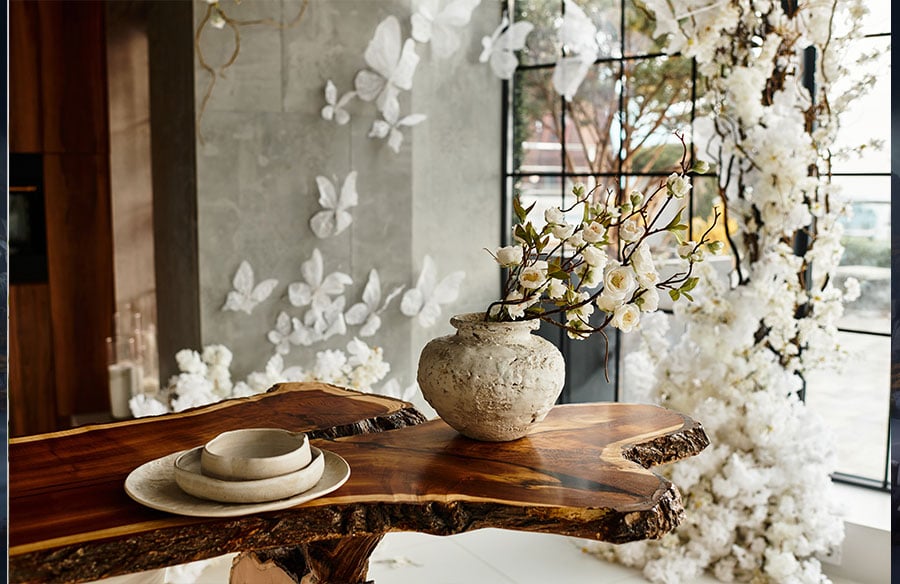
Something fascinating is happening in architectural studios worldwide. While 60% of industry experts identify bringing nature into design as 2025’s top interior trend, according to Fixr’s Interior Design and Color Trends Report, the most innovative faux plants designers achieve this through engineered botanicals that outlive their living counterparts.
The Materials Science Revolution
Walk past a high-end faux installation today and you’ll likely do a double-take. Advanced polymer compounds now replicate cellular structures so precisely that even experienced landscapers struggle to distinguish them from those picked in gardens and nurseries. Multi-layered leaf construction incorporates micro-scale venation patterns that catch the light exactly as nature intended.
Flexible wire core systems are wrapped in botanically accurate bark textures that respond to air currents with organic movement. Color gradation techniques capture the seasonal variations: imagine autumn maple leaves that shift from green to amber as lighting conditions change throughout the day.
According to Janey Dillon, Founder and CEO at the online supplier The Faux Flower Company, “a new generation of manufacturers are producing true-to-life arrangements that meet architects’ briefs for art imitating nature but with longevity. We’re talking about materials with 15-year indoor lifespans and 5-year outdoor performance warranties.”
Architectural Integration That Actually Works
The Monumental Scale Shift
Corporate headquarters are commissioning 12-15-foot botanical walls that span entire elevator banks. These aren’t decorative afterthoughts, they’re architectural features that create visual continuity between floors through precise color orchestration.
Building System Integration
Curtain wall manufacturers now offer botanical insert panels that maintain their structural integrity while adding organic elements to glass facades. This eliminates the complex planter systems, waterproofing details, and drainage infrastructure that make living walls architectural nightmares.
Modular partition systems increasingly incorporate botanical elements that can be reconfigured as tenant needs evolve: try doing that with living plants and their root systems.
Color as Wayfinding Strategy
Unlike living plants that fade, bloom unpredictably, or die, faux botanicals enable architects to use color as precise wayfinding tools. Warm-toned installations guide traffic toward collaborative zones, while cooler palettes signal focused work environments. The color consistency enables exact brand standard matching: something impossible with living systems.
The Infrastructure Liberation
Here’s where the economics become compelling. Commercial-grade living installations require irrigation infrastructure, drainage systems, and specialized HVAC modifications that cost $15-40 per square foot to install, according to EPA green infrastructure data. Add annual maintenance contracts averaging $3-5 per square foot, and the lifecycle costs become prohibitive for many projects.
Premium faux installations eliminate waterproofing failures, drainage blockages, and possible emergency plant replacements during client presentations.
Performance in Impossible Conditions
Many architectural environments cannot sustain living plants: atriums with extreme temperature swings, underground transit stations, or high-altitude locations with intense UV exposure. On the other side of the coin, faux botanicals remain a beautiful visual year-round.
Denver International Airport’s recent terminal expansion features extensive faux botanical installations that withstand 5,000-foot altitude conditions and dramatic seasonal temperature variations—conditions that would destroy living plants within months.
Health Benefits Without the Complications
Research demonstrates that well-designed faux botanical installations contribute to stress reduction and cognitive performance improvements comparable to living plants. The key differences: no seasonal die-offs that create visual disruption, no allergens affecting sensitive occupants, and no pest control chemicals compromising indoor air quality.
Healthcare facilities increasingly specify faux installations to capture biophilic benefits while eliminating infection risks associated with soil and standing water.
The Sustainability Benefit
Modern faux manufacturing uses recycled materials and bio-based polymers. Installations eliminate water consumption for irrigation (averaging 10-15 gallons per square foot annually for living walls), chemical treatments, and soil disposal.
This supports LEED and BREEAM certification while creating healthier indoor environments free from pesticides, fertilizers, and soil-borne pathogens.