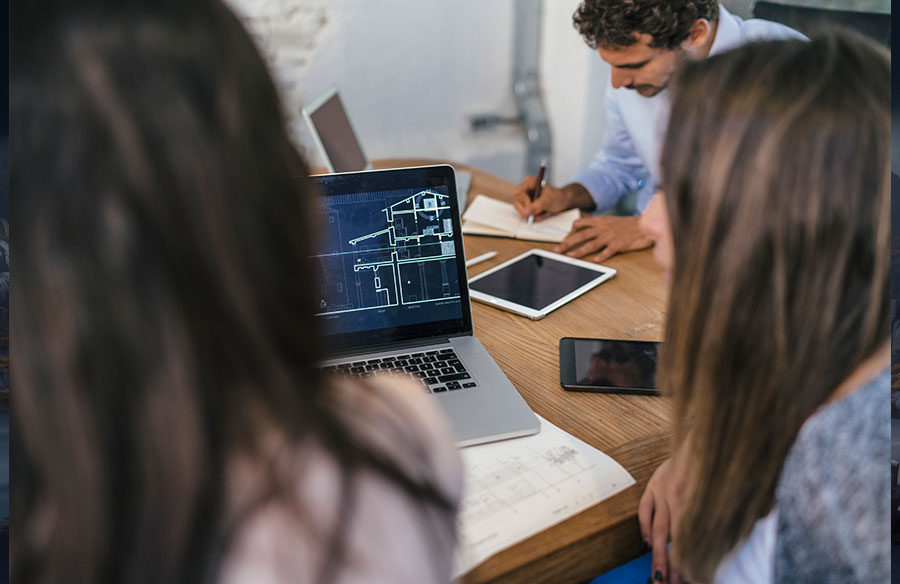
Technology is a strategic enabler more than a support function as far as architecture is concerned. Be it high-end 3D modeling, the cloud, or collaboration, your IT team has a key role to play in facilitating innovation while protecting creativity. But building the right IT department is far from a one-size-fits-all scenario, but a bespoke fit that is built for the functional requirements of architectural workflows.
Why Your Architecture Firm Can’t Settle for Generic IT Support
Most firms are mistaken in hiring general IT staff who are not accustomed to the exact requirements of architectural design technology. Unlike standard business operations, architectural practices handle very large design files, sophisticated 3D modeling software, and deadline-driven projects, architecture firms require IT professionals with special skills.
For example, CAD and BIM software are highly processing-intensive and demand customized computer configurations. Delays or downtime in syncing files can halt a designer’s productivity and result in tardy timelines and unhappy clients. Architects also like to share projects between offices or with external consultants, which demands high-performance cloud platforms optimized for large, complex files.
The other important factor is security. Such intellectual property as proprietary designs and client data should be secured by highly developed cybersecurity, specific to architecture companies. General IT personnel may not be aware of these unique threats.
Therefore, you have to create an IT team composed of professionals who comprehend technology and the architectural process as well. The union of the two ensures that technical solutions are in harmony with the creative processes. It enables architects to concentrate on design innovation without worrying about technology interruptions.
With this tailored process, your business improves its resiliency in operations and positions your architecture firms to drive growth and digitalization effectively.
This is how architectural firms can build an IT team that truly satisfies their needs. Follow these steps as below:
Step 1: Learn What Sets IT Apart for Architecture
Architecture companies depend on the use of specific applications such as AutoCAD, Revit, Rhino, and BIM. Such applications need high-performance computing devices, reliable networks, and integration to provide productivity. Besides, the security of intellectual property and the facilitation of remote collaboration are continuous issues.
Your IT team should be able to:
- Manage workstations & software licenses
- Enable versioning and large file sharing for BIM projects
- Protect confidential design information against cyberattacks
- Apply collaboration features relevant to managing architectural projects
Such niche context necessitates IT recruits with not only commodity technology skills but also domain knowledge.
Step 2: Establish Specialized Roles that Match Your Company Workflow
An effective IT department for an architectural firm should ideally include:
- Infrastructure Specialist: Delivers fast, reliable networks and design software, specialized gear.
- Software Support Engineer: Provides high-level support for CAD/BIM environments, resolving technical issues effectively.
- Cybersecurity Expert: Secures sensitive designs and client information by using specific security policies and supervision.
- Cloud & Collaboration Manager: Manages cloud, file sharing, and real-time collaboration, where it does BIM 360 or Microsoft 365.
- Helpdesk Support: Offers first-level support to all technical-support end-users and reduces architecture and designers’ downtimes.
As an example, worldwide design behemoth Gensler concentrates its IT team around tailor-made software workflows and security, which CIO David Branson outlined in a CIO.com 2023 interview. The domain knowledge within the organization enables smooth design operations worldwide.
Step 3: Employ IT Experts with an Architectural Industry Background
The worth of IT staff who have experience with architecture-specific problems cannot be overemphasized. Technically adept people who are aware of the complexities of 3D model software or big BIM datasets can foresee issues and communicate well with design teams.
Look for professionals who:
- Have experience in AEC IT positions, including architecture, engineering, or construction
- Are familiar with architectural software ecosystems
- Capable of bridging the design process and technical vocabulary
This cultural and technical alignment makes teamwork easier and quicker problem solving.
Step 4: Invest in Continuous Learning and Certifications
Technology evolves continuously with architecture. Your IT professionals must learn and become certified continuously with certifications such as:
- Autodesk Certified Professional (AutoCAD, Revit)
- Certified Information Systems Security Professional (CISSP) in cybersecurity
- Cloud certifications (AWS, Microsoft Azure)
These certifications maintain your team stays current with the most recent software releases, security features, and latest collaboration tools.
Step 5: Use IT Staffing Solutions for Targeted Hiring
Outsourcing IT professionals with architecture-specific expertise is easier said than done. The skills required go beyond general IT knowledge. Everyone in the team must understand design software ecosystems, large file management, and industry-specific security practices. That is where IT staffing solutions services prove to be useful.
These services are customized to assist your architecture firms build specialised IT departments. It can be hiring a BIM-literate support engineer, a network specialist for 3D rendering environments, or a cybersecurity expert skilled with protecting design files and IP.
These staffing solutions allow your architecture companies to onboard skilled professionals quickly, saving recruitment time and achieving proper technical fit.
Complementing your internal resources with skilled professionals through staffing services can propel the digital transformation of your organization without any compromise on quality.
Step 6: Encourage Collaboration Between IT And Design Teams
Even good IT recruits cannot be effective unless they operate in teams. Foster constant communication between architects and IT team, so that technical solutions meet actual design requirements.
Methods for building collaboration are:
- Holding joint meetings to discuss software updates and concerns
- Planning IT-enabled training in the latest tools and cybersecurity best practices
- Establishing specific communication channels for reporting and resolving tech issues on time
This alignment enhances responsiveness and enables the anticipation of workflow bottlenecks before they become issues.
Step 7: Monitoring Performance Using the Right KPIs
Tracking your IT team’s performance guarantees ongoing improvement. Some of the key performance indicators to monitor are:
- Average resolution time for software-related tickets
- Uptime and availability of hardware
- User satisfaction ratings by architects and designers
- Frequency and Response Time for Cybersecurity Incidents
Monitoring these metrics regularly will help optimize your IT infrastructure and support for architectural requirements.
Summing Up! Your IT department is the backbone of innovation
Building the perfect IT team for an architecture practice is not only about putting in place the technical roles. It involves knowledge of your business’s specific software environment, utilizing specialists with specific skills combined with business know-how, enhancing team spirit, and continued investment in skills development.
Whether building your staff in-house or working with IT staffing solutions providers to find domain specialists, an emphasis on domain expertise and transparent communication will facilitate your architecture firms to innovate safely and effectively.
If your architecture firm requires flexible, experienced IT professionals, consider specialized staffing solutions as a way to ensure your digital capabilities and compete effectively.